Showing posts with label Jacobites. Show all posts

Friday, 8 April 2011

Mo Ghile Mear: "He is my Caesar, gallant darling"

If anyone doubts that the original political belief of the ancient Catholic Gael was that same Christian Roman imperialism that has ever been the mark of Catholic Christianity since the Resurrection of the Lord, they need only listen to this wonderfully beautiful old Gaelic song, Mo Ghile Mear


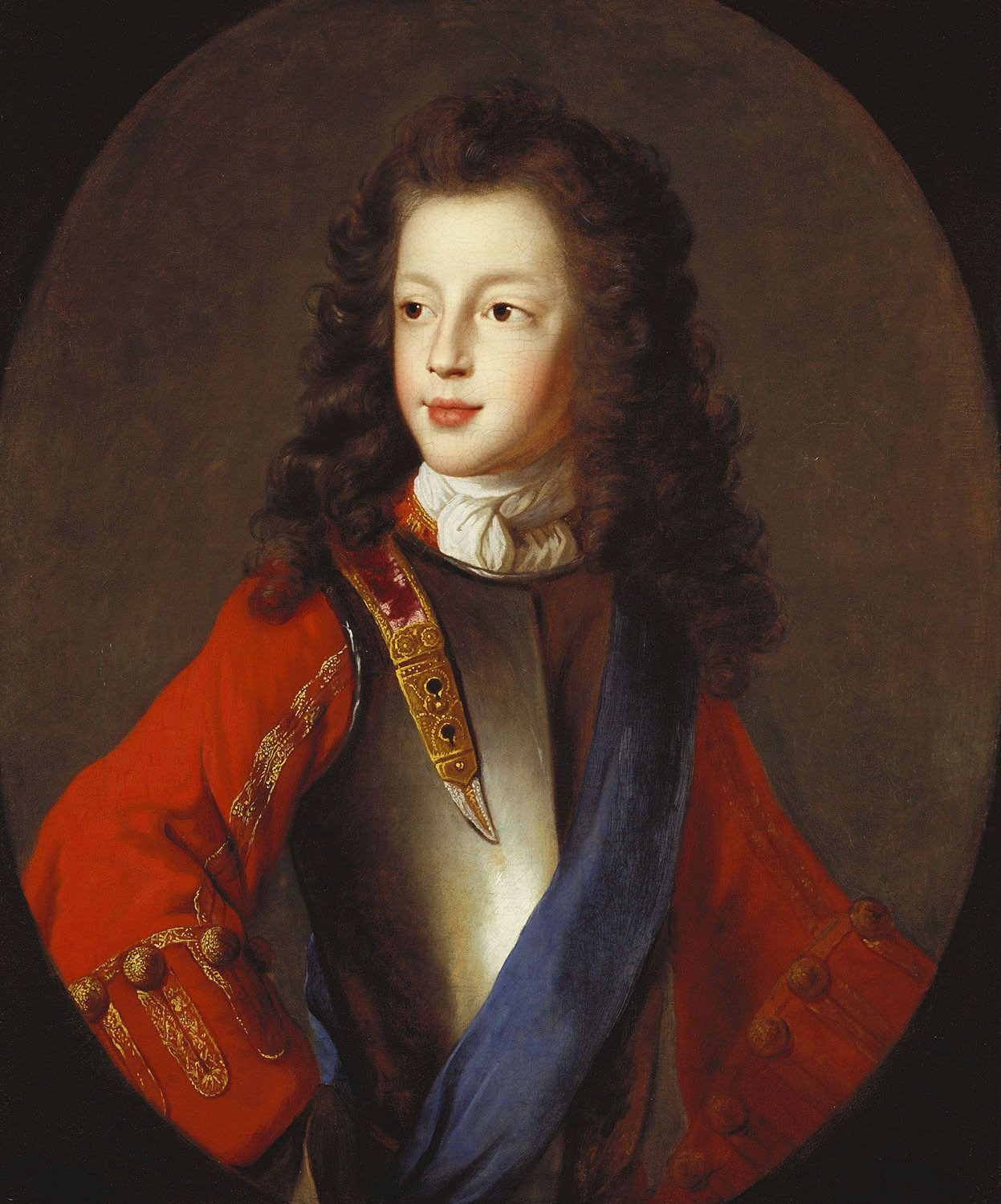
This version is performed by Mary Black, and is an Irish tribute to Bonnie Prince Charlie, Prince Charles Edward Stuart, the true King of Scotland, Ireland, and England (and France!) and true Prince of Wales, and who, as the commentary on this Youtube version rightly says, sought to put an end to religious persecution in the Three Kingdoms.

He inspired fierce loyalty wherever he went, even tho', alas, the cause was, in the end, lost. The very motto of his family, the Royal Stuarts, was Aymez Loyauté which is Old French for "Love Loyalty".

His beauty and gallantry could not fail to attract the warmest love and loyalty from the fair sex of all classes and some of the most famous songs about him were written by a woman, Carolina Oliphant of Gask, Lady Nairne, a lyric poetess called by her countrymen "the Flower of Strathearn" on account of her own beauty. Born at Gask, in Strathearn, her family ever grew white roses, the symbol of the Stuarts and of legitimate monarchy, in profusion at Gask House.

Prince Charles Edward Stuart was not a Scottish or Irish nationalist, nor any kind of nationalist. He believed in the Three Kingdoms, with three separate parliaments but with one king, the ancient Christian Constitution of the British Isles which guaranteed the fundamental freedoms of every man and woman through the Christian religion, love of God and fellow man, and the laws of men based upon the law of God.

Scotland before 1603 had a separate king but James I and VI merged the two crowns in himself.

Ireland had been a patchwork of kingdoms with one High King, Ard Rí na hÉireann, until Pope Adrian IV, in his Bull Laudabiliter (meaning "praise-worthily"), of 1155, placed Ireland under the rule of the Norman-Angevin King Henry II of England but still under the Pope, as a papal fief.

Pope Adrian made his Bull because of the disturbed condition of both Church and State in Ireland (testified to by no less an authority than St Edmund Campion SJ in his History of Ireland). Whether he was entitled to do so is a disputed question but what cannot be disputed is that the passage of time secured the new settlement, in accordance with canon, civil and moral law. The Bull was recognised by Popes Alexander III and Lucius III and ever after by the Holy See.

King Philip II of Spain and I of England and Ireland, and Queen Mary I (Tudor) of England and Ireland. Prince Charles Edward was the legitimate successor to Queen Mary.


Indeed, so disturbed was Ireland at the time that Diarmaid Mac Murchadha (Dermot MacMorrough), King of Leinster, ousted by other war-like Irish kings and chiefs, invited King Henry II to invade and pledged an oath of allegiance to him. As a further thanks for his reinstatement, MacMurrough's daughter Aoife (Eve) was married to Richard de Clare, 2nd Earl of Pembroke, a Cambro-Norman lord, known colloquially as "Strongbow".

Thereafter, the English kings were also styled "Lord of Ireland", Dominus Hiberniae, although Ireland continued to be ruled by its individual kings, like MacMorrough, in accordance with the devolved, distributist, subsidiarist feudal system.

After the Protestant Reformation King Henry VIII illegally made himself King of Ireland by the Crown of Ireland Act 1542. As the Act was passed after Henry VIII had been excommunicated twice by the Papacy, the title "King of Ireland" was not recognised initially by Europe's Catholic monarchs.

However, once Mary became Queen and made England Catholic once more, Pope Paul IV issued a papal bull in 1555 declaring King Philip II of Spain and Queen Mary of England to be King and Queen of Ireland. After Mary died in 1558, Philip made no claim to the crown, but the principle was established that the Crown of Ireland was recognized by the Holy See, from 1555, as a title of the English Crown.


Here's a toast to Charlie's health...


Prince Charles Edward was a Unionist, but not a parliamentary Unionist like the Whigs and soft Tories. He was for "Home Rule" and self-government, as it had always anciently been, for each of the kingdoms of Scotland, Ireland and England, joined as brother to each other under one king who must protect their liberties and rights, from the highest to the lowest in each kingdom.

He did not believe in the hegemony of the new rich men who had plundered the monasteries and stripped bare the poor but, instead, he believed in that great Christian chivalric principle that the greater and richer the man, the more he owed a duty to his servants, followers and to his country and particularly to the poor and needy. Hence he commanded a great and loyal following who fought fiercely for him to recover the Crown from those exploiters, the treacherous Whigs, the liars and cheats who had deposed his father, King James II and VII, and tried to murder him, as they had murdered his great-grandfather, King Charles I.

The uprising and attempted restoration by Bonnie Prince Charlie of his father, King James III and VIII, was called The Jacobite Uprising This Jacobite Uprising of 1745 very nearly succeeded and Prince Charlie got as far as Derby in his military campaign.


The Bonnie Prince


However, he was fatally persuaded to turn back and lost the momentum and, eventually, the war, and the remnants of his army were butchered savagely by the grotesque Whig and plunderer, the Duke of Cumberland, "Butcher" Cumberland, younger son of the usurping German Hanoverian, George II.

The Prince roamed the Highlands, hidden by loyal men, cared for by Flora MacDonald, and hunted by the Hanoverian government, until he eventually escaped to Europe where he was ever after in exile until his sad death.

Mo Ghile Mear was written by Seán Clárach Mac Dhomhnaill (John Clare MacDonell), c.1691-1757, in loving memory of the Bonnie Prince. It is particularly to be noted that the song-writer refers to him as "my Caesar", the title of the Christian Emperor since Roman times and sometimes borrowed to refer to any Christian king.

Here are the lyrics in both Gaelic and English.

Mo Ghile Mear

Curfa
Sé mo laoch mo Ghile Mear
‘Sé mo Chaesar, Ghile Mear,
Suan ná séan ní bhfuaireas féin
Ó chuaigh i gcéin mo Ghile Mear.

Bímse buan ar buaidhirt gach ló,
Ag caoi go cruaidh ’s ag tuar na ndeór
Mar scaoileadh uaim an buachaill beó
’s ná ríomhtar tuairisc uaidh, mo bhrón

Ní labhrann cuach go suairc ar nóin
Is níl guth gadhair i gcoillte cnó,
Ná maidin shamhraidh i gcleanntaibh ceoigh
Ó d’imthigh sé uaim an buachaill beó.

Marcach uasal uaibhreach óg,
Gas gan gruaim is suairce snódh,
Glac is luaimneach, luath I ngleo
Ag teascadh an tslua ’s ag tuargain treon.

Seinntear stair ar chlairsigh cheoil
’s líontair táinte cárt ar bord
Le hinntinn ard gan chaim, gan cheó
chun saoghal is sláinte d’ fhagháil dom leómhan.

Ghile Mear ‘sa seal faoi chumha,
‘S Éire go léir faoi chlócaibh dubha;
Suan ná séan ní bhfuaireas féin
Ó cuaigh i gcéin mo Ghile Mear.

Seal da rabhas im’ mhaighdean shéimh,
’s anois im’ bhaintreach chaite thréith,
Mo chéile ag treabhadh na dtonn go tréan
De bharr na gcnoc is I n-imigcéin.

Chorus
He is my hero, my gallant darling
He is my Caesar, gallant darling.
I've had no rest from forebodings
Since he went far away my darling.

Every day I am constantly sad
Weeping bitterly and shedding tears
Because our lively lad has left us
And no news from him is heard alas.

The cuckoo sings not pleasantly at noon
And the sound of hounds is not heard in nut-filled woods,
Nor summer morning in misty glen
Since he went away from me, my lively boy.

Noble, proud young horseman
Warrior unsaddened, of most pleasant countenance
A swift-moving hand, quick in a fight,
Slaying the enemy and smiting the strong.

Let a strain be played on musical harps
And let many quarts be filled
With high spirit without fault or mist
For life and health to toast my lion.

Dashing darling for a while under sorrow
And all Ireland under black cloaks
Rest or pleasure I did not get
Since he went far away my dashing darling.

For a while I was a gentle maiden
And now a spent worn-out widow
My spouse ploughing the waves strongly
Over the hills and far away.


Alas! To Lochaber no more....the Prince goes into exile - and over the water - forever more; but the loyal men shall be ever faithful to his memory.


Aymez Loyauté!


+++

Friday, 11 June 2010

Alexander Forbes, fourth Lord Forbes of Pitsligo (1678–1762), Jacobite gentleman, scholar and cavalry commander

Alexander Forbes, fourth Lord Forbes of Pitsligo (1678–1762), philosopher and Jacobite army officer, only son of the third lord, Alexander Forbes of Pitsligo (c.1655–1690), and Lady Sophia Erskine (fl. 1676–1734), third daughter of John, twentieth Earl of Mar, was born on 24 May 1678.

He succeeded to the estates and title on the death of his father in 1690.

Forbes married first, in 1713, Rebecca (d. 1731), daughter of John Norton, a London merchant, with whom he had one son, John, Master of Pitsligo (c.1713–1781); and secondly, in 1731, his wife's companion, Elizabeth Allen (d. 1759), in a match which produced no children.

("Master of..." was the title given to the eldest son of a Scottish Lord of Parliament if he had no other courtesy title).

In his youth he travelled to France, where he received some education and made the acquaintance of Fénelon, and was introduced by him to Mme Guyon and other quietists. These were very influential in forming his religious ideas, which, although he remained a lifelong episcopalian, were resolutely ecumenical.

He returned to Scotland in 1700. After the deposition of George Garden from his living for Jacobitism in 1701, Forbes gave him a house at Rosehearty, where an ecumenical religious community was set up "where persons of different religious persuasions lived together in the love of God and the practice of self-abnegation" (Henderson, 18): Chevalier Andrew Ramsay was one of those who sought to join it.

In the Scottish parliament Forbes sought what was "consistent with the honour and independence of Scotland" (Forbes, Thoughts, 1829, iv), opposed steps leading to the union with England, and withdrew from the consideration of the articles to Pitsligo Castle.

In 1715 Forbes joined the Jacobite rising under his first cousin the Earl of Mar, commanding a troop of horse at Sheriffmuir. Following the collapse of the rising, he was forced to flee to France.

Subsequently he made his way via Rotterdam, Leiden, Vienna (where he may have acted as King James's agent), Venice, and Munich to the Jacobite court in Italy, where he kept a diary of events, published in 1938 as The Jacobite Court at Rome in 1719.


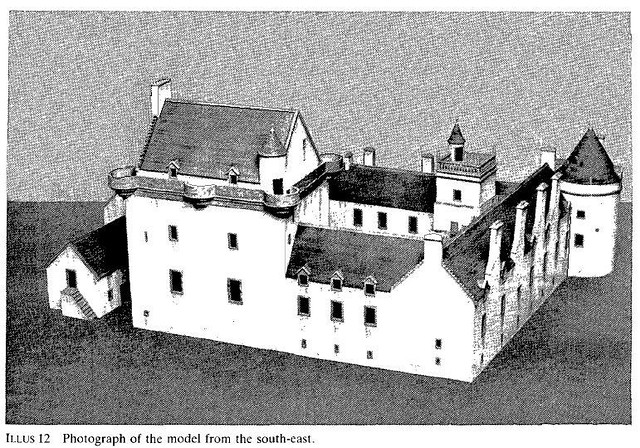
Pitsligo Castle was a great castle...
 
.....before it was burned and ruined by Whigs.

In 1720 he went to Paris, where he discussed Jacobite schemes with the financier John Law. Having not been attainted, he borrowed money from a Roman banker and returned to Scotland in the same year; living in retreat at Pitsligo Castle, he corresponded with other quietists and wrote philosophy, publishing Essays Moral and Philosophical in 1734.

Thoughts Concerning Man's Condition and Duties in this Life, and his Hope in the World to Come, also composed at this time, was not published until 1763: this work proved to be even more of a success, going through several editions and remaining in print well into the nineteenth century.

Elsewhere, he explored the question of the legitimacy of the state in his unpublished On Government and A letter on governments, composed about 1720 (which interestingly contradict some of the arguments of his published work). In them he appears to move some way towards a contractualist Whig position.

His thought combines a benign Christian ecumenism— "Every Body knows 'tis accident, for the most part, that makes us of one Religion, rather than another" (Forbes, Essays, 170)—with a kind of providential version of legitimacy and ideas of the centrality of popular consent, which can be held to hint towards the arguments of utilitarianism. He also (in his Essays) showed some sympathy with the position of women, whom he thought "more active, more foreseeing and better managers than we" (McLynn, The Jacobites, 157).

In 1745 Forbes "weighed and weighed again" the prospect of joining the rising, as he discusses at length in his complex Apologia (Memsie apologia, Aberdeen University Library, Pitsligo MS 1/16), but when he did so he entered on it with enthusiasm: "Did you ever know me absent at the second day of a wedding?" he asked his friends (Forbes, Thoughts, 1854, xvii); to his soldiers he simply said "Oh Lord, Thou knowest our cause is just. Gentlemen, march" (Tayler and Tayler, Jacobite Letters, 2).


W. Lockhart Bogle RA. Lord Forbes of Pitsligo mounts his horse. 1893.


By the end of September 1745 Forbes was in Aberdeen, whence he marched south with around 130 horse and two companies of Banffshire infantry, later incorporated in the Duke of Perth's regiment.

On arrival at Edinburgh on 8 October, he was appointed general of horse by Prince Charles (Charles Edward Stuart), with the rank of full colonel.

In England, where his cavalry were often used as scouts or forward patrols, he was in the thick of the action. Pitsligo's horse was the first body of Jacobite troops to enter Manchester, where Forbes threatened a reluctant constable with his sword; on 1 December he commanded the building of the bridge at Gatley ford and engineered the crossing of the Mersey by pontoon.

In the first stage of the fight at Clifton on 18 December, Pitsligo's horse was put to flight by government cavalry and dragoons, and retired to Penrith. At Falkirk in January 1746 the horse was stationed in the third line with the Royal Scots and the rest of the cavalry.

On the retreat north, Forbes entered Aberdeen on 7 February: on the disorder of the further retreat, all or nearly all his horses were lost. At the battle of Culloden, the men of Pitsligo's horse thus stood in the rear and took little part in the action. Their leader, however, was still at this stage (and beyond) a zealous recruiter: Adam Hay later claimed to have been held by Forbes as a pressed man in the days immediately before Culloden, while in the aftermath of the battle he was still trying to raise men, despite acknowledging over 2000 dead on the field.


Eventually accepting the inevitable, Forbes went into hiding on his own estates for the rest of his life, where his exploits became a local legend.

During the day he lay in the mosses at Craigmaud, 9 miles up-country from Fraserburgh, or hid "in a hollow place in the earth, under the arch of a small bridge" (Forbes, Thoughts, 1829, xxi).

On other occasions he called at his own castle in the guise of a beggar, ordered searching soldiers breakfast in the house in which he was hiding, or guided a search party to his own hiding place in the Cave of Cowshaven (still known as Lord Pitsligo's Cave) on the Buchan coast, 2 miles from Rosehearty.

His attainder named him as Lord Pitsligo (rather than Lord Forbes of Pitsligo), and on this technicality and the basis of similar mistakes made in attainders after the 'Fifteen, it was reversed by the court of session in 1749. This decision was, however, overturned by the House of Lords in the following year.


W. Lockhart Bogle RA. Pitsligo in hiding under the arch of a bridge. 1893.


Government troops continued to search sporadically for the ageing philosopher (who went under the name of Mr Brown in his correspondence with the Countess of Erroll, carried by the Laird of Udny's fool as go-between) until the later 1750s, by which time he was almost eighty years old.

His dignity and resignation under this treatment were remarkable: in 1752 he could still write that "We have nothing to depend upon but the Goodness of God every moment, we are sure he can do us no Injustice" (Aberdeen University Library, Pitsligo MS 1/6).

He died at Auchiries on 21 December 1762.

By all accounts Lord Forbes was a man of extraordinary moral qualities: the personification of "Virtue and Justice" to William Hamilton (Forbes, Thoughts, 1829, lvii); "the best father … best friend and the best subject in Britain" to John Murray of Broughton (Forbes, Jacobite Court, 33). His character forms the basis for that of the Baron of Bradwardine in Sir Walter Scott's novel Waverley. In the judgement of William King, Forbes was the "one person" known to him who spoke no evil "of any man living" and found good to say of all (King, 143–5).

[From Murray G. H. Pittock in the Dictonary of National Biography]


Charles Pettie. Bonnie Prince Charlie. 1898.
With Bonnie Prince Charlie, Forbes of Pitsligo is on the right (or it could possibly be MacDonald of Clanranald) and Cameron of Locheil is on the left.


HIELAND LADDY (Jacobite)

Where ha' ye been a' the day'
Bonnie laddie, Hielan' laddie
Saw ye him that' far awa'
Bonnie laddie, Hielan' laddie
On his head a bonnet blue
Bonnie laddie, Hielan' laddie
Tartan plaid and Hielan' trews
Bonnie laddie, Hielan' laddie

When he drew his gude braid-sword
Then he gave his royal word.
Frae the field he ne'er wad flee
Wi' his friends wad live or dee.

Geordie sits in Charlie's chair
But I think he'll no bide there.
Charlie yet shall mount the throne
Weel ye ken it is his own.

[From Minstrelsy of Scotland, Moffatt. Published in Jacobite Relics, 1810. A version of the tune appeared in Playford, 11th edition, 1701.]

The current Chief of the Name is Sir William Stuart Stuart-Forbes of Pitsligo, 13th Baronet, who lives in Churchill Street, Blenheim, Marlborough, New Zealand.


...

Thursday, 10 June 2010

WHITE ROSE DAY - 10 June 2010

King James III and VIII


WHITE ROSE DAY

10 June 2010

Birthday

of

King James III and VIII

de jure

King of England, Scotland, France and Ireland

illegally prevented

by the rich, corrupt, Protestant English Whigs

from occupying his throne

for no other reason than that he was

a faithful and loyal Roman Catholic.


Unlike the Whigs, Jacobites were Crown Unionists, against parliamentary union, in favour of home rule and subsidiarity and the union of the Crowns.


Agostino Masucci. The solemnization of the marriage of Prince James Francis Edward Stewart and Princess Maria Clementina Sobieska at Montefiascone, Italy, 1 September 1719. 1735.


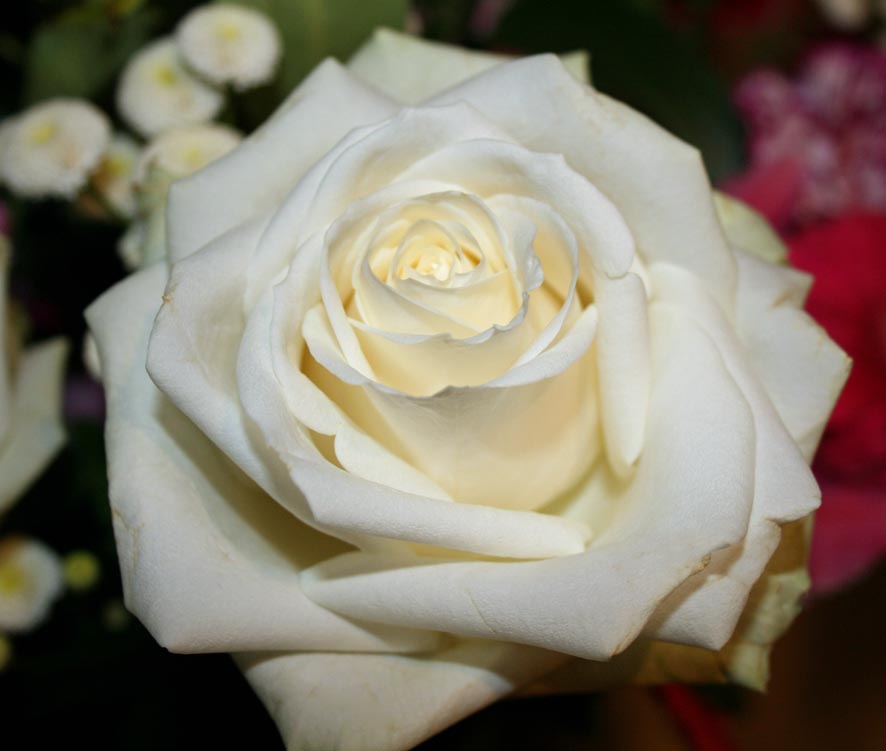
The symbol of legitimate Roman Catholic monarchy

is

the White Rose.


There'll Never Be Peace Till Jamie Comes Hame

by Robert Burns

By yon castle wa' at the close of the day,
I heard a man sing, tho' his head it was grey,
And as he was singing, the tears doon came -
'There'll never be peace till Jamie comes hame!'

'The Church is in ruins, the State is in jars,
Delusion, oppressions, and murderous wars,
We dare na weel say't but we ken wha's to blame
There'll never be peace till Jamie comes hame!

'My seven braw sons for Jamie drew sword,
But now I greet round their green beds in the yerd;
It brak the sweet heart o' my faithfu' auld dame -
There'll never be peace till Jamie comes hame!

'Now life is a burden that bows me down,
Sin I tint my bairns, and he tint his crown;
But till my last moments my words are the same -
There'll never be peace till Jamie comes hame!'


...

Wednesday, 17 June 2009

Reprise on Just War and the American Revolution

I received quite a post-bag on this one.

Let me look at some of the questions raised.

Pedes Christi wrote:

”My question is, can such a government be considered legitimate? And if not, what is one justified in doing about it? I am not suggesting violent revolution (given your just war theory above), but how does one otherwise deal with such tyranny? I pray for the conversion of my country, but what else? With this I wrestle”.

I think you are right to wrestle with this issue. See what you think of my comments below.

Mark asks:

”Surely St. Thomas would not say that a private citizen should bear ‘any’ level of injustice imposed upon him, correct? To use an example from modernity, would a private citizen in say, the Soviet Union, China, Cuba or North Korea be justified in rebelling against the dictatorship?”.

He later asks:

”1. What relevance is it to the question of Just War when the subject is a private (Catholic) citizen rebelling against a non-Catholic government? Does it matter what form the government is (monarchy, democracy, communist, tyrant), or whether it is oppressive towards Catholicism, or Christianity in general? At what point does a secular government, tyrant or otherwise, become so oppressive to a Catholic society as to merit rebellion? I have in mind your response on 10 June at 14:51 and your comment s regarding the alleged Freemasonic affiliations of the European Prime Ministers.

2. In your reply to Ollie you offered that his view was that of a ‘tiny minority’; I wonder what relevance does this have? Did you mean that in terms of having any bearing on a contemporary public that it is not relevant because it is impractical, or because it was not widely held at the time, or only that it is so obscure as to be discarded for purposes of discussion?

3. As you have explained your understanding of the application of Just War principles to this particular conflict, I wonder whether you believe the Crusades to have been just? What about the First War of Independence by the Scots?

4. In your reply to Dion, you asked a (rhetorical?) question as to how he would conclude as to the guilt of a Mohammedan claiming justice as the motivation for a act which resulted in the death of innocents; I wonder if by this you mean to imply that combatants whose actions result in the death of other combatants in wars which you believe to have been unjust are guilty of murder? Or does the responsibility for the justice of the war rest solely on the civil authorities to whom God has granted this responsibility? Is his culpability greater because the innocents were his targets, as opposed to a combatant who knows there will be innocent lives loss by his actions but which are otherwise unintended?

5. I am curious if you know of any declarations since 1789 by Roman Pontiffs declaring a major conflict to have been unjust.”


Was the German invasion of Poland just? Pomerania and Silesia were both originally German and had been seized after World War I. But the German government had pledged not to invade and, moreover, its ideology was then Nazi, a grossly heretical creed.


Let me essay an answer to these.

1. The principles of a just war are matters of Natural Law and, as such, apply to all men, not just Catholics. A private citizen, Catholic or otherwise, may not, according to those principles, rebel against properly constituted authority. It matters not what form the government takes, although it may be relevant that the government is oppressing Christianity, which is a true religion, rather than a false religion. However, that does not confer upon the private citizen the right to revolt against properly constituted government. Thus, at no point does a secular government, tyrant or otherwise, become so oppressive to a Catholic society as to merit rebellion, if it is a properly constituted government. Private citizens did not have the right to rebel against the Freemasonic European Prime Ministers, for instance, if they were properly constituted. There may be some residual or other powers of the Pope, however, to depose Catholic sovereigns but it would first have to be convincingly demonstrated that they derived their authority from the Pope. In general, according to Dante and St Thomas, Catholic monarchs derived their authority direct from God and not the Pope, although that varies. For instance, the Pope had the right to refuse to accept the Prince-electors nominee for Roman Emperor.

2. In my reply to Ollie I meant that his view is so obscure as to be discarded for purposes of discussion.

3. Not all of the Crusades were unjust – although they were not always justly conducted – because the Holy Land belonged to Christendom and the Eastern Empire in particular and it was a war of restoration and defence, expressly sanctioned by the Church as restorative and defensive against the ever-encroaching advance of Islam. I am not sure about the First War of Independence by the Scots. I would need to study the causes in more detail. Does anyone else have a view on it?

4. In my reply to Dion, I did not mean that combatants whose actions result in the death of other combatants in wars which are unjust are necessarily guilty of murder, although their leaders might be depending upon the usual criteria of intentionality. It is a standard application of the principle of “double effect” that a combatant who knows there will be innocent lives loss by his actions but which are otherwise unintended Is not guilty of moral crime. The culpability of the terrorist who deliberately targets the innocent is plainly evident. None of this was my primary point which was that no man can plead his disagreement with the Natural Law as an excuse for his crimes because every man has the Natural Law “written in his heart” and so cannot claim ignorance of it or exemption from it. If he could then Al Capone could say that he was innocent of murder because he did not believe that killing those who got in his way was murder.

5. There have been plenty of papal condemnations of conflicts as unjust since 1789. Pope Pius VI and Pius VII both declared the French Revolutionary wars unjust as well as the Bonapartist wars. Leo XII also did so and Gregory XVI declared the Italian revolutions unjust as did Bl Pius IX. He also condemned the Irish rebellions and excommunicated the Fenians on 12 January 1870. Of course, he also did the same to the Italian rebels. The Polish rebels were also – very significantly since they were rebelling against an heretic Tsar – condemned. The First World War was variously condemned and so were the Fascist and Nazi wars. The Spanish rebels were condemned (as were some actions by the Nationalists), Paul VI condemned the anti-terrorist war against ETA and John Paul II condemned the British invasion of the Falkland Islands, albeit not formally (and, in my view, on questionable grounds) as well as the Iraq war.


St Thomas Aquinas, leading theologian of just war principles


St. Thomas would not say that a private citizen should bear ‘any’ level of injustice imposed upon him, however bad, because he expressly allows the principle of self-defence. One may defend oneself, one’s family and others, together with property. If this requires what may become a war against the government then that is justified on the principle of “double effect” provided that there is no intention to overthrow the government or to prosecute a war against it.

If, however, the government was never a legitimate one then a war might be prosecuted against it (subject to all the usual just war criteria) in order to restore the legitimate government.

This was the purpose behind the Jacobite and Carlist wars and – arguably – the US War between the States. The South were seeking to restore the original Constitution as against the effectively new and unauthorised Constitution imposed by Lincoln and the Northern Yankees.

The governments of the Soviet Union, China, Cuba and North Korea were all illegitimate governments imposed by revolution and force of arms against legitimate governments. So long as they continued to be illegitimate in that sense it would be open to anyone (subject to all the other just war criteria) to rise up against them to restore the true and legitimate government (if there was one).


"Manifest Destiny" was just a re-run of the old Puritan and Cromwellian cry that the Protestant white man was pre-destined by an apparently arbitrary God to rule over all other men as a "chosen people" of Biblical stature who would be enriched in a new republic designed chiefly for their benefit. It is, of course, unbiblical nonsense.


I agree that “Manifest Destiny” is really an outgrowth of the theology of certain Protestant groups (often Calvinists) who beleive in the “God is on our (America's) side” school of thinking and I agree that this theology – like that of the Cromwellian Puritans and the Afrikaner Boer Vortrekker people – tends to give the impression of a status of “chosen people” based upon the nation of Israel as a chosen people.

That is one of the reasons why I am opposed to such Americanist Yankee nonsense. It does no good to America nor to the rest of the world.

But you cannot persuade Americanists of this view. They simply stick their fingers in their ears and shout pro-Americanist slogans.

...

Wednesday, 10 June 2009

WHITE ROSE DAY

Today is White Rose Day, the day when Prince James, Prince of Wales (James Francis Edward Stuart; "The Old Pretender" or "The Old Chevalier") was born in 1688, thus occasioning the English Whigs to begin to plot against his father, King James II and VII, our last Catholic King, so as to exclude from the throne all Catholic monarchs.

King James III and VIII, de jure King, died on 1 January 1766 and, as the son of the deposed King James II and VII, rightfully claimed the English, Scottish and Irish thrones (as James III of England and Ireland and James VIII of Scotland) from the death of his father in 1701, when he was proclaimed king of England, Scotland and Ireland by his cousin Louis XIV of France. Following his death in 1766 he was succeeded by his son Prince Charles Edward Stuart ("Bonnie Prince Charlie") in the Jacobite Succession.

The White Rose or White Cockade is the symbol of Catholic monarchy all over Europe.

The motto of the family was (in Old French) Aymez Loyaute - "Love Loyalty"- a fitting motto if ever there was one!

God save the House of Stuart!

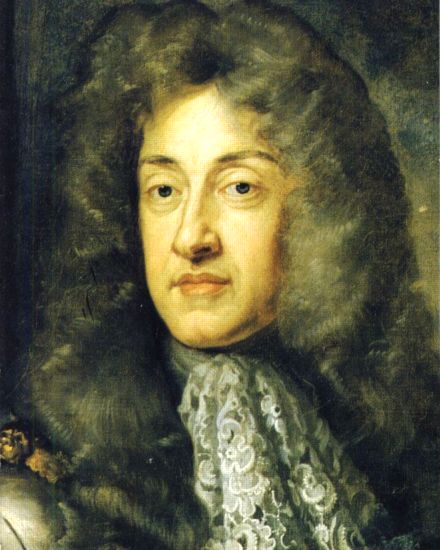
King James III of England and Ireland and VIII of Scotland - the legitimate Catholic King when he was a young prince.


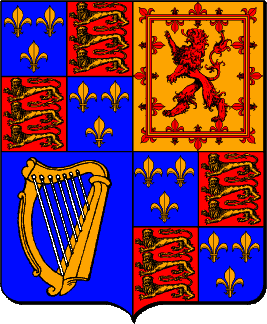
The Arms of the House of Stuart


...

Saturday, 6 September 2008

Lumsden of Cushnie passes on to the Land o' the Leal. RIP.

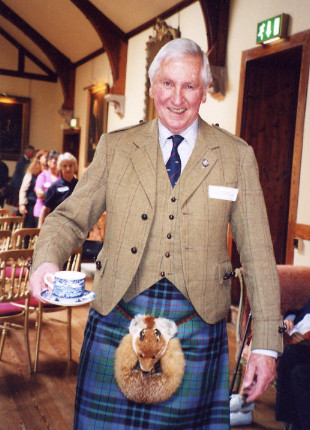
The news of the sad and sudden death of good friend David Lumsden of Cushnie, longtime Baron of Cushnie-Lumsden in the ancient Feudal Baronage of Scotland which pre-dates the later (and modern) form of peerage, sees the loss of one of the most loyal defenders of the Jacobite heritage and of Scottish Catholic tradition.

Fittingly the Laird of Cushnie died shortly after presiding over the annual meeting of the 1745 Association at Glenfinnan, where the Royal Standard of Prince Charles Edward was first raised in 1745.

The Sunday before he had attended Mass in the traditional Roman rite at St. Andrew’s Church, Ravelston in Edinburgh which had, in recent times, become one of his preferred places of worship.

David Gordon Allen d’Aldecamb Lumsden of Cushnie, sometime Baron of Cushnie-Lumsden, was born on 25 May in 1933 in Quetta, Baluchistan in, as he often put it, the "Empire of India". He was the son of Henry Gordon Strange Lumsden, a Major in the Royal Scots, of Nocton Hall, Lincolnshire and Sydney Mary, only child of Brigadier-General Charles Allen Elliot.

He was educated at Allhallows, Devon, Bedford School, and at Jesus College, Cambridge. He held a commission in the London Scottish TA before developing an executive career with British American Tobacco for 23 years from 1959, and was a member of Lloyd's from 1985 until his retirement in 2001. He worked in Africa, India and the Far East, as well as eastern Europe. Upon leaving BAT he moved into castle restoration.

He was a Knight of Honour and Devotion of the Sovereign Military and Hospitaller Order of St John of Jerusalem, Rhodes and Malta (the oldest military-religious order of the Roman Catholic Church), a Knight of Justice of the Sacred Military Constantinian Order (the other international Roman Catholic military order), a Knight of the Order of Saint Maurice and St Lazarus and Bailie of the Bailiwick of Scotland of the Order of St Lazarus, as well as being a Freeman of the City of London.

His motto, Dei Donum Sum Quod Sum (by the grace of God, I am what I am) reflected his strong Christian and Catholic commitment.

He was also a Patron of the Aboyne Highland Games.


The Laird of Cushnie (4th from the left) at the Aboyne Games


David was, moreover, a keen heraldist and served as Garioch Pursuivant-of-Arms to the Chief of the Name and Arms of Mar, Margaret Alison of Mar, 31st Countess of Mar and Lady Garioch (and Titular 11th Duchess of Mar in the Jacobite Peerage in which Peerage she is numbered as 32nd Countess of Mar, as the attainder of 1716-1824 is not recognised by Jacobites). The Earldom of Mar is the oldest peerage title in the United Kingdom. Garioch is one of the four surviving private officers of arms in Scotland recognised by the Court of the Lord Lyon King of Arms.

David co-founded the Castles of Scotland Preservation Trust and the Scottish Historic Organs Trust and was President of the Scottish Military History Society. In addition he was a Fellow of the Society of Antiquaries of Scotland. He was on the council of the Admiral the Viscount Keppel Association and was one of the patrons of the Russian Summer Ball in London. He was Convenor of the Monarchist League of Scotland and was on the council of the Royal Stuart Society.

In the realm of sport, he was a keen shot, played polo in his youth and had rowed at Cambridge, in addition to his interest in sailing and riding.

Given his interests in heraldry, castle restoration, monarchy and Jacobitism, he might have preferred to live in the past, avoiding the present but he went about his business with a vigour that easily dispelled any notion of retirement despite his 75 years.

His tall, trim figure figure recalled an active life and youth and a clan chief once observed of him "David has a distinctive aquiline nose, and on the walls [of his house] were portraits of all his ancestors, mainly eminent soldiers dating back to the Napoleonic war. That nasal feature had endured for more than 150 years in the male line".

David personally restored two family properties – Cushnie House (built in 1688 by Alexander Lumsden) and Tillycairn Castle (built in 1540 by Mathew Lumsden), thereafter restoring both Leithen Lodge at Innerleithen, an arts-and-crafts shooting lodge of 1887, and Liberton Tower, in Edinburgh.

He was a co-founder with Harry Borthwick (23rd Lord Borthwick), Nigel Tranter and Hugh Ross of the Castles of Scotland Preservation Trust.

His bete noire (or perhaps "bete blanche") was the hideous, modern penchant for wearing white socks with the kilt. "Any colour but white" was David's constant refrain and he would present offenders with a card bearing that same advice.


The Laird of Cushnie


A loyal and profound monarchist and Jacobite, David was a contributor to the The Muster Rolls of the 45 (listing all those who served with Prince Charles Edward during the '45 Jacobite campaign to restore the rightful Stuart dynasty to its lawful place upon the British throne), and served as a council member of the Royal Stuart Society.

In 2007, he played a prominent role in commemorating the bicentenary of the death of HRH Prince Henry Benedict Stuart, the Cardinal Duke of York, last member of the Royal House of Stuart, at the Royal Hospital Chelsea, along with Viscount Maitland (hereditary bearer of the National Flag of Scotland) and General Lord Walker (governor of the Royal Hospital). He also participated in the Requiem arranged by the Sovereign Military Order of St John of Jerusalem, Rhodes and Malta at their Church of St John in the Hospital of St John and St Elizabeth in St John's Wood.

Keenly interested in music, he was co-founder of the Scottish Historic Organs Trust in 1991.

His ancestor, Robert Lumsden, 1st Laird of Cushnie, was granted a charter of the lands by King James IV in 1509. David was kinsman to Sir Winston Churchill who was himself descended from Robert of Cushnie.

David was an active member of the Convention of the Baronage of Scotland and represented the convention at two services in St Giles' Cathedral each year – St Andrews Day and the opening of the General Assembly of the Kirk. For these occasions the colourful scarlet robes of the Feudal baronage are worn by those, like David, entitled to wear them. He hosted Convention meetings at his home, Hamilton House near Prestonpans, scene of the battle in which the Bonnie Prince soundly defeated Hanoverian General Sir John Cope in 1745.

His younger brother, Kenneth, died earlier in the year and they are survived by their sister, Jean (Mrs de Laurier) and her two sons.

Robin Angus said of David that he “personified a world of precious things — things which are imperilled, but which never seemed imperilled when he was there. David no longer visibly with us is unimaginable... He was the soul of old Scotland".


David Gordon Allen d’Aldecamb
Lumsden
of Cushnie


1933–2008


Requiem aeternum dona eis Domine:
et lux perpetua luceat eis.
Requiescat in pace.


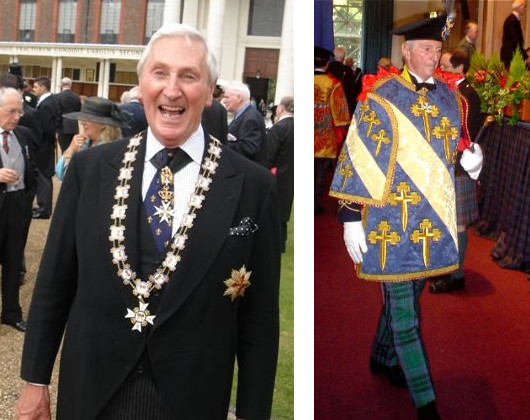
David at bi-centenary celebrations for HRH Henry Benedict Stuart, Cardinal Duke of York (left)
and as Garioch Pursuivant-of-Arms at the 27th Genealogical Congress (right)


His death puts us in mind of the loyal, Jacobite songs of Carolina Oliphant of Gask, Lady Nairne, such as Will Ye No Come Back Again, Wha'll Be King But Charlie and Charlie Is My Darlin'.

Perhaps, however, the poignant and beautiful words of her touching song The Land o' The Leal, in which a Jacobite husband comforts his grieving wife as he lies dying, are the most appropriate epitaph, reproduced below.

Land o' the Leal

I'm wearin' awa' Jean,
Like snaw-wreaths in thaw, Jean,
I'm wearin' awa'
To the land o' the leal.
There's nae sorrow there, Jean
There's neither cauld nor care, Jean,
The day's aye fair
In the land o' the leal.

To me ye hae been true Jean,
Your task's ended noo, Jean
For near kythes my view
O' the land o' the leal.
Our bonnie bairn's there, Jean,
She was baith gude and fair, Jean,
And, oh! we grud'd her sair
To the land o' the leal.

But dry that tearfu' ee, Jean,
Grieve na for her and me, Jean
Frae sin and sorrow free
I' the land o' the leal.
Now fare ye weel, may ain Jean!
This warld's cares are vain, Jean,
We'll meet and aye be fein
I' the land o' the leal.

land o' the leal = land of the loyal, i.e. heaven
cauld = cold
aye = ever
kythes = beholds
bairn = child
baith gude = both good
ee = eye
na = not
ain = own
fein = happy

Tuesday, 10 June 2008

White Rose Day - 10 June: the Royal Stuarts and St Margaret of Scotland

In the late Seventeenth Century the Jacobites took up the White Rose of York as their emblem, celebrating "White Rose Day" on 10 June, the anniversary of the birth of James III and VIII in 1688.

Traditionally the origins of the emblem are said to go back to Edmund of Langley in the 14th century, the first Duke of York and the founder of the House of York as a Cadet branch of the then ruling House of Plantagenet.

The actual symbolism behind the rose has religious connotations as it represents the Virgin Mary, who was often called the Mystical Rose of Heaven. The Yorkist rose is white in colour, because in Christian liturgical symbolism, white is the symbol of light, typifing innocence and purity, joy and glory.

During the civil wars of the 15th century, the White Rose was the symbol of Yorkist forces opposed to the rival House of Lancaster, whose symbol was the Red Rose of Lancaster. The opposition of the two roses gave the wars their name: the Wars of the Roses.

The conflict was ended by King Henry VII of England, who symbolically united the White and Red Roses to create the Tudor Rose, symbol of the Tudor dynasty.

Today is also, fittingly, the Feast Day of St Margaret, Queen of Scotland.

St Margaret, Queen of Scotland, watches as her husband, King Malcolm Canmore kisses her books of religion out of respect for her virtue and learning

Born a Saxon circa 1046 (d. November 16, 1093) and raised in Hungary, Margaret was daughter of the English prince Edward the Exile or 'Edward Outremer', and granddaughter of King Edmund Ironside of England.

She was great-niece of Saint Stephen of Hungary. When her uncle, King Edward the Confessor, died in 1066, she was living in England where her brother, Edgar Ætheling, had decided to make a claim to the vacant throne.

After the conquest of England by the Normans, the widowed Agatha decided to leave Northumberland with her children and return to the Continent, but a storm drove their ship to Scotland where her daughter, the beautiful and learned Margaret married Malcolm Canmore (King Malcolm III of Scotland – son of “the gracious Duncan”, whom Shakespeare's Macbeth murdered in his own castle).

Legend has it that, although he could not read, he would turn the leaves of her books, and kiss those which she liked best. He gave her jewel-encrusted books as presents, one of which, a book of the Gospels, richly adorned with jewels, one day dropped into a river and was according to legend miraculously recovered, and is now in the Bodleian library at Oxford.

St Margaret helped the church in Scotland and was noted for her piety and learning. She founded Dunfermline Abbey as the new burial place for Scottish kings; it was also built to enshrine her greatest treasure, a relic of the True Cross.

It is customary for Jacobites to wear the White Rose on this day in memory of the Jacobite cause, the cause of legitimate, historic, just, Christian government under the ancient Stuart dynasty, illegally ousted by treachery, revolution and a Dutch invasion.

James Stuart, de jure King James III and VIII of England, Scotland, Ireland and France, kept out of his throne after the treacherous Whig revolution and Dutch invasion that illegally cast his father, King James II, from the throne.

Prince James, the true King, was offered the throne by the revolutionary Protestants if he would abjure the Roman Catholic religion and embrace Anglicanism. "Sir", the true King replied boldly, "Nothing would induce me to abandon my religion for it is the true one".

Let his cause for sainthood be introduced!

"Bonnie Prince Charlie", Prince Charles Stuart, son of King James III and VIII

...

Saturday, 12 April 2008

Sir Walter Scott: the non-Catholic who might have been..

Sir Walter Scott of Abbotsford came from the race of Scotts of Harden, one of many war-like families on the Borders of Scotland in the Middle Ages who made raids across the border with England.

He is collaterally related to the Montagu-Douglas-Scott, Dukes of Buccleuch, the Chief of Clan Scott. This, together with a time he spent with his grandfather at his home near Dryburgh Abbey, gave Scott his great interest in the ages of faith and the ancient history of Scotland.

He fairly lived and dreamed the romance of chivalry and the ages of faith, whilst all the time remaining a member of the Episcopal Church of Scotland. In the age he lived in, he could not contemplate the great sacrifice necessary for a Scotsman of his class and background to become a Catholic, even assuming that he really wanted to.

Nevertheless, although he tries to conceal it with the usual Georgian and Victorian prejudices against the Catholic Church, there is a constant, latent hint of sympathy and sneaking admiration for the towering strength and majesty of the Catholic Church and the fierce loyalty and courage it inspires in the best of its members. Once can feel Scott secretly admiring this. There is even a palpable but hidden yearning for it throughout all his novels and poems, albeit well-concealed.

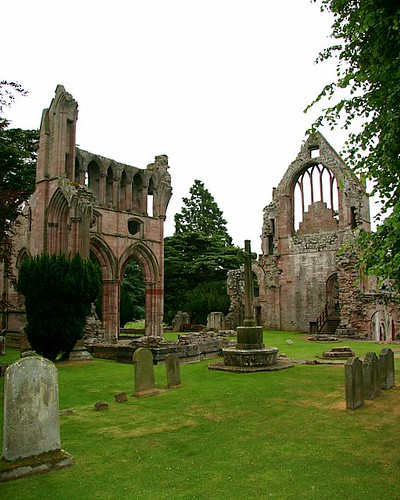
The ruins of Dryburgh Abbey, Roxburghshire, where Scott played as a child and was later buried


Scott became a lawyer, a member of the Scottish Faculty of Advocates, and later Sheriff-Depute (a Judge) of Selkirk, and eventually, with the income from his writing, he was able to build Abbotsford, his Scottish baronial style home in the Borders, which stands to this day. His fame resulted in his being raised to the baronetcy by the King.

Scott had married, in December 1797, Mlle Margaret Charlotte Charpentier, a French royalist emigre whose family had escaped from the French revolutionary terror, one of those many, often aristocratic, French exiles who did so much to re-align British views of French Catholicism. She must surely have had some influence on Scott's views of the Catholic religion.

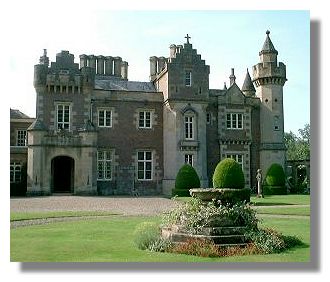
Abbotsford, the home of Sir Walter Scott, Bt


However, Scott later fell into enormous debt when the legal firm of which he had remained a sleeping partner became insolvent and he was made liable for its debts. He escaped bankruptcy by putting Abbotsford into trust with his creditors as beneficiaries and then proceeded to write his way out of debt which, astonishingly, he eventually succeeded in doing, albeit the last remaining debts were only finally cleared shortly after his death from his estate, the ever-increasing wealth of which was due to the continuing huge success of his writings.

Here is one of his many poems with a Catholic flavour:

The Bare-footed Friar

I’ll give thee, good fellow, a twelvemonth or twain,
To search Europe through, from Byzantium to Spain;
But ne’er shall you find, should you search till you tire,
So happy a man as the Barefooted Friar.

Your knight for his lady pricks forth in career,
And is brought home at even-song prick’d through with a spear;
I confess him in haste—for his lady desires
No comfort on earth save the Barefooted Friar’s.

Your monarch? —Pshaw! many a prince has been known
To barter his robes for our cowl and our gown,
But which of us e’er felt the idle desire
To exchange for a crown the grey hood of a Friar!

The Friar has walk’d out, and where’er he has gone,
The land and its fatness is mark’d for his own;
He can roam where he lists, he can stop when he tires,
For every man’s house is the Barefooted Friar’s.

He’s expected at noon, and no wight till he comes
May profane the great chair, or the porridge of plums
For the best of the cheer, and the seat by the fire,
Is the undenied right of the Barefooted Friar.

He’s expected at night, and the pasty’s made hot,
They broach the brown ale, and they fill the black pot,
And the goodwife would wish the goodman in the mire,
Ere he lack’d a soft pillow, the Barefooted Friar.

Long flourish the sandal, the cord, and the cope,
The dread of the devil and trust of the Pope;
For to gather life’s roses, unscathed by the briar,
Is granted alone to the Barefooted Friar.


It is typical Scott: he tilts, in good Protestant fashion, at the allegedly easy life of a mendicant friar, giving no credit whatever for the self-mortifications, strong discipline and nightly rising for prayer, which was then a part of the life of every good friar, but at the same time you sense that he knows he is both celebrating and short-changing the friar.

The tomb of Sir Walter Scott, Bt, in the ruins of Dryburgh Abbey, Roxburghshire


Scott completely revolutionised the attitude of the English and Lowland Scots to the Celtic Highland clans and even to the Middle Ages and, thus, indirectly to the Catholic Church. Of course Victorian Protestants still maintained their false claims against the Catholic Church but with greater softening of former rigour which must, in its way, have contributed to Catholic emancipation in these islands.


"I love"
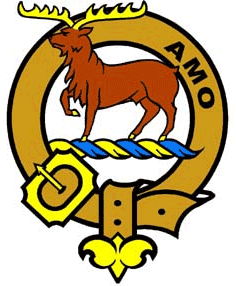
Badge of Clan Scott, containing the crest and motto of the Chief


...

Sunday, 6 April 2008

The prayers of King James II

King James II, the last reigning Catholic King of England, Scotland, and Ireland, battled with self-sacrificing zeal during his short active reign (1685-1688) to restore his realms peacefully to unity and to free Catholics from persecution and oppression.

For this he was deposed by a treacherous conspiracy of faithless Whigs, claiming to be working for the good of the country but actually lining their own pockets.

James was brought up in the Church of England but he and his wife, Lady Anne Hyde, later converted to Roman Catholicism and ever after regarded it as the true religion, even though Anne Hyde was the daughter of the Earl of Clarendon, a leading light in the Church of England.

However, James was sensible to the dangers and in no way sought to impose his religion on the unwilling. He sought, instead, to free men from religious persecution and oppression, to succour the poor and to unite the country under the banner of freedom and prosperity.

The rich, bloated, Capitalist Whigs would have none of it. Anglicanism imposed on the nation suited them and allowed them to keep their ill-gotten gains and to continue to oppress the poor.

James was defeated by a conspiracy of highly-placed traitors, including John Churchill. He retreated to France where he lived, in the odour of sanctity, a devout Catholic life often visiting the Abbey of La Trappe, where some of his former officers were now Trappist monks.

These prayers below were composed especially for him, and written by hand into his own prayer-book. In to-day's Church, they are especially relevant for those who would remain loyal to orthodox Roman Catholic doctrine and practise in the face of bigoted hostility and an renewed and increasing persecution and oppression, by government and others, on the ground of religion.

PRAYERS OF KING JAMES II AND VII OF ENGLAND, SCOTLAND, FRANCE AND IRELAND

ALMIGHTY and everlasting God! Who only workest great marvells, show the riches of Thy goodness to Thy desolate and persecuted Church, that now sits mourning in her own dust and ruins, torn by schism and stripped and spoiled by sacrilege.
And Thou, who after a long captivity didst bring back Thy people to rebuild their Temple, look upon us with the same eyes of mercy.
Restore to us once again the publick worship of Thy name, the reverent administration of Thy sacraments; raise up the King, that we may once more enter into Thy courts with praise and serve Thee with that reverence, that unity, and order, as may be acceptable in Thy sight, through Jesus Christ our Lord. AMEN.

O MOST powerful and ever blessed Lord God! Who art glorious in holiness, fearful in praises, doing wonders; we most humbly beseech Thee to look compassionately on this persecuted part of Thy Church, now driven from Thy publick altars into corners and secret closets, that Thy protection may be over us, wherever we shall be scattered, and a remnant preserved amongst us by whom Thy name may be glorified, Thy sacraments administered, and the souls of Thy servants kept up in a corrupted and corrupting generation. So we that are Thy people and sheep of Thy pasture shall give Thee thanks for ever, and will always be showing forth Thy praise from generation to generation, through Jesus Christ, our only Saviour and Redeemer. AMEN.
[Source: Donald B. Aldrich, ed., The Golden Book of Prayer, Dodd, Mead, & Co., New York 1942, pp. 224-225.]

PRAYERS FOR ENGLAND

A Devout Recommendation

I adore and glorify Thee, O blessed Trinity, God Almighty, Father, Son, and Holy Ghost; I offer myself to Thy divine Majesty, humbly beseeching Thee to take from me, and from all Thy Faithful, whatever displeaseth Thee, and give us that which is grateful in Thy Sight. Grant that we may here do what Thou commandest, and hereafter receive what Thou promisest.
To Thee, O Lord, I commend my Soul and Body, (my Wife and Children, my Father and Mother, my Brethren and Sisters) my Kinsfolk and Benefactors, my Friends and Familiars, all my nearest and dearest Relations, and all those for whom I am any ways bound to offer up my Prayers. To Thee I commend the Holy Catholic Church. To Thee I commend this Kingdom, [and our Gracious Sovereign]. Grant, O Lord, that all may know Thee, all may honour and reverence Thee, all may love Thee, and be loved by Thee. Reduce those that err, and bring then again into the Way; abolish Heresies, convert all to the true Faith, who as yet do not know Thee. Grant us, O Lord, Thy Grace, and keep us in Thy Peace; may Thy holy Will be done, and not ours: Comfort all those that lead their Lives in Sorrow, Misery, or Temptations, and mercifully relieve them in their Afflictions, Spiritual or Temporal. Lastly, I commend all to Thy holy Protection, that Thou wouldest vouchsafe to the Living Forgiveness of their sins, and to the Souls departed everlasting Rest. Amen.

The Litany of Intercession for England

Remember not, O Lord, our Offences, nor those of our Parents; neither take Thou Vengeance of our Sins.
Lord, have Mercy on us.
Christ, have Mercy on us.
Lord, have Mercy on us.
Jesus, receive our Prayers.
Lord Jesus, grant our Petitions,
O God the Father, Creator of the World, Have Mercy on England.
O God the Son, Redeemer of the World, Have Mercy on England.
O God the Holy Ghost, Protector of the World, Have Mercy on England.
O Sacred Trinity, three Persons and one God, Have Mercy on England.
Holy Mary, Mother of God, pray for England (repeat).
Holy Mary, Queen of Angels, whose powerful Intercession destroys Heresies,
Holy Mary, Virgin of Virgins, whose eminent Sanctity our Lord hath honoured with so many Miracles,
St. Michael, Prince of the Church,
St. Gabriel, glorious messenger of our Saviour's Incarnation,
St. Raphael, faithful guide of those that have lost their Way,
Holy Angel, to whose pious custody this Province is committed,
All Holy Angels, and blessed Spirits, of Heaven, who celebrate with Joy the Conversion of Sinners,
St. John Baptist, Precursor of the Messiah, and great Example of Penance,
All ye holy Patriarchs and Prophets, Friends of God, and Advancers of his Truth,
St. Peter, Prince of the Apostles, and Supreme Pastor of Christ's Sheep,
St. Paul, Doctor of the Gentiles, who of a Persecutor became a Preacher,
St. Andrew, first Disciple of Christ, and constant Lover of the Cross,
All holy Apostles and Evangelists, chief Planters of the Christian Faith, and zealous Maintainers of Catholic Unity,
St. George, our principal Patron, whose Courage remained invincible in the midst of so many Torments,
St. Alban, our first Martyr, who, for the generous charity of harbouring a Priest, was put to Death,
St. Thomas of Canterbury, who, as a faithful Shepherd, laidst down thy Life in Defence of thy Flock,
All holy Martyrs of this Nation, who voluntarily lost your Lives here, to find them again in a joyful Eternity,
St. Gregory, most vigilant Bishop of the universal Church, whose pious Zeal sent Missionaries from Rome for the conversion of our Ancestors,
St. Augustine, peculiar Apostle of this Nation, by whom our Forefathers were reclaimed from Paganism and Infidelity,
St. Bede, most venerable Confessor, by whose religious Life, and learned Writings, the Catholic Faith was eminently propagated amongst us,
All holy Bishops and Confessors, by whose Wisdom and Sanctity this Island was once a flourishing Seminary of Religion,
St. Helen, most holy Queen, and happy Mother of the first Christian Emperor,
St. Ursula, most blessed Martyr, who died in the glorious Defence of Faith and Chastity,
St. Winifred, most admirable Virgin, even in this unbelieving Generation still miraculous,
All holy Saints of this Nation, who, amidst the innumerable Joys of Heaven, still retain a particular Charity for the Conversion of your country,
All holy Saints of all Places, who, tho' divided here in several Regions, were united in the same Faith, and now enjoy one common Felicity, Be merciful, O Lord, and spare us.
Be merciful, O Lord, and hear us.

From the Dangers most justly threatening our Sins, Deliver England, O Lord.
From the Spirit of Pride, Rebellion, and Apostacy, Deliver England, O Lord.
From the Spirit of Hypocrisy, Prophaneness, and Sacrilege, Deliver England, O Lord.
From Schism, Heresy, and all Blindness of Heart, Deliver England, O Lord.
From Gluttony, Drunkenness, and the false Liberty of an undisciplin'd Life, Deliver England, O Lord.

We Sinners beseech Thee hear us.

That it will please Thee to hasten the Conversion of this, our miserable country, and re-unite them to the ancient Faith and Communion of Thy Church,
We Sinners beseech Thee hear us. (repeat)
That it would please Thee particularly to have Mercy on our Kinsfolks, Friends, and Benefactors, and open their Eyes to see the Beauty of Thy Truth, and embrace it,
That it would please Thee to incline the Hearts of all the Magistrates rightly to understand our Religion, and impartially consider our Sufferings; and how hardly soever they may deal with us, make us till with exact Fidelity to perform our Duties toward them,
That it would please Thee to comfort and strengthen Thy Servants who suffer for the Catholic Faith, and not permit the weakest of us, by any Temptation whatsoever, to fall away from Thee and Thy Truth,
That it would please Thee to assist with Thy special Grace those good Pastors who venture their Lives for their Flock, and daily augment in them the Fire of Thy Love, and the Zeal of gaining Souls,
That it would please Thee to preserve the Catholics of this Land from all Sin and Scandal, and to adorn our Lives with solid Piety, that our Enemy, seeing our good Works, may glorify Thee our heavenly Father,
That it would please Thee to grant us the grace of improving the Restraints and temporal Disadvantages we fall under, into an Occasion of Retiredness and Christian Severity; supplying our Want of public Assemblies by a greater diligence in private Devotions,
That it may please Thee to govern us by Thy good Spirit, that we may accept such Ease and Liberty, as Thou vouchsafest to bestow on us, with Gratitude, use it with Modesty, and give others to understand by our Behaviour, that nothing is pleasing to us, but so far as it tends to Thy Honour and our Neighbour's Good,
That it would please Thee to illuminate the Hearts of all Schismatics, who live out of the Church, seriously to apprehend the danger of their State, and the great Importance of eternal Salvation,
That it would please Thee to look mercifully down from Heaven on the Tears of the Afflicted, and the Blood of so many Martyrs, who have spent their Lives and suffered Death to convert us to Thee, Son of God, we beseech Thee to hear us.

O Lamb of God, that takest away the Sins of the World, Spare us, O Lord.
O Lamb of God, that takest away the Sins of the World, Hear us, O Lord.
O Lamb of God that takest away the Sins of the World, Have Mercy on us.
Lord have Mercy on us.
Christ, have Mercy on us.
Lord have Mercy on us.

Our Father, etc.
V.: And lead us not into Temptation.
R.: But deliver us from Evil. Amen.
V.: O Lord, hear our Prayers.
R.: And let our Supplications come unto Thee.

Let us Pray.

Almighty and everlasting God, whose Judgements are righteous, and Counsels unsearchable, who visitest the Iniquities of the Parents upon the Children, to the third and fourth generation, and yet at length rememberest Mercy: Forgive, we beseech Thee, the Sins of our Forefathers, and turn away Thy Wrath from their Posterity; deliver the Ignorant from being seduced by false Teachers, and the Learned from being abused by their Passions, and the whole Nation from the Spirit of Contradiction, Licentiousness, and Discord; that instead of many Divisions and Changes in Religion, under which they labour, they may again be restored to that Unity of Mind, Steadiness of Faith, and Tranquillity of Conscience, which is no where to be sought but in the Communion of Thy Church, nor possible to be found but by the Conduct of Thy Grace.
O eternal God, who in this great Deluge of Heresy, which wholly overflows, and almost covers the Face of this Land, hast vouchsafed to select a small Number for Thyself, and save them in Thy Holy Ark from the common Inundation; we praise and glorify Thy infinite Goodness, by which alone we enjoy the Comfort of a firm and settled Belief, free from the Inconstancy of those, who, having no Support but their own Fancies, float up and down awhile, and sink at last into the Gulf of Infidelity; make us sensible, O Lord, of these Thy unspeakable blessings, that as we know Thee by a sure Faith, we may love Thee with a perfect Charity; and fixing all our hopes on the joys of a future Life, patiently suffer what Thou permittest here, and still press on to what Thou promisest hereafter, thro' Jesus Christ our Lord, and only Saviour. Amen.

A Prayer to be Said Every Day in the Time of Persecution

O My Lord Jesus Christ, true God and true Man, who sufferedst an ignominious Death on the Cross for my Redemption; I humbly offer up to Thee my Soul, my Body, my Life, my Goods, and all my Fortunes, to be wholly disposed of according to Thy most blessed Will; and if it be Thy holy Pleasure that I should lose my Life or Fortunes for the profession of Thy holy Name and the Catholick Religion, Lord, I humbly and freely submit thereunto, beseeching Thee of Thy infinite Goodness and Mercy, and by the Merits of Thy bitter Death and Passion, that Thou wilt please to forgive me my Sins; give me Strength and Patience to overcome all Temptations and Adversities; pardon all my Enemies and Persecutors, and all the Injuries they have done me in Thought, Word, or Deed, and make us all Partakers of Thy heavenly Kingdom; through Jesus Christ our Lord and Saviour, who, with the Father and the Holy Ghost, liveth and reigneth one God, World without End. Amen.

Prayer for the King

V.: O Lord, save [name] our King.
R.: And hear us in the Day that we shall call upon Thee.

Let us pray.

We beseech Thee, Almighty God, that Thy Servant [name], our King, who, thro' Thy Mercy, hath the Government of this Realm committed to him, may likewise receive the Increase of all Virtues, wherewith being adorned, he may avoid the Enormity of Sin, and being rendered acceptable in Thy Sight, come at length to Thee, who art the Way, the Truth, and the Life: Who livest and reignest with God the Father, in the Unity of the Holy Ghost, one God, World without End. Amen.
[Taken from A Manual of Prayers and Other Christian Devotions: Fitted For All Persons and Occasions, dated 1755, probably printed at Preston.]


Aymez Loyauté

("Love loyalty" - the motto of the Stuarts)


...

Saturday, 5 April 2008

Our last Catholic King: James II and VII

King James II of England, France and Ireland and VII of Scotland, was our last Catholic King.

He was pushed off his throne by a treacherous conspiracy of Whigs and other traitors including, it must be added, his money-worshipping chief army commander, Lieutenant General John Churchill, later 1st Duke of Marlborough, who plotted to kidnap James after William of Orange landed with his Dutch army. Churchill, ancestor to Sir Winston, then deserted his King at a crucial point in the defence of the nation. He became the richest man in Europe through his naked treachery and base betrayal of the King to whom he had sworn a solemn oath of loyalty.

King James was forced to flee to France and the protection of King Louis XIV. He kept court at St Germain-en-Laye looking for opportunities to regain his throne but his plans were ended at the Battles of the Boyne and Aughrim in Ireland.

The gauntlet of old, Catholic England, Scotland and Ireland was later taken up by his son, James Francis Edward and his grandson, Charles Edward ("Bonnie Prince Charlie").

Bonnie Prince Charlie, flanked by Cameron of Lochiel and MacDonald of Clanranald


Recent historians have begun to paint a true picture of our last Catholic King and to expose the dishonest picture painted of him by the treacherous but victorious Whig historians whose false portrayal of James has dominated the teaching of English history for so long.

The real reason that the treacherous Whigs sought to oust him was his attempt to roll back the penal laws which so grossly oppressed Catholics and Dissenting Protestants. In his Declaration of Indulgence, James granted religious liberty to his subjects showing that he was far ahead of his contemporaries and had a much wider vision than did the bigoted Whigs who wanted to impose Anglicanism on the three kingdoms and forbid non-Anglicans from taking any part in the professions, teaching, medicine, the law or any public life and to persecute those who were not Anglicans, above all Catholics.

The Whigs feared even the slightest relaxation of the oppression of Catholics because they were convinced that this might mean that they had to disgorge some of the immense wealth that they had stolen from the Church and the monasteries and which they continued to squeeze out of the poor (as William Cobbett, an Anglican, so devastatingly shows in his History of the Protestant Reformation in England and Ireland).

The result was the beginnings of the modern world with a tiny number owning a huge, vast share of the wealth and the vast majority owning only a small part.

Here is an extract from James's last letter to his own son:

James Francis Edward, son of King James II and father to Bonnie Prince Charlie

Instructions left by King James II to his son, 1692

"If it please God to restore me (which I trust in His goodness He will do) I may then hope to settle all things so as may make it easier for you to governne all my Dominions with safty to the Monarchy, and the satisfaction of all the Subjects. No King can be happy without his Subjects be at ease, and the people be secure of enjoying their own without the King be at his ease also, and in a condition to protect them and secure his own right; therefore preserve your prerogative, but disturbe not the Subjects in their property, nor conscience, remember the great precept, Do as you would be done to, for that is the law and the Prophets. Be very carefull that none under you oppresse the people, or torment them with vexations, suits, or projects: Remember a King ought to be a Father of his people, and must have a fatherly tendernesse for them... be content with what is your own. Endeavour to settle Liberty of Conscience by a Law.

...Be never without a considerable body of Catholick troops without which you cannot be safe, then will people thanke you for Liberty of Conscience. Be not persuaded by any to depart from that.

Our Blessed Saviour whipt people out of the Temple, but I never heard he commanded any should be forced into it; tis a particular grace and favour that God Almighty shews to any, who he enlightens so as to embrasse the true Religion, tis by gentleness, instruction, and good example, people are to be gained and not frightened into it, and I make no doubt if once Liberty of Conscience be well fixed, many conversions will ensue..."


So you see, it was King James who was for freedom of conscience and liberty of religion, and the Whigs who were for bigotry, oppression and the forceful imposition of Anglicanism upon the nation by violence, unjust and odious oaths and the savage persecution of Catholics.

Yet there are still many - even some seemingly intelligent people - who think that Whigs stood for toleration and liberty of conscience.

It was, in fact, James and his followers, the Cavaliers, Jacobites and Conservatives, who really had the interests of the nation and the people at heart and who truly preserved freedom and justice for all - not the treacherous Roundheads, Whigs and so-called Liberals.

It takes a special brand of hypocrite to call himself a "Liberal" whilst grinding the face of the poor and hanging, drawing and quartering a man for his religion and his priesthood.


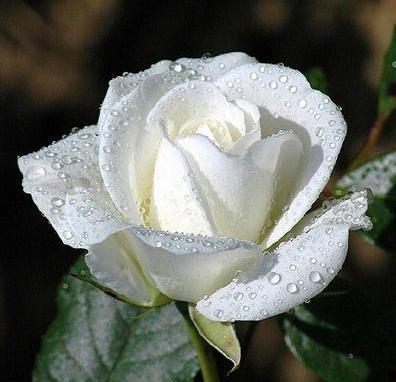
The White Rose of the Stuarts and of legitimate Catholic monarchy throughout Europe


...