Showing posts with label chivalry. Show all posts

Thursday, 9 October 2008

8 October: St Bridget of Sweden, great saint and patroness of chivalry

St Bridget (sometimes called Birgitta) - Feast day 8 October - was born about the year 1303 (by tradition on 14 June) in Upland, the chief province of Sweden, where her father, Birger Persson, Lord of Finsta, was governor and "law-speaker".

Her mother, Lady Ingeborg of Finsta, was a daughter of the governor of East Gotland.

When only seven Bridget had a vision in which our Lady placed a crown on her head, and when ten, after a sermon on the Passion, she saw in a dream Christ wounded and bleeding.

These two experiences seem to have been the formative ones of her life.

Her mother died in 1314, and she lived with an aunt until, in 1316, obediently but against her inclination, she married Ulf Gudmarsson, Lord of Närke.

They had four boys and four girls.

Two of the boys died young. Karl, the eldest, was worldly but devoted to our Lady. Birger, the second, though married, later became his mother's companion and brought her body home to Sweden from Rome to be buried. Three of the girls married: Merita and Cecilia staying in Swedish society, while Catherine lost her husband and lived with her mother. The fourth, Ingebord, became a Cistercian.

Twenty-eight years after their marriage, Lord Ulf died and Bridget went to live the penitential life she longed for near the Cistercian monastery at Alvastra. While there, she planned the Rule and Office of the Order she was called to found but which she never saw in existence. After two years, in 1344, she went to Rome, where she died on 23 July 1373. Her canonization took place only eighteen years later, on 7 October 1391 (later the Feast Day of the Holy Rosary, following the Battle of Lepanto).

St. Bridget had the gift of prophecy and worked many marvellous cures. Once widowed, she lived an ascetic life, eating very little, sleeping short hours, and praying continually. She followed a strict rule and practised every possible kind of charitable work, even reducing herself to begging.

She received constant inspirations which were either taken down by her chaplain and put into Latin, thus becoming known as her Revelations, or took the form of letters to the succeeding popes, cardinals, and secular rulers of the day, telling them of their wickedness and how to reform their lives.

Both in Sweden and in Rome she was either hated violently or loved as a saint. "Strong and full of courage", she was "homely and kind and had a laughing face".

She founded the Order of the Saviour or the Bridgettines at Vadstena in Sweden, which was richly endowed by King Magnus Eriksson of Sweden and his Queen.


Vadstena Abbey, founded by St Bridget of Sweden, stands to this day


King Magnus had been named at birth after Carolus Magnus i.e. Charlemagne the Emperor.

The Order really started after St. Bridget's death but with her daughter, St. Catherine of Sweden, as first Abbess of Vadstena.

About 1350 she went to Rome, partly to obtain from the pope the authorisation of the new order, and partly in pursuance of her self-imposed mission to elevate the moral tone of the age.


Bridgettine sisters wear a very distinctive habit and wimple with a cross over the head


She also set herself the task of persuading the Pope to return to Rome from Avignon, a task later completed by St Catherine of Siena.

She also composed a Rosary-chaplet of 69 Aves in honour of the number of years of our Lady's life, with 7 Paternosters and 7 Credos in honour of her joys and sorrows.

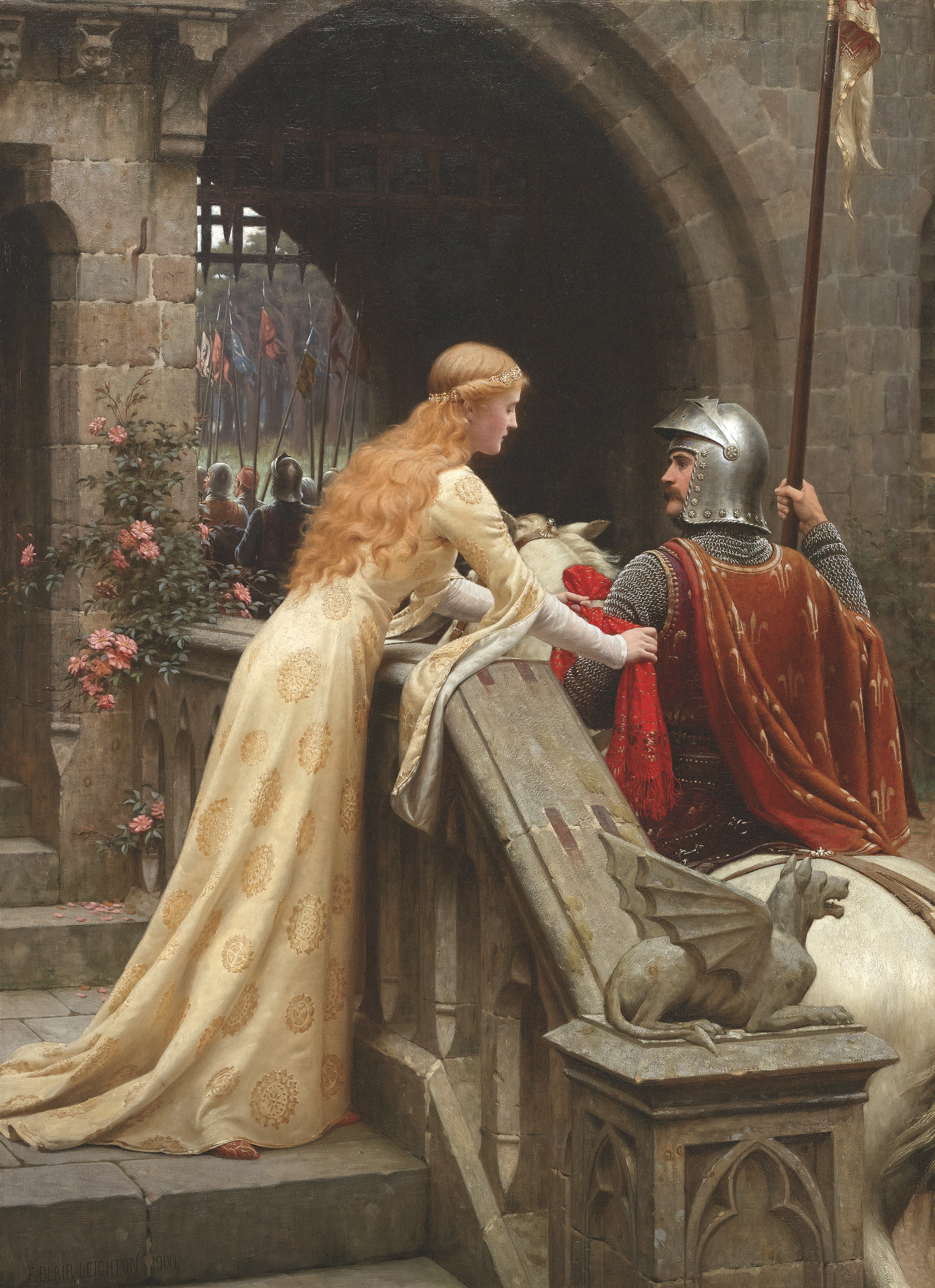
St Bridget received great revelations concerning chivalry and the great virtue of the knights that fought for Christ and Christendom. Our Lord appeared to her and said in one of her visions, taking care to emphasise what He said to her, this:

"A knight who keeps the laws of his order is exceedingly dear to me. For if it is hard for a monk to wear his heavy habit, it is harder still for a knight to wear his heavy armour".

These were the very words of our Lord to St Bridget.
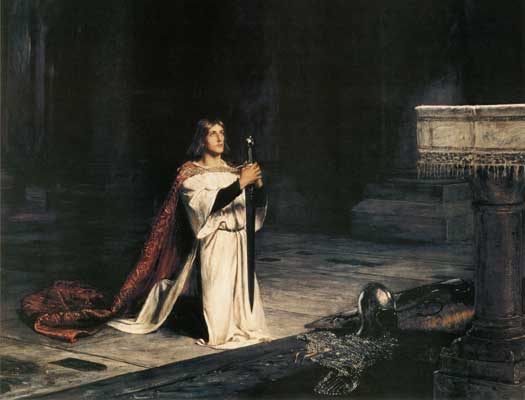


The Vigil of a knight.
St Bridget had visions from our Lord extolling Christian chivalry and the virtue of Knighthood


It was not until 1370 that Pope Urban V confirmed the rule of her order, but meanwhile Bridget had made herself universally beloved in Rome by her kindness and good works. Save for occasional pilgrimages, including one to Jerusalem in 1373, she remained in Rome until her death on 23 July 1373. She was originally buried at San Lorenzo in Panisperna before being moved to Sweden. She was canonized in 1391 by Pope Boniface IX (also confirmed by the Council of Constance in 1415).

In 1999, Pope John Paul II chose St Bridget of Sweden as Europe's co-patroness, along with St Catherine of Siena and St Teresa Benedicta of the Cross.
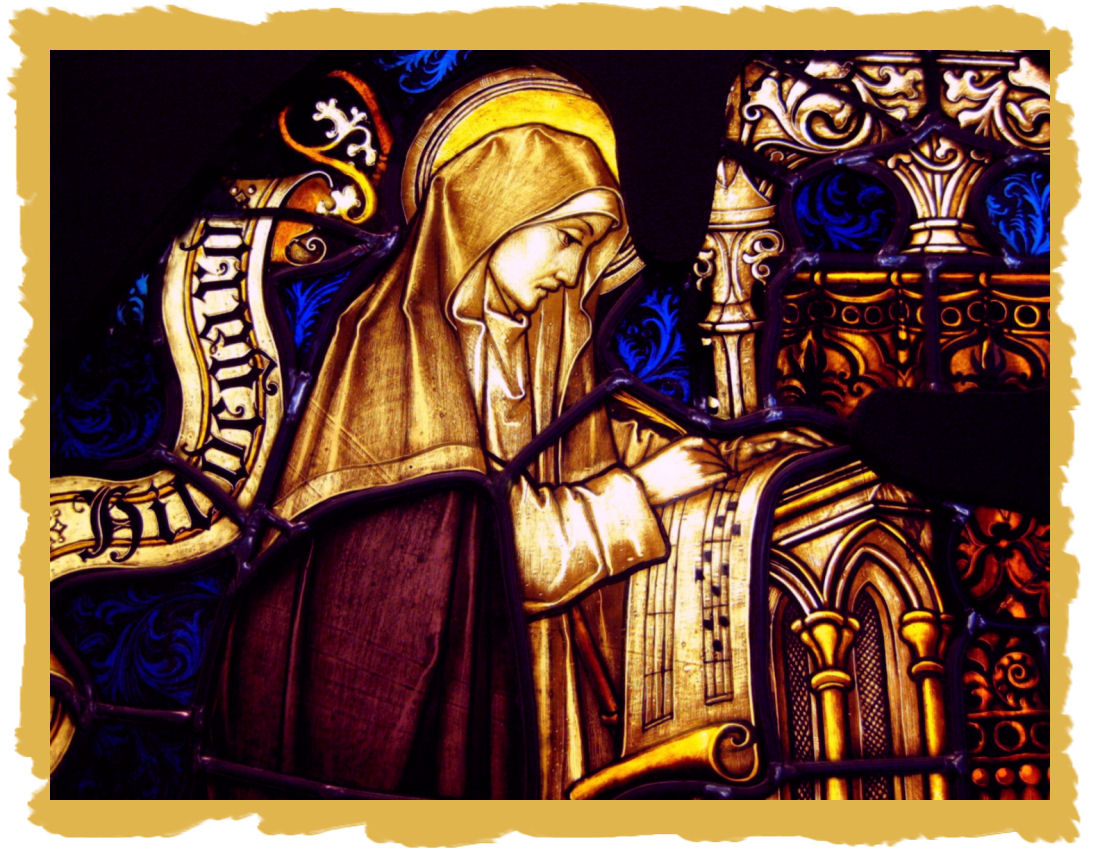


St Bridget of Sweden, pray for us!


...

Saturday, 12 April 2008

Sir Walter Scott: the non-Catholic who might have been..

Sir Walter Scott of Abbotsford came from the race of Scotts of Harden, one of many war-like families on the Borders of Scotland in the Middle Ages who made raids across the border with England.

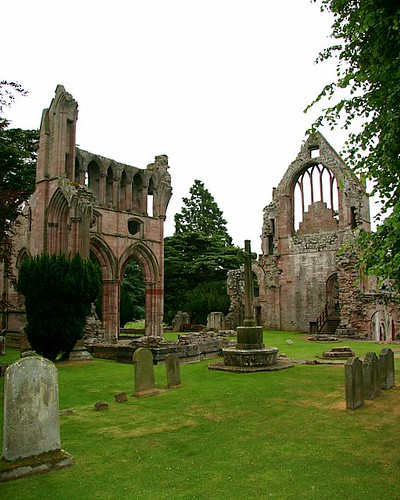
He is collaterally related to the Montagu-Douglas-Scott, Dukes of Buccleuch, the Chief of Clan Scott. This, together with a time he spent with his grandfather at his home near Dryburgh Abbey, gave Scott his great interest in the ages of faith and the ancient history of Scotland.

He fairly lived and dreamed the romance of chivalry and the ages of faith, whilst all the time remaining a member of the Episcopal Church of Scotland. In the age he lived in, he could not contemplate the great sacrifice necessary for a Scotsman of his class and background to become a Catholic, even assuming that he really wanted to.

Nevertheless, although he tries to conceal it with the usual Georgian and Victorian prejudices against the Catholic Church, there is a constant, latent hint of sympathy and sneaking admiration for the towering strength and majesty of the Catholic Church and the fierce loyalty and courage it inspires in the best of its members. Once can feel Scott secretly admiring this. There is even a palpable but hidden yearning for it throughout all his novels and poems, albeit well-concealed.

The ruins of Dryburgh Abbey, Roxburghshire, where Scott played as a child and was later buried


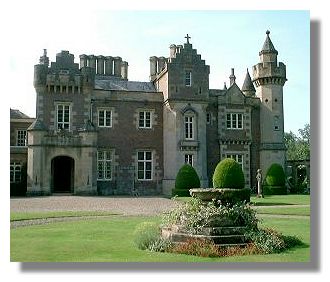
Scott became a lawyer, a member of the Scottish Faculty of Advocates, and later Sheriff-Depute (a Judge) of Selkirk, and eventually, with the income from his writing, he was able to build Abbotsford, his Scottish baronial style home in the Borders, which stands to this day. His fame resulted in his being raised to the baronetcy by the King.

Scott had married, in December 1797, Mlle Margaret Charlotte Charpentier, a French royalist emigre whose family had escaped from the French revolutionary terror, one of those many, often aristocratic, French exiles who did so much to re-align British views of French Catholicism. She must surely have had some influence on Scott's views of the Catholic religion.

Abbotsford, the home of Sir Walter Scott, Bt


However, Scott later fell into enormous debt when the legal firm of which he had remained a sleeping partner became insolvent and he was made liable for its debts. He escaped bankruptcy by putting Abbotsford into trust with his creditors as beneficiaries and then proceeded to write his way out of debt which, astonishingly, he eventually succeeded in doing, albeit the last remaining debts were only finally cleared shortly after his death from his estate, the ever-increasing wealth of which was due to the continuing huge success of his writings.

Here is one of his many poems with a Catholic flavour:

The Bare-footed Friar

I’ll give thee, good fellow, a twelvemonth or twain,
To search Europe through, from Byzantium to Spain;
But ne’er shall you find, should you search till you tire,
So happy a man as the Barefooted Friar.

Your knight for his lady pricks forth in career,
And is brought home at even-song prick’d through with a spear;
I confess him in haste—for his lady desires
No comfort on earth save the Barefooted Friar’s.

Your monarch? —Pshaw! many a prince has been known
To barter his robes for our cowl and our gown,
But which of us e’er felt the idle desire
To exchange for a crown the grey hood of a Friar!

The Friar has walk’d out, and where’er he has gone,
The land and its fatness is mark’d for his own;
He can roam where he lists, he can stop when he tires,
For every man’s house is the Barefooted Friar’s.

He’s expected at noon, and no wight till he comes
May profane the great chair, or the porridge of plums
For the best of the cheer, and the seat by the fire,
Is the undenied right of the Barefooted Friar.

He’s expected at night, and the pasty’s made hot,
They broach the brown ale, and they fill the black pot,
And the goodwife would wish the goodman in the mire,
Ere he lack’d a soft pillow, the Barefooted Friar.

Long flourish the sandal, the cord, and the cope,
The dread of the devil and trust of the Pope;
For to gather life’s roses, unscathed by the briar,
Is granted alone to the Barefooted Friar.


It is typical Scott: he tilts, in good Protestant fashion, at the allegedly easy life of a mendicant friar, giving no credit whatever for the self-mortifications, strong discipline and nightly rising for prayer, which was then a part of the life of every good friar, but at the same time you sense that he knows he is both celebrating and short-changing the friar.

The tomb of Sir Walter Scott, Bt, in the ruins of Dryburgh Abbey, Roxburghshire


Scott completely revolutionised the attitude of the English and Lowland Scots to the Celtic Highland clans and even to the Middle Ages and, thus, indirectly to the Catholic Church. Of course Victorian Protestants still maintained their false claims against the Catholic Church but with greater softening of former rigour which must, in its way, have contributed to Catholic emancipation in these islands.


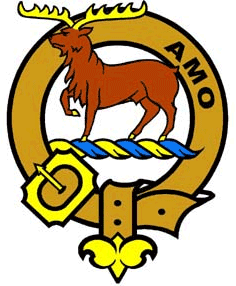
"I love"
Badge of Clan Scott, containing the crest and motto of the Chief


...

Sunday, 14 October 2007

St Bridget of Sweden: saint of chivalry

St. Bridget (sometimes called Birgitta) - Feast day 8 October - was born about the year 1303 (by tradition on June 14th) in Upland, the chief province of Sweden, where her father, Prince Birger, was governor. Her mother, Lady Ingeborg of Finsta, was a daughter of the governor of East Gothland. When only seven Bridget had a vision in which our Lady placed a crown on her head, and when ten, after a sermon on the Passion, she saw in a dream Christ wounded and bleeding. These two experiences seem to have been the formative ones of her life.

Her mother died in 1314, and she lived with an aunt until, in 1316, obediently but against her inclination, she married Ulf Gudmarsson. They had four boys and four girls. Two of the boys died young; Karl, the eldest, was worldly but devoted to our Lady; Birger, the second, though married, later became his mother's companion and brought her body home to Sweden from Rome to be buried. Three of the girls married: Merita and Cecilia staying in Swedish society, while Catherine lost her husband and lived with her mother; the fourth, Ingebord, became a Cistercian.

Twenty-eight years after their marriage, Ulf died and Bridget went to live the penitential life she longed for near the Cistercian monastery at Alvastra. While there, she planned the Rule and Office of the order she was called to found but which she never saw in existence. After two years, in 1344, she went to Rome, where she died on July 23rd, 1373. Her canonization took place only eighteen years later, on October 7th, 1391.

St. Bridget had the gift of prophecy and worked many marvellous cures. Once widowed, she lived an ascetic life, eating very little, sleeping short hours, and praying continually. She followed a strict rule and practiced every possible kind of charitable work, even reducing herself to begging. She received constant inspirations which were either taken down by her chaplain and put into Latin, thus becoming known as her "Revelations", or took the form of letters to the succeeding popes, cardinals, and secular rulers of the day, telling them of their wickedness and how to reform their lives. Both in Sweden and in Rome she was either hated violently or loved as a saint. "Strong and full of courage", she was "homely and kind and had a laughing face".

She founded the Order of the Saviour or the Bridgettines at Vadstena in Sweden, was richly endowed by King Magnus Eriksson of Sweden and his queen. King Magnus had been named at birth after Carolus Magnus i.e. Charlemagne the Emperor. The Order really started after St. Bridget's death but with her daughter, St. Catherine of Sweden, as first abbess.

About 1350 she went to Rome, partly to obtain from the pope the authorization of the new order, and partly in pursuance of her self-imposed mission to elevate the moral tone of the age.

She also set herself the task of persuading the Pope to return to Rome from Avignon, a task later completed by St Catherine of Siena.

She also composed a Rosary of 69 Aves in honour the number of years of our Lady's life, with 7 Paternosters and 7 Credos in honour of her joys and sorrows.

St Bridget received great revelations about chivalry and the great virtue of teh knights that fought for Christ and Christendom. Our Lord appeared to her and said in one of her visions, even emphasizing what He said to her, this:

"A knight who keeps the laws of his order is exceedingly dear to me. For if it is hard for a monk to wear his heavy habit, it is harder still for a knight to wear his heavy armour".

These were the very words of our Lord to St Bridget.

It was not until 1370 that Pope Urban V confirmed the rule of her order, but meanwhile Birgitta had made herself universally beloved in Rome by her kindness and good works. Save for occasional pilgrimages, including one to Jerusalem in 1373, she remained in Rome until her death on July 23, 1373. She was originally buried at San Lorenzo in Panisperna before being moved to Sweden. She was canonized in 1391 by Pope Boniface IX (also confirmed by the Council of Constance in 1415).

In 1999, Pope John Paul II chose Birgitta as Europe's co-patroness, along with St Catherine of Siena and St Teresa Benedicta of the Cross.