Sunday, 13 April 2008

Dawkins STILL can't answer...

There are several videos on Youtube claiming foul play and faking in the "Dawkins Stumped" video.

What, in fact, do they prove?

Of those I have seen so far - nothing.

Indeed, the makers of the "Dawkins Stumped" video have clearly answered their critics and set out a complete timeline of the interview.

They also answer some representative critics and do so politely and fairly despite the fact that, like so many Dawkins fans, they are rude, aggressive, ranting and immature.

As to the attempts to debunk the original footage, for instance, here's one:

http://www.youtube.com/watch?v=-uz1CiDDIq4&feature=r

It begins by saying how wonderful Dawkins is and then claims to explain why he appeared to hesitate in the "Dawkins Deluded" video clip.

We wait with bated breath for all to be revealed.

An overlay appears in the left hand corner with someone - unknown, unspecified, unexplained and unidentified - who asks the same question, a little later than the original questioner.

This is supposed to expose a fraud?

Really?

In fact, faking that overlay is far easier than faking an interview.

Then, we are told the original video is a fake by "creationists".

But how?

They don't say.

At the end they say go to another website and you'll see. Well, I don't know about others but when I tried, Google could not find it. I got a "404-Not Found" error.

So who, then, is the fake?

Note also, that they cut off the last of Dawkins' reply in which he asks for the interviewer to stop recording "so that I can just think".

That bit is cut out in the alleged expose.

In any event, Dawkins STILL cannot answer the question - an elementary one - still pauses, still looks stumped and when he is given time to come back and answer - he STILL can't!

Game, set and match, I think.

Sadly, this does appear to show an amazing dishonesty and fraud on the part of the Dawkins' supporters. They will do anything to defend him, it seems.

The original makers of the "Dawkins stumped" video set out a full timeline on their site at:

http://creationontheweb.com/content/view/5712

Whether one agrees with their creationism or not, they answer the critics fairly and provide a timeline of the interview with Dawkins.

Frankly, it is absurd for Dorky to be titled Professor of the Public Understanding of Science when the reality is that he is little more than a self-appointed publicist for ill-constructed, 3rd rate, atheist fairy tales.

If he knew a bit more science then he might be a bit more interesting. But, as it is, he's just tedious and unoriginal.

Dorky deluded: the sceptic at large, looking for answers and finding none...

...

Saturday, 12 April 2008

Dawkins simply CANNOT answer the question...

The question was:

"Can you give an example of a genetic mutation or an evolutionary process which can be seen to increase the information in the genome?"

And here is Dicky Dawkins totally stumped to such a degree that he has to ask for the camera to be turned off so he can "think":


What's up, Dick? Does the lens stop you thinking?

Basic question for a scientist, Dickie!

What an embarrassingly poor performance from the Professor of the Public Understanding of Science at Oxford University!

He then proceeds to evade the question utterly and to talk about a "common misconception" regarding evolution - as if THAT answers the question.

Of course, it simply does not answer the question.

Dorky is stumped: "Can you just stop while I think?"

In fact, there IS an answer to the question but the embarrassing part for Dawkins is that HE could not answer it.

Another bloggist/Youtuber answers for him by pointing to Downs Syndrome.

However, that is not a very brilliant contribution, either. How many people think that evolution takes place by mutations such as Downs? Most people, not least those with Downs, regard it as a disease, not a stage in the genetic evolution of Man.

One is reminded of the graffiti seen on the wall of a University Biology Department which read:

"Mutate now...and avoid the rush!"

Will somebody please take Dorky Dawkins aside and explain to him that if he goes on making such a fool of himself, even his mother will disbelieve him?


...

Clerical titles: the real story is much more interesting...

It is now common, in the English speaking world, to address parish clergy as "Father".

Actually, this is a recent invention.

From some time after the Reformation until the 1820s, or thereabouts, parish clergy were addressed as "Mister", the title of a gentleman in civil society. This title originally comes, of course, from "Master" just as the titles "Mrs" and "Miss" come from "Mistress", the title of a lady of gentility. Those not of the nobility or gentry were called only by their first and/or surname e.g. John Smith.

In Medieval and Renaissance England, a secular priest was always titled "Sir" like a knight, thus "Sir John Smith". For examples of this, see Shakespeare's plays where the secular priests are called thus e.g. Sir Christopher Urswick in Richard III, especially Act IV, Scene V, and in other of his plays. Only religious or bishops are called by the title "Father" e.g. "Right Reverend Fathers" again in Richard III, and Friar Lawrence in Romeo and Juliet, who is greeted variously as "Father", "Friar", "Brother" and "my Ghostly Confessor".

Around the 1820s the use of the title "Father" even for secular clergy became more common in England, Ireland, America and the Anglophone world, having crept in over the penal times, by virtue of the difficulty in distinguishing between secular and religious clergy, since all were constantly in hiding or operating covertly and shared a similar life and persecuted status.

In Catholic countries on the continent of Europe, however, the distinction of titles continued and still continues today. Thus, the titles for a secular cleric, broadly equivalent to "Sir" or "Mr" are as follows:

France - Monsieur l'Abbé. For a Parish Priest, Monsieur le Curé.
Italy - Signor Don followed by the name (more like "Sir" in English). For a Parish Priest, Signor Don Parroco.
Spain - Señor Don followed by the name. For a Parish Priest, Señor Don Cura.
Austria/Germany - Hochwurden (literally "most worthy" but roughly equivalent to
"your Reverence"). For a Parish Priest, Herr Pfarrer (meaning "Lord Rector" or "Sir Rector").

Signor, Señor, Monsieur or Herr are all titles of gentility, gentry or nobility, meaning "Lord". So, in fact, is "Mister" or "Mr", which is the title by which a gentleman is addressed. An higher estate is that of Knight who was addressed "Sir" which is roughly equivalent to the Spanish and Italian title Don. The middle ranking title of "Esquire" is derived from the French Esquier, or "shield-bearer", meaning one who is entitled to a coat of arms, the sign of nobility. In German, the equivalent used to be Junker and in Dutch is still the title Jonkheer.

Monsieur is unusual in that all French nobility, high or low, were called by this short title, since it means "my Lord". Moreover, the French nobility were mildly encouraged, by an old royal tradition, to treat each other as equals and so all, whether dukes or small local sieurs, called each other Monsieur. There were, of course, variations and royalty began to be called Mon Seigneur, a title used by both kings and bishops. An older title was that of Mon Sire which is broadly the same as Monsieur. From it we get the title of address "Sire" sometimes used for royalty and some Prince-bishops.

Prince-Electors of the Empire, whether clerical or lay, were styled "your Eminence" just as cardinals were, and are, and as the Grand Master of the Order of Malta still is, although not a cleric.

It is readily apparent what the Italian title Monsignor means: it means, again, "my Lord".

There are broad equivalents in all other European countries, with many variations as befits the variety of culture that flourished under the Church reflecting the "glorious liberty of the Sons of God".
Clemens-August, Archbishop Baron von Droste zu Vischering, the saintly Archbishop of Cologne (and by ancient right a Prince-Elector of the Empire) who was persecuted and imprisoned by the Prussian Protestant government for his faith and loyalty to the See of St Peter. Note the scarlet of a Prince-Elector, similar to a cardinal (he was not a cardinal, having declined the offer by the Pope).

All clergy in Major Orders were termed "Lord" or "Sir" like their lay counterparts, the gentlemen, esquires, knights, barons and nobility of Christendom.

The modern, absurdly chummy manner of introducing oneself to a complete stranger with "Hello, Bob" or "It's Fred, here" is entirely foreign to Catholic culture and tradition. Of course, close friends, clerical and lay, called each other interchangeably by their first names but the modern idea of treating every person as if they were a close friend is an invasion of the privacy of individuals and disrespectful of the right of men and women to their privacy and to respect for their individual personhood.

The title "Father" is still - in theory - preserved in non-Anglophone Catholic countries for clerical members of religious orders, just as it used to be in Anglophone countries before about 1820.

In the Catholic Church permanent deacons (that is, deacons who are not preparing for ordination to priesthood) are styled "Reverend Mr" in correspondence, although it has also become customary to address them simply as "Deacon John Smith". In fact, in former times, and still in the Eastern churches, all deacons were styled "Father Deacon Smith". The idea that permanent deacons are somehow "different" from other deacons is simply fallacious. Permanent deacons of varying kinds have existed for a long time in various forms. The Holy Roman Emperor, since the time of Emperor Charles V was always, at his coronation, ordained a permanent deacon by the Pope. In earlier times he was ordained a subdeacon.

The idea that the title "Father" was always used for priests, and only priests, is simply ahistorical. St Francis of Assisi was called "Father" by his brethren (and still is) although he was a deacon not a priest and St Benedict, likewise was called "Father" by his brethren (and still is), albeit he was not even in Major Orders. In the Middle Ages many abbots were not priests but were still called "Father" by their brethren.

The title "your Reverence" was also once much in use (and one can still occasionally hear it in Ireland).

The idea that the title or description "Reverend" is Anglican is another Anglophone fallacy resulting from poor education among Catholics.

It is used on the continent, also, e.g. Reverend pere is used in France to address clerical religious and occasionally even parish clergy; also Reverendissime Pere, or "Very Reverend Father" for an abbot or bishop.

ALL Anglican clerical titles are derived from the days when the Roman Catholic Church was the Church of England, the Ecclesia Anglicana.

Thus the title Rector means a Parish Priest and the title Vicar means a priest or cleric standing in for another cleric, often an absentee cleric, which often meant an absentee Parish Priest which is why many Anglican clergy are called Vicar. It comes from the Latin vicarius (meaning "in place of another") and is an entirely Roman Catholic title. Another example of its use is in the title "Vicar-General".

Titles like "Prebendary" are also originally Catholic and refer to "Canons Prebendary" (Canoni Prebendarii) of a Cathedral whose office attracted funds called "Prebends" (from another Latin word) which came from tithes and were to be used by the Canon for the spiritual and corporal works of mercy of the Church.

So next time you hear someone say of some traditional title "Oh, that's just Anglican!", you may correct the ill-informed person concerned and point out to them that it was, without question, Roman Catholic first.

The only thing that is peculiarly "Anglican" is their Protestant doctrine - that and nothing more. The rest is, and always was, Catholic in form, spirit and origin.


...

Sir Walter Scott: the non-Catholic who might have been..

Sir Walter Scott of Abbotsford came from the race of Scotts of Harden, one of many war-like families on the Borders of Scotland in the Middle Ages who made raids across the border with England.

He is collaterally related to the Montagu-Douglas-Scott, Dukes of Buccleuch, the Chief of Clan Scott. This, together with a time he spent with his grandfather at his home near Dryburgh Abbey, gave Scott his great interest in the ages of faith and the ancient history of Scotland.

He fairly lived and dreamed the romance of chivalry and the ages of faith, whilst all the time remaining a member of the Episcopal Church of Scotland. In the age he lived in, he could not contemplate the great sacrifice necessary for a Scotsman of his class and background to become a Catholic, even assuming that he really wanted to.

Nevertheless, although he tries to conceal it with the usual Georgian and Victorian prejudices against the Catholic Church, there is a constant, latent hint of sympathy and sneaking admiration for the towering strength and majesty of the Catholic Church and the fierce loyalty and courage it inspires in the best of its members. Once can feel Scott secretly admiring this. There is even a palpable but hidden yearning for it throughout all his novels and poems, albeit well-concealed.

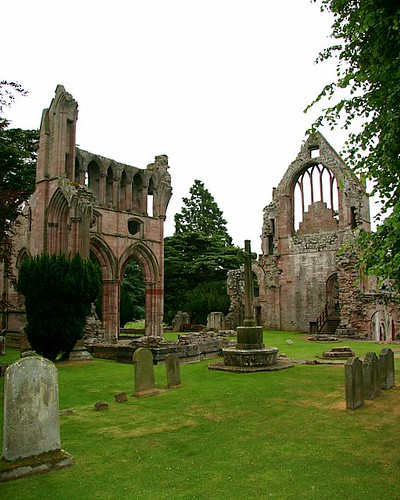
The ruins of Dryburgh Abbey, Roxburghshire, where Scott played as a child and was later buried


Scott became a lawyer, a member of the Scottish Faculty of Advocates, and later Sheriff-Depute (a Judge) of Selkirk, and eventually, with the income from his writing, he was able to build Abbotsford, his Scottish baronial style home in the Borders, which stands to this day. His fame resulted in his being raised to the baronetcy by the King.

Scott had married, in December 1797, Mlle Margaret Charlotte Charpentier, a French royalist emigre whose family had escaped from the French revolutionary terror, one of those many, often aristocratic, French exiles who did so much to re-align British views of French Catholicism. She must surely have had some influence on Scott's views of the Catholic religion.

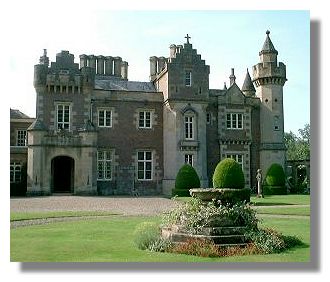
Abbotsford, the home of Sir Walter Scott, Bt


However, Scott later fell into enormous debt when the legal firm of which he had remained a sleeping partner became insolvent and he was made liable for its debts. He escaped bankruptcy by putting Abbotsford into trust with his creditors as beneficiaries and then proceeded to write his way out of debt which, astonishingly, he eventually succeeded in doing, albeit the last remaining debts were only finally cleared shortly after his death from his estate, the ever-increasing wealth of which was due to the continuing huge success of his writings.

Here is one of his many poems with a Catholic flavour:

The Bare-footed Friar

I’ll give thee, good fellow, a twelvemonth or twain,
To search Europe through, from Byzantium to Spain;
But ne’er shall you find, should you search till you tire,
So happy a man as the Barefooted Friar.

Your knight for his lady pricks forth in career,
And is brought home at even-song prick’d through with a spear;
I confess him in haste—for his lady desires
No comfort on earth save the Barefooted Friar’s.

Your monarch? —Pshaw! many a prince has been known
To barter his robes for our cowl and our gown,
But which of us e’er felt the idle desire
To exchange for a crown the grey hood of a Friar!

The Friar has walk’d out, and where’er he has gone,
The land and its fatness is mark’d for his own;
He can roam where he lists, he can stop when he tires,
For every man’s house is the Barefooted Friar’s.

He’s expected at noon, and no wight till he comes
May profane the great chair, or the porridge of plums
For the best of the cheer, and the seat by the fire,
Is the undenied right of the Barefooted Friar.

He’s expected at night, and the pasty’s made hot,
They broach the brown ale, and they fill the black pot,
And the goodwife would wish the goodman in the mire,
Ere he lack’d a soft pillow, the Barefooted Friar.

Long flourish the sandal, the cord, and the cope,
The dread of the devil and trust of the Pope;
For to gather life’s roses, unscathed by the briar,
Is granted alone to the Barefooted Friar.


It is typical Scott: he tilts, in good Protestant fashion, at the allegedly easy life of a mendicant friar, giving no credit whatever for the self-mortifications, strong discipline and nightly rising for prayer, which was then a part of the life of every good friar, but at the same time you sense that he knows he is both celebrating and short-changing the friar.

The tomb of Sir Walter Scott, Bt, in the ruins of Dryburgh Abbey, Roxburghshire


Scott completely revolutionised the attitude of the English and Lowland Scots to the Celtic Highland clans and even to the Middle Ages and, thus, indirectly to the Catholic Church. Of course Victorian Protestants still maintained their false claims against the Catholic Church but with greater softening of former rigour which must, in its way, have contributed to Catholic emancipation in these islands.


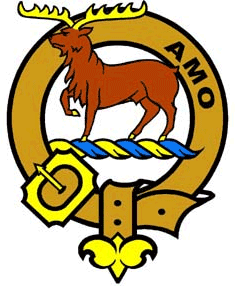
"I love"
Badge of Clan Scott, containing the crest and motto of the Chief


...

Sunday, 6 April 2008

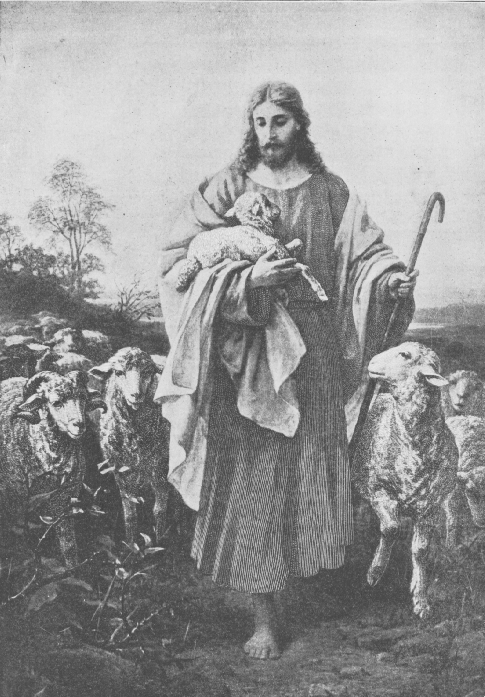
Good Shepherd Sunday

Today is Good Shepherd Sunday.

Ego sum Pastor bonus, allelúja: et cognósco oves Meas, et cognóscunt Me Meæ. Allelúja, allelúja.

I am the good Shepherd, alleluia: and I know My sheep, and Mine know Me, alleluia, alleluia.

Today's Gospel is from John 10: 11-16:

In illo témpore: Dixit Jesus Pharisæis: "Ego sum Pastor bonus. Bonus pastor ánimam suam dat pro óvibus. Mercenárius autem et qui non est pastor, cujus non sunt oves própriæ, videt lupum veniéntem, et dimíttit oves, et fugit: et lupus rapit et dispérgit oves: mercenárius autem fugit, quia mercenárius est, et non pértinet ad eum de óvibus. Ego sum Pastor bonus: et cognósco oves meas, et cognóscunt me meæ. Sicut novit me Pater, et ego agnósco Patrem: et ánimam meam pono pro óvibus meis. Et alias oves hábeo, qum non sunt ex hoc ovíli: et illas opórtet me addúcere, et vocem meam áudient, et fiat unum ovíile, et unus pastor."

At that time Jesus said to the Pharisees: "I am the good Shepherd. The good Shepherd giveth his life for his sheep. But the hireling, and he that is not the shepherd, whose own the sheep are not, seeth the wolf coming and leaveth the sheep and flieth: and the wolf catcheth and scattereth the sheep: and the hireling flieth, because he is a hireling, and he hath no care for the sheep. I am the good Shepherd: and I know Mine, and Mine know Me, as the Father knoweth Me, and I know the Father: and I lay down My life for My sheep. And other sheep I have that are not of this fold: them also I must bring, and they shall hear My voice, and there shall be one fold and one shepherd."


Take note all pastors and bishops and be not hirelings but true shepherds.

We should also note that our Lord says He has sheepthat are "not of this fold" who shall hear His voice - perhaps better than those who are currently of His Flock - and they shall become part of the Flock, too.

This should teach us to be humble and not to presume or become complacent. Some who are not currently of the Flock may be judged better than us to sit amongst the saints in Heaven.

Let us pray for them, also, and remember that the Catholic Church is for all, including those who are not yet members. It is not a convenient little club only for cradle Catholics.

God chose the Israelites but all but a few later rejected Him and he transferred His favour to the Gentiles who converted to Him and loved Him better than many of His own chosen people.


...

The prayers of King James II

King James II, the last reigning Catholic King of England, Scotland, and Ireland, battled with self-sacrificing zeal during his short active reign (1685-1688) to restore his realms peacefully to unity and to free Catholics from persecution and oppression.

For this he was deposed by a treacherous conspiracy of faithless Whigs, claiming to be working for the good of the country but actually lining their own pockets.

James was brought up in the Church of England but he and his wife, Lady Anne Hyde, later converted to Roman Catholicism and ever after regarded it as the true religion, even though Anne Hyde was the daughter of the Earl of Clarendon, a leading light in the Church of England.

However, James was sensible to the dangers and in no way sought to impose his religion on the unwilling. He sought, instead, to free men from religious persecution and oppression, to succour the poor and to unite the country under the banner of freedom and prosperity.

The rich, bloated, Capitalist Whigs would have none of it. Anglicanism imposed on the nation suited them and allowed them to keep their ill-gotten gains and to continue to oppress the poor.

James was defeated by a conspiracy of highly-placed traitors, including John Churchill. He retreated to France where he lived, in the odour of sanctity, a devout Catholic life often visiting the Abbey of La Trappe, where some of his former officers were now Trappist monks.

These prayers below were composed especially for him, and written by hand into his own prayer-book. In to-day's Church, they are especially relevant for those who would remain loyal to orthodox Roman Catholic doctrine and practise in the face of bigoted hostility and an renewed and increasing persecution and oppression, by government and others, on the ground of religion.

PRAYERS OF KING JAMES II AND VII OF ENGLAND, SCOTLAND, FRANCE AND IRELAND

ALMIGHTY and everlasting God! Who only workest great marvells, show the riches of Thy goodness to Thy desolate and persecuted Church, that now sits mourning in her own dust and ruins, torn by schism and stripped and spoiled by sacrilege.
And Thou, who after a long captivity didst bring back Thy people to rebuild their Temple, look upon us with the same eyes of mercy.
Restore to us once again the publick worship of Thy name, the reverent administration of Thy sacraments; raise up the King, that we may once more enter into Thy courts with praise and serve Thee with that reverence, that unity, and order, as may be acceptable in Thy sight, through Jesus Christ our Lord. AMEN.

O MOST powerful and ever blessed Lord God! Who art glorious in holiness, fearful in praises, doing wonders; we most humbly beseech Thee to look compassionately on this persecuted part of Thy Church, now driven from Thy publick altars into corners and secret closets, that Thy protection may be over us, wherever we shall be scattered, and a remnant preserved amongst us by whom Thy name may be glorified, Thy sacraments administered, and the souls of Thy servants kept up in a corrupted and corrupting generation. So we that are Thy people and sheep of Thy pasture shall give Thee thanks for ever, and will always be showing forth Thy praise from generation to generation, through Jesus Christ, our only Saviour and Redeemer. AMEN.
[Source: Donald B. Aldrich, ed., The Golden Book of Prayer, Dodd, Mead, & Co., New York 1942, pp. 224-225.]

PRAYERS FOR ENGLAND

A Devout Recommendation

I adore and glorify Thee, O blessed Trinity, God Almighty, Father, Son, and Holy Ghost; I offer myself to Thy divine Majesty, humbly beseeching Thee to take from me, and from all Thy Faithful, whatever displeaseth Thee, and give us that which is grateful in Thy Sight. Grant that we may here do what Thou commandest, and hereafter receive what Thou promisest.
To Thee, O Lord, I commend my Soul and Body, (my Wife and Children, my Father and Mother, my Brethren and Sisters) my Kinsfolk and Benefactors, my Friends and Familiars, all my nearest and dearest Relations, and all those for whom I am any ways bound to offer up my Prayers. To Thee I commend the Holy Catholic Church. To Thee I commend this Kingdom, [and our Gracious Sovereign]. Grant, O Lord, that all may know Thee, all may honour and reverence Thee, all may love Thee, and be loved by Thee. Reduce those that err, and bring then again into the Way; abolish Heresies, convert all to the true Faith, who as yet do not know Thee. Grant us, O Lord, Thy Grace, and keep us in Thy Peace; may Thy holy Will be done, and not ours: Comfort all those that lead their Lives in Sorrow, Misery, or Temptations, and mercifully relieve them in their Afflictions, Spiritual or Temporal. Lastly, I commend all to Thy holy Protection, that Thou wouldest vouchsafe to the Living Forgiveness of their sins, and to the Souls departed everlasting Rest. Amen.

The Litany of Intercession for England

Remember not, O Lord, our Offences, nor those of our Parents; neither take Thou Vengeance of our Sins.
Lord, have Mercy on us.
Christ, have Mercy on us.
Lord, have Mercy on us.
Jesus, receive our Prayers.
Lord Jesus, grant our Petitions,
O God the Father, Creator of the World, Have Mercy on England.
O God the Son, Redeemer of the World, Have Mercy on England.
O God the Holy Ghost, Protector of the World, Have Mercy on England.
O Sacred Trinity, three Persons and one God, Have Mercy on England.
Holy Mary, Mother of God, pray for England (repeat).
Holy Mary, Queen of Angels, whose powerful Intercession destroys Heresies,
Holy Mary, Virgin of Virgins, whose eminent Sanctity our Lord hath honoured with so many Miracles,
St. Michael, Prince of the Church,
St. Gabriel, glorious messenger of our Saviour's Incarnation,
St. Raphael, faithful guide of those that have lost their Way,
Holy Angel, to whose pious custody this Province is committed,
All Holy Angels, and blessed Spirits, of Heaven, who celebrate with Joy the Conversion of Sinners,
St. John Baptist, Precursor of the Messiah, and great Example of Penance,
All ye holy Patriarchs and Prophets, Friends of God, and Advancers of his Truth,
St. Peter, Prince of the Apostles, and Supreme Pastor of Christ's Sheep,
St. Paul, Doctor of the Gentiles, who of a Persecutor became a Preacher,
St. Andrew, first Disciple of Christ, and constant Lover of the Cross,
All holy Apostles and Evangelists, chief Planters of the Christian Faith, and zealous Maintainers of Catholic Unity,
St. George, our principal Patron, whose Courage remained invincible in the midst of so many Torments,
St. Alban, our first Martyr, who, for the generous charity of harbouring a Priest, was put to Death,
St. Thomas of Canterbury, who, as a faithful Shepherd, laidst down thy Life in Defence of thy Flock,
All holy Martyrs of this Nation, who voluntarily lost your Lives here, to find them again in a joyful Eternity,
St. Gregory, most vigilant Bishop of the universal Church, whose pious Zeal sent Missionaries from Rome for the conversion of our Ancestors,
St. Augustine, peculiar Apostle of this Nation, by whom our Forefathers were reclaimed from Paganism and Infidelity,
St. Bede, most venerable Confessor, by whose religious Life, and learned Writings, the Catholic Faith was eminently propagated amongst us,
All holy Bishops and Confessors, by whose Wisdom and Sanctity this Island was once a flourishing Seminary of Religion,
St. Helen, most holy Queen, and happy Mother of the first Christian Emperor,
St. Ursula, most blessed Martyr, who died in the glorious Defence of Faith and Chastity,
St. Winifred, most admirable Virgin, even in this unbelieving Generation still miraculous,
All holy Saints of this Nation, who, amidst the innumerable Joys of Heaven, still retain a particular Charity for the Conversion of your country,
All holy Saints of all Places, who, tho' divided here in several Regions, were united in the same Faith, and now enjoy one common Felicity, Be merciful, O Lord, and spare us.
Be merciful, O Lord, and hear us.

From the Dangers most justly threatening our Sins, Deliver England, O Lord.
From the Spirit of Pride, Rebellion, and Apostacy, Deliver England, O Lord.
From the Spirit of Hypocrisy, Prophaneness, and Sacrilege, Deliver England, O Lord.
From Schism, Heresy, and all Blindness of Heart, Deliver England, O Lord.
From Gluttony, Drunkenness, and the false Liberty of an undisciplin'd Life, Deliver England, O Lord.

We Sinners beseech Thee hear us.

That it will please Thee to hasten the Conversion of this, our miserable country, and re-unite them to the ancient Faith and Communion of Thy Church,
We Sinners beseech Thee hear us. (repeat)
That it would please Thee particularly to have Mercy on our Kinsfolks, Friends, and Benefactors, and open their Eyes to see the Beauty of Thy Truth, and embrace it,
That it would please Thee to incline the Hearts of all the Magistrates rightly to understand our Religion, and impartially consider our Sufferings; and how hardly soever they may deal with us, make us till with exact Fidelity to perform our Duties toward them,
That it would please Thee to comfort and strengthen Thy Servants who suffer for the Catholic Faith, and not permit the weakest of us, by any Temptation whatsoever, to fall away from Thee and Thy Truth,
That it would please Thee to assist with Thy special Grace those good Pastors who venture their Lives for their Flock, and daily augment in them the Fire of Thy Love, and the Zeal of gaining Souls,
That it would please Thee to preserve the Catholics of this Land from all Sin and Scandal, and to adorn our Lives with solid Piety, that our Enemy, seeing our good Works, may glorify Thee our heavenly Father,
That it would please Thee to grant us the grace of improving the Restraints and temporal Disadvantages we fall under, into an Occasion of Retiredness and Christian Severity; supplying our Want of public Assemblies by a greater diligence in private Devotions,
That it may please Thee to govern us by Thy good Spirit, that we may accept such Ease and Liberty, as Thou vouchsafest to bestow on us, with Gratitude, use it with Modesty, and give others to understand by our Behaviour, that nothing is pleasing to us, but so far as it tends to Thy Honour and our Neighbour's Good,
That it would please Thee to illuminate the Hearts of all Schismatics, who live out of the Church, seriously to apprehend the danger of their State, and the great Importance of eternal Salvation,
That it would please Thee to look mercifully down from Heaven on the Tears of the Afflicted, and the Blood of so many Martyrs, who have spent their Lives and suffered Death to convert us to Thee, Son of God, we beseech Thee to hear us.

O Lamb of God, that takest away the Sins of the World, Spare us, O Lord.
O Lamb of God, that takest away the Sins of the World, Hear us, O Lord.
O Lamb of God that takest away the Sins of the World, Have Mercy on us.
Lord have Mercy on us.
Christ, have Mercy on us.
Lord have Mercy on us.

Our Father, etc.
V.: And lead us not into Temptation.
R.: But deliver us from Evil. Amen.
V.: O Lord, hear our Prayers.
R.: And let our Supplications come unto Thee.

Let us Pray.

Almighty and everlasting God, whose Judgements are righteous, and Counsels unsearchable, who visitest the Iniquities of the Parents upon the Children, to the third and fourth generation, and yet at length rememberest Mercy: Forgive, we beseech Thee, the Sins of our Forefathers, and turn away Thy Wrath from their Posterity; deliver the Ignorant from being seduced by false Teachers, and the Learned from being abused by their Passions, and the whole Nation from the Spirit of Contradiction, Licentiousness, and Discord; that instead of many Divisions and Changes in Religion, under which they labour, they may again be restored to that Unity of Mind, Steadiness of Faith, and Tranquillity of Conscience, which is no where to be sought but in the Communion of Thy Church, nor possible to be found but by the Conduct of Thy Grace.
O eternal God, who in this great Deluge of Heresy, which wholly overflows, and almost covers the Face of this Land, hast vouchsafed to select a small Number for Thyself, and save them in Thy Holy Ark from the common Inundation; we praise and glorify Thy infinite Goodness, by which alone we enjoy the Comfort of a firm and settled Belief, free from the Inconstancy of those, who, having no Support but their own Fancies, float up and down awhile, and sink at last into the Gulf of Infidelity; make us sensible, O Lord, of these Thy unspeakable blessings, that as we know Thee by a sure Faith, we may love Thee with a perfect Charity; and fixing all our hopes on the joys of a future Life, patiently suffer what Thou permittest here, and still press on to what Thou promisest hereafter, thro' Jesus Christ our Lord, and only Saviour. Amen.

A Prayer to be Said Every Day in the Time of Persecution

O My Lord Jesus Christ, true God and true Man, who sufferedst an ignominious Death on the Cross for my Redemption; I humbly offer up to Thee my Soul, my Body, my Life, my Goods, and all my Fortunes, to be wholly disposed of according to Thy most blessed Will; and if it be Thy holy Pleasure that I should lose my Life or Fortunes for the profession of Thy holy Name and the Catholick Religion, Lord, I humbly and freely submit thereunto, beseeching Thee of Thy infinite Goodness and Mercy, and by the Merits of Thy bitter Death and Passion, that Thou wilt please to forgive me my Sins; give me Strength and Patience to overcome all Temptations and Adversities; pardon all my Enemies and Persecutors, and all the Injuries they have done me in Thought, Word, or Deed, and make us all Partakers of Thy heavenly Kingdom; through Jesus Christ our Lord and Saviour, who, with the Father and the Holy Ghost, liveth and reigneth one God, World without End. Amen.

Prayer for the King

V.: O Lord, save [name] our King.
R.: And hear us in the Day that we shall call upon Thee.

Let us pray.

We beseech Thee, Almighty God, that Thy Servant [name], our King, who, thro' Thy Mercy, hath the Government of this Realm committed to him, may likewise receive the Increase of all Virtues, wherewith being adorned, he may avoid the Enormity of Sin, and being rendered acceptable in Thy Sight, come at length to Thee, who art the Way, the Truth, and the Life: Who livest and reignest with God the Father, in the Unity of the Holy Ghost, one God, World without End. Amen.
[Taken from A Manual of Prayers and Other Christian Devotions: Fitted For All Persons and Occasions, dated 1755, probably printed at Preston.]


Aymez Loyauté

("Love loyalty" - the motto of the Stuarts)


...

Saturday, 5 April 2008

Our last Catholic King: James II and VII

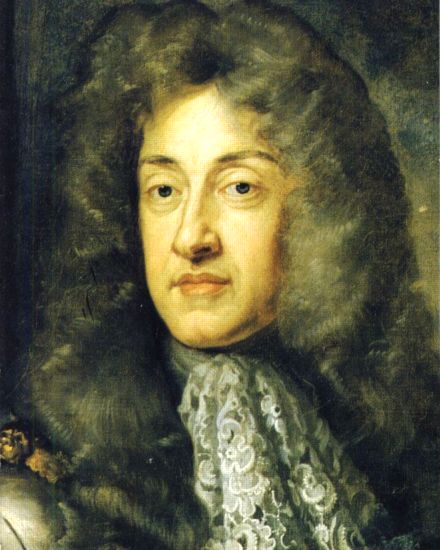
King James II of England, France and Ireland and VII of Scotland, was our last Catholic King.

He was pushed off his throne by a treacherous conspiracy of Whigs and other traitors including, it must be added, his money-worshipping chief army commander, Lieutenant General John Churchill, later 1st Duke of Marlborough, who plotted to kidnap James after William of Orange landed with his Dutch army. Churchill, ancestor to Sir Winston, then deserted his King at a crucial point in the defence of the nation. He became the richest man in Europe through his naked treachery and base betrayal of the King to whom he had sworn a solemn oath of loyalty.

King James was forced to flee to France and the protection of King Louis XIV. He kept court at St Germain-en-Laye looking for opportunities to regain his throne but his plans were ended at the Battles of the Boyne and Aughrim in Ireland.

The gauntlet of old, Catholic England, Scotland and Ireland was later taken up by his son, James Francis Edward and his grandson, Charles Edward ("Bonnie Prince Charlie").

Bonnie Prince Charlie, flanked by Cameron of Lochiel and MacDonald of Clanranald


Recent historians have begun to paint a true picture of our last Catholic King and to expose the dishonest picture painted of him by the treacherous but victorious Whig historians whose false portrayal of James has dominated the teaching of English history for so long.

The real reason that the treacherous Whigs sought to oust him was his attempt to roll back the penal laws which so grossly oppressed Catholics and Dissenting Protestants. In his Declaration of Indulgence, James granted religious liberty to his subjects showing that he was far ahead of his contemporaries and had a much wider vision than did the bigoted Whigs who wanted to impose Anglicanism on the three kingdoms and forbid non-Anglicans from taking any part in the professions, teaching, medicine, the law or any public life and to persecute those who were not Anglicans, above all Catholics.

The Whigs feared even the slightest relaxation of the oppression of Catholics because they were convinced that this might mean that they had to disgorge some of the immense wealth that they had stolen from the Church and the monasteries and which they continued to squeeze out of the poor (as William Cobbett, an Anglican, so devastatingly shows in his History of the Protestant Reformation in England and Ireland).

The result was the beginnings of the modern world with a tiny number owning a huge, vast share of the wealth and the vast majority owning only a small part.

Here is an extract from James's last letter to his own son:

James Francis Edward, son of King James II and father to Bonnie Prince Charlie

Instructions left by King James II to his son, 1692

"If it please God to restore me (which I trust in His goodness He will do) I may then hope to settle all things so as may make it easier for you to governne all my Dominions with safty to the Monarchy, and the satisfaction of all the Subjects. No King can be happy without his Subjects be at ease, and the people be secure of enjoying their own without the King be at his ease also, and in a condition to protect them and secure his own right; therefore preserve your prerogative, but disturbe not the Subjects in their property, nor conscience, remember the great precept, Do as you would be done to, for that is the law and the Prophets. Be very carefull that none under you oppresse the people, or torment them with vexations, suits, or projects: Remember a King ought to be a Father of his people, and must have a fatherly tendernesse for them... be content with what is your own. Endeavour to settle Liberty of Conscience by a Law.

...Be never without a considerable body of Catholick troops without which you cannot be safe, then will people thanke you for Liberty of Conscience. Be not persuaded by any to depart from that.

Our Blessed Saviour whipt people out of the Temple, but I never heard he commanded any should be forced into it; tis a particular grace and favour that God Almighty shews to any, who he enlightens so as to embrasse the true Religion, tis by gentleness, instruction, and good example, people are to be gained and not frightened into it, and I make no doubt if once Liberty of Conscience be well fixed, many conversions will ensue..."


So you see, it was King James who was for freedom of conscience and liberty of religion, and the Whigs who were for bigotry, oppression and the forceful imposition of Anglicanism upon the nation by violence, unjust and odious oaths and the savage persecution of Catholics.

Yet there are still many - even some seemingly intelligent people - who think that Whigs stood for toleration and liberty of conscience.

It was, in fact, James and his followers, the Cavaliers, Jacobites and Conservatives, who really had the interests of the nation and the people at heart and who truly preserved freedom and justice for all - not the treacherous Roundheads, Whigs and so-called Liberals.

It takes a special brand of hypocrite to call himself a "Liberal" whilst grinding the face of the poor and hanging, drawing and quartering a man for his religion and his priesthood.


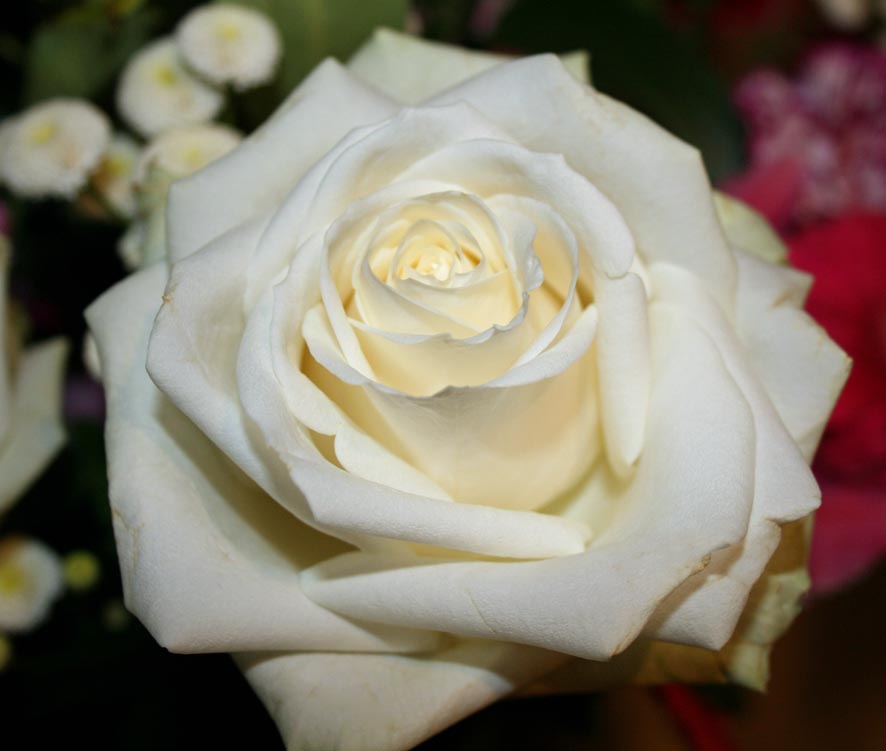
The White Rose of the Stuarts and of legitimate Catholic monarchy throughout Europe


...