Showing posts with label Viva Cristo Rey. Show all posts

Sunday, 31 October 2010

Ave Christus Rex! Hail Christ the King!

Ave Christus Rex!

The Feast of Christ the King


Munkácsy Mihály. Ecce Homo. 1896.


Ecce Homo!

"Behold the Man!"

"Then therefore, Pilate took Jesus, and scourged him. And the soldiers platting a crown of thorns, put it upon his head; and they put on him a purple garment. And they came to him, and said:

Hail, King of the Jews;


and they gave him blows. Pilate therefore went forth again, and saith to them: Behold, I bring him forth unto you, that you may know that I find no cause in him. (Jesus therefore came forth, bearing the crown of thorns and the purple garment.) And he saith to them:

Behold the Man!"


[John 19:1-5]


Diego Velazquez. The Crucifixion or Christ of San Placido. 1630.


Regnavit a ligno Deus

"God hath ruled us from a tree"

[Vexilla Regis, Venantius Fortunatus]


Christos Pantokratoros (Christ, ruler of all), ancient Byzantine ikon.


Rex regum et Dominus dominantium

"King of kings and Lord of lords"

[Revelation 19:16]


Dignus est Agnus qui occisus est, accipere virtutem, et divinitatem, et sapientem, et fortiudinem, et honorem. Ipsi gloria et imperium in saecula saeculorum. Amen.

[Revelation 5: 12, 13, Introit for the Mass of Christ the King]

"Worthy is the Lamb that was slain to receive power, and riches, and wisdom, and strength, and honour, and glory, and blessing...Blessing, and honour, and glory, and power, be unto Him that sitteth upon the throne, and unto the Lamb for ever and ever."

Dixit itaque ei Pilatus: ergo Rex es tu? Respondit Jesus: tu dicis quia Rex sum ego. Ego in hoc natus sum, et ad hoc veni in mundum, ut testimonium perhibeam veritati: omnis qui est ex veritate, audit vocem meam.
[John 18, Gospel for the Mass of Christ the King]

"Pilate therefore said to Him: art Thou a king then? Jesus answered: thou sayest that I am a king. For this was I born, and for this came I into the world, that I should give testimony to the truth. Everyone that is of the truth heareth my voice".


"And I heard as it were the voice of a great multitude, and as the voice of many waters, and as the voice of mighty thunderings, saying, Alleluia: for the Lord God omnipotent reigneth."
[Revelation 19:6]

"And the seventh angel sounded; and there were great voices in heaven, saying, The kingdoms of this world are become the kingdoms of our Lord, and of His Christ; and He shall reign for ever and ever."
[Revelation 11:15]

"And He hath on His vesture and on His thigh a name written, KING OF KINGS, LORD OF LORDS."
[Revelation 19:16]

"For unto Us a Child is born, unto Us a Son is given: and the government shall be upon His shoulder: and His name shall be called Wonderful, Counsellor, The mighty God, The everlasting Father, The Prince of Peace".
[Isaiah 9:6]


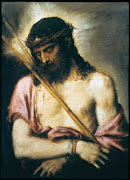
Jusepe de Ribera. Christ in the Crown of Thorns.


The Kingship of Christ is not like the kingship of pagans, heathens, unbelievers and gentiles. The Kingship of Christ is the kingship of a God-King-Priest Who suffers for the sake of his subjects whom He considers to be His very own children.

His crown is the Crown of Thorns, His sceptre is the Reed of humility, His royal cloak is the Purple Robe of suffering, for a royal girdle He is bound with the Bonds of servitude, His white Seamless Garment of purity and integrity is stripped from Him in public, His subjects mock Him, His servants desert Him, His people for whom He suffers and dies reject Him, His path is a Way of the Cross and His greatest work is Crucifixion as a common criminal.

Behold the King Who is a servant to the meanest of His people!

In so suffering, this great King gives us a model for all Christian leadership - paternal, royal, priestly, loving, unselfish, all-suffering, all-giving and all-sacrificing.

This is how all Christian kings and fathers must conduct themselves. For kings are fathers and fathers are kings, their subjects are children and their children are subjects - to be loved, not oppressed; to be formed, not neglected; to be nourished, not abused.

For these little ones, a king and a father sacrifices all he has and, above all, himself.

That is the meaning of Christian kingship, fatherhood and leadership.


"He saith to them: My chalice indeed you shall drink; but to sit on my right or left hand, is not mine to give to you, but to them for whom it is prepared by my Father. And the ten hearing it, were moved with indignation against the two brethren. But Jesus called them to him, and said: You know that the princes of the Gentiles lord it over them; and they that are the greater, exercise power upon them. It shall not be so among you: but whosoever will be the greater among you, let him be your minister:

And he that will be first among you, shall be your servant.

Even as the Son of man is not come to be ministered unto, but to minister, and to give his life a redemption for many."
[Matt 20:23-28]


But how few among us - even among us Christians - understands this meaning of Christian leadership? So few. They still think - like pagans - either that leadership and earthly power are useful means to enrich oneself and lord it over others or else, equally falsely, they think they are merely evil, which is to say the same thing.

It is false.

Others foolishly think that it is degrading to be a servant and better to be rich, powerful, and influential, not so as to be a servant, but so as to serve oneself and oppress and humiliate others.

In fact, kingship or leadership is given by God to men to serve others and to sacrifice oneself for the good of others, as Christ the King did for us. The role of Christian leader is one of suffering and self-sacrifice - not selfishness and self-aggrandisement. It is a most noble and holy calling and we must re-learn to regard it as such.

Woe betide those who use power and rule for themselves and not for others!
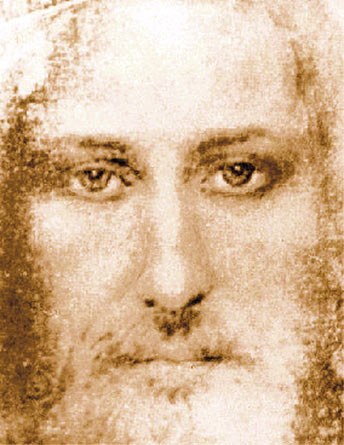


The Face of JESUS CHRIST on the Shroud of Turin - the face of love.


And so we must return to the Social Kingship of Jesus Christ...

"19. When once men recognize, both in private and in public life, that Christ is King, society will at last receive the great blessings of real liberty, well-ordered discipline, peace and harmony.

Our Lord's regal office invests the human authority of princes and rulers with a religious significance; it ennobles the citizen's duty of obedience. It is for this reason that St. Paul, while bidding wives revere Christ in their husbands, and slaves respect Christ in their masters, warns them to give obedience to them not as men, but as the vicegerents of Christ; for it is not meet that men redeemed by Christ should serve their fellow-men.

'You are bought with a price; be not made the bond-slaves of men'.

If princes and magistrates duly elected are filled with the persuasion that they rule, not by their own right, but by the mandate and in the place of the Divine King, they will exercise their authority piously and wisely, and they will make laws and administer them, having in view the common good and also the human dignity of their subjects. The result will be a stable peace and tranquillity, for there will be no longer any cause of discontent.

Men will see in their king or in their rulers men like themselves, perhaps unworthy or open to criticism, but they will not on that account refuse obedience if they see reflected in them the authority of Christ God and Man.

Peace and harmony, too, will result; for with the spread and the universal extent of the Kingdom of Christ men will become more and more conscious of the link that binds them together, and thus many conflicts will be either prevented entirely or at least their bitterness will be diminished.
...
28. We further ordain that the dedication of mankind to the Sacred Heart of Jesus, which Our predecessor of saintly memory, Pope Pius X, commanded to be renewed yearly, be made annually on that day."

[Pope Pius IX, Quas Primas, Encyclical letter establishing the Feast of Christ the King, 1925.]


Hail Christ the King!


...

Sunday, 25 October 2009

Ave Christus Rex! Viva Christo Rey! Hail Christ the King!

Ave Christus Rex!

The Feast of Christ the King


Munkácsy Mihály. Ecce Homo. 1896.


Ecce Homo!

"Behold the Man!"

"Then therefore, Pilate took Jesus, and scourged him. And the soldiers platting a crown of thorns, put it upon his head; and they put on him a purple garment. And they came to him, and said:

Hail, King of the Jews;


and they gave him blows. Pilate therefore went forth again, and saith to them: Behold, I bring him forth unto you, that you may know that I find no cause in him. (Jesus therefore came forth, bearing the crown of thorns and the purple garment.) And he saith to them:

Behold the Man!"


[John 19:1-5]


Diego Velazquez. The Crucifixion or Christ of San Placido. 1630.


Regnavit a ligno Deus

"God hath ruled us from a tree"

[Vexilla Regis, Venantius Fortunatus]


Christos Pantokratoros (Christ, ruler of all), ancient Byzantine ikon.


Rex regum et Dominus dominantium

"King of kings and Lord of lords"

[Revelation 19:16]


Dignus est Agnus qui occisus est, accipere virtutem, et divinitatem, et sapientem, et fortiudinem, et honorem. Ipsi gloria et imperium in saecula saeculorum. Amen.

[Revelation 5: 12, 13, Introit for the Mass of Christ the King]

"Worthy is the Lamb that was slain to receive power, and riches, and wisdom, and strength, and honour, and glory, and blessing...Blessing, and honour, and glory, and power, be unto Him that sitteth upon the throne, and unto the Lamb for ever and ever."

Dixit itaque ei Pilatus: ergo Rex es tu? Respondit Jesus: tu dicis quia Rex sum ego. Ego in hoc natus sum, et ad hoc veni in mundum, ut testimonium perhibeam veritati: omnis qui est ex veritate, audit vocem meam.
[John 18, Gospel for the Mass of Christ the King]

"Pilate therefore said to Him: art Thou a king then? Jesus answered: thou sayest that I am a king. For this was I born, and for this came I into the world, that I should give testimony to the truth. Everyone that is of the truth heareth my voice".


"And I heard as it were the voice of a great multitude, and as the voice of many waters, and as the voice of mighty thunderings, saying, Alleluia: for the Lord God omnipotent reigneth."
[Revelation 19:6]

"And the seventh angel sounded; and there were great voices in heaven, saying, The kingdoms of this world are become the kingdoms of our Lord, and of His Christ; and He shall reign for ever and ever."
[Revelation 11:15]

"And He hath on His vesture and on His thigh a name written, KING OF KINGS, LORD OF LORDS."
[Revelation 19:16]

"For unto Us a Child is born, unto Us a Son is given: and the government shall be upon His shoulder: and His name shall be called Wonderful, Counsellor, The mighty God, The everlasting Father, The Prince of Peace".
[Isaiah 9:6]


Jusepe de Ribera. Christ in the Crown of Thorns.


The Kingship of Christ is not like the kingship of pagans, heathens, unbelievers and gentiles. The Kingship of Christ is the kingship of a God-King-Priest Who suffers for the sake of his subjects whom He considers to be His very own children.

His crown is the Crown of Thorns, His sceptre is the Reed of humility, His royal cloak is the Purple Robe of suffering, for a royal girdle He is bound with the Bonds of servitude, His white Seamless Garment of purity and integrity is stripped from Him in public, His subjects mock Him, His servants desert Him, His people for whom He suffers and dies reject Him, His path is a Way of the Cross and His greatest work is Crucifixion as a common criminal.

Behold the King Who is a servant to the meanest of His people!

In so suffering, this great King gives us a model for all Christian leadership - paternal, royal, priestly, loving, unselfish, all-suffering, all-giving and all-sacrificing.

This is how all Christian kings and fathers must conduct themselves. For kings are fathers and fathers are kings, their subjects are children and their children are subjects - to be loved, not oppressed; to be formed, not neglected; to be nourished, not abused.

For these little ones, a king and a father sacrifices all he has and, above all, himself.

That is the meaning of Christian kingship, fatherhood and leadership.


"He saith to them: My chalice indeed you shall drink; but to sit on my right or left hand, is not mine to give to you, but to them for whom it is prepared by my Father. And the ten hearing it, were moved with indignation against the two brethren. But Jesus called them to him, and said: You know that the princes of the Gentiles lord it over them; and they that are the greater, exercise power upon them. It shall not be so among you: but whosoever will be the greater among you, let him be your minister:

And he that will be first among you, shall be your servant.

Even as the Son of man is not come to be ministered unto, but to minister, and to give his life a redemption for many."
[Matt 20:23-28]


But how few among us - even among us Christians - understands this meaning of Christian leadership? So few. They still think - like pagans - either that leadership and earthly power are useful means to enrich oneself and lord it over others or else, equally falsely, they think they are merely evil, which is to say the same thing.

It is false.

Others foolishly think that it is degrading to be a servant and better to be rich, powerful, and influential, not so as to be a servant, but so as to serve oneself and oppress and humiliate others.

In fact, kingship or leadership is given by God to men to serve others and to sacrifice oneself for the good of others, as Christ the King did for us. The role of Christian leader is one of suffering and self-sacrifice - not selfishness and self-aggrandisement. It is a most noble and holy calling and we must re-learn to regard it as such.

Woe betide those who use power and rule for themselves and not for others!


The Face of JESUS CHRIST on the Shroud of Turin - the face of love.


And so we must return to the Social Kingship of Jesus Christ...

"19. When once men recognize, both in private and in public life, that Christ is King, society will at last receive the great blessings of real liberty, well-ordered discipline, peace and harmony.

Our Lord's regal office invests the human authority of princes and rulers with a religious significance; it ennobles the citizen's duty of obedience. It is for this reason that St. Paul, while bidding wives revere Christ in their husbands, and slaves respect Christ in their masters, warns them to give obedience to them not as men, but as the vicegerents of Christ; for it is not meet that men redeemed by Christ should serve their fellow-men.

'You are bought with a price; be not made the bond-slaves of men'.

If princes and magistrates duly elected are filled with the persuasion that they rule, not by their own right, but by the mandate and in the place of the Divine King, they will exercise their authority piously and wisely, and they will make laws and administer them, having in view the common good and also the human dignity of their subjects. The result will be a stable peace and tranquillity, for there will be no longer any cause of discontent.

Men will see in their king or in their rulers men like themselves, perhaps unworthy or open to criticism, but they will not on that account refuse obedience if they see reflected in them the authority of Christ God and Man.

Peace and harmony, too, will result; for with the spread and the universal extent of the Kingdom of Christ men will become more and more conscious of the link that binds them together, and thus many conflicts will be either prevented entirely or at least their bitterness will be diminished.
...
28. We further ordain that the dedication of mankind to the Sacred Heart of Jesus, which Our predecessor of saintly memory, Pope Pius X, commanded to be renewed yearly, be made annually on that day."

[Pope Pius IX, Quas Primas, Encyclical letter establishing the Feast of Christ the King, 1925.]


Hail Christ the King!


...

Monday, 29 October 2007

Dios, Fueros, Patria y Rey! The Spanish Carlists and Christ the King

Carlism began as a dynastic struggle for the Spanish throne which emerged within the Bourbon dynasty when King Ferdinand VII on 29 March 1830, dissolved the Salic Law, permitting his only child to become Queen Isabel II, rather than the monarchy pass only through the male line to his brother Don Carlos Maria Isidro (pictured), Infante of Spain.

This change of law was not only to cast away the traditional dynastic law of the Spanish Royal house but, more importantly, was to give a chance to Spanish anti-clericals, inspired by the French Revolution, to adopt the cause of Queen Isabel as a means of gaining power and so over-throwing both Church and Monarchy and so bring in a secular state in imitation of the French revolutionaries.

The Spanish traditional Catholics flocked to the standard of Don Carlos and so the Carlist Party was born to fight against the secularisers and anti-clericals. They were determined to protect and defend the traditions of Catholic Spain and its regions from Galicia to Valencia, from Granada to Aragon.

The anti-clerical "liberals" were equally determined to fight against the Catholic traditions of Spain although they were careful to couch their language in terms of liberty and supposed pragmatism. In reality they intended to bring in a bourgeois monarchy, such as was to obtain in France, so that they, the anti-clerical bourgeois revolutionaries, could then assume key positions in the state and so enrich themselves fabulously at the expense of the ordinary people.

The people had remained staunchly Catholic and so, where they had not been suborned by the lies of the revolutionaries, they followed the Church and Don Carlos. The divisions between conservative Catholics and liberal revolutionaries led to a series of wars throughout the 19th century which weakened Spain, already economically weak from the loss of her Empire during the Napoleonic occupation. Bonaparte's occupation of Spain allowed the anti-clerical, Freemasonic revolutionaries in Latin America to seize power and break the power of the Church and Monarchy, re-introducing slavery and enriching the revolutionary leaders at the expense of the poor.

Throughout three Carlist Wars (the last in 1893), numerous coup plots, and wedding schemes - almost all of which took on international political overtones - the Carlists made some headway but were headed off by an international revolutionary alliance supporting the Isabellinist "liberals".

The fourth Carlist War was called off in 1936, when, faced with a much greater threat from Communism and the corruptly elected "Popular Front" government, the Carlist pretender, Alfonso Carlos I, decided he had to back General Francisco Franco, the leader of the Nationalist revolt.

The Carlists had an uneasy relationship with Franco who attempted to force them into a merger with the much more Right Wing Falange (literally "Phalanx"), founded by Jose Antonio Primo de Rivera, so as to present a united front against the revolutionary "Popular Front" government who had set about murdering clergy and religious.

The motto of Carlism was "Dios, Patria, Fueros, Rey" ("God, Country, our ancient customs, and our King").

Carlists preserved the Catholic ideals of the Spanish Empire, fighting both by military and political means to restore Catholic rule to Spain as it had existed for centuries. "Throne and Altar" was their guide just as it was for Catholic legitimists all over Europe.

With this vision came all the principles and liberties associated with Catholic Social teaching including a respect for local autonomy and subsidiarity, the principle of de-centralising power save where it was otherwise necessary to do otherwise.

This was what sometimes set them at odds with the Falangists and with Franco, both of whom saw a need for one, united Spain to fight the evil of Communism. This the Carlist leaders agreed with up to a point but they wanted the old local autonomies - and their fueros or local customary rights - restored as soon as possible.

The Carlist concept of fueros attracted many U.S. conservatives, who realised it was akin to the concept of "states' rights" which the US Constitution was supposed to preserve (but failed to do during and after the American civil war).

Under this system, when Carlists ruled certain regions of Spain during one of their wars, they gave maximum "community control" to ethnic provinces.

The flag of the Carlists was that of the Spanish Empire, itself brought to Spain from Burgundy by the Spanish Habsburgs. It is the red serrated saltire cross of Burgundy.


After the Spanish civil war was over, the Carlists were somewhat sidelined by Franco but still maintained a presence in the Spanish Cortes or Parliament. Moreover, there were splits in the movement when the heir-presumptive, Don Carlos VIII Hugo ( Don Carlos Hugo de Borbón-Parma y Borbón-Busset, the Duke of Madrid), became a Socialist which was alien to the Carlist tradition.

The traditional Carlists formed the COMUNIÓN TRADICIONALISTA CARLISTA which looks to his brother, Don Sixto Enrique (Don Sixto Enrique de Borbón-Parma y Borbón-Busset, Duke of Aranjuez) as putative Regent during the time that Don Carlos Hugo remains a Socialist, hoping for better from his sons.

In the meantime, General Franco decided to recognise Don Juan Carlos (Juan Carlos de Borbón y Borbón Dos Sicilias, Count of Barcelona) who fused both the Isabellinist line, the Alphonist line and the Carlist line of Borbon y Austria which arose at the death of King Alfonso Carlos I in 1936. Many Carlists had refused to recognise this line because its head, King Alfonso XII did not share the full Carlist ideals, especially of local regional autonomy, however it was arguably the direct male line of Don Carlos.

Thus King Juan Carlos I represents the fusion of the Legitimist and the Isabellinist lines which made a lot of sense in terms of stability.

However, traditional Carlists still recognise Don Sixto Enrique because he supports the traditionalist Catholic and regionalist principles of Carlism.

Carlists fought with the nationalists in the Civil war because the common enemy were the Communists, Socialists and Anarchists who were brutally murdering bishops, priests and religious and raping and murdering nuns and Catholic men, women and children.

On Sunday 28 October 2007, the Feast of Christ the King, Pope Benedict XVI beatified no less than 498 Spanish martyrs, brutally killed by the crazed and bloodthirsty Assault Guards, secret police (the dreaded SIM) and thugs of the revolutionary republicans.

This raised howls of protest from the modern secularists who could not stomach the idea that the Church dared to show any kind of support for those who were the victims of Communist and Anarchist brutality. These people are very happy when the Church beatifies the victims of Nazism and Right Wing regimes but the minute the Church shews balance and also beatifies the victims of the equally brutal Communist regimes, they howl. That this view is wholly unbalanced needs hardly to be stated - but nevertheless large sections of the media still vilify the Church for being so even-handed.

Apparently this kind of religious vilification is deemed acceptable by their editors and programme-makers. More balanced readers and viewers are able to judge more fairly and can see that it is no better than any other kind of religious vilification and, indeed, all the more odious for being practised by hypocrites who claim to object to such religious vilification.

The Carlist anthem is the hymn El Oriamendi.

It can be heard here:

http://www.youtube.com/watch?v=wDikhUw8P9s

sung for the Regiment of Requetes of our Lady of Montserrat, and here:

http://www.youtube.com/watch?v=nzrKhRX0CP4

The words are:

Por Dios, por la Patria y el Rey
lucharon nuestros padres.
Por Dios, por la Patria y el Rey
lucharemos nosotros también.

Lucharemos todos juntos,
todos juntos en unión,
defendiendo la bandera
de la santa tradición.

Lucharemos todos juntos,
todos juntos en unión,
defendiendo la bandera
de la santa tradición.

Cueste lo que cueste
se ha de conseguir
que venga el rey de España
a la Corte de Madrid.

Por Dios, por la Patria y el Rey
lucharon nuestros padres.
Por Dios, por la Patria y el Rey
lucharemos nosotros también.

+++++++++++++++++++

For God, for our country and king,
Our fathers fought without shirking
For God, for our country and king,
We shall do the very same thing!

Together we'll fight all as one
Together in unison,
Defending the standard as one
Of our holy tradition.

Whate'er the expense may be
To be counted at the end
The king of Spain shall enter
The court of Madrid at the end.

For God, for our country and king,
Our fathers fought without shirking
For God, for our country and king,
We shall do the very same thing!


Viva Cristo Rey!
Long live Christ the King!


....

Sunday, 28 October 2007

Ave Christus Rex! Long live Christ The King! Viva Cristo Rey!

Jusepe de Ribera. Christ in the Crown of Thorns.

Christus Rex

The Feast of Christ the King

is today!

Regnavit a ligno Deus

"God hath ruled us from a tree"

(Vexilla Regis, Venantius Fortunatus)

Christos Pantokrator (Christ, ruler of all), ancient Byzantine ikon

Rex regum et Dominus dominantium
"King of kings and Lord of Lords"

Revelation 19:16


Dignus est Agnus qui occisus est, accipere virtutem, et divinitatem, et sapientem, et fortiudinem, et honorem. Ipsi gloria et imperium in saecula saeculorum. Amen.
Revelation 5: 12, 13, Introit for the Mass of Christ the King

"Worthy is the Lamb that was slain to receive power, and riches, and wisdom, and strength, and honour, and glory, and blessing...Blessing, and honour, and glory, and power, be unto Him that sitteth upon the throne, and unto the Lamb for ever and ever."
The same from Handel's Messiah

Dixit itaque ei Pilatus: ergo Rex es tu? Respondit Jesus: tu dicis quia Rex sum ego. Ego in hoc natus sum, et ad hoc veni in mundum, ut testimonium perhibeam veritati: omnis qui est ex veritate, audit vocem meam.
John 18, Gospel for the Mass of Christ the King

"Pilate therefore said to Him: art Thou a king then? Jesus answered: thou sayest that I am a king. For this was I born, and for this came I into the world, that I should give testimony to the truth. Everyone that is of the truth heareth my voice".


"And I heard as it were the voice of a great multitude, and as the voice of many waters, and as the voice of mighty thunderings, saying, Alleluia: for the Lord God omnipotent reigneth."
Revelation 19:6

"And the seventh angel sounded; and there were great voices in heaven, saying, The kingdoms of this world are become the kingdoms of our Lord, and of His Christ; and He shall reign for ever and ever."
Revelation 11:15

"And He hath on His vesture and on His thigh a name written, KING OF KINGS, LORD OF LORDS."
Revelation 19:16

"For unto Us a Child is born, unto Us a Son is given: and the government shall be upon His shoulder: and His name shall be called Wonderful, Counsellor, The mighty God, The everlasting Father, The Prince of Peace".
Isaiah 9: 6
All also from Handel's Messiah


And so we must return to the social Kingship of Jesus Christ...

"19. When once men recognize, both in private and in public life, that Christ is King, society will at last receive the great blessings of real liberty, well-ordered discipline, peace and harmony. Our Lord's regal office invests the human authority of princes and rulers with a religious significance; it ennobles the citizen's duty of obedience. It is for this reason that St. Paul, while bidding wives revere Christ in their husbands, and slaves respect Christ in their masters, warns them to give obedience to them not as men, but as the vicegerents of Christ; for it is not meet that men redeemed by Christ should serve their fellow-men. "You are bought with a price; be not made the bond-slaves of men." If princes and magistrates duly elected are filled with the persuasion that they rule, not by their own right, but by the mandate and in the place of the Divine King, they will exercise their authority piously and wisely, and they will make laws and administer them, having in view the common good and also the human dignity of their subjects. The result will be a stable peace and tranquillity, for there will be no longer any cause of discontent. Men will see in their king or in their rulers men like themselves, perhaps unworthy or open to criticism, but they will not on that account refuse obedience if they see reflected in them the authority of Christ God and Man. Peace and harmony, too, will result; for with the spread and the universal extent of the kingdom of Christ men will become more and more conscious of the link that binds them together, and thus many conflicts will be either prevented entirely or at least their bitterness will be diminished.
...
28. We further ordain that the dedication of mankind to the Sacred Heart of Jesus, which Our predecessor of saintly memory, Pope Pius X, commanded to be renewed yearly, be made annually on that day."

[Pope Pius IX, Quas Primas, Encyclical letter establishing the Feast of Christ the King, 1925.]


Hail Christ the King!


...