Thursday, 7 June 2012

La Reine au balcon - the courage of the Queen of France faced by the devils of Paris

The French Revolution unleashed an army of blood-guzzling devils upon France and then upon the world.

It led to further revolutions including the Italian, Spanish, Russian, Nazi-German and many more revolutions. It was a disgusting display of the most appalling evil then seen and led to yet more disgusting and vile revolutions.

In the name of a totally false cry of "liberty, equality and fraternity" it killed liberty, equality and fraternity in the most foul murders imaginable.

Oceans of blood were spilled and only to introduce into the world a most evil ideology - ideology which has continued to poison the world ever since.

This ideology is that of hatred of God, of rightful authority, of justice, of charity, and of simple humanity.

If anyone be in any doubt about this, they need only read the history of the violence and bloodshed of this most grotesque flood-tide of venomous hatred.
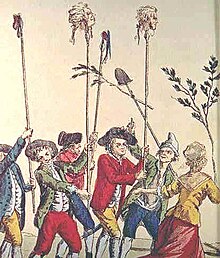

From the very beginning, agitators persuaded the rebels to cut off heads and stick them on pikes


A few facts:

- the vast majority of those murdered were French peasants.

- the supposedly “democratic” revolution led straight to a totalitarian dictatorship under the Convention, the Directory, the Committee of Public Salvation, Maximilien Robespierre and then an imperial dictatorship under Napoleon Bonaparte. Some democracy! Pah.

- It was the people of the Vendee and of Brittany who opposed the Revolution by force of arms and, under their generals, they did so successfully. However, whenever the Revolution had a chance it would slaughter, maim, burn and torture every living thing: men, women, children, the elderly, livestock – everything! Then it would burn and lay waste. And this was against its own people!

- In Nantes the bestial Jean-Baptiste Carrier tied men and women together naked and drowned them in the Loire calling this “republican marriage”. He took boatloads of priests out into the Loire and deliberately sank them. He pitted brother against brother and child against parent. He said “never have I so much enjoyed it as to see the last grimaces of a dying priest”. He was barely human, a base brute of the worst kind.

- In the end, the Revolution was unsustainable: it destroyed the very people who made it. First the Girondins, then Hebert, then Georges Danton himself and finally Louis-Antoine de St Just and Robespierre. Truly did the odious St Just declaim that “the Revolution consists in the destruction of its enemies”. It was death and destruction for the sake of both.

And yet there are still stupid people today who actually pretend that the French Revolution was something good!

No.

It was a cataclysmic outpouring of hatred and degradation. It was pure evil.

In stark contrast stands the nobility of those who suffered torture at the hands of the God-hating revolutionaries.

Here is how the young Queen Marie-Antoinette, aged 33, daughter of the Holy Roman Emperor Francis I and Empress Maria-Theresa, conducted herself before the howling mob that invaded Versailles in October 1789 to force the King and Queen to leave Versailles and go to the run-down Tuileries Palace in Paris, an act calculated to destroy the authority of the Monarch:


This is authentic. The Queen, by her courage and dignity, silenced the baying, howling mob that had intended to kill her. But the agitators and rebels would soon enough imprison her, the King and their children. And that was but the beginning of their travails and sufferings.

The King and Queen were imprisoned during the terrible period of the September Massacres in 1792 when the devilish Parisian mob broke into the prisons and simply slaughtered everyone in sight without regard for age, sex or condition, brutally, callously, shamefully and in the most cowardly manner.

The first to die were some 24 innocent non-juring priests being transferred from one prison to another.

The satanic mob attacked and slaughtered the priests and then mutilated them obscenely, cutting off their privy parts and displaying them crudely placed at various points on – and in – the mutilated bodies.

Then they broke into the prisons and slaughtered all crying “death to the aristocrats, death to the priests”. Many prisoners were forced to drink the blood of the slaughtered as “revolutionary communion” in blasphemous mockery of Christian Holy Communion.

These living devils in human form then searched out, found and attacked the Queen’s best friend, Marie-Louise of Savoy, the Princesse de Lamballe. And what did these devils do to her?

They throttled and stabbed her, then one of these living devils cut out her beating heart and began to eat it raw and pumping blood.

Then they cut off her head and stuck it on a pike and thrust it at the window of the cell in which the Queen was imprisoned, to horrify her.

This was what those devils called "liberty, equality and fraternity"!

Yes, really!

Here is that appalling scene re-captured in all its horror but in film, the vile, devilish mob singing the odious "Carmagnole":


Those odious women are calling out "Hey autrichienne! Here's your friend the Princesse de Lamballe! How do you like her now?!"

And they deliberately pronounced "autrichienne" meaning "Austrian woman" as "autre chienne" meaning "you other bitch" or sometimes "autru chienne" meaning "you ostrich bitch". These devils truly lived in themselves the morals of the gutter.

Soon enough the mob and their "democratic" representatives and agitators demanded the death of the King and Queen.

Here is how the noble King Louis XVI, that simple and gentle man, met his accusers and their grotesquely unjust and treacherous sentence of death against the innocent King.

See how the odious rebels – Danton, Robespierre, Desmoulins, St Just and the disgusting Jean-Paul Marat – smirk at the simple words of the King.

The same Danton who helped himself liberally and corruptly to the goods and chattels of those whose lands and property he despoiled, has the effrontery to vote for the King’s death, as does the strikingly hypocritical Robespierre and the supposedly “reasonable” Camille Desmoulins - lying, odious scoundrels, all of them.

All, save Marat, will meet death in the same way, the ghastly Revolution devouring its own excrement.

Marat himself is murdered by Marie-Anne Charlotte de Corday d'Armont whose brother’s murder had been contrived by Marat.

The priest attending the King was an Irishman, the Abbé Henry Essex Edgeworth de Firmont, and, as the blade descended, this great Irishman, who had so faithfully served the King, called aloud “Fils de St Louis, monte au ciel!!”, that is:

“Son of St Louis, ascend to heaven!”


So died a noble king, one who faithfully followed the example of his Redeemer who also died an innocent, brutally murdered by the baying mob consisting of those who ought to have loved Him most.

Truly King Louis XVI embraced the Crown of Thorns and the Cross of Christ.

So, too, did his noble wife, Queen Marie-Antoinette.

See how, when she hears the guns announcing that the King has been executed, and her daughter runs to her bed crying, this noble Queen faithfully remembering her own little son, Charles, goes to him, embraces him and then bows low before him who is now the Most Christian King of France, His Sacred Majesty King Louis XVII, successor to Clovis, Hugh Capet and St Louis of France.

Truly this is a most touching and inspiring scene.

In so bowing to her new Sovereign, her own child, she bows to Christ the King through His earthly representative in France, and imitates the Blessed Virgin, Queen of Heaven, who, likewise, treated her own Holy Child as Son, King and God, demonstrating both the highest humility, the highest royal dignity and the highest maternal devotion and piety.

This is the truest and highest sanctity!

It is the sanctity shown by the Blessed Virgin herself and the reason why she, the Queen of Juda and Queen of Heaven, and Mother of God, who made herself the lowest, is now far above us all.

She will have ensured that her Son rewarded Queen Marie-Antoinette, of the House of Austria and Most Christian Queen of France, with a great diadem for her faithfulness and humility.

Not much later comes the trial and condemnation of that same noble Queen. This most innocent and horribly maligned Queen is accused before the fatuous and ridiculous revolutionary tribunal of the most horrible crimes such as sexually corrupting her own children.

Then she is condemned and, like her husband, goes courageously, nobly and valiantly to her death, another martyr to innocence, truth and true Christian charity.

She even apologised to the executioner for tripping on his foot.

This was the gentle nobility of Queen Marie-Antoinette of Austria, the Most Christian Queen of France.

What devilish, hate-filled savages could ever even begin to consider murdering an innocent woman, let alone one like her?


These royal saints gave, like many after them, a stirring and inspiring example of heroic martyrdom for the sake of Christ and the Holy Catholic religion.

Left behind was the child-king, Louis XVII, but he was imprisoned in a darkened cell by the vile revolutionaries and left in his own filth. He eventually died aged around 10, neglected or murdered by the vile beasts who claimed to act in the name of freedom, equality, fraternity and justice.

See how the odious Robespierre even persuades himself, in the face of the rising in the Vendee and Brittany, that he, who claimed to act in the name of the "people", now thinks that even the "people" are wrong. Only he can be right. Oh, odious hypocrite!

His murderous lieutenant, Louis-Antoine de St Just, born noble but living most ignobly, now calls for the Republic to require men to prove their innocence or face death, a complete reversal of true justice.

Danton even abandons the Revolution to live on his ill-gotten gains and is married by a non-juring, anti-revolutrionary priest. Later, like a dog returning to its vomit, he goes back to his revolutionary career of murder.

But they are all destined to die the same ignoble death that they planned for others, the Revolution devouring itself in a frenzy of devilish hatred.

Princess Marie-Therese of France, the King's eldest daughter, lived on in exile, with her other kin. She eventually married her cousin, the Duc d'Angouleme, who became, titularly, King Louis XIX.

She is buried in Nova Gorica in Slovenia, whence she was later exiled with her husband and her uncle, King Charles X, who reigned briefly again in France before another revolution. Both are buried beside her.

On her tomb are written in Latin the words from Tenebrae of Good Friday:

"O all ye who pass by, attend and see if there be any sorrow like unto my sorrow"

So ends a fitting tribute to a deeply devout, royal family whom modern, atheist, Godless, republican France repudiates but whom God Himself has rewarded with an eternal crown, a crown that the atheist godless revolutionaries shall never see unless they repented of their foul deeds.


O Mary, Mother of Sorrows, pray for us!

...

Monday, 30 April 2012

3rd Sunday after Easter: "Love the brotherhood...Honour the Emperor"

3rd Sunday after Easter

"Honour all men: love the brotherhood: 
fear God: honour the Emperor"

The imperial crown of the Emperor Charlemagne


EPISTLE ¤ 1 Blessed Peter the Apostle 2:11-19 Lectio Epistolae beati Petri Apostoli. Caríssimi, Obsecro vos tamquam ádvenas, et peregrínos abstinére vos a carnálibus desidériis, quæ mílitant advérsus ánimam, conversatiónem vestram inter gentes habéntes bonam: ut in eo, quod detréctant de vobis tamquam de malefactóribus, ex bonis opéribus vos considerántes, gloríficent Deum in die visitatiónis. Subjécti ígitur estóte omni humánæ creatúra propter Deum: sive imperatori, quasi præcellénti: sive dúcibus, tamquam ab eo missis ad vindíctam malefactórum, laudem vero bonórum: quia sic est volúntas Dei, ut benefaciéntes obmutéscere faciétis imprudént-ium hóminum ignorántiam: quasi líberi, et non quasi velámen habéntes malítiæ libertátem, sed sicut servi Dei. Omnes honoráte: fraternitátem dilígite: Deum timéte: imperatorem honorificáte. Servi, súbditi estóte in omni timóre dóminis, non tantum bonis, et modéstis, sed etiam dyscolis. Hæc est ením grátia: in Christo Jesu Dómino nostro. Deo Gratias...


Lesson from the Epistle of Blessed Peter the Apostle. Dearly beloved, I beseech you, as strangers and pilgrims, to refrain yourselves from carnal desires, which war against the soul, having your conversation good among the Gentiles: that whereas they speak against you as evil-doers, they may, by the good works which they shall behold in you, glorify God in the day of visitation. Be ye subject therefore to every human creature for God's sake: whether it be to the Emperor as excelling, or to governors as sent by him for the punishment of evil-doers and for the praise of the good: for so is the will of God, that by doing well you may put to silence the ignorance of foolish men: as free, and not as making liberty a cloak for malice, but as the servants of God. Honour all men: love the brotherhood: fear God: honour the Emperor. Servants, be subject to your masters with all fear, not only to the good and gentle, but also to the froward. For this is grace before God: in Christ Jesus our Lord. Thanks be to God.


The Blessed Emperor Charlemagne, first emperor of the Holy Roman Empire 


GOSPEL ¤ Blessed Apostle John 16:16-22 † Sequéntia sancti Evangélii secúndum Joannem. In illo témpore: Dixit Jesum discípulis suis: "Módicum, et jam non vidébitis me, et íterum módicum, et vidébitis me: quia vado ad Patrem." Dixérunt ergo ex discípulis ejus ad ínvicem: Quid est hoc, quod dicit nobis: Módicum, et non vidébitis me: et íterum modicum, et vidébitis me, at quia vado ad Patrem? Dicébant ergo: Quid est hoc, quod dicit, Móodicum? nescímus quid lóquitur. Cognóvit autem Jesum, quia volébant eum interrogáre, et dixit eis: "De hoc quæritis inter vos, quis dixi, Módicum, et non vidébitis me: et íterum módicum, et vidébitis me? Amen, amen dico vobis: quia plorábitis, et flébitis vos, mundus autem gaudébit: vos vero contristabímini, sed tristítia vestra vertétur in gáudium. Múlier cum parit, tristítlam habet, quis venit hora ejus: cum autem pepérerit púerum, jam non méminit pressúre propter gáudium: quia natus est homo in mundum. Et vos ígitur nunc quidem tristítiam habétis: íterum autem vidébo vas, et gaudébit cor vestrum: et gáudium vestrum nemo tollet a vobis." Laus tibi Jesum Christum.

† Continuation of the Holy Gospel according to Blessed Apostle Saint John At that time. Jesus said to His disciples: "A little while, and now you shall not see Me: and again a little while, and you shall see Me: because I go to the Father." Then some of His disciples said one to another: what is this that He saith to us: A little while, and you shall not see Me: and again a little while, and you shall see Me: because I go to the Father? They said therefore: What is this that He saith, A little while? We know not what He speaketh. And Jesus knew that they had a mind to ask Him. And He said to them: Of this do you inquire among yourselves, because I said: A little while, and you shall not see Me: and again a little while, and you shall see Me? Aman, amen, I say to you, that you shall lament and weep, but the world shall rejoice: and you shall be made sorrowful, but your sorrow shall be turned into joy. A woman, when she is in labor, hath sorrow, because her hour is come: but when she hath brought forth the child, she remembereth no more the anguish, for joy that a man is born into the world. So also you now indeed have sorrow: but I will see you again and your heart shall rejoice: and your joy no man shall take from you." Praise be to Jesus Christ.


The Blessed Emperor Charles I of Austria, successor to Emperor Charlemagne


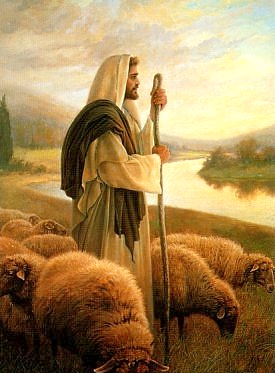
Good Shepherd Sunday - "I know my sheep and they know me..."

Ego sum Pastor bonus, allelúja: et cognósco oves Meas, et cognóscunt Me Meæ. Allelúja, allelúja.

I am the good Shepherd, alleluia: and I know My sheep, and Mine know Me, alleluia, alleluia.

The Gospel is from John 10: 11-16:

In illo témpore: Dixit Jesus Pharisæis: "Ego sum Pastor bonus. Bonus pastor ánimam suam dat pro óvibus. Mercenárius autem et qui non est pastor, cujus non sunt oves própriæ, videt lupum veniéntem, et dimíttit oves, et fugit: et lupus rapit et dispérgit oves: mercenárius autem fugit, quia mercenárius est, et non pértinet ad eum de óvibus. Ego sum Pastor bonus: et cognósco oves meas, et cognóscunt me meæ. Sicut novit me Pater, et ego agnósco Patrem: et ánimam meam pono pro óvibus meis. Et alias oves hábeo, qum non sunt ex hoc ovíli: et illas opórtet me addúcere, et vocem meam áudient, et fiat unum ovíile, et unus pastor."

At that time Jesus said to the Pharisees: "I am the good Shepherd. The good Shepherd giveth his life for his sheep. But the hireling, and he that is not the shepherd, whose own the sheep are not, seeth the wolf coming and leaveth the sheep and flieth: and the wolf catcheth and scattereth the sheep: and the hireling flieth, because he is a hireling, and he hath no care for the sheep. I am the good Shepherd: and I know Mine, and Mine know Me, as the Father knoweth Me, and I know the Father: and I lay down My life for My sheep. And other sheep I have that are not of this fold: them also I must bring, and they shall hear My voice, and there shall be one fold and one shepherd."


Take note all pastors and bishops and be not hirelings but true shepherds.

We should also note that our Lord says He has sheep that are "not of this fold" who shall hear His voice - perhaps better than those who are currently of His Flock - and they shall become part of the Flock, too.

This should teach us to be humble and not to presume or become complacent. Some who are not currently of the Flock may be judged better than us to sit amongst the saints in Heaven.

Let us pray for them, also, and remember that the Catholic Church is for all, including those who are not yet members. It is not a convenient little club only for cradle Catholics.

God chose the Israelites but all but a few later rejected Him and he transferred His favour to the Gentiles who converted to Him and loved Him better than many of His own chosen people.


...

Dominica in Albis Deponendis
(Sunday when the newly baptised finally put off their white garments of Easter)

also called

Quasimodo Sunday

or

Low Sunday

or

Close-Pasch
 
and

the Feast of Divine Mercy

 
"Quasimodo geniti infantes, alleluia, rationabile sine dolo lac concupiscite. Alleluia, alleluia, alleluia."
"As newborn babes, alleluia, desire the rational milk without guile. Alleluia, alleluia, alleluia"
[1 Peter 2:2; Introit for the Mass of Low Sunday]


"Deinde dicit Thomae: infer digitum tuum huc et vide manus meas, et affer manum tuam et mitte in latus meum et noli esse incredulus sed fidelis. Respondit Thomas et dixit ei: Dominus meus et Deus meus!"
 
"Then He said to Thomas 'Put in thy fingers hither and see my hands and bring hither thy hand and put it into my side and be not faithless but believing'. Thomas answered and said to him 'My Lord and my God!' " 
[John 20:27-28; Gospel of Low Sunday]


Caravaggio. Doubting Thomas. 1602-1603.

"Dearly beloved, laying away all malice and all guile and dissimulations and envies and all detractions as newborn babes desire the rational milk without guile, that thereby you may grow unto salvation, if so be you have tasted that the Lord is sweet...for you are a chosen race, a kingly priesthood, a holy nation, a purchased people that you may declare His virtues who hath called you out of darkness into His marvellous light."
[1 Peter 2:2-3, 9]

"Now when it was late that same day, the first of the week, and the doors were shut, where the disciples were gathered together, for fear of the Jews, Jesus came and stood in the midst, and said to them: Peace be to you. And when he had said this, he shewed them his hands and his side. The disciples therefore were glad, when they saw the Lord. He said therefore to them again: Peace be to you. As the Father hath sent me, I also send you. When he had said this, he breathed on them; and he said to them: Receive ye the Holy Ghost. Whose sins you shall forgive, they are forgiven them; and whose sins you shall retain, they are retained. Now Thomas, one of the twelve, who is called Didymus, was not with them when Jesus came. The other disciples therefore said to him: We have seen the Lord. But he said to them: Except I shall see in his hands the print of the nails, and put my finger into the place of the nails, and put my hand into his side, I will not believe. And after eight days again his disciples were within, and Thomas with them. Jesus cometh, the doors being shut, and stood in the midst, and said: Peace be to you. Then he saith to Thomas: Put in thy finger hither, and see my hands; and bring hither thy hand, and put it into my side; and be not faithless, but believing. Thomas answered, and said to him: My Lord, and my God. Jesus saith to him: Because thou hast seen me, Thomas, thou hast believed: blessed are they that have not seen, and have believed."
[John 20:19-29]

"In the Old Covenant I sent prophets wielding thunderbolts to My people. Today I am sending you with My mercy to the people of the whole world. I do not want to punish aching mankind, but I desire to heal it, pressing it to My Merciful Heart. (1588
It's a sign for the end times; after it will come the day of justice. While there is still time, let them have recourse to the fount of My mercy; let them profit from the Blood and Water which gushed forth for them. (848)
Before I come as a just Judge, I first open wide the doors of My mercy. He who refuses to pass through the doors of My mercy must pass through the doors of My justice... (1146)"
[Diary of Divine Mercy, Revelation of our Lord to St Maria Faustina (Kowalska) of the Blessed Sacrament]

St Faustina Kowalska, messenger of Divine Mercy
"Sanctus Deus, Sanctus Fortis, Sanctus Immortalis, miserere nobis" [Latin]
"Hagios Theos, hagios ischyros, hagios athanatos, eleison imas" [Greek]
"Elohim hakadosh, Elohim hakol yakhol, rakhem aleinu, veal kol haolam" [Hebrew]
"Holy God, Holy Mighty One, Holy Immortal One, have mercy on us"

[The ancient prayer of the Trisagion from the Improperia or "Reproaches" of the Good Friday liturgy in Latin, Greek, Aramaic and English, dating back to at least the 5th century. They form part of the Divine Mercy prayers requested of St Faustina by our Lord.]

"Feed my sheep".
Rafaello Sanzio. The gift of the keys to Peter.

+++

Sunday, 8 April 2012

EASTER SUNDAY: Christus surrexit hodie sicut dixit! Alleluia!


Happy Easter to all!


Christus surrexit,
sicut dixit,
alleluia!

Christ is risen
as he said!
Alleluia!


[Correggio. Noli me tangere. 1525]

"When the sabbath was over, Mary Magdalene and Mary the mother of James and Salome, bought spices so that they might come and anoint Jesus...and on a sabbath morning they came to the sepulchre after sunrise...and looking up they saw that the stone was rolled back. Alleluia!"
[Taverner, Dum transisset sabbatum from Mark 16, sung at the Easter Vigil mass of Holy Saturday night]

"The Angels said to her 'Woman, why are you weeping?'. She said to them 'Because they have taken away my Lord and I do not know where they have laid Him'. Saying this she turned round and saw Jesus standing but she did not know that it was Jesus. Supposing Him to be the gardener, she said to Him 'Sir, if you have carried Him away tell me where you have laid Him and I will take Him away'. And Jesus said to her 'Mary'. She turned and said to Him in Hebrew 'Rabboni!'".
[John 20]

"She went and said to the Disciples 'I have seen the Lord!' "
[John 20]


John Taverner (1490-1545). Dum Transisset Sabbatum. Sung by the Tallis Scholars.


Dum transisset Sabbatum,
Maria Magdalene et Maria Jacobi et Salome
emerunt aromata ut venientes ungerent Jesum.
Alleluia.
Et valde mane una sabbatorum veniunt ad monumentum orto iam sole ut venientes ungerent Jesum.
Alleluia.
Gloria Patri et Filio et Spiritui Sancto.
Alleluia.

And when the Sabbath was past,
Mary Magdalene and Mary the mother of James and Salome
had brought sweet spices, that they might come and anoint him.
Alleluia.
And very early in the morning, the first day of the week,
they came unto the sepulchre at the rising of the sun that they might come and anoint him.
Alleluia.
Glory be to the Father, and to the Son, and to the Holy Spirit.
Alleluia.

[Dum Transisset Sabbatum - taken from the Gospel of St Mark, Ch16]


Carl Heinrich Bloch. The Resurrection.


Victimae paschali laudes
immolent Christiani
Agnus redemit oves:
Christus innocens Patri
Reconciliavit peccatores.
Mors et vita duello conflixere mirando,
Dux vitae mortuus, regnat vivus.
Dic nobis Maria, quid vidisti in via?
Sepulcrum Christi viventis,
Et gloriam vidi resurgentis:
Angelicos testes, sudarium et vestes.
Surrexit Christus spes mea:
Praecedet vos in Galilaeam.
Credendum est magis soli
Mariae veraci
Quam Judaeorum
Turbae fallaci.
Scimus Christum surrexisse
a mortuis vere:
Tu nobis, victor Rex, miserere.
Amen. Alleluia.

[Wipo of Burgundy, Victimi Paschali Laudes. 1040. Sung on Easter Sunday]


Surrexit Christus hodie! Alleluia!

Christ is risen today! Alleluia!

...

Saturday, 7 April 2012

Holy Saturday: "Jerusalem, Jerusalem, be converted unto the Lord thy God!"


Holy Saturday

"See how the city that was filled now sits solitary...there is none to comfort her among all them that were dear to her...
Jerusalem, Jerusalem, be converted unto the Lord thy God!"


Caravaggio. The Entombment. c.1602-1604


"See how the city that was filled now sits solitary...there is none to comfort her among all them that were dear to her...Jerusalem, Jerusalem, be converted unto the Lord thy God!"
[Office of Tenebrae of Maundy Thursday (Matins), Lamentations of Jeremiah the Prophet, ch.1]

"Arise O Jerusalem and put off thy garments of joy: put on ashes and sackcloth, for in thee was slain the Saviour of Israel."
[Responsory, Tenebrae (Matins) of Holy Saturday]

"Remember, Lord, what is come upon us: consider and behold our reproach. Our inheritance is turned unto aliens, our houses to strangers. We are become orphans without a father, our mothers are as widows...our fathers have sinned and are no more and we have borne their iniquities.
[Tenebrae (Matins) of Holy Saturday, prayer of the prophet Jeremiah]

"I am counted among them that go down to the pit. I am become like a man without help free among the dead."
[Responsory, Tenebrae (Matins) of Holy Saturday]

"For when every commandment of the Law had been read by Moses to all the people, he took the blood of goats and calves and of goats with water and scarlet wool and hyssop and sprinkled both the book itself and all the people saying, this is the blood of the Testament which God hath enjoined upon you. The tabernacle also and all the vessels of the ministry in like manner he sprinkled with blood. And almost all things according to the Law are cleansed with blood and without shedding of blood there is no remission."
[Heb. ix.]

"When the Lord was buried they sealed the sepulchre rolling a stone before the mouth of the sepulchre and placed soldiers to guard Him."
[Responsory, Tenebrae (Matins) of Holy Saturday]

"O death I will be thy death! O hell, I will be thy bite!"
[Antiphon of the Miserere, Tenebrae (Lauds) of Holy Saturday]


Jerusalem, Jerusalem, be converted unto the Lord thy God!

+++

...
Good Friday: "Attend and see if there be any sorrow like unto my sorrow..."


Good Friday


Quid ultra debui facere tibi, et non feci? Ego quidem plantavi te vineam meam speciosissimam: et tu facta es mihi nimis amara: aceto namque sitim meam potasti: et lancea perforasti latus Salvatori tuo.

Ego dedi tibi sceptrum regale: et tu dedisti capiti meo spineam coronam.

Popule meus, quid feci tibi? Aut in quo contristavi te? Responde mihi!


"What more ought I to have done for thee, that I have not done? I planted thee, indeed, My most beautiful vineyard and thou hast become exceeding bitter to Me, for in My thirst thou gavest Me vinegar to drink and with a lance thou pierced the side of thy Saviour!

I gave thee a royal sceptre and thou didst give My head a crown of thorns…

O my people! What have I done to thee? Wherein have I offended thee? Answer me!"


Titian. Christ Crowned with Thorns. 1540.

"For he hath taken us and he will heal us: he will strike and he will cure us. He will revive after two days: on the third day he will raise us up and we shall live in his sight. We shall know and we shall follow on, that we know the Lord...for I desired mercy and not animal sacrifice and the knowledge of God more than holocausts."
[Hosea 6, First lesson sung at the Good Friday Service of the Mass of the Pre-sanctified]

"He had no form or comeliness that we should look at him, and no beauty that we should desire him. He was despised and rejected of men, a man of sorrows and acquainted with grief; and as one from whom men hide their faces he was despised, and we esteemed him not. Surely he has borne our griefs and carried our sorrows; yet we esteemed him stricken, smitten by God, and afflicted. But he was wounded for our transgressions, he was bruised for our iniquities; upon him was the whole chastisement that made us whole and with his stripes we are healed. All we like sheep have gone astray; we have turned every one to his own way; and the LORD has laid on him the iniquity of us all. He was oppressed and he was afflicted, yet he opened not his mouth; like a lamb that is led to the slaughter and like a sheep that is dumb before its shearers, he opened not his mouth."
[Isaiah 53, Epistle for Wednesday in Holy Week]


Titian. Ecce Homo. 1560.


"Jesus answered: ‘My kingdom is not of this world. If My kingdom were of this world, My servants would certainly strive that I should not be delivered to the Jews; but now my kingdom is not from hence’. Pilate therefore said to Him ‘Art Thou a King then?’ Jesus answered ‘Thou sayest that I am a King. For this I was born and for this I came into the world, that I should give testimony of the truth. Everyone that is of the truth heareth My voice…

…Then therefore Pilate took Jesus and scourged Him and the soldiers plaiting a Crown of Thorns, put it upon His head and they put upon Him a purple mantle and they came to Him and said ‘Hail King of the Jews!’ and they gave Him blows."
[John 18]

Regnavit a ligno Deus.
"God hath reigned from a tree."

[From Vexilla Regis, St Venantius Fortunatus, sung during the Good Friday Service of the Passion.]

"What more ought I to have done for thee, that I have not done? I planted thee, indeed, My most beautiful vineyard and thou hast become exceeding bitter to Me, for in My thirst thou gavest Me vinegar to drink and with a lance thou pierced the side of thy Saviour!
… For thy sake I scourged Egypt with its first-born and thou didst deliver Me up to be scourged…
… I gave thee a royal sceptre and thou didst give My head a crown of thorns…
… I exalted thee with great strength and thou didst hang Me on the gibbet of the Cross…
O my people! What have I done to thee? Wherein have I offended thee? Answer me!"

[Improperia or Reproaches of Christ to His people and to us all, from the Good Friday Service of the Passion]

O vos omnes, qui transitis per viam, attendite et videte si est dolor sicut dolor meus.
"O all ye that pass by the way, attend and see if there be any sorrow like unto my sorrow."

[Lamentations of Jeremiah, sung at Tenebrae (Matins and Lauds) on Maundy Thursday]


Diego Velázquez. Christ Crucified. c. 1632.

"And they took Jesus and led Him forth. And bearing His cross, He went forth to that place that is called Calvary but in Hebrew Golgotha, where they crucified Him and with Him two others, one on each side and Jesus in the midst. And Pilate wrote a title also and he put it upon the Cross and the writing was ‘Jesus of Nazareth, the King of the Jews’… and it was written in Hebrew, in Greek, and in Latin."

[John 18]


...