Tuesday, 23 December 2008

The German martyrs falsely accused before the odious Nazi People' s Court - newly discovered film footage

In this extraordinary newly discovered and release footage, one can see Ambassador Ulrich von Hassell, Major Ludwig Freiherr (Baron) von Leonrod and Rev Hermann Wehrle before the People's Court, their eloquent defences and their ill treatment at the hands of the odious Court President, Roland Freisler.

Freisler acts as both prosecutor and judge in a blatant breach of elementary natural justice and then, with all the venom he can muster, he screeches and screams at the victims earning himself the clandestine sobriquet "raving Roland". He ensured that his victims, the false accused, were further humiliated by having them dressed in old ragged clothes, often without any belt to keep their trousers up, so that they appeared before this Nazi kangaroo court looking shabby, scruffy and humiliated, particularly those who had been generals or high officials.

In these clips he finds Major Baron von Leonrod and his Father-Confessor, Fr Wehrle, guilty of knowing of the 20 July 1944 plot to assassinate Hitler, and of following Catholic theology in considering themselves not bound to reveal their knowledge (clearly because of Hitler's tyranny).

He then condemns them to death, to be hanged by wire, suspended from meat hooks, in the cells of Ploetzensee prison as "enemies of the Reich" but, in reality and in the eyes of God, as deeply heroic Christian martyrs.

We salute their courage in standing firm before the odious treachery, heathen villainy and pagan devilishness of the National Socialist German Worker's Party and its atrocious, diabolical leadership who, with their symbol of a cross with arms broken, the satanic swastika, declared war on the old, royal, noble and Catholic Germany of men like Count Claus von Stauffenberg, Baron Ludwig von Leonrod and Fathers Delp and Wehrle.

In so doing these National Socialists grossly besmirched and blackened the good name of Germany and the German people in the eyes of the world and poured filth upon the ancient history and heritage of a nation and people who, for many past centuries, had formed the political heart and centre of a once Christian Europe now banished by the evil of a modern, secularist, anti-Christian, neo-pagan, National Socialism.


Hail Christian martyrs of Catholic Bavaria
and of the old, once Christian, Germany!


Freisler, who had been a Communist in his youth, had been sent to the Soviet Union to learn how they conducted their show trials of dissidents. He learned his evil trade well at the hands of the equally brutal Soviet prosecutors and judges.

Freisler himself was killed in a bombing raid not long after the 20 July plot trials when the court building was struck by a direct hit. He was found with a file in his hands about to persecute yet another victim of the "People's Court".

His victims are now commemorated in modern Germany as national heroes.

RIP. May they rest in peace!

May we draw strength from their courageous stand against evil. Consider what a singular honour it will be to spend eternity in heaven with men such as these. Are we worthy of the company of these gentle giants?

God give us the strength to learn from them and live as they did!


Our Lady, Queen of Martyrs and of Sorrows,
pray for us and for them!


...

Saturday, 20 December 2008

What does a martyr look like? These men gave testimony of faith in the modern world...

Colonel Claus Philipp Maria Schenk Count von Stauffenberg (15 November 1907–21 July 1944), pictured left, was a German cavalry officer and Roman Catholic aristocrat who was one of the leading officers of the 20 July plot of 1944 attempting to assassinate Adolf Hitler and remove the Nazi Party from power in World War II Germany.

Stauffenberg was the third of three sons of Alfred Schenk Count von Stauffenberg, the last Oberhofmarschall of the Kingdom of Württemberg, and Caroline Schenk Countess von Stauffenberg, née Countess von Üxküll-Gyllenband.

Claus was born in the Stauffenberg castle of Jettingen between Ulm and Augsburg, in the eastern part of Swabia, at that time in the Kingdom of Bavaria. The von Stauffenberg family is one of the old and distinguished aristocratic Roman Catholic families of southern Germany.

In 1926, he joined the family's traditional regiment, the 17th Bavarian Cavalry Regiment (the Bamberger Riders) in Bamberg.

Stauffenberg found some aspects of the Nazi Party's ideology repugnant; and he remained a practicing Catholic. On top of this, the growing systematic ill-treatment of Jews and suppression of religion had offended Stauffenberg's strong personal sense of religious morality and justice. While his uncle, Nikolaus Count von Üxküll, had approached him before to join the resistance movement against the Hitler regime, it was only after the Polish campaign in 1939 that Stauffenberg's individual conscience and his religious convictions made him consider joining.

In 1943, Stauffenberg was promoted to Oberstleutnant-iG (lieutenant-colonel on the general staff) and was wounded serving in North Africa, losing his left eye, right hand, and the fourth and fifth fingers of his left hand.

He was later posted to Army HQ in Bendlerstrasse and one of his superiors was General Friedrich Olbricht, a committed member of the resistance movement. Stauffenberg was now fully committed to the resistance himself.

From the beginning of September 1943 until 21 July 1944, Claus von Stauffenberg was the driving force behind the plot. His resolve, his organizational abilities, and his radical approach put an end to inactivity caused by doubts.

On 20 July 1944 he planted a bomb in the conference room in which Hitler was attending a military conference. The bomb went off but did not kill Hitler who was protected by a heavy oak table. If, as was expected, the conference had been held in the bunker of his Wolfshanze (Wolf’s Lair), Hitler could not have survived. But he did and Goebbels quickly restored control.

The conspirators were tracked to their Bendlerstrasse offices and were overpowered after a brief shoot-out, during which Stauffenberg was shot in the shoulder.

In a futile attempt to save his own life, the co-conspirator Colonel-General Friedrich Fromm, Commander-in-Chief of the Replacement Army, present in Bendlerstrasse, to save himself charged the other conspirators, held an impromptu court martial, and condemned the ringleaders of the conspiracy to death. They were shot that night (21 July 1944) by a makeshift firing squad in the courtyard of the Bendlerblock, which was lit by the headlights of a truck.

As his turn came, Stauffenberg spoke his last words: "Es lebe unser heiliges Deutschland!" ("Long live our holy Germany!").


Fr Alfred Delp SJ
before the Nazi People's Court
martyred for the Faith in 1945


Rev Alfred Delp, SJ
(15 September 1907 – 2 February 1945 ) was a German Jesuit priest born in Mannheim, Germany, to a Catholic mother and a Protestant father.

After matriculation – in which he came out top of his class – he joined the Society of Jesus in 1926.

He was later appointed rector of the St Georg Church, part of the Heilig-Blut (Holy Blood) Parish in the Bogenhausen neighbourhood in Munich. He preached both at Heilig-Blut and at St Georg, and also secretly helped Jews who were escaping to Switzerland through the underground.

Outspoken opposition to the Nazis by individual Jesuits resulted in harsh response from government officials, including imprisonment of priests in concentration camps. The government takeover of church property, the so-called "Klostersturm", resulted in the loss of valuable properties and limited the work of the Jesuits in Germany.

It was Augustin Rösch who introduced Delp to the Kreisau Circle. As of 1942, Delp met regularly with the clandestine group around Helmuth James Count von Moltke to develop a model for a new social order after the Third Reich came to an end. Delp's role was to explain Catholic social teaching to the group, and to arrange contacts between Moltke and Catholic leaders, including Archbishop (later Cardinal) Preysing of Berlin.

After the July 20 plot to assassinate Hitler failed, a special Gestapo commission arrested and interrogated all known members of the Resistance. Delp was arrested in Munich on 28 July 1944 (eight days after Claus von Stauffenberg's attempt on Hitler's life), although he was not directly involved in the plot. He was transferred to Tegel Prison in Berlin. While in prison, he secretly began to say Mass and wrote letters.

On 8 December 1944, Delp received a visitor, Franz von Tattenbach SJ, and made his final vows to the Jesuit Order.

He was tried, together with Count von Moltke, Franz Sperr, and Eugen Gerstenmaier, before the Volksgericht (the Nazi People's Court), the odious monster, Court President Roland Freisler, presiding. All were sentenced to death by hanging for high treason.

While he was in prison, the Gestapo offered Delp his freedom in return for his leaving the Jesuits, but he rejected it. Of all prisoners, only Delp had to wear chains and leg irons up to his execution. The sentence was carried out on 2 February 1945 at Plötzensee Prison in Berlin.

As with many of those tried, his body was cremated and his ashes strewn over manure fields.


Ambassador Ulrich von Hassell
before the Nazi People's Court
martyred 1944.


Ambassador Ulrich von Hassell (12 November 1881–8 September 1944) was a German nobleman and diplomat during World War II.

A member of the German Resistance against Hitler, Hassell was executed in the aftermath of the failed 20 July plot to assassinate Der Fuehrer, spearheaded by Colonel Count von Stauffenberg.

Hassell was born in Anklam, Pomerania, the son of an Army officer from a Protestant family. Hassell, between 1899 and 1903, studied law and economics at the University of Lausanne, the University of Tübingen and in Berlin. He was active in the Corps Suevia Tübingen (a Student society). He began in 1909 to work as a graduate civil servant (Assessor) in the Foreign Office.

In 1911, Hassell married Ilse von Tirpitz, the daughter of Grand Admiral Alfred von Tirpitz. The couple had four children. In 1911, he was named Vice-Consul in Genoa.

In the First World War, Hassell was wounded in the chest in the First Battle of the Marne on 8 September 1914. Later in the war, he worked as Alfred von Tirpitz's advisor and private secretary. He also later wrote his father-in-law's biography.

After the war ended in 1918, Hassell returned to the Foreign Office and worked until the early 1930s in Rome, Barcelona, Copenhagen, and Belgrade. In 1932, Hassell was made Germany's ambassador to the Kingdom of Italy.

In 1933, Hassell favoured Western-Christian unity in Europe rather than the Nazi-Soviet pact. After the outbreak of the Second World War, Hassell took part in plans to overthrow Hitler.

Hassell's main function was to be a liaison between the conservative opposition groups centred around Carl Friedrich Goerdeler and Ludwig Beck and the younger Kreisau Circle. After 1943, he took a background role and played no part in the plot to kill Hitler.

Nevertheless, on 29 July 1944, Hassell was arrested by the Gestapo for his involvement in the July plot, something that he had foreseen. On 8 September, after a two-day trial at the People's Court, over which presided the monstrous Court President Roland Freisler, he was sentenced to death. He was executed the very same day at Plötzensee Prison in Berlin.


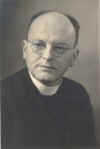
Dr Hermann Josef Wehrle
curate at Holy Blood Church, Munich,
martyred for the Faith in 1944


Rev Hermann Josef Wehrle
(26 July 1899-14 September 1944) was a Catholic priest who was also tried by the People's Court and executed..

Born in Nuremberg, in his early childhood his family moved to Frankfurt, which was still an independent city and regional seat at that time. There he grew up and went to the school. In the First World War, from 1917, he took part in the war but thereafter studied Catholic theology in Fulda, finishing his studies in 1922.

He studied philosophy and history in Frankfurt, and attained a doctorate in 1928. In 1942 he was ordained a priest and was appointed curate at Munich/Bogenhausen.

On 13 December 1943 Wehrle was asked by cavalry Major Ludwig Baron von Leonrod, in a private spiritual conference effectively under the seal of the confessional, whether it was a sin to know about an assassination attempt plan and not to reveal it. Wehrle answered this question in the negative after consulting the Encyclopaedia of Theology and the Church on the issue of the assassination of tyrants.

On 18 August 1944 Wehrle was arrested on the accusation of having knowledge of the 20 July assassination plot against Hitler’s life and was brought before the People's Court under its odious Court President, the brutal monster Roland Freisler. Despite his intelligent and well-argued defence, calmly, courageously and even amusingly delivered before the court, and which showed that he had committed no crime, Fr Wehrle was nevertheless condemned to death on 14 September, the Feast of the Exaltation of the Holy Cross.

He was hanged on the same day in the state prison of Berlin in Plötzensee, along with other victims of the terror that followed the failure of the 20 July plot.


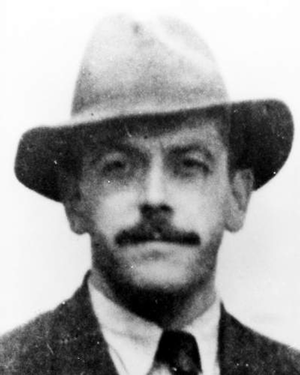
Major Ludwig Freiherr (Baron) von Leonrod
Cavalry officer and devout Catholic aristocrat
martyred for the Faith in 1944


Major Ludwig Freiherr (Baron) von Leonrod was the oldest child of Wilhelm Baron von Leonrod and his wife Clara, born Baroness von Sazenhofen.

His father was a personal aide at the Royal Court.

After Matriculation in 1926, Ludwig Baron von Leonrod chose the career of an Army officer, following family tradition. His career began in Bamberg in the 17th Bavarian Cavalry Regiment, where he came to know Claus von Stauffenberg, a brother officer.

In 1930 he was promoted second lieutenant, in 1933 to first lieutenant and in 1937 to captain of cavalry. In 1941 whilst a major and commander of a Reconnaissance unit, he was awarded the Iron Cross. After being gravely wounded by a mine at the beginning of 1942, he was transferred to Munich to the VIIth Military District. In March 1943, he married Monika, Baroness von Twickel (born 1908).

In the autumn of 1943, von Stauffenberg sought co-conspirators from within the military districts.

He told Leonrod of his plans in December but Leonrod was opposed. He wanted to support his friend, but, for reasons of conscience, was unsure about the morality of the planned attack. A believing Catholic, he accordingly asked, on 13 December 1943, in a spiritual conference with the parish curate, Rev Dr Hermann Josef Wehrle, whether concealing his knowledge regarding the assassination attempt plan was a sin. Wehrle answered this in the negative after consulting theological works.

Leonrod played no part in the plot during its whole operational sequence.

A training posting sent him to Army HQ in Bendlerstrasse (now Stauffenbergstrasse) so that he was present on 20 July when the plot was put into execution.

In the evening he returned to his training course accommodation, but found himself arrested on the following day. On 14 August he was dishonourably discharged from the armed forces following the decision, on 2 August 1944, of a Court of Honour, so that the Reich Court Martial was no longer responsible for sentencing him.

Instead, on 21 August 1944, he was taken before the People’s Court, under the deeply odious monster, Court President Roland Freisler. After a show trial he was sentenced to death.

Judgement was carried out on 26 August in Berlin’s Plötzensee prison. On 14 September, Fr Wehrle was hanged also.

In Bamberg Cathedral a memorial tablet commemorates the memory of Major Ludwig Baron von Leonrod and the five former members of the 17th Cavalry Regiment who lost their lives in the fight against the brutal Nazi regime.


Hail Christian martyrs of Catholic Bavaria
and the old, once Christian, Germany!


_____________________

Saturday, 13 December 2008

Drop down dew, ye heavens, from above and let the clouds rain down the Just One...

The Annunciation

Rorate caeli desuper et nubes pluant iustum. Aperiatur terra et germinet Salvatorem.
Drop down the dew, ye heavens, from above, and let the clouds rain down the Just One: let the earth be opened, and bud forth a Saviour.
Isaias 45:8


This versicle appears throughout the Offices for Advent and is yet another example of how much more Scriptural the old Roman rite of the Catholic Church is compared with the new rite of Paul VI in which, sadly, it is almost never sung. Most modern Catholics do not even know that this most beautiful Advent antiphon even exists.
 
The full hymn is sung thus:
 
Rorate caeli desuper et nubes pluant iustum.

Ne irascaris Domine, ne ultra memineris iniquitatis: ecce civitas Sancti facta est deserta, Sion deserta facta est: Ierusalem desolata est: domus sanctificationis tuac et gloriae tuae, ubi laudaverunt te patres nostri.
Rorate caeli desuper, et nubes pluant iustum.
Peccavimus, et facti sumus tamquam immundus nos, et cecidimus quasi folium universi; et iniquitates nostrae quasi ventus abstulerunt nos: abscondisti faciem tuam a nobis, et allisisti nos in manu iniquitatis nostrae.

Rorate caeli desuper, et nubes pluant iustum.

Vide, Domini, afflictionem populi tui, et mitte quem missurus es, emitte Agnum dominatorem terrae, de Petra deserti montem filiae Sion: ut auferat ipse iugum captivatis nostrae.

Rorate caeli desuper, et nubes pluant iustum.

Consolamini, consolamini, popule meus: cito veniet salus tua:. quare moerore consumeris, quia innovavit te dolor? Salvabo te, noli timere: ego enim sum Dominus Deus, tuus, Sanctus Israel, Redemptor tuus.
Rorate caeli desuper, et nubes pluant iustum.

Listen to these French monks singing the Rorate in the monastic church of their conventual home, calling upon God to forgive their sins as they await with joy, once again, the great Feast of the Birth of our Most Holy Saviour:


Drop down the dew, ye heavens, from above and let the clouds rain down the Just One!

Be not angry, O Lord, and remember no longer our iniquity : behold the city of Thy sanctuary is become a desert, Sion is made a desert. Jerusalem is desolate, the house of our holiness and of Thy glory, where our fathers praised Thee.
Drop down the dew, ye heavens, from above and let the clouds rain down the Just One!
We have sinned, and we are become as one unclean, and we have all fallen as a leaf; and our iniquities, like the wind, have taken us away; Thou hast hid thy face from us, and hast crushed us by the hand of our iniquity.
Drop down the dew, ye heavens, from above and let the clouds rain down the Just One!
See, O Lord, the affliction of Thy people, and send Him whom Thou hast promised to send. Send forth the Lamb, the Ruler of the earth, from the rock of the desert to the mount of the daughter of Sion, that He Himself may take off the yoke of our captivity.
Drop down the dew, ye heavens, from above and let the clouds rain down the Just One!
Be comforted, be comforted, my people; thy salvation shall speedily come. Why wilt thou waste away in sadness? Why hath sorrow seized thee? I will save thee; fear not: for I am the Lord thy God, the Holy One of Israel, thy Redeemer.

Drop down the dew, ye heavens, from above and let the clouds rain down the Just One!

"

With this extraordinarily beautiful hymn the prayer of the Church during Advent is lifted up to the heavens in song.
Henry Tanner. The Annunciation. 1898
...

Monday, 8 December 2008

8 December: Yo soy la inmaculada concepción...

On the great Feast of the Immaculate Conception of the Blessed Virgin Mary we remember the words first said to St Bernadette Soubirous of Lourdes only 4 years after the decree Ineffabilis Deus, infallibly promulgating the doctrine of the Immaculate Conception, was issued by Blessed Pope Pius IX.

Our Lady spoke to St Bernadette in her own Occitan patois, the language of the Languedoc region of Southern France. This was what surprised the Parish Priest - none of the ordinary Occitan-speaking people of that part of France had heard or used this glorious title because, in an unbelieving and scoffing age, this and other great titles of the Blessed Virgin had fallen into disuse.

It is a simple historical fact that the original Protestant Reformers accepted almost every major Marian doctrine and considered these doctrines to be both scriptural and fundamental to the historic Christian Faith.

Many modern Protestants object to devotion to the Virgin Mary, or at least, to such devotion as is shown in such feasts as that of the Immaculate Conception. They often seem unable to understand it.

The founders of the Protestant movement believed in the special position of the Blessed Virgin Mary.

For example, Martin Luther defended the Immaculate Conception of the Blessed Virgin Mary, now seen by most to be a specifically Roman Catholic doctrine, until his death. Like St Augustine, he believed that Mary's divine maternity necessarily implied her perpetual virginity and conception without Original Sin.

"But the other conception, namely the infusion of the soul, it is piously and suitably believed, was without any sin, so that while the soul was being infused, she would at the same time be cleansed from original sin and adorned with the gifts of God to receive the holy soul thus infused. And thus, in the very moment in which she began to live, she was without all sin..."1

John Calvin always referred to the Blessed Virgin Mary as La Sainte Vierge, the “Holy Virgin”.

He wrote of her:

“Elizabeth called Mary Mother of the Lord, because the unity of the person in the two natures of Christ was such that she could have said that the mortal man engendered in the womb of Mary was at the same time the eternal God.”2


“Helvidius has shown himself too ignorant, in saying that Mary had several sons, because mention is made in some passages of the brothers of Christ.”3


Even Ulrich Zwingli, had this to say about the Blessed Virgin Mary:

“It was given to her what belongs to no creature, that in the flesh she should bring forth the Son of God.”4

"I firmly believe that Mary, according to the words of the Gospel, as a pure Virgin brought forth for us the Son of God and in childbirth and after childbirth forever remained a pure, intact Virgin.”5

Zwingli used Exodus 4:22 to defend the doctrine of Mary's perpetual virginity.

“I esteem immensely the Mother of God, the ever chaste, immaculate Virgin Mary.”6

“Christ ... was born of a most undefiled Virgin.”7

“It was fitting that such a holy Son should have a holy Mother.”8

“The more the honour and love of Christ increases among men, so much the esteem and honour given to Mary should grow.”9

The Protestant Reformers did not reject most of the other Marian dogmas which were then taught by the Roman Catholic Church. The simple reason for this is that they could not avoid the fact that the honour and reverence due to the Blessed Virgin is plainly evident, to any objective eye, from Scripture.


References:
1
Pelikan, J (ed), The Works of Martin Luther, Concordia: St. Louis, volume 4, 694.
2 Calvin, J, Opera, Braunshweig-Berlin, 1863-1900, Volume 45, 35.
3 Leeming, Bernard, “Protestants and Our Lady”, Marian Library Studies, January 1967, p.9.
4 Zwingli, U, In Evangelii Lucae, Opera Completa, Zurich, 1828-42, Volume 6, I, 639.
5 Zwingli, U, Opera, Corpus Reformatorum, Volum 1, 424.
6 Stakemeier, E, in De Mariologia et Oecumenismo, Balic, K (ed), Rome, 1962, p.456.
7 Ibid.
8 Ibid.
9 Zwingli, U, Opera, Corpus Reformatorum, Volume 1, 427-428.


Gaude Maria Virgo, cunctas haereses tu sola interemisti in universo mundo

Rejoice, O Virgin Mary, to thou only has it been given to destroy all heresies in the whole world


[From The Little Office of the Blessed Virgin Mary]

Monday, 1 December 2008

Solemn Requiem for David Lumsden of Cushnie


By kind permission of
His Excellency Fra’ Fredrik Crichton-Stuart,
the Grand Prior of England of the Sovereign Military Order of Malta,

Solemn Requiem Mass

will be sung

in the

Conventual Church

of

the Sovereign Military and Hospitaller Order of St John of Jerusalem, Rhodes and Malta,

at
the Hospital of St John and St Elizabeth,
60 Grove End Road,
St John’s Wood,
London NW8 9NH

at

11.30am

on

Saturday 6th December 2008

for the repose of the soul of late confrere

David Lumsden of Cushnie


erstwhile hereditary
Baron of Cushnie-Lumsden
in the Scottish Feudal Baronage

of Hamilton House, West Loan, Prestonpans,


Knight of Honour and Devotion of the Sovereign Military Hospitaller Order of Malta,
Knight of Justice of the Sacred Military Constantinian Order of St George,
Knight of the Order of Saints Maurice and Lazarus,
Garioch Pursuivant to the Chief of the Name and of Arms of Mar,
Margaret, 30th Countess of Mar, 11th Duchess of Mar (in the Jacobite peerage),


born Quetta, Baluchistan, in the Empire of India, 25 May 1933
died at Glenfinnan, Loch Shiel, Scotland on 28 August 2008


Celebrant: Very Rev Canon John MacDonald
Musical Setting: Requiem of Eustache du Caurroy
Piper: Pipe Major David Waterton-Anderson KSG
Dress: Morning dress and decorations, Highland dress
or dark suit (Choir dress for Knights)


Approach from either Grove End Road, through the Hospital entrance, or Circus Road

[Nearest tube: St John’s Wood]


...

Saturday, 29 November 2008

Brigadier-General Stand Watie: Cherokee Indian and Confederate cavalry commander

Stand Watie (also known as Standhope Oowatie or Degataga meaning "stand firm") was a Cherokee and a Christian born in Georgia in the year 1806, the year when, in Europe, in the face of Bonaparte’s attacks, the Holy Roman Empire was declared at an end.

By 1820, almost one third of the Cherokee nation had been relocated west of the Mississippi River. Their lands in Indian Territory (modern-day Oklahoma), prosperous before the War of 1861-65, were in ruins thereafter. Many of these Indians were Christians and excellently educated.

They were US citizens, many became wealthy, and many become plantation and even slave owners.

The Cherokee people established a central government in 1827, electing John Ross (1796-1866) as their principal chief. He spoke out against the removal of the Cherokee from their homeland and strongly opposed the illegal Indian Removal Acts of President Andrew Jackson.


Cherokee Chief John Ross


Watie recognized Andrew Jackson’s determination to proceed with the ethnic cleansing of the Cherokee people from the south-eastern United States. The Supreme Court struck down the Indian Removal Acts as unconstitutional. However, President Jackson famously responded:


"The Chief Justice [John Marshall] has made his ruling. Now let him enforce it".


But it was the President’s job to enforce it!

In defying the Constitution, Jackson was a traitor.

But he had might over right on his side and so survived his treacherous betrayal of the US people and Constitution.


President Andrew Jackson, the founder of the Democrat Party.
He illegally sent thousands of Cherokee to their death west of the Mississippi.


This was the founder of the Democrat Party of the United States.

By mid 1837, many Cherokee had been moved to Indian Territory. The rest of the tribes, excluding some who fled to the mountains, were forcibly removed from their homes and shipped West in 1838 on the infamous “Trail of Tears” upon which many perished thanks to the illegal Acts of Jackson.


A portrait of a Cherokee chief


Thousands of them, mostly women and children, died in the vast open wilderness amidst a howling winter and sometimes brutal Federal soldiers, en route to their new homeland.

It was an attempted genocide.

Watie and others were at first seen as collaborators and some were murdered. Eventually, these troubles ended and Watie was appointed to the Cherokee Tribal Council and served from 1846 to 1861.

Shortly thereafter, Watie enlisted in the Confederate army.

Of the five "Civilized" Tribes – Cherokee, Chickasaw, Choctaw, Creek, and Seminole – most fought for the Confederacy.

A successful planter and journalist, Watie supported the Confederacy from the start. His influence helped lead the Cherokee nation into a formal alliance with the South. He and many fellow Cherokees gained renown for their battle exploits – renown largely ignored in traditional American histories.

Watie’s own wife, Sarah Bell Watie, and their children had to flee into North Texas in the cold of winter.


Sarah Bell Watie, wife of General Watie


He was promoted Colonel and organized and commanded the Cherokee Mounted Rifles. They earned a fearsome reputation at such battles as Wilson’s Creek in Missouri and Pea Ridge in Arkansas.

At the latter, Watie’s cavalry, though outnumbered, charging into the face of blazing Yankee cannon, captured them, then turned them on their fleeing Yankee enemy.

Watie eventually commanded the Confederate Indian cavalry made up mostly of Cherokee, Creek and Seminole.

He led Confederate forces to victory in the Second Battle of Cabin Creek where he captured an enormous Federal wagon train.

He was promoted Brigadier-General in 1864.

He was the last Confederate general to surrender, undaunted and unvanquished, on 23 June 1865, nearly three months after the surrender at Appomattox. At Fort Towson in the Choctaw Nation's area of the Indian Territory, Watie signed a cease-fire agreement with Union representatives, becoming the last Confederate general in the field to stand down.

Watie returned to financial ruin and a home burned to the ground by Yankees during the war. He tried to restore his ruined Grand River property which was devastated by the war and met with but little success. Exhausted by the war, Watie nevertheless committed his resources to the education of his children.

The Confederate Cherokees saw their land stripped away from them by a vengeful Yankee government.

In 1863, Stand Watie was elected principal chief of the Cherokee Nation.
Stand Watie died on September 9, 1871. He had outlived all but two of his children.

A friend wrote to Watie’s widow in these moving terms:

"I read with sadness of the death of your much esteemed husband. My tenderest sympathy is yours. I trust you have consolation from a Higher Power than earthly friends for the loss of one so dear to you. His labours on earth have not been in vain, he has done much lasting good for his country and country-men, that will never be forgotten but handed down to the future generations in the book of history for them to follow in his foot-steps and to aspire to leave their foot prints on the sands of time as well as he."


The grave of Brigadier-General Stand Watie


All ye holy saints of the Americas, pray for Stand Watie and the Cherokees deceased!

...

Tuesday, 18 November 2008

"I serve" or "I shall not serve"? Master and servant - or mere employer and employee?

We all are - or should be - servants: servants of others and of each other.

In so doing we imitate the very God Himself who, though He was the Creator of all things, did not shrink from making Himself the servant of His own creation.

In the famous Ford Maddox Brown painting (left), the Second Person of the Holy, Undivided and Everlasting Trinity washes the feet of His own disciples, setting a famous example for us all.

At the great feast of the institution of the Holy Eucharist, on Maundy Thursday, this great act of humility and love is re-enacted as the celebrant priest washes the feet of 12 members of the congregation.

The choir sing the famous words based upon the Gospel of St John - Ubi caritas et amor, Deus ibi est - "Where charity and love are, there is God" and the Last Supper is remembered when the God of earth and heaven gave His own precious Body and Blood as food for His children.

This is the heart and centre of the Christian religion.

In it is contained the most noble of all its teachings: we are all to be servants of each other as God made Himself our servant and as the Son is servant to the Father and, in turn, the Father serves the Son.

Just as the Father serves so does a Christian father and, indeed, a Christian king or master.

Indeed, the relationship between the Father and the Son and between God and His people is the model for the relationship between every master and every servant.

The Christian master is a father to his servant. They obey him and he protects and cares for them. Their bond is a bond of mutual charity, loyalty and fidelity. It is a quasi-familial, paternal relationship, just as the relationship of priest and people is a paternal relationship.

Such was the model of the master-servant relationship that obtained in old Christendom. Think of good King St Wenceslaus fetching food for the poor and warming the feet of his servant or of King St Louis of France or of any of the saintly kings of Christendom.


A stylized view of Good King St Wenceslaus and his servant


Nowadays, this relationship - based upon the divine - is mocked, derided and scorned to ridicule and falsely caricatured as a relationship of exploitation, venal peculation and cruelty by the master and of craven, stupid subserviance on the part of the servant.

What a shameless lie!

This, indeed, is what the relationship became when it ceased to be based upon the divine charity and instead became the pedestrian, mundane and loveless relationship of "employer" and employee".

No longer was the relationship familial but merely a cold, sordid relationship of money, exchange, trade and mutual exploitation.


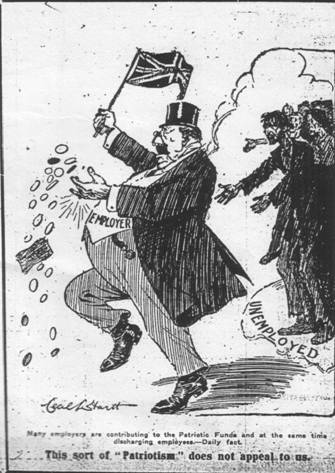
Old master was replaced by new "employer" who cared only for money and kept his "employees" only so long as they were useful to him.


The employer sought only to maximize his profits through hiring employees who, once no longer useful, were "let go" and dispensed with as mere surplusage to fend for themselves.

The employee sought to extract from his employer all that he could in wages and recognised his authority for only so long as it suited him.

The employers used the employee as a mere commodity and the employees combined together to squeeze out of the employer every last penny that they could through strikes and walk-outs.

The familial and paternal relationship of mutual love, respect, loyalty and fidelity for life was gone - smashed by the preposterous Victorian "Political Economists" with their "hidden hand" of mutual exploitation which led to the ghastly mills, factories and workhouses of Victorian England.

Later smashed still further was it by the rise of the "wild-cat" striker Trade Unions, eschewing all responsibility in the name of the Worker's Marxist paradise. Reacting to the new evil of employer Capitalism came the devilish creed of Communism.


Reacting to the new evil of employer Capitalism came the devilish creed of Communism.


Such became the new relationship between men: mere employer and mere employee. Love died and dull exploitation replaced it.

Yet modern man fatuously rejoices in these new, loveless titles!

This was even - ridiculously - called "progress"!

The idea of any man serving another man as "servant" to his "master" was laughed to scorn. The master no longer felt any responsibility to his servant and the servant no longer felt any loyalty to his master.

The very idea of serving others was cast aside in favour of serving only oneself - the creed of Hell. Like their new master, the Devil, men said "I shall not serve".

Egalitarianism again raised its ugly, diabolical head, for where all are equal then none can appeal to any higher authority for justice and the rule of might conquers the rule of right.

As Gilbert and Sullivan put it so aptly "When every body's somebody then no-one's anybody".

In fact, of course, hierarchy is the natural order for mankind since that is how heaven is and will be. God intends that some should be masters and some servants, so that all can appeal to a higher authority, but both are really servants of a different sort, serving each other and others, in differing ways.

The motto of the Royal Military Academy Sandhurst describes well the role of a Christian leader: "Serve to lead".


"Serve to lead"
- the motto of the Royal Military Academy Sandhurst


Leadership is a form of service to others. A Christian leader seeks first to serve and not to be served, just as his master, Christ the King, came to serve rather than to be served.

So it was that our Lord commended the gentile Centurion who came to him and asked that our Lord heal his servant. He said these profound words:

"Lord, my servant lieth at home sick of the palsy, and is grievously tormented. And Jesus saith to him: I will come and heal him. And the centurion making answer, said: Lord, I am not worthy that thou shouldst enter under my roof: but only say the word, and my servant shall be healed. For I also am a man subject to authority, having under me soldiers; and I say to this, Go, and he goeth, and to another, Come, and he cometh, and to my servant, Do this, and he doeth it".
[Matt 8:6-9]


Our Lord marvelled at this, the Centurion being a gentile.

"And Jesus hearing this, marvelled; and said to them that followed him: Amen I say to you, I have not found so great faith in Israel". [Matt 8:10]


"I have not found so great faith in Israel"
- the prayer of the Good Centurion was Domine, non sum dignus - "Lord, I am not worthy...
"


Now we say the Centurion's prayer 3 times at Mass whenever we prepare to receive the Holy Eucharist in Holy Communion:

Domine, non sum dignus ut intres sub tectum meum, sed tantum dic verbo et sanabitur anima mea.

"Lord, I am not worthy to receive you under my roof, say but the word and my soul shall be healed."


This is the prayer of a true Christian master, officer and leader who, loving his own servant as a son, is himself a servant to others.

This is how all Christian masters and leaders should be, whether they are kings, military officers, professional men, or political or business leaders.

They should be as fathers to their servants, not merely employers to their employees.

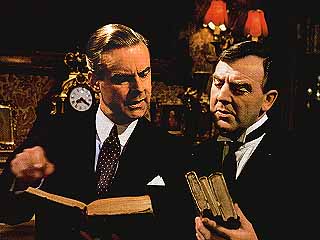
One gets something of the flavour of the old Christian bond between master and servant, in an amusingly eccentric English way, in the relationship between Lord Peter Wimsey, and his butler, Bunter, the aristocratic detective and his servant, both creations of English writer Dorothy L. Sayers. [Note for American readers: only the sons of Dukes and Marquesses have the courtesy title of "Lord" before their first name and family surname. A life peer in the House of Lords has the title of "Lord" before his family surname only. These days plenty of ignorant English writers get this wrong.]

Unlike other "employers" Wimsey will never part with Bunter and always provides for him. Bunter, on the other hand, saved Wimsey's life in the trenches of the First World War, as he lay wounded in no-man's-land.

It is unquestionably a relationship of love between master and servant, a relationship now mocked by "progressive" - and ignorant - modern man. Lord Peter Wimsey and Bunter share a mutual love and respect which modern secularist man - in his utter ignorance and clod-like inability to think beyond himself - simply cannot fathom.


Lord Peter Wimsey and his manservant, Bunter,
share a mutual love and respect which modern secularist man - in his utter ignorance
and clod-like inability to think beyond himself - simply cannot fathom.


HRH the Prince of Wales, the heir to the throne, has, as his motto, the German phrase Ich Dien which means simply "I serve". It is a profoundly Christian idea. Even the heir to the throne must regard himself as a servant.


Ich Dien
is the motto of HRH the Prince of Wales and means "I serve".
Even the heir to throne must regard himself as a servant.


Like a good father, the Christian master does not throw out his servant when he is no longer useful but rather cares for him in his old age remembering the good service that the servant did when he was fit and young.

He does not merely dump him upon the resources of the state, community and society as the modern employer does once he no longer has any use for the employee.

Likewise the servant shows a filial loyalty and love for his master just as God the Son does for the God the Father, as a son does for his father and as a good religious does for his Father superior.

Ultimately, the good Christian master shows the same paternal love for his servant as the father does even for his prodigal son, never casting him off but bearing with him even when he is froward, wasteful or neglectful.


Bartolomé Esteban Murillo. The Return of the Prodigal Son. 1667-1670.


What a disaster for mankind it was when the wonderful relationship of the Christian master and the Christian servant was consciously rejected.

Like so many evils, the beginnings of this rejection is to be found in that cataclysm that historians call the Protestant Reformation. Fortunately, not all Protestant masters rejected the old idea and many continued to treat their servants in the old, charitable way. It was the so-called Enlightenment and the later Industrial Revolution which eventually deprived the world of the beautiful old relationship that God intended to exist between a master and his servants.


The Servant King


...