Showing posts with label First World War. Show all posts

Tuesday, 16 November 2010

Their name liveth for evermore...


Their name liveth for evermore...


O Valiant Hearts!

O valiant hearts who to your glory came
Through dust of conflict and through battle flame;
Tranquil you lie, your knightly virtue proved,
Your memory hallowed in the land you loved.

Proudly you gathered, rank on rank, to war
As who had heard God’s message from afar;
All you had hoped for, all you had, you gave,
To save mankind—yourselves you scorned to save.

Splendid you passed, the great surrender made;
Into the light that nevermore shall fade;
Deep your contentment in that blest abode,
Who wait the last clear trumpet call of God.

Long years ago, as earth lay dark and still,
Rose a loud cry upon a lonely hill,
While in the frailty of our human clay,
Christ, our Redeemer, passed the self same way.

Still stands His Cross from that dread hour to this,
Like some bright star above the dark abyss;
Still, through the veil, the Victor’s pitying eyes
Look down to bless our lesser Calvaries.

These were His servants, in His steps they trod,
Following through death the martyred Son of God:
Victor, He rose; victorious too shall rise
They who have drunk His cup of sacrifice.

O risen Lord, O Shepherd of our dead,
Whose cross has bought them and Whose staff has led,
In glorious hope their proud and sorrowing land
Commits her children to Thy gracious hand.


The Next War

by Wilfred Owen

Out there, we've walked quite friendly up to Death, —
Sat down and eaten with him, cool and bland, —
Pardoned his spilling mess-tins in our hand.
We've sniffed the green thick odour of his breath, —
Our eyes wept, but our courage didn't writhe.
He's spat at us with bullets and he's coughed
Shrapnel. We chorussed when he sang aloft,
We whistled while he shaved us with his scythe.

Oh, Death was never enemy of ours!
We laughed at him, we leagued with him, old chum.
No soldier's paid to kick against His powers.
We laughed, — knowing that better men would come,
And greater wars: when each proud fighter brags
He wars on Death, for lives; not men, for flags.


We are in the season of Remembrance Day - Martinmas, the Feast of St Martin, the Roman imperial officer who became a bishop.

Let us remember those who are serving in Afghanistan and other theatres of war and let us especially remember the dead and pray for them.

Let us also remember those who died in the two world wars and wars since.


Tyne Cot cemetery near Passchendaele, Flanders
where my grandfather and others of my family fought in battle


Once again, I would like especially to remember the officers and men from that most forgotten Division of all the regiments of the British Army at any time, anywhere, ever.

I mean the 10th and 16th Irish Divisions and their respective regiments.

These brave and dutiful soldiers are little remembered today because the Ireland from which they enlisted to fight for the freedom of small nations had, by 1918, undergone a radical sea-change in national aspirations because of the Rebellion of 1916, the reaction to it and the War of Independence of 1919-20 and the Civil War of 1920-21.

These most noble and brave Irish Divisions vanished into limbo, without honour, lying in an unquiet grave, forgotten by their own country and their own countrymen, save the brave and loyal families of the dead themselves, who were left to grieve alone, forgotten, even reviled, though their sons had faithfully answered the call of the Irish parliamentary leaders, John Redmond MP and John Dillon MP.

It is a little known fact that more Irishmen from the South served in the British Army and fought – in BOTH World Wars – than did those from the so-called “Loyalist” North.

Let us also remember the very young men from other parts of the British isles, too, who died in that terrible war that served to decimate Europe.

I can never help but think of the young lives lost in the First World War - that useless, pointless war brought about by the enemies of civilisation, of peace and - above all - of Christianity. Having started the war, the enemies of Christianity then did their level best to prevent it ending until every Christian nation had either toppled (like Austria-Hungary) or else had been bled half to death.

I think of young men like 19-year-old Roland Leighton, the poet and fiancée of Vera Brittain, who died of wounds on the Western Front.

"Goodnight, though life and all take flight, never goodbye..."
Inscription on the grave of Roland Leighton, the 19-year-old English poet.


God grant them all eternal rest...


In Flanders Fields
by Lt Col John McCrae, May 1915

In Flanders fields the poppies blow
Between the crosses, row on row,
That mark our place; and in the sky
The larks, still bravely singing, fly
Scarce heard amid the guns below.

We are the Dead. Short days ago
We lived, felt dawn, saw sunset glow,
Loved and were loved, and now we lie
In Flanders fields.

Take up our quarrel with the foe:
To you from failing hands we throw
The torch; be yours to hold it high.
If ye break faith with us who die
We shall not sleep, though poppies grow
In Flanders fields.


At a Calvary near the Ancre
by Wilfred Owen

One ever hangs where shelled roads part.
In this war He too lost a limb,
But His disciples hide apart;
And now the Soldiers bear with Him.

Near Golgotha strolls many a priest,
And in their faces there is pride
That they were flesh-marked by the Beast
By whom the gentle Christ's denied.

The scribes on all the people shove
And bawl allegiance to the state,
But they who love the greater love
Lay down their life; they do not hate.


Let us remember, too, the men of the Burma Star Association who fought - and especially those who died - in the great Burma campaign in the 14th Army - the "forgotten army" - against the savage power of the Japanese Imperial Army.


"When You Go Home, Tell Them Of Us And Say,
For Their Tomorrow, We Gave Our Today"

(John Maxwell Edmonds (1875 -1958), 1916)


The Kohima memorial


St Martin of Tours, pray for all our brave boys who gave their lives...

Their name, indeed, liveth for evermore...


+


Saturday, 7 November 2009

Martinmas - Remembrance of the Dead


Lest we forget...


The Next War
By Wilfred Owen

Out there, we've walked quite friendly up to Death, —
Sat down and eaten with him, cool and bland, —
Pardoned his spilling mess-tins in our hand.
We've sniffed the green thick odour of his breath, —
Our eyes wept, but our courage didn't writhe.
He's spat at us with bullets and he's coughed
Shrapnel. We chorussed when he sang aloft,
We whistled while he shaved us with his scythe.

Oh, Death was never enemy of ours!
We laughed at him, we leagued with him, old chum.
No soldier's paid to kick against His powers.
We laughed, — knowing that better men would come,
And greater wars: when each proud fighter brags
He wars on Death, for lives; not men, for flags.


In 3 days time it will be Remembrance Day - Martinmas, the Feast of St Martin, the Roman imperial officer who became a bishop.

Let us remember those who are serving in Afghanistan and other theatres of war and let us especially remember the dead and pray for them.

Let us also remember those who died in the 2 world wars and wars since.


Tyne Cot cemetery near Passchendaele, Flanders


Once again, I would like especially to remember the officers and men from that most forgotten Division of all the regiments of the British Army at any time, anywhere, ever.

I mean the 10th and 16th Irish Divisions and their respective regiments.

These brave and dutiful soldiers are little remembered today because the Ireland from which they enlisted to fight for the freedom of small nations had, by 1918, undergone a radical sea-change in national aspirations because of the Rebellion of 1916, the reaction to it and the War of Independence of 1919-20 and the Civil War of 1920-21.

These most noble and brave Irish Divisions vanished into limbo, without honour, lying in an unquiet grave, forgotten by their own country and their own countrymen, save the brave and loyal families of the dead themselves, who were left to grieve alone, forgotten, even reviled, though their sons had faithfully answered the call of the Irish parliamentary leaders, John Redmond MP and John Dillon MP.

It is a little known fact that more Irishmen from the South served in the British Army and fought – in BOTH World Wars – than did those from the so-called “Loyalist” North.

Let us also remember the very young men from other parts of the British isles, too, who died in that terrible war that served to decimate Europe.

I can never help but think of the young lives lost in the First World War - that useless, pointless war brought about by the enemies of civilisation, of peace and - above all - of Christianity. Having started the war, the enemies of Christianity then did their level best to prevent it ending until every Christian nation had either toppled (like Austria-Hungary) or else had been bled half to death.

I think of young men like 19-year-old Roland Leighton, the poet and fiancée of Vera Brittain, who died of wounds on the Western Front.

"Goodnight, though life and all take flight, never goodbye..."
Inscription on the grave of Roland Leighton, the 19-year-old English poet.


God grant them all eternal rest...


In Flanders Fields
by Lt Col John McCrae, May 1915

In Flanders fields the poppies blow
Between the crosses, row on row,
That mark our place; and in the sky
The larks, still bravely singing, fly
Scarce heard amid the guns below.

We are the Dead. Short days ago
We lived, felt dawn, saw sunset glow,
Loved and were loved, and now we lie
In Flanders fields.

Take up our quarrel with the foe:
To you from failing hands we throw
The torch; be yours to hold it high.
If ye break faith with us who die
We shall not sleep, though poppies grow
In Flanders fields.


At a Calvary near the Ancre
by Wilfred Owen

One ever hangs where shelled roads part.
In this war He too lost a limb,
But His disciples hide apart;
And now the Soldiers bear with Him.

Near Golgotha strolls many a priest,
And in their faces there is pride
That they were flesh-marked by the Beast
By whom the gentle Christ's denied.

The scribes on all the people shove
And bawl allegiance to the state,
But they who love the greater love
Lay down their life; they do not hate.


St Martin of Tours, pray for our noble dead!


...

Saturday, 24 November 2007

They do not hate...

The First World War saw the final end of old Europe.

Too few realised it at the time. Earl Grey, the British Foreign Secretary, was one of the few who did. "The lights are going out all over Europe", he said, "And we shall not see them lit again in our lifetime".

The “war to end all wars” did not end war at all – but it did finally mean the end of the beautiful, old world of Catholic Christendom that had given to the world everything that it had come to value did the world but wish to know. Instead, this horrid war ushered in the new, grim, ugly, inhuman world of secularism which has given us Communism, Nazism, abortion and euthanasia.

The First World War was, in reality, the culmination of over 200 years of campaigning by the secularist Antichrist to eliminate traditional Christianity from the government of states.

Its partisans did not care how many died in this deathly struggle – indeed, like their master, Satan, they seemed to revel demonically in the destruction of the old world even as this alien spirit devoured its own sons.

A few bright lights sought to end this terrible and useless war: Pope Benedict XV and the Blessed Emperor Charles were but two such.

But all the more did the secular Antichrist snort and rave at them since these two represented the very enemy it wished to destroy!

Even misguided Catholics denounced their own spiritual leader, Pope Benedict XV, who was so zealous for peace. He could foresee what they could not. The enemies of Christendom had settled upon nothing less than a conflagration of the old world to usher in a new, secular world, and they did not care how many were killed in the process.

Mercy, compassion, forebearance, humility, meekness and love. Pah! What did the new men care for these! These were the signs and symbols of the Creed they wished to eliminate in the name of a spurious, perverted superstition that they sought to dignify with the hallowed name of “science”.

It was no “science” but rather the alchemy of Hell, the occult ignorance of the witch, the presdigitation of the charlatan and the theosophy of self-worship – in short, a monstrous, devilish fraud.

It was the advent of what even Sir Winston Churchill himself admitted would be “the abyss of a new dark age made more sinister and perhaps more prolonged by the lights of a perverted science”.

As so often, it was as much the journalists, chattering classes, scribblers and "scribes" who, not having to fight the war themselves, gleefully helped to whip up the intoxicating spirit of war-fever and misguided patriotism that so much marked the time.

Journalists pride themsleves on exposing frauds and using free speech to denounce evils. Some brave and courageous journalists do but the craven majority simply exacerbate the fashionable evils of their time by promoting and exalting them. One need only look at the utterly craven and cowardly way in which so many journalists promoted Communism during the years of Stalin's greatest mass-murdering of his own people. So, too, did many journalists avidly support the First World War.

And this homage to the Enemy of human nature claimed the lives of millions, even of some of the brightest and best.

Here dead we lie because we did not choose
To live and shame the land from which we sprung.
Life, to be sure, is nothing much to lose;
But young men think it is, and we were young.

A E Housman (1859-1936)

Roland Leighton

Roland Aubrey Leighton (27 March 1895-23 December 1915) was an English poet and soldier, immortalised in Vera Brittain's memoir, Testament of Youth, who was killed aged only 20 years old, not long out of boyhood (his grave says 19).

His parents, Robert Leighton and Marie Connor, were both writers. Leighton was a pupil at Uppingham School, where he became a close friend of Vera Brittain's brother, Edward.

He obtained a commission in 1915 and served with the Worcestershire Regiment in France. He died of wounds on 23 December 1915 having been shot through the stomach while inspecting wire, and is buried in the military cemetery at Louvencourt, near Doullens, France.

Vera Brittain, who had accepted his proposal of marriage four months before his death, was to include him, and quote some of his work, in her writing at the time, and later in Testament of Youth.

Many of Leighton's letters are included in Letters from a Lost Generation, a compilation of her wartime letters that was published after her death. His mother anonymously published a memoir of him called Boy of My Heart which heart-rendingly tells the tragic tale of a mother's loss of her most beloved son.

Readers of Testament of Youth will get a flavour of the horror, heartache and grief that was caused by this most odious and senseless war.

Vera Brittain herself later campaigned during World War II against unrestricted bombing, joining with men like Bishop Bell of Chichester and Richard Stokes, the Catholic Labour MP. They were in touch with the German opposition and men like Dietrich Bonhoeffer. Such was the enthusiasm for bombing that they were not listened to and a huge amount of unnecessary damage was done.

Her daughter, Shirley Williams, now Baroness Williams of Crosby, became a famous Labour politician.

Roland Leighton, himself, however, had quietly converted to Roman Catholicism on the battlefield.

Like many another young soldier in that war, he had seen the Catholic chaplains risking their lives to tend wounded soldiers in no-mans-land, bringing them the Sacraments, Viaticum, Anointing and the last rites. Many a young man awoke in the mud to find a Catholic priest leaning over him, anointing him and asking "Shall I write to your mother?", or similar, before moving on to another wounded boy, leaping from trench to trench, amidst shrapnel, explosions and stray bullets, to bring the crucified Christ to the lips of the shattered and dying.

The Parable of the Old Man and the Young

So Abram rose, and clave the wood, and went,
And took the fire with him, and a knife.
And as they sojourned both of them together,
Isaac the first-born spake and said, My Father,
Behold the preparations, fire and iron,
But where the lamb for this burnt-offering?
Then Abram bound the youth with belts and straps,
And builded parapets and trenches there,
And stretched forth the knife to slay his son.
When lo! an angel called him out of heaven
Saying, lay not thy hand upon the lad,
Neither do anything to him. Behold,
A ram, caught in a thicket by its horns;
Offer the Ram of Pride instead of him.

But the old man would not so, but slew his son,
And half the seed of Europe, one by one.

Wilfred Owen (1893 - 1918)

Raymond Asquith

Raymond Asquith (6 November 1878-15 September 1916) was an English barrister and eldest son and heir of British Prime Minister H. H. Asquith, later Earl of Oxford and Asquith, by his first wife Helen Kelsall Melland (who died 1891).

Raymond Asquith was a Wykehamist, a brilliant scholar of Balliol College, Oxford, and a fellow of All Souls College, Oxford. He was a member of “The Coterie”, one of many Edwardian sets (or fraternities, as the Americans call them) that sprung up at the time, and a prominent young Englishman of the Edwardian period. He died on active service during the First World War in 1916 at the age of 37, having volunteered shortly before.

Asquith was one of the young stars of his generation, a brilliant scholar, a brilliant barrister and rapidly selected as Junior Counsel to the Treasury. He later figured prominently in the Titanic Enquiry as Counsel for the Board of Trade.

From this platform he could undoubtedly have become one of the greatest in the land, with a brilliant political career ahead of him – perhaps Prime Minister, like his father, or Lord Chancellor.

Instead he volunteered to fight as a humble lieutenant on the Western Front with the Grenadier Guards and was killed at Ginchy on the Somme. He is buried at Guillemont by the Somme.

His relatives are well-known: his sister Violet, her elder son Mark and granddaughter Jane who all became Life Peers, as Baroness Asquith of Yarnbury, Lord Bonham-Carter and Baroness Bonham Carter of Yarnbury, respectively.

Raymond's son Julian succeeded his grandfather as 2nd Earl of Oxford and Asquith.

Other relatives include the late director Anthony Asquith (a half-brother), his great-niece, the actress Helena Bonham Carter (a granddaughter of Violet Bonham Carter), his grandson, the 5th Baron Hylton who was elected to the House of Lords as a representative peer, another grandson, the writer, the Hon John Joliffe, who edited a collection of Asquith's letters, and the late Liberal politician Jo Grimond, the Baron Grimond (who married Raymond Asquith's niece Laura, a daughter of Violet).

The writer John Buchan devoted several pages of his autobiography, Memory Hold-the-Door, to remembering Raymond Asquith and their friendship in some detail.

Raymond Asquith was married in 1907 to the former Katherine Horner, younger daughter of Sir John Horner, of Mells Abbey, Somerset, descended from “Little Jack Horner'”of nursery song fame. His wife inherited the estate when her brother Edward Horner (1888-1917) also died in the war. Asquith and his wife had three children.

Raymond Asquith died before his father was raised to the House of Lords in 1925 as Earl of Oxford and Asquith.

His widow, Katherine, famously converted to Roman Catholicism, and befriended Monsignor Ronald Knox, the even more famous Old Etonian convert to the Faith.

Upon Raymond Asquith's grave are inscribed these words from the final chorus of Shakespeare's Henry V:


"Small time but in that small, most greatly lived this star of England"


A poignant epitaph to a man of brilliance, cut down in his prime in a cruel war.


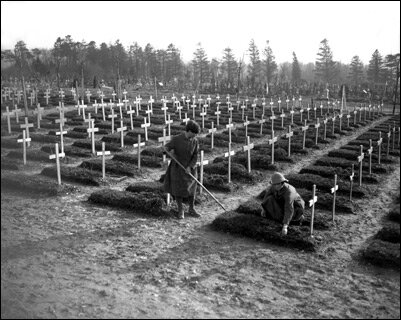
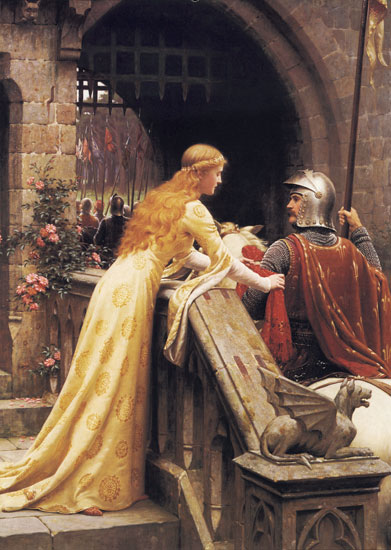
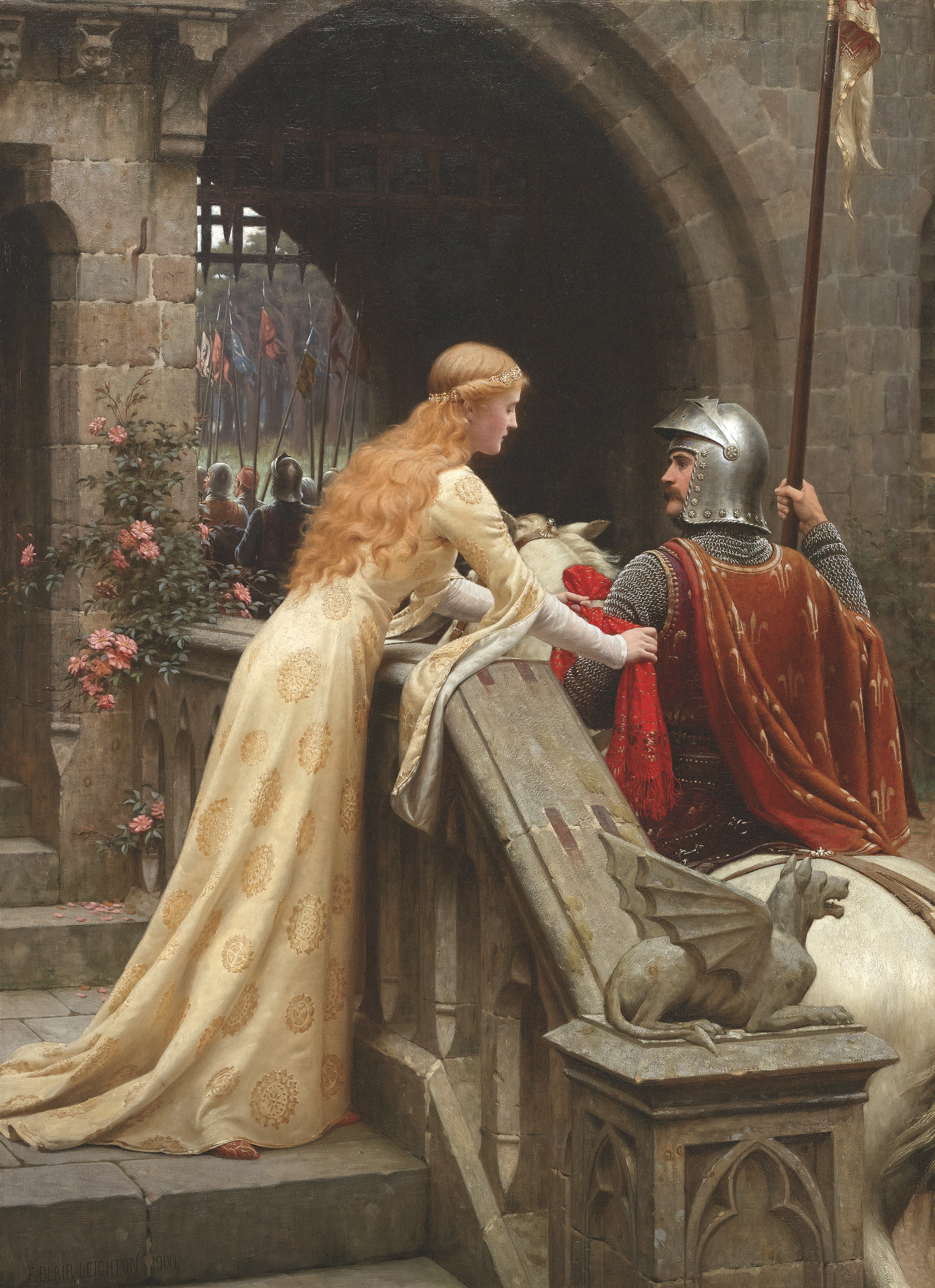
What began, in the minds of the innocent, with this:


Ended with the reality of this:

Better men seeing the futility of it tried to stop the war but the Moloch of secularism was determined to sacrifice all to its insatiable lust for gore and blood.


At a Calvary near the Ancre

One ever hangs where shelled roads part.
In this war He too lost a limb,
But His disciples hide apart;
And now the Soldiers bear with Him.

Near Golgotha strolls many a priest,
And in their faces there is pride
That they were flesh-marked by the Beast
By whom the gentle Christ's denied.

The scribes on all the people shove
And bawl allegiance to the state,
But they who love the greater love
Lay down their life; they do not hate.

Wilfred Owen (1893 - 1918)


...

Monday, 12 November 2007

War vignette: Simpson, the donkey-man of Gallipoli

One story I like is that of the donkey man at Gallipoli, serving with the Australian forces.

Jack Simpson Kirkpatrick was born in 1892 at South Shields in the north east of England. He came from a large family, being one of eight children. As a child during his summer holidays he used to work as a donkey-lad on the sands of South Shields. He had a great affinity with animals, in particular donkeys. Later he deserted ship in Australia when he heard of the war with Germany.

Fearing that a deserter might not be accepted into the Australian Army, he dropped Kirkpatrick from his name and enlisted simply as John Simpson. He was to become Australia’s most famous, and best-loved military hero.

In Perth on 23rd August 1914, Jack was accepted and chosen as a field ambulance stretcher bearer. This job was only given to strong men so it seems that his work as a stoker in the Merchant Marine had prepared him well for his exceptional place in history. He joined the 3rd Field Ambulance at Blackboy Hill camp, 35 km east of Perth, on the same day.

On the 25th April 1915 he, along with the rest of the Australian and New Zealand contingent, landed at the wrong beach on a piece of wild, impossible and savage terrain in Gallipoli, now known as Anzac Cove.

Attack and counter attack began.

During the morning hours of 26th April, along with his fellows, Jack was carrying casualties back to the beach over his shoulder – it was then that he saw the donkey and decided to make use of it to ferry wounded men down the shrapnel-flecked mountain.

From then on he became a part of the scene at Gallipoli walking along next to his donkey, singing and whistling and calmly chatting to his wounded passengers as he held onto them, careless of the extreme personal danger which he risked.

He seemed to lead a charmed life as bullets and shrapnel winged past him harmlessly. But at length, however, on 19th May 1915, he was finally hit by a machine gun bullet in his back which killed him. The donkey-man was dead.

In his amazing 24 days of rescue he was to save over 300 men, ferrying them down the notorious Monash and Shrapnel valleys. His prodigious, heroic feat was accomplished under constant and ferocious attack from artillery, field guns and sniper fire.

It was said of him by an officer: “Almost every digger knew about him. The question was often asked: ‘Has the bloke with the donkey stopped one yet?’. He was the most respected and admired of all the heroes at Anzac.”

Captain C. Longmore, in 1933, remembered how the soldiers “watched him spellbound from the trenches... it was one of the most inspiring sights of those early Gallipoli days”.

Colonel, later Field Marshal Sir John, Monash wrote “Private Simpson and his little beast earned the admiration of everyone at the upper end of the valley. They worked all day and night throughout the whole period since the landing, and the help rendered to the wounded was invaluable. Simpson knew no fear and moved unconcernedly amid shrapnel and rifle fire, steadily carrying out his self imposed task day by day, and he frequently earned the applause of all personnel for his many fearless rescues of wounded men from areas subject to rifle and shrapnel fire”.

The Dying Digger

“Mate, hold me rifle, I think I’m hit.
I’ll rest meself just here a bit.
It’s just a scratch. I’ll soon be fine.
I’ll soon enough be back in line”.

“Not quite so fast, old chum, I’d say
You’ll have to sit it out today.
That shot’s torn half your leg away
I’m gettin’ you back to the Bay”.

“Where’s Simpson? Where’s that donkey bloke?
Here, drink this, mate – try not to choke.
He’ll get you down, old son, you’ll see.
He once did just the same for me”.

“Hang on there, boy, he’ll not be long
That mount of his is good and strong.
No smokes now, mate – yeah, I can tell
You’ve copped one in your chest as well”.

At length the donkey hove in sight
The burly Simpson on his right,
“Up you get, but take it slow,
And hang on tight - now up you go”.

From Palestine, a donkey led
Came once, but on its back instead
A woman, great with child, ‘tis said,
She, too, from mortal danger fled.

So led he then, the soldier's friend,
The bleeding boy, and there to tend
Him in the crowded Bay close by
The Dardanelles, lest he should die.

Death moaned and whined about his head
As down the rocky cliff he led,
Keeping him safely in the lea,
His sacred charge from danger free.

Crusaders who, this land, of old,
Knew well, this new-borne courage bold
Now see in spirit and rejoice
In song withal and warrior’s voice.

Through thorn and bush and sandy height
As shot and shell fell left and right
The humble donkey bore its load
Its master guiding without goad.

“Hey digger, where’s your home?” asks he,
To keep him from despondency,
“Outback”, the blonde-haired youth replies,
And turns his gaze to leaden skies.

This last he speaks before they reach
The sandy bottom on the beach:
“Long way from home”, the soldier breathes,
“Too far” the donkey-man agrees.

No loud hosannas greet them there,
Nor palm tree fronds strewn anywhere,
As greeted Him who also rode
The donkey’s back, a blessèd load.

For fronds, the whining shot they face,
And blasting shells the cries replace.
“You’re safe”, the donkey-man declares
But fate will catch them unawares.

Great Providence had yet decreed
Another way which they must heed,
The donkey-man must weep once more
As oft, so oft, he’d done before.

The dressing station on the shore
Was now close by, this Simpson saw,
But ‘twas too late to pass ahead -
Too late. The golden boy was dead.

~~~"~~~


Their name liveth for evermore...

...