Wednesday, 30 January 2008

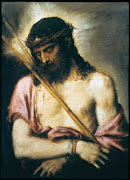
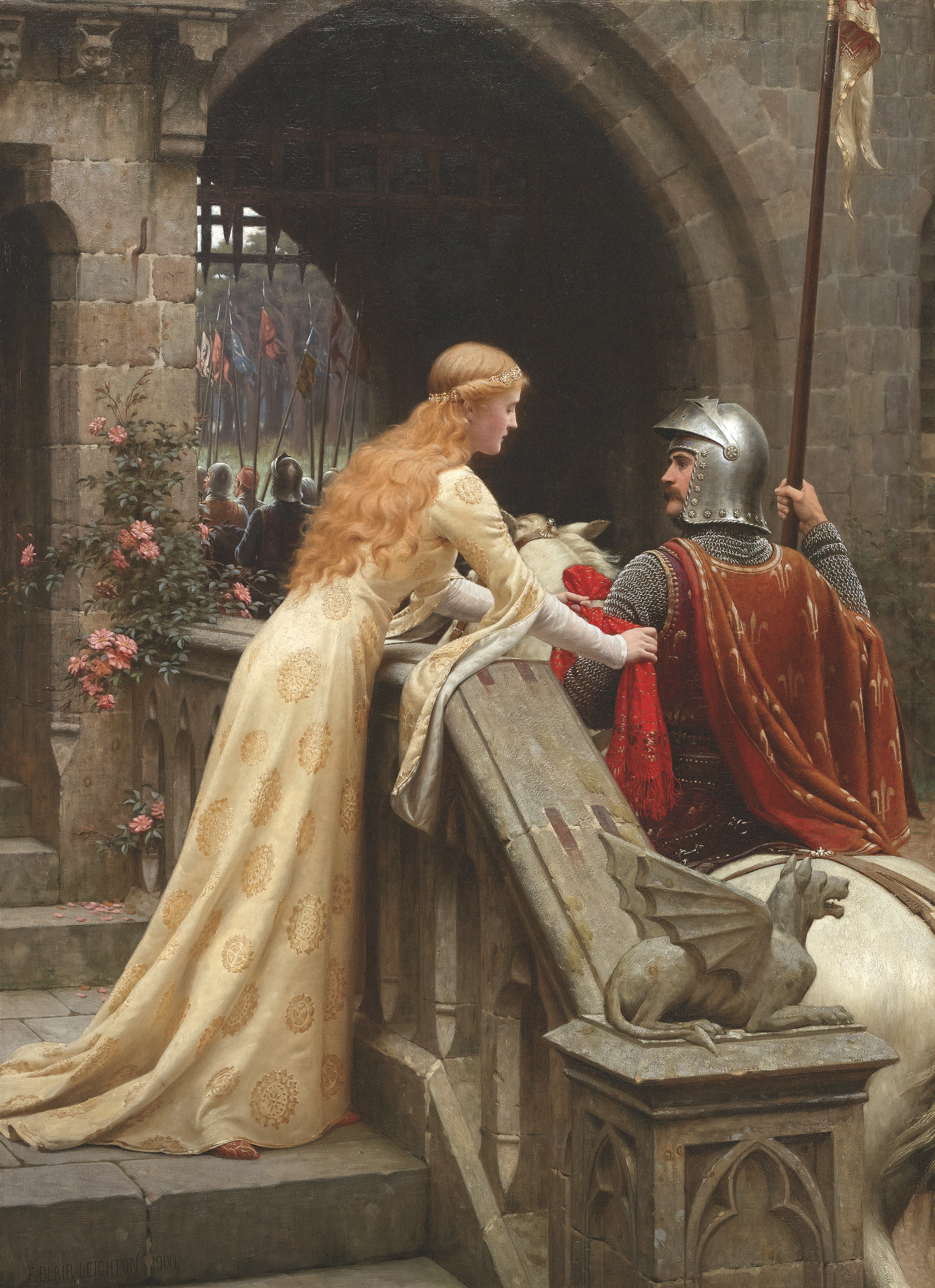
King Charles I: anniversary of the Royal martyrdom

The anniversary of the death of King Charles I is today, 30 January.

Whilst King Charles I was a Protestant and not a Catholic, nevertheless his reign and death are of great significance to the constitutional history of Britain and to Catholic monarchists and Jacobites.

The unnatural rebellion against the King was orchestrated by a parcel of Puritan revolutionaries who, taking the revolutionary spirit of the Protestant Reformation to the next stage, staged a political revolution in England that was to have reverberations throughout history and throughout the Common Law world.

From this devilish rebellion came the inspiration for later, and bloodier revolutions, such as the American, the French, the Russian, the Irish and many another.

The best work on the subject is that of Hilaire Belloc entitled Charles I.

He shows how the monarchy was financially squeezed by the massive inflation that was created by the English Protestant Reformation of King Henry VIII - 300% running inflation year after year.

The traditional revenues of the Crown, such as Ship Money and Poundage and Tunnage, were so tightly squeezed that the King did not have enough to run the state, let alone defend the state.

The Puritan peers, MPs, lawyers and the new men, enriched from the plunder of the monasteries, saw their chance and seized, squeezing the King tighter and tighter so as to demand more and more concessions against the Church of England, the Crown and the Royal prerogative.

The King sought to govern for the whole people and not just for the rich new men.

The Parliamentary Puritans sought to govern for their own benefit and the benefit of the rich, all the time disguising their rapacity as religious Reformation.

This is made crystal clear by the Protestant Anglican author and MP, William Cobbett, in his famous book The Protestant Reformation in England and Ireland in which he flays utterly the rapacious rich new men who profited from the spoliation of the monasteries and ground the face of the poor so utterly as to create a whole new class of paupers, the like of which had never befopre been seen in Merrie England of old when Englishmen were all Catholic.

Eventually, like all revolutions, one brood of rebels began to declare war on others and to swallow them up so that a strong man was soon to emerge and so provide the model for future Fascist dictators.


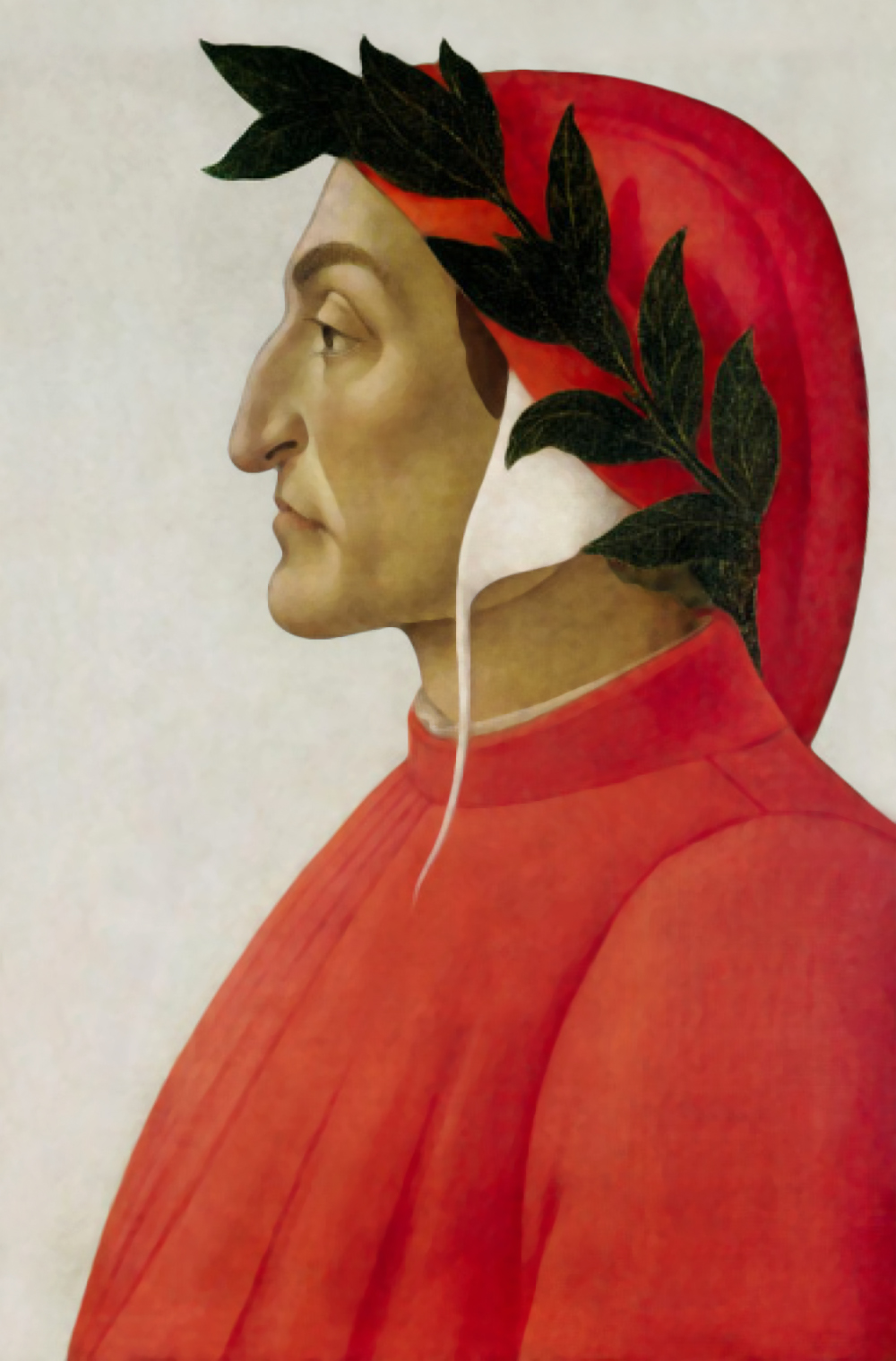
Oliver Cromwell: the traitorous king-murderer and bloody dictator of the English republic


This man was Oliver Cromwell, descendant of the same Thomas Cromwell who had orchestrated the dissolution of the monasteries and the utter pauperisation of the working men of England.

The new rich, rapacious as ever, began a land grab by stealing the common land from the peasantry of England in a process called "Enclosure".

This, on top of the spoliation of the monasteries, helped them to become immensely rich.

But it caused them to fall out with the next rung of the social ladder - the Puritan country squires and townsmen who had not managed to get their snouts into the trough quickly enough.

These men then organised the revolution that was the English Civil War and perpetrated the most unnatural outrage of executing the King - an action without any legal basis whatsoever and an act of the basest treason.

Thereafter the Revolution began to devour its own. Soon the rebels began to rebel against the richer and nobler of the Protestant Ascendancy. Below them, in turn, other species of rebels like the Levellers began to rebel against the Cromwellites.

Cromwell rode roughly over them and over the very parliamentary rights that he claimed to be fighting for.

He was, like all revolutionaries, a gross hypocrite.

Nevertheless, supposedly Catholic historian Lady Antonia Fraser (now Pinter, since her divorce) calls him "Our Chief of Men" - chief of traitors, more like.

King Charles I was a convinced Anglican and so erred himself but this did not excuse the far worse errors and crimes of the Puritan rebels.

He died a martyr for the Christian Constitution of states and as such his martyrdom remains significant to this day.

So rightly said Michael Hodgman QC in an address to Australians for Constitutional Monarchy the groupd campaigning to preserve and protect Constitutional monarchy in Australia where it has worked to remarkably well.

His speech can be read here:

http://www.norepublic.com.au/index.php?option=com_content&task=view&id=693&Itemid=24


....

Tuesday, 29 January 2008

Vernacular readings: the discussion continued

The discussion continues on Shawn Tribe’s website The New Liturgical Movement at:

http://thenewliturgicalmovement.blogspot.com/

He writes:

“As I’ve said as well however, there are two problematic extremes. One is change for its own sake; the other is immobilism.

While there needs to be a certain caution and prudence, there also needs to be discussion and some reasonable sense of the normal, living liturgical process and how that might be manifest or approached. This is more than ever necessary given the problematic ways in which it has been approached in the 20th century.

What can concern me in addition to needless and arbitrary change -- which does concern me -- is that there can develop amongst some an attitude that seems somewhat reactionary, which possibly categorizes any development as equally problematic or undesirable.

Veneration of the liturgy has to occur with a respect to its natural context which is neither innovationist nor immobilist.

We need not agree whether a particular development -- such as this one we’ve been discussing -- is a reasonable development, but it seems to me that there should be at least be an openness to such possibilities in principle; possibilities that must be balanced off by a rejection of mastery over the liturgy; a rejection of liturgy-by-committee; a rejection of any sense of the liturgy and its form as arbitrary.”

And the reader replies:

“Dear Shawn,

Your approach seems to be that we should aim at a compromise as our first goal - a compromise between what you see as two extremes.

This is not the way the Church has ever thought about liturgy. Liturgy is not primarily an exercise in compromising. Liturgy is about worshipping God in the way He wants. And He indicates that by the test of time of time and continuity, as Newman eloquently tells us in his Development of Christian Doctrine.

All liturgical reforms of the Roman rite, save that of Bugnini’s Novus Ordo, have been, first and foremost, preservative and restorative and only after that have they been additive.

They have never been - and mark this well - subtractive.

To subtract from the sacred liturgy has always been seen as akin to sacrilege.

Thus the Gregorian reforms, the Gelasian reforms, the Pian reforms and all reforms (save Bugnini’s) have been what you would call ‘reactionary’. They have sought to eliminate recent and inconsistent novelties encrusted onto the old rite and to restore the rite to its ancient splendour, not by false antiquarianism but by careful preservation of that which has been handed down to us by Sacred Tradition.

Anything new has only ever been additive and then only at the edges of the rite by way of approved and authorised devotions, themselves of considerable antiquity and always entirely fitting to the ancient rite.

Bugnini’s reforms were as far away from such a model as could be imagine and were more comparable to those carried about by the ‘slash and burn’ technique used by the early Protestants who butchered the Roman rite for their own nefarious purposes.

This is how the Apostolic See has, in times past, reformed liturgy. Its approach has been consciously preservative and not innovative. It has indeed been what you would call ‘reactionary’.

There is not only no condemnation by any pope or Council of a reactionary approach to liturgy but, on the contrary, it is the approach that the popes and Councils themselves have always used.

Even Vatican II was largely preservative and not innovative. The innovations came about AFTER the Council.

Liturgy, since it involves the way in which the Church prays to God publicly, is, together with doctrine, the very paradigm of Sacred Tradition and the handing on of that which we have received from our fathers.

The liturgy is not about compromises, development, liturgical processes and so on. To think so is inevitably to hand oneself over to liturgical committees.

It is about the preservation of Sacred Traditions handed down from the time of the Apostles until our time.

Any additions to the liturgy can only come after centuries of the hallowed use BY ALL THE PEOPLE (and not just in the mind of some specious expert) of holy prayers and ceremonies, in keeping with sacred tradition and, eventually after long usage, approved, by such continuous usage, by the Holy See.

Subtractions are never permitted since they savour of suggesting that the Holy Spirit made a mistake in the past.

This is not to suggest that devotions, processions and so on, around and outside the sacred liturgy should be avoided. On the contrary, even certain very slight changes have been allowed within the rite itself giving rise to ‘uses’ of the Roman rite such as the Sarum, York and Aberdeen uses among many others.

Some of these, when hallowed by centuries of use, may, if approved for universal use by the Holy See, become part of the main rite.

That is how the Holy See has, historically, introduced feasts into the Calendar.

But the idea that we can, within anyone’s lifetime, see wholesale novelties added to the rite, no matter how fitting some people may think they are, is simply an idea without any precedent whatever.

The addition of a new feast or saint to the calendar and rite is not a novelty since the idea of venerating the feasts and saints in the liturgy is as old as the liturgy itself and thus not a novelty at all but the continuance of an exceedingly ancient and hallowed tradition.

The idea that we should introduce novelties in each generation but, in doing so, should avoid ‘extremes’ of ‘reaction’ or ‘needless innovation’ is already itself an ‘extreme’ idea and one with not the slightest foundation or basis in Catholic tradition or teaching.

It comes rather from the jejune shallows of modern political discourse where change, revolution, innovation and compromise are the key concepts and where the very idea of hallowed and sacred tradition are laughed to scorn.”

Any further thoughts ladies and gentlemen?


Monday, 28 January 2008

Vernacular readings: treat with caution!

On his site The New Liturgical Movement, on 23 January 2008, Shawn Tribe posts this:

"The Vernacular Option for the Lessons; A Call for Discussion

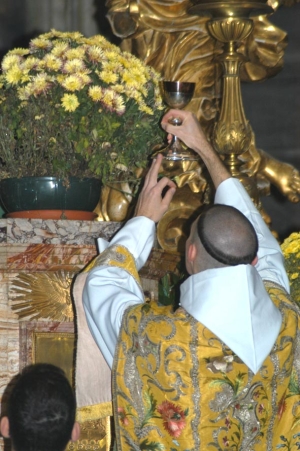
One of our readers sent in this story: Aufer A Nobis: Missa Pro Pace at St. Mary's in Washington, DC. The Mass, offered in the ancient form of the Roman rite, occurred in relation to the Pro-life March in that same capital city.

What I found particularly interesting however was that the celebrating priest, a European priest from the Institute of Christ the King, employed a practice that -- to my knowledge -- tended to be employed within continental Europe, and in particular France: while the celebrating priest quietly read the Epistle and Gospel from the altar in Latin, another member of the clergy read the lessons in the vernacular aloud concurrently.

For whatever reason this practice had not found liturgical expression within the English speaking world -- enough so that to even see or hear of this might seem novel to some -- with the preference instead being for the proclamation of the readings in Latin from the altar and later again from the pulpit (in the vernacular) prior to the homily.

The former, more European practice has always seemed to me to be a more elegant solution that meshed better with the flow of the liturgy. Today however, the option for the use of vernacular readings has been made available to us by the Pope, therefore firming up a development that had been already occuring:

‘In Masses celebrated in the presence of the people in accordance with the Missal of Bl. John XXIII, the readings may be given in the vernacular, using editions recognised by the Apostolic See.’ (Article 6, Summorum Pontificum)

Simply put, the readings proper to the 1962 Missal may be spoken or chanted by the priest at the altar in the natural course of the liturgy.

While it is a point of legitimate disagreement amongst those of us attached to the ancient Roman liturgy, I myself believe that if one is going to have vernacular readings proclaimed (rather than simply read as we might do elsewhere in the liturgy with our missals) then doing so in the way described in article 6 of Summorum Pontificum is a preferable option to exercise given the right conditions -- i.e. pastoral preparation.

Previously we were more limited in this regard and so the aforementioned workarounds were implemented. These have served their purpose in the context of their day, but in the present situation I think we need to now re-analyze our approach to this.

In my mind, neither of the aforementioned practices are the best liturgical solution any longer. After all, if we wish to have the readings proclaimed in the vernacular, why have the priest say them in Latin at the altar while having someone else do so concurrently? Likewise, why have the same epistle read twice and why have people stand and listen to the same gospel proclaimed twice?

In the case of the latter, what I have often found mentioned is the aspect of the preserving the chanted Latin readings. I'd propose that we need not be all or nothing about this. A vernacular equivalent can be worked out using those same melodies -- thereby preserving the chanted aspect -- and if a community wishes to preserve the tradition of the Latin readings (a good thing as well) why not simply make the translation of the readings available to the faithful so that they might read along as the priest or deacon says/sings them in Latin, just as they might at other times in the Mass?

Some might say that I am myself being rather ‘all or nothing’ in promoting a choice between using either the vernacular or Latin for the readings of a particular liturgy -- rather than both-and. However, it seems to me there is something to be said for preserving the normal place of the readings in the context of the natural ebb and flow of the liturgy itself with its associated prayers, tracts, alleluias and ceremonial. So perhaps we need to just make our choice for that Mass, Latin or vernacular readings, and proceed with it accordingly.

There may indeed be some need for preparation of course. Perhaps all that will be required in one community is a simple explanation by the priest of this in the light of the Pope's motu proprio. Perhaps time will be needed for priests to learn how to chant the reading in the vernacular. Perhaps it will take time to source out an approved edition of the readings in question. Moreover, perhaps one's congregation is peculiarly sensitive to this issue, in which case it may be best to work in such possibilities gradually over a more extended period of time.

This is all fine of course. We have had enough rushing into things to last us for quite some time and we need measured, prudent and responsible applications. I am not interested in promoting such rushing in. However, I think it would also be a mistake to not at least begin to approach the issue, or to simply assume that there will be a negative response, particularly now that the Pope has made it a formalized option.

With that in mind, I would be curious to hear your comments either in support, caution, or disagreement. Let's hear your thoughts. In particular, I would be interested in hearing from our clergy celebrating the usus antiquior."


A reader replied to him thus:

“Dear Shawn,

Well! That certainly generated a discussion!

The temptation to change for the sake of compromise is very great but, alas, the itch for compromise and change is what got us in a mess in the first place.

I think there is something mystical at work, here, if it’s not too dramatic to say so.

Why did God allow the virtual suppression of the TLM? In one sense, I suppose, God has preserved His treasure by allowing foolish men to act as if it were suppressed. Thus it has been curiously preserved whole and intact, amidst all the liturgical chaos of the last 40 years.

That seems providential, indeed.

In times past, as the English bishops said in response to Apostolicae Curae in the early 20th century, the idea that anyone could make substantial changes to the liturgy was utterly unthinkable and like a kind of sacrilege. Additions, yes, but subtractions, no, and the vernacular was viewed cautiously because it so easily lends itself to mistranslation and misinterpretation.

The Eastern Churches have a horror of such (and their liturgies are in a sacred vernacular, like Old Slavonic or Geez, which seems to give them, like 1662 Anglicans, an extra sensitivity to the unbridled vernacular). Their view is that the Last Supper was like what we would call a ‘collegial’ or ‘conventual’ mass and that our Lord used Hebrew, as was used in the Temple worship, and not vernacular Aramaic or Koine Greek. And, today, liturgical Aramaic and Greek are not at all colloquial or ‘vernacular’ but more akin to the relationship between Classical Arabic and vernacular Arabic.Which translation of Scripture would be used?

The Earl of Clarendon said, in his history of the English Civil War, that three words had destroyed all peace and stability in the nation. They were: ‘Search the Scriptures’. He did not mean that there was anything bad about Scripture but rather that men wrought Scripture to their own damnation.

For this reason it is better kept in a sacred language and not broadcast promiscuously to the people who may then wrest the meaning to their spiritual destruction. Better that the learned understand it and the clergy explain it (in sermons etc).

When Vatican II urges greater reading of Scripture, that is, of course, right, but that surely meant under the guidance of the Church and not simply by promiscuous reading of Scripture in the vernacular so that the people might make of it what they will.

Liturgically, it seems odd, too, since it can interrupt the flow of the dramaturgy like, say, a man walking on stage during a Shakespeare play to explain in modern English to the audience what the dialogue means.

Yes, more than one thing can happen at a time in a play/liturgy but it can destroy the harmony of the whole if it does not fit the drama or is intruded into the drama.

Some will say that this is just the ‘old guard’ moaning again. Actually, it was a twenty-something black student who made the comment to me.

I think it is wiser to treat phrases like ‘it always seemed to me’ or ‘in my mind’ with caution.

Whenever Tradition is set aside or dismantled it is usually in the name of someone who has had a bright new idea and wishes it to replace what has been handed down for centuries.”

Any views, folks?


...

Monday, 21 January 2008

Eilein Duinn: Karen Matheson sings for Rob Roy

Ailein duinn ("Dark-haired Alan") is the song sung during the Ceilidh in the film version of the life of Rob Roy, just before Alan MacDonald's riderless horse appears at the feast indicating foul play against him and Rob's borrowed money.

It is sung by the immortal Karen Matheson of the singing band, Capercaillie. Sir Sean Connery once said of her that her "throat has been touched by the hand of God".

This haunting melody sung by Karen can be heard on Youtube at the following site:

http://www.youtube.com/watch?v=x8OXbctQwXA

Ailein duinn is a Scots Gaelic (or Gallic) lament written for Ailean Moireasdan (Alan Morrison) by his fiancée, Annag Chaimbeul (Annie Campbell).

In 1788, Ailean, a sailor, set off with his ship to Scalpay, Harris, where he and Annag were to be married.

In a tragic twist, the ship sailed into a storm and all on board were lost.

Annag was devastated and lost her will to live, dying several months later. Her body was later discovered on the beach, not far from where Ailean's body was found. Before she died, Annag composed this lament for her lost love.

It is a story with a tragic ending and whilst it is not edifying that anyone should so lose the will to live yet Annag's undying love for Ailean cannot but move us.

The melody is deeply affecting and is a classic in the genre of the solo female voice singing the Gallic.

Here are the lyrics, in Gallic for those who read it, and translated for those who do not:

Gura mise tha fo éislean
Moch sa mhaduinn is mi g'éirigh

Sèist:
Ò hì, shiùbhlainn leat
Hì ri bhò hò ru bhì
Hì ri bhò hò rinn o ho
Ailein Duinn, ò hì, shiùbhlainn leat

Ma 's e 'n cluasag dhuit a ghaineamh
Ma 's e leabaidh dhut an gheamainn

Ma 's e 'n t-iasg do choinnlean geala
Ma 's e na ròin do luchd-faire

Dh'òlainn deoch ge b' oil le càch e
De dh'fhuil do choim 's tu 'n déidh do bhathadh

"How sorrowful I am
Early in the morning rising

Chorus (after each verse):
Ò hì, I would go with thee
Hì ri bhò hò ru bhì
Hì ri bhò hò rinn o ho
Brown-haired Alan, ò hì, I would go with thee

If it is thy pillow the sand
If it is thy bed the seaweed

If it is the fish thy candles bright
If it is the seals thy watchmen

I would drink, though all would abhor it,
Of thy heart's blood after thy drowning."


...

Rob Roy MacGregor: king of outlaws or oppressed son of the Church?

Robert Roy MacGregor, (1671-1734), called Rob Roy within the MacGregor Clan, was the most famous of the Gregor chieftains albeit not Clan Chief. The Chief of Clan Gregor is MacGregor of MacGregor. MacGregor means "son of Gregor".

The Highland chiefs often adopted the re-duplication of the name in the old Celtic style in preference to the Lowland custom of adding a “designation” to the name. A “designation” is the name of the lands whereon the Chief has his caput (Latin for "head"), his primary house or seat, for example “Cameron of Lochiel”, the Chief of Clan Cameron, has his seat at Achnacarry near Loch Eil.

This designative style is the same as that used by the European nobility who add the name of their primary estate to their name by custom or by royal or imperial permission.

Some other Highland chiefly styles are “The Chisholm” or “the Captain of Clan Chattan”, for example.

Clan Gregor – also called in Gallic, Gregarach - are one of the oldest of Highland Clans, the true “children of the mist”, as many call them whose origins stretch back to the earliest times.

The MacGregors being Catholics and Jacobites who actively opposed the oppressive Whig government were treated with great harshness and severity by the government. Because they resisted so stoutly the oppressive way they were treated, they were declared outlaw and even the use of their name was banned. The Highland dress and language, called Gallic (Scots Gaelic), had already been banned.

The treachery of the government is famously remembered in the story of the Massacre of Glencoe. MacDonald of Glencoe, having indicated he would take up the amnesty for Jacobite "rebels", entertained a party of British troops commanded by a Campbell (the arch-enemies of the Jacobites and especially the McDonalds and Camerons) and gave them hospitality, in return for which the Redcoats treacherously slaughtered many of the MacDonalds in their beds.

Men like MacGregor set themselves against this treachery and oppression and were outlawed for it.

As a result he is sometimes known as the Scottish Robin Hood. Rob Roy is anglicised from the Scots Gaelic Raibeart Ruadh, or Red Robert. This is because Rob Roy had red hair, though it darkened to auburn in later life.

Rob Roy was born at Glengyle, at the head of Loch Katrine. His father was Donald MacGregor, and his mother Margaret Campbell (not all Campbells were anti-Jacobite).

He later met Mary Helen MacGregor of Comar, who was born at Leny Farm, Strathyre, and they were married in Glenarklet in January 1693 later and had four sons: James (known as Mor or Tall), Ranald, Coll, and Robert (known as Robin Oig or Young Rob). A cousin, Duncan, was later adopted.

Rob and his father joined the Jacobite rising led by John Graham of Claverhouse, Viscount Dundee, along with many Highland chiefs and chieftains, to support the Stuart King James II and VII who had been deposed by William of Orange, the Stadtholder of the Netherlands and a scheming, ambitious Protestant but also the son-in-law of King James.

John Graham of Claverhouse (pronounced "Clavers"), Viscount Dundee, nicknamed "Bonnie Dundee" on account of his famous good looks.


“Bonnie Dundee”, as he was called on account of his handsome looks, was a brilliant Brigadier-General and persistently harried and defeated the government troops with his blue-bonneted Jacobite clansmen but, by an unfortunate chance, was killed at the point of victory in the Battle of Killiecrankie. Thereafter, lacking his brilliance, the Jacobite cause began to lose its advantage.

Rob’s father was taken to jail, where he was held on doubtful treason charges for two years. His mother’s health deteriorated during this time and she died upon Donald’s release.

Nevertheless, Rob Roy continued to fight in the Jacobite cause and led an army at the inconclusive Battle of Glen Shiel in 1719 in support of King James’s son, also James, the rightful King James III and VIII but who never regained his father’s throne. Rob Roy was badly wounded at Glen Shiel.

Thereafter, he was forced to become a cattleman and to sell protection for other men’s cattle, sometimes by taking them himself, robbing the rich to give to the poor. Needless to say, many Whig historians have – with consummate hypocrisy given their own legalised grand larceny and robbery – have much vilified him and his Clan for this “blackmailing”.

Rob Roy later borrowed a large sum of money to increase his own cattle herd, but due to a deception, some say by Whig skullduggery and some say by his own chief herder who was entrusted with the money to bring the cattle back, Rob Roy lost his money and cattle, and defaulted on his loan.

He was again re-branded an outlaw, and his wife and family were evicted from their house at Inversnaid, which was then burned.

His principal creditor was, ironically, James Graham, Marquess (later Duke) of Montrose who was close kinsman to John Graham, Viscount Dundee, the same “Bonnie Dundee” who had been the great Jacobite general.

Montrose seized his lands forcing Rob Roy to war with the Duke until 1722, when Rob was finally forced to surrender. Later imprisoned, Rob was finally pardoned in 1727 thanks to the fictionalised account of his life told by Daniel Defoe, the English novelist, entitled Highland Rogue which influenced King George I to pardon him. He died in his house at Inverlochlarig Beg, Balquhidder, on 28 December 1734.

His grave states, defiantly, “MacGregor despite them”, a reference to his determination to carry on his family name despite the oppressive ban upon it.

Sir Walter Scott, Bt, later glorified his name yet further in his 1817 novel Rob Roy.

The MacGregor seat, Glengyle House, on the shore of Loch Katrine, dates back to the early 18th century. It is built on the site of the 17th century stone cottage in which Rob Roy is said to have been born.

Glengyle House, Loch Katrine, in the heart of MacGregor country

In Robert Louis Stevenson’s novel, Catriona, sequel to Kidnapped, the hero. David Balfour of Shaws, meets and falls in love with Catriona MacGregor-Drummond, the daughter of James MacGregor-Drummond, also known as James Mor (meaning James the Great). There was a real James Mor MacGregor in the muster roll lists of the Battle of Culloden, the last great Jacobite battle in which “Bonnie Prince Charlie”, the grandson of James II and VII, was defeated and his wounded men massacred by the Whig general, “Butcher” Cumberland (Duke of Cumberland and a Hanoverian).

Catriona’s family append the name “Drummond” because the MacGregor name has been banned. Catriona engineers her father’s escape from prison. David marries her allying himself thereby with the Clan Gregor, the most ancient of the Jacobite clans.

The message is clear: the author, though a Protestant like Sir Walter Scott, is, like Scott, more in sympathy with the Jacobites than he is with those of his own background.


The grave of Rob Roy, his wife and children which defiantly states "MACGREGOR DESPITE THEM".

Domine, miserere eis.

Dona eis, Domine, requiem aeternam. Requiescant in pacem et lux perpetua luceat eis.


...

Tuesday, 15 January 2008

The truth about the Spanish laws against slavery: rebutting the atheist sceptics again

A recent correspondent thinks that all the Spanish rulers in Latin America were a parcel of rogues and trots out the usual Secular Fundamentalist claptrap, displaying the usual almost complete ignorance of history and not one shred of evidence to support her jaundiced hypothesis (bless 'er!).

Here's what she writes:

'Stepping out of the classifications of "Roman Catholic" and "protestant" and "freemasons" we can simply observe the phenomena from a human scale. All parties concerned exploited what seemed to be a good economic venture. Some parties tried to stop it but people will be people and humans tend to think more about themselves than other people. Protestant, Catholic, whatever, they all wanted the wealth of the New World and took it however they could, disregarding the inhumanity that brought it about. The Americas was peopled by Hidalgos and Conquistadors who were fresh from the Crusades and the Inquisition and wanted adventure. Besides the New World was peopled by pirates, buccaneers, criminals and other undesirables. No one could expect them to "behave" themselves and no one cared if they misbehaved because according to all of those groups enumerated, they were going to hell anyway, Amerindians and colonists alike. The MAJORITY felt that as long as they profited it would be fine. If all the people in the churches (this is plural, now) had felt so strongly about it they would have found a way to stop it. So, good intentions aside, all of these religious institutions oversaw the continuation of Amerindian exploitation and extinction and it didn't help that a few thought it was bad because most did not care.'

Here is how I replied to her:

'I'm sure you're a lovely lady. But...according to your world-view, seemingly, almost everyone is stinkingly corrupt, out for themselves, cares nothing for the rights of others, thinks more about themselves, that is just the way people are, whether Catholic or Protestant or Secular they are all out for one thing - themselves.

I do not share your cynical view of the world.

How does your cynical view accommodate the Jesuit saints who built the Reducciones for the native Indians like the Guarani?

How do you explain that a handful of Jesuits taught hundreds of Guarani how to build homes, town halls, magnificent churches, to play beautiful Baroque music, to make some of the best musical instruments in the world and so many other things?

Have you ever even heard the powerfully beautiful choral works that were written by Amerindian composers themselves - in the jungle, moreover! - having been taught the art of musical composition by the Jesuits in the 17th and 18th century?

Well? Have you?

St Peter Claver SJ, Apostle of the Slaves


How do people like St Peter Claver, who made himself the servant of the slaves, fit into your sad little view of the world?


What about St Martin de Porres, one of the most beautiful of the many amazing and wonderful black saints of the Catholic Church?

St Martin de Porres, the sainted Dominican lay brother

Were these people all pirates, buccaneers, criminals and undesirables?

Do you really believe that?

And, if not, then consider that the Church that inspired them to these great and heroic acts was none other than the Roman Catholic Church which you so much disdain to consider favourably.

Did this legion of friars, brothers, priests, nuns and sisters think that all those whom they gave their lives for were just going to Hell, were only good for exploitation, extinction and profit?

Did these sons and daughters of the Roman Catholic Church simply refuse to care?

No, of course not.

Why not?

Because they did not share your sad and cynical view of humanity and of the world. They saw the image of God in their fellow men and women and sought to serve them as they would serve God Himself.

They no longer thought chiefly of themselves but were ready to give themselves completely for others.

How quickly does this radical self-giving explode your sad little view of the world!

Do you see this? Do you see what it is that inspires these heroic saints? Can you comprehend it, my dear?

Let me tell you what it is.

It is what we Catholics call love.

I think you have been reading too much Philip Pullman and Dan Brown (you list them among your favourites) and have read too little of the actual laws passed by the Spanish Crown for the governance of the New World.

King Phillip II of Spain who maintained the laws against slaving in the face of opposition from godless Spanish anti-clericals and anti-monarchists in the New World

And you have obviously read even less of the lives of the saints!

The story of their lives is not some clever fairy tale dreamt up by a couple of cynical atheists, like Brown and Pullman.

The lives of the American saints are TRUE stories. They actually and really happened.

The evidence is there for you to read and discover - if you can bring yourself to do it.

BUT where is YOUR evidence?

I've given you evidence in the form of the actual laws that were promulgated by the Spanish Roman Catholic kings under the influence of the Spanish Roman Catholic Church.

It may suit your Secular Fundamentalist world outlook to believe that there is no difference between Catholics and other religions but history and fact are against you.

There were secularists in those days, too, however much you may wish to pretend otherwise.

And it is a matter of historical fact that the slavers were exactly the same people who became the anti-clericals and anti-monarchists who hated the Church and the Spanish crown.They hated Church and King because both outlawed the slave-trade by which the slavers were enriching themselves.

Read the facts and face the truth - if you dare.

Read and be amazed!'

But will she?

I wonder.

St Peter Claver and St Martin de Porres, pray for us!


...

Monday, 14 January 2008

Jefferson Davis: answering the sceptics

I am still getting posts from sceptics who are (all innocently in most cases) still so badly infected with modernist historical piffle and secular fundamentalist propaganda that they just cannot bring themselves to believe that Jeff Davis wore Catholic devotional symbols about his person.

One good-natured soul writes thus:

"I would REALLY love to believe all of this, really I would... But do you have a citation for

'Davis always wore a St. Benedict Medal and a Miraculous Medal as well as a French scapular. Someone had also given him the brown scapular of the Discalced Carmelites. All of these he wore in prison and preserved to the end of his life.'

I wear all of those as well... would love to believe he did too, but... I am not sure I believe this one."

I answer him/her thus:

"Worry no more.

You may believe it all!

There are a number of sources but this one is good:

Jefferson Davis: the Unconquerable Heart (1999) by Felicity Allen (Blue and Grey Series).

At page 440, she writes this:

'Davis wore round his neck at that very moment, besides his St Benedict medal the one already known as 'Miraculous', struck just 33 years before, from the vision of a French Sister of Charity, still living, who would one day be known as St Catherine Laboure.

Nor were these all: thin woven laces over his shoulders held on his breast and back the little cloth panels of a French scapular. Both these distinctly Roman Catholic channels of blessing had been sent to him by the Sisters of Charity who had cared for his family in Savannah.'

Believe and be no more unbelieving, O ye of little faith!

I realise that it is hard for us moderns to get our heads round the fact that the secular, liberal, anti-Christian view of history is false but you really must try and overcome the Secular Fundamentalist mumbo-jumbo that the media, the chattering classes and the more worldly of your teachers and professors have tried to hoodwink you with!

Real history and the truth is much more interesting, fascinating, inspiring and fulfilling.

FREE YOUR MIND!

REJECT SECULAR FUNDAMENTALIST CLAPTRAP NOW!

And enjoy the book, too!"

Yes, folks, Jeff Davis really did wear them!


...