Monday, 12 September 2011

We came, we saw, God conquered: 9/11, the Battle of Vienna, the Holy Name of Mary

Today, 12 September, is the Feast of the Holy Name of Mary.

It is the day that the cavalry of Poland and the Holy Roman Empire saved Christian Europe, aided by the Holy Mass and the Holy Rosary.

It is, perhaps, no accident that the 9/11 terrorists chose the first day of the Battle of Vienna, 11 September, to launch their now world-famous attacks on the World Trade Towers in New York City.

After the loss of the Holy Land, the Eastern Roman Empire and control of the Mediterranean, Christendom was in constant danger of being overwhelmed by the Muslim Ottoman Turks and the Protestant Reformation further weakened the defences.

Moreover, Catholic Christendom was fighting, now, on two fronts against both Muslim and Protestant and might, at any time, be swept away altogether.

Particular determination, tenacity and courage were now needed more than ever from the defenders of Christendom.

Fortunately, courage was not lacking.

In September 1529, after defeating the Hungarians at the Battle of Mohacs, the Ottoman Turks and their allies laid siege to Vienna – the famous Siege of Vienna of 1529.

After a tremendous struggle the Austrians, under the 70-year-old Count Nicholas von Salm, were finally victorious, although Salm himself was killed during the siege.

On 7 October 1571, the Ottoman Turks had seized the opportunity to launch a vast fleet to conquer as much of Christendom as they could conquer.

Almost miraculously, they were defeated at the Battle of Lepanto by the combined Christian fleets under the command of Grand Admiral Don John of Austria, the illegitimate son of the Roman Emperor, Charles V.

To these were added the prayers of Christendom since the pope, St Pius V, had ordered a Christendom-wide Rosary prayer campaign for victory.

Moreover, a copy of the miraculous image of our Lady of Guadalupe sat in the cabin of Don John throughout the battle. The victory of Lepanto was commemorated by a new Feast, that of our Lady of Victory (or Victories) which was later made universal and later still re-named the Feast of our Lady of the Rosary.

In 1716, Clement XI inscribed the Feast of our Lady of the Holy Rosaryon the universal calendar in gratitude for the victory gained by Prince Eugene of Savoy, commander of the Imperial forces of the Habsburg Roman Emperor, on 5 August at Peterwardein in Vojvodina, in Serbia.

Later, however, on 11 September 1683 – 9/11 no less – came the Battle of Vienna of 1683, when King Jan (John) III Sobieski of Poland-Lithuania, also accompanied by Christendom-wide praying of the Rosary, delivered Vienna and Christendom once again from the Muslim Ottoman Turks and protected the Holy Roman Empire of Emperor Leopold I from imminent destruction.
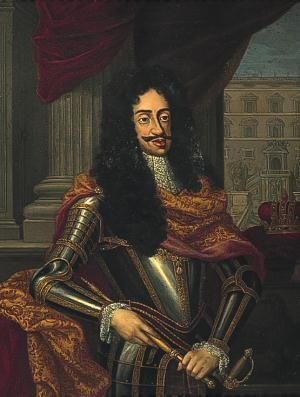
Emperor Leopold I, Holy Roman Emperor at the Battle of Vienna


After the victory of Sobieski over the Turks, Blessed Pope Innocent XI, extended the Feast of the Holy Name of Mary to the whole Church to be celebrated on 12 September in memory of the deliverance of Christendom. The feast was extended to the universal Church and assigned to the Sunday after the Nativity of Mary by a Decree of 25 November 1683, or, if that was not possible, then it had to be kept on 12 September.

12 September had also been the day of the Battle of Muret 1213, when Count Simon de Montfort (father of the founder of the English parliament) and 700 knights had defeated the Albigensian army of some 50,000, whilst St Dominic and his friars were praying the Rosary in the church of Muret.

But 9/11 was the day that the battles began in each case.

The Battle of Vienna took place on 11 September and 12 September 12, 1683 after Vienna had been besieged by the Ottoman Empire for two months. The battle broke the advance of the Ottoman Empire into Europe, and marked the political hegemony of the Habsburg dynasty and the beginning of the end of the Ottoman Muslim Empire.The battle was won by Polish-Austrian-German forces led by King Jan III Sobieski against the Ottoman Empire army commanded by Grand Vizier Merzifonlu Kara Mustafa Pasha.


King Jan III Sobieski of Poland -Lithuania

The siege itself began on 14 July 1683 with an the Ottoman Empire army of approximately 138,000 men. The decisive battle took place on 12 September, after the united relief army of 70,000 men had arrived, pitted against the Ottoman army.

The battle marked the turning point in the 300-year struggle between Roman Christendom and the Ottoman Empire.
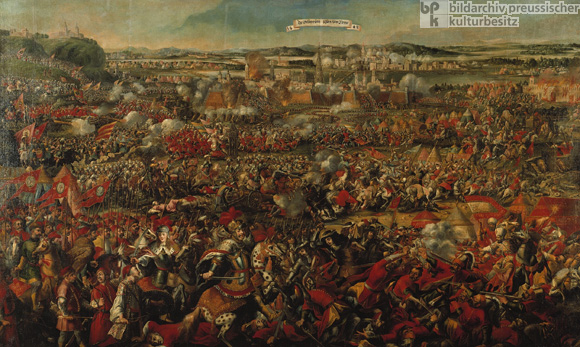
The siege before the Battle of Vienna (1683)


The capture of the city of Vienna had long been a strategic aspiration of the Ottoman Empire.

The Ottoman Empire had even been providing military assistance to dissident Hungarians and to anti-Catholic minorities in Habsburg-occupied portions of Hungary. There, in the years preceding the siege, Ottoman-fomented unrest had become open rebellion upon Leopold I's pursuit of Catholic Counter-Reformation principles.

King Jan Sobieski salutes the Roman Emperor Leopold I

In 1681, Protestants and other anti-Habsburg forces, led by Imre Thököly, were reinforced with a significant force from the Ottoman Muslims, who recognized Imre as King of "Upper Hungary". This support went so far as explicitly promising the "Kingdom of Vienna" to the disloyal and treacherous Hungarians, if it fell into Ottoman hands.

In 1681 and 1682, clashes between the forces of Imre Thököly and the Habsburgs' military frontier forces intensified, which was used as a casus belli by Grand Vizier Kara Mustafa Pasha in convincing the Sultan Mehmet IV and his Divan, to allow the movement of the Ottoman Army. Mehmet IV authorized Kara Mustafa Pasha to operate as far as Győr and Komarom castles, both in northwestern Hungary, and to besiege them. The Ottoman Army was mobilized on 21 January 1682, and war was declared on 6 August 1682.

Sultan Mehmet IV

The wording of this declaration left no room for doubt what would be in store after a Turkish success.

Mehmet IV wrote to Leopold I thus, verbatim:

"We order You to await Us in Your residence city of Vienna so that We can decapitate you... (...) We will exterminate You and all Your followers... (...) Children and adults will be equally exposed to the most atrocious tortures before being finished off in the most ignominious way imaginable..."

During the winter, the Habsburgs and Poland concluded a treaty in which Leopold would support Sobieski if the Turks attacked Kraków; in return, the Polish Army would come to the relief of Vienna, if attacked.

The King of Poland prepared a relief expedition to Vienna during the summer of 1683, honouring his obligations to the treaty. He went so far as to leave his own nation virtually undefended when departing from Kraków on 15 August, the Feast of the Assumption of our Lady. Sobieski covered this with a stern warning to Imre Thököly, the rebellious Hungarian Protestant leader, whom he threatened with severity if he tried to take advantage of the situation — which, nevertheless, the treacherous Thököly did.

The main Turkish army finally invested Vienna on 14 July.

Count Ernst Rüdiger von Starhemberg, leader of the remaining 11,000 troops and 5,000 citizens and volunteers, refused to capitulate.

Count Ernst Rudiger von Starhemberg, commander of the Vienna garrison

The Turks dug tunnels under the massive city walls to blow them up with explosives, using sapping mines.

The Ottoman siege cut virtually every means of food supply into Vienna, and the garrison and civilian volunteers suffered extreme casualties. Fatigue became such a problem that Count von Starhemberg ordered any soldier found asleep on watch to be shot. Increasingly desperate, the forces holding Vienna were on their last legs when in August, Imperial forces under Charles, Duke of Lorraine, beat Imre Thököly of Hungary at Bisamberg, 5km northeast of Vienna.

On 6 September, the Poles crossed the Danube 30km north west of Vienna at Tulln, to unite with the Imperial forces and additional troops from Saxony, Bavaria, Baden, Franconia and Swabia who had answered the call for a Holy League that was supported by Pope Innocent XI.

The devious King Louis XIV of France declined to help and instead used the opportunity to attack cities in Alsace and other parts of southern Germany. Anyone who thinks Louis XIV a good Catholic king really needs to think again.

During early September, the experienced 5,000 Turkish sappers repeatedly blew up large portions of the walls, the Burg bastion, the Löbel bastion and the Burg ravelin in between, creating gaps of about 12m in width. The Austrians tried to counter by digging their own tunnels, to intercept the depositing of large amounts of gunpowder in subterranean caverns. The Turks finally managed to occupy the Burg ravelin and the Nieder wall in that area on 8 September. Anticipating a breach in the city walls, the remaining Austrians prepared to fight in Vienna itself.

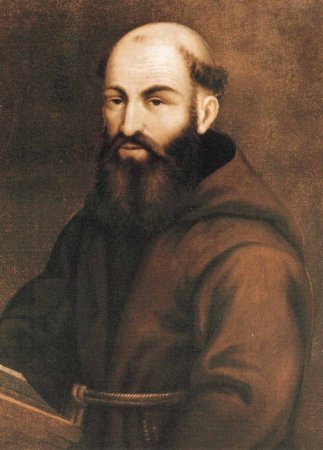
The relief army had to act quickly to save the city from the Turks and to prevent another long siege in case they would take it. Despite the international composition of the Army and the short time of only six days in which to organise, an effective leadership structure was established. This was largely the work of the extraordinary and holy Austrian Chaplain-General, Blessed Marco d'Aviano, Emperor Leopold's privy counsellor.

Blessed Marco d'Aviano, OFMCap, Imperial Chaplain-General


The Holy League forces arrived on the Kahlenberg (bare hill) above Vienna, signalling their arrival with bonfires. In the early morning hours of 12 September, before the battle, King Jan served a Solemn High Mass.

While the Turks hastily finished their mining work and sealed the tunnel to make the explosion more effective, the Austrian "moles" detected the cavern in the afternoon and one brave man entered and defused the mines just in time.

At the same time, the Polish infantry had launched a massive assault upon the Turkish right flank.

After 12 hours of fighting, Sobieski's Polish force held the high ground on the right. At about 5pm, after watching the ongoing infantry battle from the hills for the whole day, four cavalry groups, one of them Austrian-German, and the other three Polish, totalling 20,000 men, charged down the hills - the largest cavalry charge in history.

The attack was led by the Polish king himself in front of a spearhead of 3000 heavily wing-armoured Polish lancer-hussars. This charge thoroughly broke the lines of the Ottoman troops. Seizing the initiative, Starhemberg led the Vienna garrison in sallying out of its defences to join the assault.
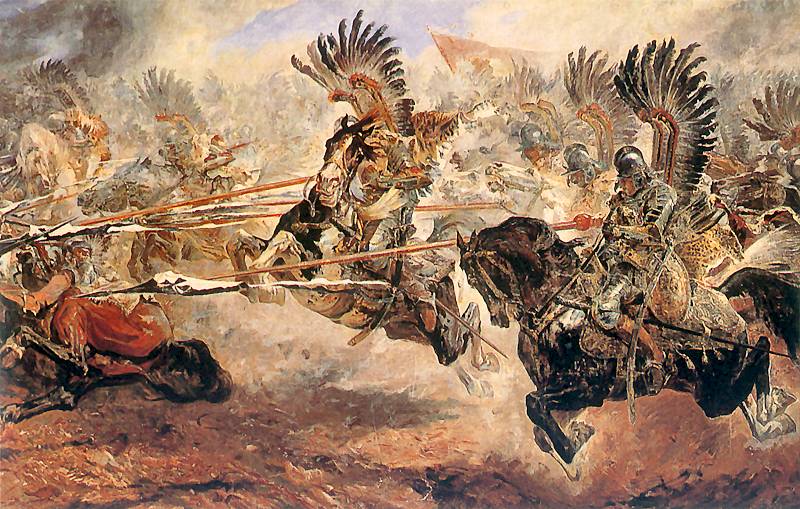
The massive charge of the Polish winged lancer-hussars which terrified the Ottoman troops and decided the Battle of Vienna. The wings made a terrifying sound as the Polish hussars came charging down the mountainside.

In less than three hours after the cavalry attack, the Christian Imperial forces had won the battle, saved Vienna from capture and rescued Christendom from the Turks.

One may recall the decisive charge of the Rohirrim from Tolkien's Lord of the Rings, to get a flavour of what it must have been like, King Jan III Sobieski leading his Polish hussars just as King Theoden led his Riders of Rohan.

After the battle, Sobieski paraphrased Julius Caesar's famous quote by saying "venimus, vidimus, Deus vicit" - "We came, we saw, God conquered".


The Battle of Vienna

The Turks lost about 15,000 men in the fighting, compared to approximately 4,000 for the Habsburg-Polish forces. Though routed and in full retreat, the Turkish troops had found time to slaughter all their Austrian prisoners, with the exception of those few of nobility which they took with them for ransoming.

King Jan vividly described events in a letter to his wife a few days after the battle:

“Ours are treasures unheard of ... tents, sheep, cattle and no small number of camels ... it is victory as nobody ever knew of, the enemy now completely ruined, everything lost for them. They must run for their sheer lives ... Commander Starhemberg hugged and kissed me and called me his saviour.”

The victory at Vienna set the stage for Prince Eugene of Savoy's reconquest of Hungary and the Balkans within the following years.

Long before that, the Turkish Sultan had disposed of his defeated commander. On 25 December 1683, Kara Mustafa Pasha was executed in Belgrade.

However, it was the end for the Ottoman Empire. The Ottomans fought on for another 16 years but lost control of Hungary and Transylvania and capitulated finally by the Treaty of Karlowitz.

Christendom was once again safe.

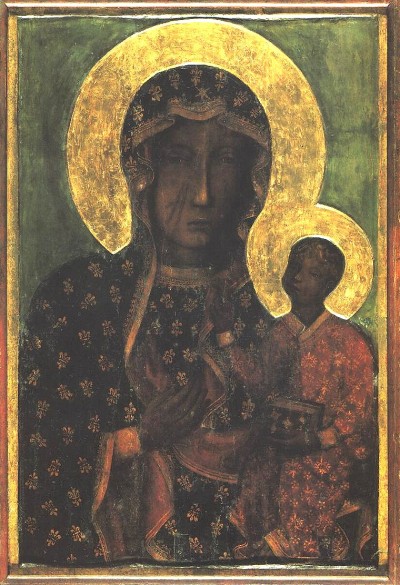
Because Sobieski had entrusted his kingdom to the protection of the our Lady of Czestochowa before the battle, Blessed Pope Innocent XI commemorated his victory by extending the feast of the Holy Name of Mary to the universal Church.

Croissants signify the Turkish crescent

The Battle of Vienna was marked by culinary inventions:

1. The croissant was invented in Vienna to celebrate the defeat as a reference to the crescents on the Turkish flags.

2. The bagel was made as a gift to King Jan Sobieski to commemorate the victory, being fashioned in the form of a stirrup, to commemorate the victorious charge by the Polish cavalry.

The Bagel, symbolising the Polish stirrup


3. After the battle, the Austrians discovered many bags of coffee in the abandoned Turkish encampment. Using this captured stock, Franciszek Jerzy Kulczycki opened the third coffee house in Europe and the first in Vienna, where, Kulczycki and Marco d'Aviano adding milk and honey to sweeten the bitter coffee, thereby invented the cappuccino, so named after Blessed Marco because of the Capuchin’s brown hood.

The Capuccino or "Capuchin", named after Bl Marco d'Aviano, Imperial Chaplain-General


Our Lady of Czestochowa, pray for us!
Blessed Marco d'Aviano, pray for us!
Holy Name of Mary, protect us!

...

Saturday, 13 August 2011

London's burning - the London riots reflect years of contempt by secular liberal fundamentalists for ordinary values


London streets have been the scene of rioting and havoc which are plainly the result, not of poverty, but of decades of contempt for ordinary human values, particularly on the part of secular liberal fundamentalists.

The innocent are punished by the riotous children of sloth, envy, greed and arrogance. The police have not handled matters ideally, either.

Events have unfolded as follows, according to London’s Metro magazine:

August 4: 29-year-old Mark Duggan was shot dead by police in Ferry Lane, Tottenham.
Officers had stopped his taxi to arrest him as part of a pre-planned operation, according to the Independent Police Complaints Commission.

August 6: Around 120 people march peacefully from the local area of Broadwater Farm to Tottenham police station, demanding "justice" for Mr Duggan's family.

However the initially peaceful protest turns ugly after missiles were thrown at police, cars, and buildings and a double-decker bus are set alight by rioters.


Rioters attack police horses

August 7: The looting begins in the early house of Sunday morning, with a mob taking things from almost all the stores in Tottenham Hale Retail Park half a mile away.

Mr Duggan's family state that they do not condone the action of the rioters, which left property in Tottenham damaged and rendered a number of people homeless.

On Sunday evening, trouble flares in Enfield, North London, with further violence and looting in the high street, and in Brixton, south London, with shops and buildings ransacked and damaged.


A rioting yob kicks in a window

August 8: Reports emerge of “copycat criminal activity” in several other parts of London.

Deputy Assistant Commissioner Steve Kavanagh blames Twitter for fuelling looting and violence as the website is used to organise riots.

The Home Secretary Theresa May returns home from holiday to deal with the crisis, followed several hours later by the Prime Minister who returns from Italy.

Mayor of London Boris Johnson announces he will also return from his family holiday to help deal with the crisis.

Scotland Yard apologises to the family of Mark Duggan for the “distress” caused to them following his death. His fiancée, Semone Wilson, says the riots had “got out of hand” and were “not needed at all”.

As night falls, mayhem grips London with riots and looting on the streets of Clapham Junction, Ealing, East Dulwich, Bethnal Green, Newham, Lewisham, Camden, Enfield, Croydon, Peckham and Hackney.


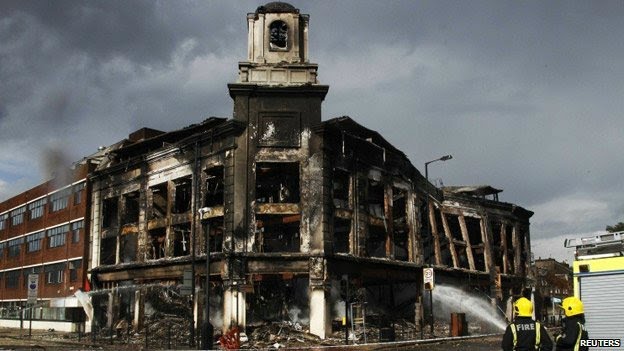
A department store in Croydon is burned out

The violence also moves out of London for the first time, with thugs going on the rampage in Liverpool, Bristol, Birmingham, Reading and Kent.

A 26-year-old man, Trevor Ellis, of Brixton Hill, is found with gunshot wounds inside a car in Croydon.

August 9: Scotland Yard announces it has had help from 11 other forces in policing the streets.

The Prime Minister chairs a 9am meeting of the Cobra Committee to discuss the unfolding emergency.

Acting Met Commissioner Tim Godwin calls for all special constables to be allowed on duty and announces 16,000 police officers would be on duty in London, with all leave cancelled.


A woman jumps to rescuers to escape being burnt to death

The Football Association announces that England's friendly match against Holland at Wembley Stadium, due to take place on Wednesday night, has been called off.

Mark Duggan's inquest opens and adjourns after hearing the father-of-four died from a single bullet to the chest.

The Ministry of Justice confirms there is enough room in jail for anyone sentenced to custody as a result of the violence and looting. Meanwhile David Cameron announced Parliament will be recalled from its summer break on Thursday to discuss the crisis.

Trevor Ellis, who was shot in Croydon on Monday night, dies from his injuries.

Riot clean-up sees members of the public take to the streets to clear up the damage caused to parts of London in Monday's night of violence - with the campaign quickly gathering momentum on Twitter. This “broom army” restores tidiness to many streets.

Businesses in London close early in anticipation of a fourth night of violence - but the capital remains quiet. However rioting spreads to Manchester, Birmingham, Nottingham, Wolverhampton and Gloucester.

A police station in Nottingham is fire-bombed by a group of 30 to 40 men. Cars are burnt and shops looted in West Bromwich and Wolverhampton.


A bus is set alight and explodes

August 10: A murder investigation was launched after three young men died after being hit by a car while trying to protect their community from rioters in Birmingham.

Tariq Jahan, whose 21-year-old son Haroon Jahan was killed alongside Shazad Ali, 30, and Abdul Musavir, 31, made an emotional, dignified plea for the violence to stop.

Police charge a number of people for using social networking sites to incite others to commit acts of disorder.

Boris Johnson calls on the Government to reconsider plans to reduce police numbers in the wake of the widespread rioting.

The first people to be arrested during the riots are fast-tracked through the courts, with judges sitting around the clock in order to hear all the cases. Among the first to be convicted is Alexis Bailey, a primary school learning mentor from South London.


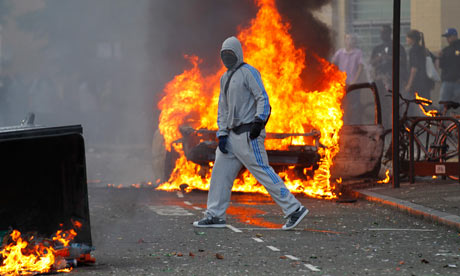
A "hoodie", a youth wearing a hooded top so that he cannot be later identified, walks past a burning car

David Cameron insisted the "fightback" by police was succeeding adding that contingency plans were in place for water cannon to be available at 24 hours' notice. He said: "It is clear there are things that are badly wrong in our society".

Six forces - the Metropolitan Police, West Midlands, Nottinghamshire, Avon and Somerset, Greater Manchester and Gloucestershire - drafted in extra officers from other constabularies amid fears of a fifth night of violence.

The streets of London and other cities affected by the riots remain calm.


The burnt out department store

August 11: Parliament is recalled to discuss the emergency and Mr Cameron vowed to do “whatever it takes” to restore order to the streets.

He announced £30 million in central government funding to help businesses get back up and running and councils to clear up the riot damage.

An 11-year-old girl appears in court charged with criminal damage after she was caught with a group of youths smashing store windows in Nottingham.


An anarchist sloganises and waves the Black Flag of the Anarchists.
The "small print" on the sign says "One War - Class War", the cry of every Marxist or anarchist revolutionary

A murder investigation is launched after Richard Mannington Bowes, 68, who was attacked by rioters as he tried to put out a fire during the riots in Ealing on Monday, dies in hospital from his injuries.

The IPCC appeal for witnesses to come forward a week after Mr Duggan's death.
Scotland Yard said a total of 1,009 people had been arrested in connection with violence, disorder and looting in London since Saturday, of whom 464 have been charged.

Greater Manchester Police said they had so far made 147 arrests in connection with the riots and more than 70 people had already appeared in court.


The Right "Honourable" Harriet Harman MP
blames it all on government "cuts" - cuts that became necessary because of the waste and mismanagement of the spendthrift government of which she was deputy leader and, for a time, interim leader


The Rt Hon Harriet Harman MP, Deputy Leader of the British Labour Party, comes from an upper class family and has no idea about living in poverty or on the margins of society. She is a radical, “pro-choice” Feminist of the most typecast kind and a typically rich, self-interested “champagne Socialist”. Her aunt was Elizabeth Pakenham, Countess of Longford, and her cousins include writers Lady Antonia Fraser, Lady Rachel Billington, and the Hon Thomas Pakenham, 8th Earl of Longford, all theoretically Catholic.

Harman attended a fee-paying public (i.e. private or "preppie") school, St Paul's Girls' School. In 1982 she was found in contempt of court by Mr Justice Hugh Park - see Harman v The Home Office [1983] 1 AC 280, the conviction for contempt being upheld on appeal.

Documents were released by the Home Office for use in court, Harman having indicated that she well knew that she was forbidden, by her implied solicitor’s undertaking, not to use them outside court.

Instead, she handed some of the documents to a journalist to use and, when he used them to criticise the Home Office, Harman was accused of contempt and found guilty.

She appealed to the Court of Appeal and the House of Lords and lost. Her appeals were dismissed and she remains a convicted contemnor.

She seems to fit neatly into the category of persons whom Bob Dylan criticised when he sang of "law-breakers making laws".

Now she claims to tell us that the riots are not due to crime, injustice or immorality but rather to "cuts".

...

Tuesday, 19 July 2011

HIRH Archduke Otto of Austria - the Kaiserhymne and the Habsburg burial ritual


The Vienna Requiem

of

His Imperial & Royal Highness

Archduke Otto of Austria


~~~ " ~~~


The Kaiserhymne


The Habsburg burial ritual


Austria Erat in Orbe Ultimo

***

Sunday, 10 July 2011

His Imperial & Royal Highness Archduke Otto of Austria, successor to the Roman Emperors, dies - RIP


Of your charity

pray for the soul of

His Imperial and Royal Highness

Archduke

Franz Joseph Otto Robert Maria Anton Karl Max Heinrich Sixtus Xavier Felix Renatus Ludwig Gaetan Pius Ignatius

By the Grace of God

and hereditary right

Emperor of Austria

and

King of Hungary

and of Bohemia, Dalmatia, Croatia, Slavonia, Galicia and Lodomeria
King of Jerusalem
Archduke of Austria
Grand Duke of Tuscany and Cracow
Duke of Lorraine, Salzburg, Styria, Carinthia, Carniola and Bukowina
Grand Prince of Transylvania, Margrave of Moravia
Duke of Silesia, Modena, Parma, Piacenza, Guastalla, Oświęcim and Zator, Teschen, Friaul, Dubrovnik and Zadar
Princely Count of Habsburg and Tyrol, of Kyburg, Gorizia and Gradisca
Prince of Trent and Brixen
Margrave of Upper and Lower Lusatia and Istria
Count of Hohenems, Feldkirch, Bregenz, Sonnenburg etc
Lord of Trieste, Kotor and the Windic March,
Grand Voivod of the Voivode of Serbia etc


Bailiff Grand Cross of Honour and Devotion of the Sovereign Military Hospitaller Order of Saint John of Jerusalem, of Rhodes and of Malta

Grand Master of the Order of the Golden Fleece (Austrian Branch)
Knight Grand Cross of the Royal Hungarian Order of Saint Stephen

Knight Grand Cross of the Imperial Austrian Order of Leopold

Knight of the Order of the Most Holy Annunciation (Savoy)

Knight Grand Cross of the Order of Saint Januarius (Bourbon-Sicily)

Knight Grand Cross of the Order of Saint Hubert (Wittelsbach-Bavaria)

Knight Grand Cross of the Order of the Immaculate Conception of Vila Viçosa (Braganza-Portugal)


HIRH Archduke Otto of Austria
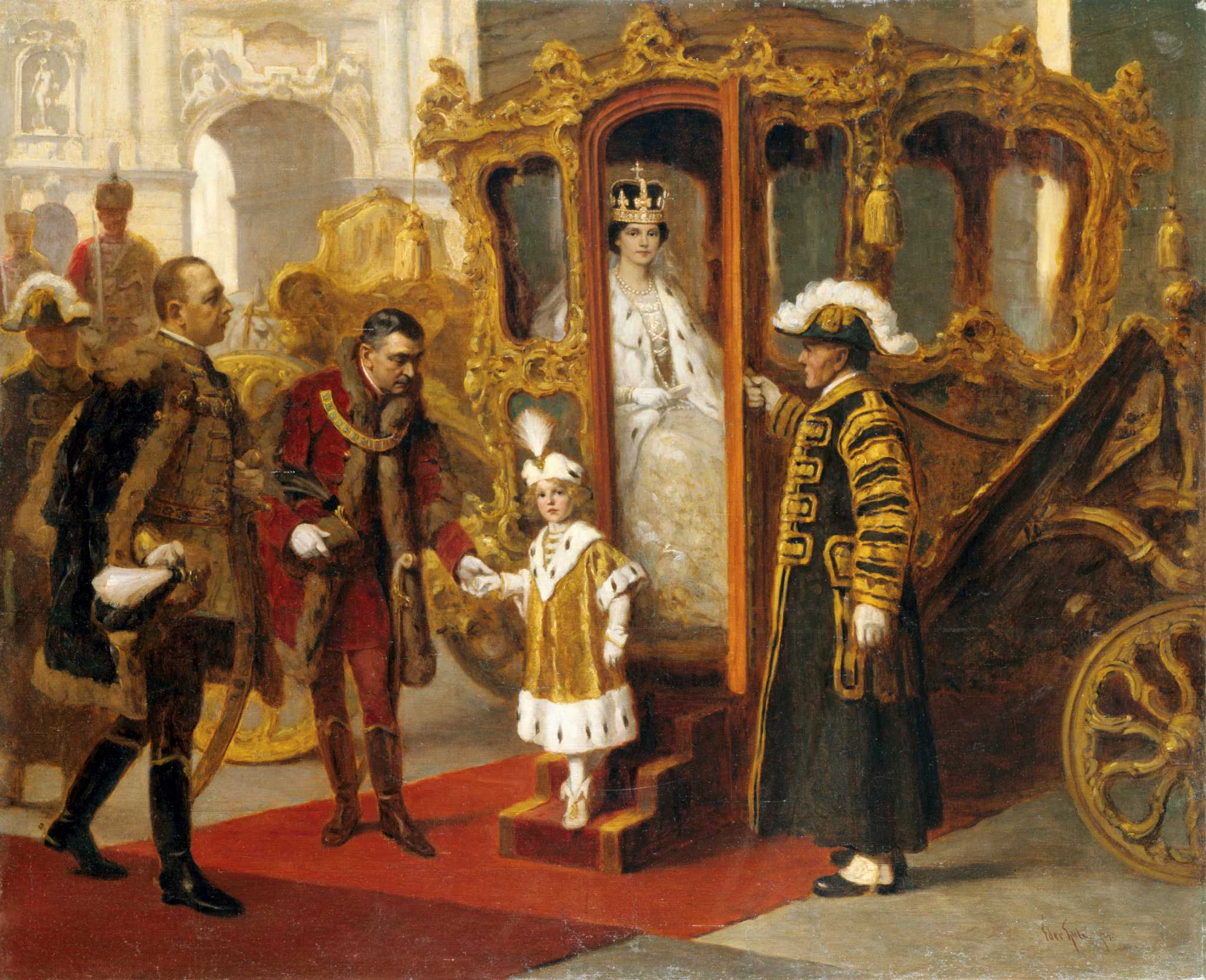
at the coronation of his father, HIM the Blessed Emperor Charles of Austria,
as King Charles IV of Hungary in 1916
.
alighting from the royal coach with his mother, HIM Empress Zita


A.E.I.O.U.

Austria Erat In Orbe Ultimo


The Funeral Exequies

for

His Imperial and Royal Highness

Archduke Otto of Austria


occurs five times in three countries

Bavaria – The first requiem was initiated with a mass for His Imperial and Royal Highness Archduke Otto of Austria, Prince Royal of Hungary, celebrated on 9 July 2011 by Bishop Konrad Zdarsa of Augsburg in the St. Pius church in Pöcking, near the home of Archduke Otto.

Bavaria – The second requiem mass will be celebrated in the Theatine Church in Munich on 11 July 2011 at 10am by Cardinal Reinhard Marx.
The requiem will be screened on big screens at Odeonsplatz.

Following the requiem, the Prime Minister of Bavaria, Horst Seehofer, hosts a reception for around 700 invited guests in the Kaisersaal of the Munich Residenz. Among the guests are former Austrian Chancellor Wolfgang Schüssel, members of the House of Wittelsbach, of the Order of Malta and the Order of the Golden Fleece, and other European royals and leading politicians.
Bavarian Television will broadcast the entire ceremony.

Austria – The third requiem will be celebrated in the pilgrimage town of Mariazell on 13 July 2011 at 2pm. Mariazell has for centuries been the most important pilgrimage town for the House of Habsburg, and large parts of the former Austria-Hungary.

Austria – The main funeral ceremony will take place in Vienna. The requiem will be celebrated in St Stephen's Cathedral on 16 July 2011 at 3pm, at which His Eminence, Christoph Cardinal Count von Schönborn will preside.
It will be followed by a funeral procession through the Innere Stadt of Vienna and the entombment of Archduke Otto and his wife, Archduchess Regina, in the Habsburg Imperial Crypt of the Imperial Capuchin Church of Vienna

Hungary – The last requiem mass is scheduled for Sunday, 17 July 2011 at 3pm, and will be celebrated in St Stephen's Basilica in Budapest, Hungary.

Finally Otto's heart will be interred in Pannonhalma Archabbey with only the close family present.


Tributes to Archduke Otto of Austria

EU – The President of the European Parliament, Jerzy Buzek, stated: "This morning, a European giant passed away [...] In the darkest hours of our continent, Otto von Habsburg has been a rock of truth and humanity. He resisted Nazism with the same determination he opposed the Communist regimes of the Eastern bloc".

Paneuropean Union flag Paneuropean Union – Zoltán Wodianer-Nemessuri, chair of the Paneuropean Union in Hungary, stated: "He deserves undying respect in Hungary (for doing) by far the most to ensure that the 1956 Hungarian Uprising should not fade from public memory".

Holy See – In a telegram addressed to Karl von Habsburg, Archduke of Austria, Pope Benedict XVI offered his condolences to the House of Habsburg. Pope Benedict XVI praised Otto von Habsburg as "a great European" who had worked tirelessly for peace, the coexistence of peoples and a just order in Europe. "In the hour of grief over this tragic loss, I associate myself with you and the entire imperial family in prayer for the deceased. In a long and fulfilling life, Archduke Otto was a witness to the eventful history of Europe", the Pope wrote.

HE Renato, Cardinal Martino remembered Otto as one of the twentieth century's "greatest defenders" of the Catholic faith and human dignity, stating that his father, "Blessed Karl of Austria, instilled in him from an early age that the office of a ruler is one of holy service and selfless sacrifice for the good of the peoples entrusted to him. It was a philosophy that would influence him all his life."

HE Christoph, Cardinal Count von Schönborn said that "Otto von Habsburg was without doubt one of the really great Europeans". Schörnborn regretted that it had taken so much time for Austria to show "the reasonable gratitude towards the House of Habsburg, to which Austria owes so incredibly much" and whose "political and cultural heritage we live on today."


Hungary – As the news emerged about Archduke Otto's death in Budapest, Hungarian lawmakers immediately held a minute of silence in parliament. The President of Hungary, Pál Schmitt, and the Prime Minister of Hungary, Viktor Orbán, both sent their condolences to the Habsburg family.

An official government statement said that "his staunch support for the Hungarian cause and for Hungarian people brought him universal recognition and popularity in our country".


Austria – Austrian president Heinz Fischer labeled Archduke Otto a "loyal citizen of the republic of Austria", despite the fact that his family was forbidden to enter Austria until Archduke Otto formally renounced his claim to the throne.

Chancellor Werner Faymann said that "his life reflects the great turning points of the Austrian and European history".


Czech Republic – Foreign Minister His Serene Highness Prince Karel von Schwarzenberg praised Archduke Otto, stating that Otto had "courageously fought for the peoples imprisoned behind the Iron Curtain". Schwarzenberg remarked that Otto was the last person who had had a constitutional position "in the old Monarchy", stating that "we should never forget that he was the Crown Prince of Austria, Hungary, and Bohemia". Schwarzenberg also praised Archduke Otto's strong anti-Nazi stance, stating that the fact that the annexation of Austria was codenamed "Operation Otto", meant that "the Nazis knew Otto was their main enemy".

Slovenia – President Danilo Türk said: "Otto von Habsburg was one of the strongest advocates of a united Europe, a great man and a promoter of human freedom".

Latvia – Foreign Minister Ģirts Valdis Kristovskis sent his condolences to the German Foreign Minister, saying Archudke Otto's "involvement of spreading European democracy and the European idea will be remembered in Latvia".

Macedonia – President Gjorge Ivanov sent his letter of condolences to the Habsburg family, stating that Archduke Otto was a "friend of the Republic of Macedonia" and that "he never forgot about Macedonia".

Kosovo – President Atifete Jahjaga sent her condolences to the Habsburg court, stating that "with deep sorrow I heard the news of the death of His Majesty Archduke Otto von Habsburg. Today, Europe has lost a prominent politician, the great proponent of peace and a contributor to its union, while Kosovo has lost an irreplaceable friend who will be considered and remembered forever. On this painful occasion, on behalf of the Republic of Kosovo and its citizens, and on my personal behalf, I express my most heartfelt condolences and my deepest sympathy to the Court of Habsburg".

Croatia – Foreign Minister Gordan Jandroković sent his condolences to the Habsburg family, and described Archduke Otto as "a great political role model, a great European and a relentless promoter of human rights". He said that the Croatian people always had a great friend in Archduke Otto and that he will be especially remembered for his involvement and contribution to the international recognition of the Republic of Croatia.

Germany – Member of Parliament and President of the Federation of Expellees Erika Steinbach praised Archduke Otto as "a strong supporter of the refugees and a compassionate intermediary between the peoples of Europe".

Bavaria – The ruling Christian Social Union of Bavaria, the party which Otto represented as a MEP, issued a statement, stating, "the CSU mourns the death of His Imperial and Royal Highness Dr Otto von Habsburg". Prime Minister Horst Seehofer lauded Otto as "an advocate for Europe, a defender of freedom, and of the faith and our values". He also mentioned Archduke Otto's role in bringing down the Iron Curtain.

Austria – Former Chancellor of Austria Wolfgang Schüssel said that Archduke Otto "internalized like no other person the all-European idea and articulated it already at a time when there was still a dark shadow over the continent".

Othmar Karas, leader of the European Parliament delegation of the Austrian People's Party, said that "all of Europe is crying" at the news of Archduke Otto's death.


Archduke Otto speaks about the importance of religion in the world today and his life in politics


A 13-day period of mourning started in several countries formerly part of Austria-Hungary on 5 July 2011, when the body of His Imperial and Royal Highness Archduke Otto of Austria, Prince Royal of Hungary was laid in repose in the Church of St. Ulrich near his home in Pöcking, Bavaria.


The body will be transferred by train to the Catholic pilgrimage basilica in Mariazell on 12 July 2011 before being transferred by train to Vienna.

In accordance with the Habsburg tradition, his body and heart will be buried separately.

Archduke Otto will be entombed in the Imperial Crypt (Kapuzinergruft) together with his parents, wife and other family members.

His heart will be buried in Pannonhalma Archabbey in Hungary.

Archduke Otto was educated by monks from Pannonhalma Benedictine College.

He and his family were exiled from Austria and Hungary in 1918 and then again after his father attempted to re-gain the throne of Hungary but was stopped by Admiral von Horthy, the Regent, who later sided with Hitler.

The funeral is expected to be a major event in Vienna's history. Cardinal von Schönborn described it as "an historic moment for Austria", stating that it will be good for the country to "think of this great Habsburg in prayer and gratitude".

Otto's mother, Empress-Queen Zita, dies in 1989 and her state funeral was attended by 40,000 people.

Otto will be buried with military honours.

The funeral in Vienna will be broadcast live by Austrian Television and the requiem will also be screened at big screens at Stephansplatz.

The organisers are planning one of the longest funeral processions in history (some 1.5 km long) through the inner city.

Following the procession, Archduke Otto will be entombed in the Imperial Crypt.

According to Der Standard, "the Republic and the Church are preparing an imperial funeral".

A blessing from Pope Benedict XVI will be read during the requiem.

Archduke Otto will be the penultimate person to be entombed in the Imperial Crypt, where 145 other members of his family have been entombed since 1633. The Crypt is almost full.

In Bavaria, the ruling Christian Social Union of Bavaria are also organising the largest commemorations in the state since the death of the former Prime Minister, Franz Josef Strauss. The commemorations include the celebration of two requiems and a reception at the Munich Residenz.

Archduke Otto's coffin has been draped with the Habsburg imperial flag in black-yellow emblazoned with the imperial-royal coats of arms of Austria and Hungary in addition to the Habsburg family coat of arms.

Archduke Otto wrote that the funeral of Franz Joseph I of Austria in 1916 had been the most profound experience of his childhood; the 4-year old had attended the funeral dressed completely in white among all the adults dressed in black.

Archduke Otto's funeral is organised by his sons, Charles, head of the House of Habsburg, and George. Charles revealed that the planning for the funeral had started 12 years earlier, and that Otto had not involved himself in it, except for expressing the wish for a ceremony in Hungary in line with the family tradition.

The Imperial Crypt of the Habsburg family is each year visited by around 200,000 people. The Crypt was constructed ain accordance with the will of Empress Anna.

At the traditional Habsburg funeral ceremony the procession of mourners arrives at the gates of the Imperial Capuchin Crypt, and a Chamberlain knocks on the door. A Capuchin friar then asks "who demands entry?" The Chamberlain responds with the name and many titles of the imperial personage. The Capuchin friar then responds "we don't know him". The same procedure is repeated but with less titles on the second occasion. On the third occasion, the Chamberlain responds, answering "a sinful, mortal human being", the friar responds "then we know him" and the gates are opened and the dead imperial Habsburg is admitted into the Crypt. This ceremony was used at the funeral requiem in 1989 of Empress Zita of Austria, the mother of Archduke Otto.

The sarcophagus of Archduke Otto's wife, Archduchess Regina, which was interred in her family crypt in the castle of Veste Heldburg in Germany in 2010, will be transferred to Mariazell and then to the Imperial Crypt in Vienna at the same time at that of Archduke Otto. However, the heart of Archduchess Regina will remain in her family crypt in Veste Heldburg.


Requiescant in pace...

May they rest in peace...


+++

Sunday, 26 June 2011


Of your charity

pray for the soul of

His Excellency Fra’ Fredrik Crichton-Stuart

Grand Prior of England of the Sovereign Military Order of Malta

1940 – 2011

who sadly died on 14 June 2011 at Edinburgh


It is with the greatest sadness that the death is notified of

His Excellency FRA’ FREDRIK CRICHTON-STUART
Grand Prior of England
Knight Grand Cross of Justice in the Solemn Vows of religion
from a heart attack early on the morning of Tuesday 14th June 2011 as he was at prayer reading his breviary

Please pray for the repose of his soul.

Requiescat in pace


His Excellency Fra' Fredrik Crichton-Stuart RIP

Grand Prior of England


His Excellency Fra' Fredrik Crichton-Stuart, Grand Prior of England, died at his home in Edinburgh on the morning of Tuesday 14th June 2011, after a long illness.

Fra' Fredrik joined the Order of Malta in 1962, and in 1993, on the restoration of the Grand Priory of England, he was appointed Chancellor, becoming Grand Prior in 2008.

For many years he was also Delegate of Scotland and the Northern Marches for the Order, and was a tireless worker for the sick and the needy, assisting in the weekends for the handicapped held regularly at Lake Kielder as well as being an effective and long standing Chairman of Dial-A-Journey in mid Scotland, an organisation he served devotedly up until his death.

Freddy, as he was always known, was born in 1940 at Bute House, formerly owned by the Bute family but now owned by the Bute House trustees and currently the residence and offices of the First Minister of Scotland.

Fra' Freddy was the eldest son of Lord Rhidian Crichton-Stuart and grandson of John Crichton-Stuart, the 4th Marquess of Bute.

Fra' Freddy was educated at Ampleforth and brought up in Scotland and North Africa where his father had business interests. His long career included spells in industry and farming and he was a Chartered Accountant with his own practice until his retirement. He was an officer of the Territorial Army in the Queens Own Royal Glasgow Yeomanry, and a trustee and later Chairman of Una Voce Scotland, and he sat on the boards of a number of charities in Scotland.

Fra’ Freddy Crichton-Stuart was a man of prayer whose love of and commitment to the Order of Malta, its traditions and works, was exemplary and inspirational.

The condolences of the many members of the Grand Priory of England and the British Association of the Order of Malta have been extended to his family and his many friends. He will be sadly missed.

Funeral and requiem details

The Funeral Exequies

for

His Excellency Fra' Fredrik John Patrick Crichton-Stuart
Grand Prior of England

will be held
at
St Mary's Metropolitan Cathedral, 61 York Place, EDINBURGH EH1 3JD

on

Tuesday 28th June 2011.

The Body will be received into the Cathedral
at
5pm on Monday the 28th June

and

the Office of Vespers for the Dead will be sung.

On Tuesday morning the Office of Lauds will be sung
at
10.30am

and

he Funeral Mass will begin at 11.15am.

The Mass will be followed by a Reception given by the Family in the Cathedral Hall.

The Committal and Burial will take place at Mount Vernon Catholic Cemetery, 49 Mount Vernon Road, Edinburgh, EH16 6JG. The funeral cortège will leave the Reception promptly at 2.15pm and the burial will start upon arrival, around 2.45pm. Everyone is invited to attend, but mourners must be at the cemetery in good time, as parking space close by is limited.

At the family's request, donations in memory of Fra' Fredrik may be made to:

Order of Malta Dial-a-Journey,
3 Cunningham Road,
Springkerse Industrial Estate,
Stirling FK7 7SW.
Charity No. SC 018831.
Tel: 01786 46535

+++

Friday, 3 June 2011

Beautiful hymn to a mother...


I think this the most poignantly beautiful tribute I have ever seen.

The music is by 15th century Spanish composer Juan de Anchieta and is entitled Con Amores La Mi Madre and is here performed by performed by the Kings' Singers.

The accompanying selection of photographs are of Signora Carla Cintoli (nee Aldega), from her childhood to 1981, presented by her devoted sons Alessandro and Fabrizio.

A few months after the last picture presented, Signora Cintoli avoided being photographed, although still very attractive, but she became ill and died in 2000, aged only 67, it seems, but clearly mourned by her family. Her husband, Sergio, died in the same year, aged 70.

Surely this devotion by her sons to the memory of their mother is both a reminder of the sadness of this life when we are compelled to witness the loss of those we love and yet, also, evidence that love never dies.

Here, surely, is a reflection of the love of God for us and especially for His mother.

Can it be that such love does not endure beyond life and death as the poor atheists tell themselves? Of course not.

Yes, we may be sure that this love endures and lives forever, both here and in the beyond.

That is because God is love and, to use the dying words of the great Ecuadorean martyr, Gabriel Garcia Morena: Dios no muere - God never dies.


Con amores, la mi madre

Con amores, la mi madre
con amores m'adormí
Asi dormida soñaba lo que el corazon velaba,
Qu'el amor me consalabe
Con mas bien que mereci.

With love, my mother,
I fell asleep with love.
I dreamed about my heart's care
and love consoled me
far more than I deserved.


...

The Rogation days of the Ascension and beating the bounds

Rogation days are days set apart for solemn processions to invoke the mercy of God. The word comes from the Latin rogare “to say or ask” meaning, in this context, to pray to God for good things.

They come at this time because of the Gospel reading for the previous Sunday (the 5th Sunday after Easter, sometimes for that reason called Rogation Sunday) which includes the text from the Gospel of St John 16:24 “Ask and ye shall receive”.

The Rogation days are:

(1) St Mark’s Day on 25 April (the Major Rogation)
(2) The 3 days before the Ascension Day (the Minor Rogations)

The first Rogation, which includes the Greater Litanies, was originally a christianisation of the old Roman pagan feast day of Robigalia, on 25 April, a day to pray for good crops.

The minor Rogations, including the Lesser Litanies, were introduced in 470 by Bishop Mamertus of Vienne and then spread to the rest of the Roman Church. They became a preparation also for the Feast of the Ascension.

These days coincided also with the ceremony of the “Beating of the Bounds” during which a procession led by ministers and choir would proceed round the boundaries of the parish, partly to re-affirm the boundaries but also to pray for the protection of the parish over the forthcoming year. Choir boys and servers would carry canes to "beat" the boundaries at each stopping point.

Absurdly, the Rogation days are yet further ancient and beautiful ceremonies that were done away with by the liturgical wreckers after 1970. They have, of course, come back with the return of the traditional rites.

The ceremony of the Beating of the Bounds can still be seen in the City of London and processions continue to go round the boundaries to the various churches of the City, often escorted by a marching group of one or more of the City TA Regiments.

What diabolical spirit came over the liturgical consilium of Archbishop Bugnini that he even thought to try and get rid of this beautiful, scriptural, ancient liturgical devotion? Yet further evidence, if it were still needed, that a dark and sinister spirit has, these 40 years past, been suffered by weak, vain and worldly prelates to invade parts of the Church.


"Beating the bounds"

"22 So also you now indeed have sorrow; but I will see you again, and your heart shall rejoice; and your joy no man shall take from you. 23 And in that day you shall not ask me any thing. Amen, amen I say to you: if you ask the Father any thing in my name, he will give it you. 24 Hitherto you have not asked any thing in my name. Ask, and you shall receive; that your joy may be full. 25 These things I have spoken to you in proverbs. The hour cometh, when I will no more speak to you in proverbs, but will show you plainly of the Father."
[John 16.22-25]


Peccatores, Te rogamus audi nos

We sinners, beseech Thee, hear us!

...