Showing posts with label papal decrees. Show all posts

Friday, 14 September 2007

"Faithful Cross above all others, one and only noble tree": the Exaltation of the Holy Cross and the Grand Restoration of the Roman rite

CRUX fidelis, inter omnes, arbor una nobilis;
Nulla talem silva profert,
Flore, fronde, germine.
Dulce lignum, dulci clavos, dulce pondus sustinens!

FAITHFUL Cross! Above all other,
One and only noble Tree!
None in foliage, none in blossom,
None in fruit thy peers may be;
Sweetest wood and sweetest iron!Sweetest Weight is hung on thee!

So for centuries has been sung the song composed by Venantius Forntunatus (530-609) extolling the Triumph of the Cross.

And never more so than today, the Feast which recalls the return of the True Cross to Jersualem following its recapture from the pagan Persians by the Roman Emperor in the East, Emperor Heraclius.

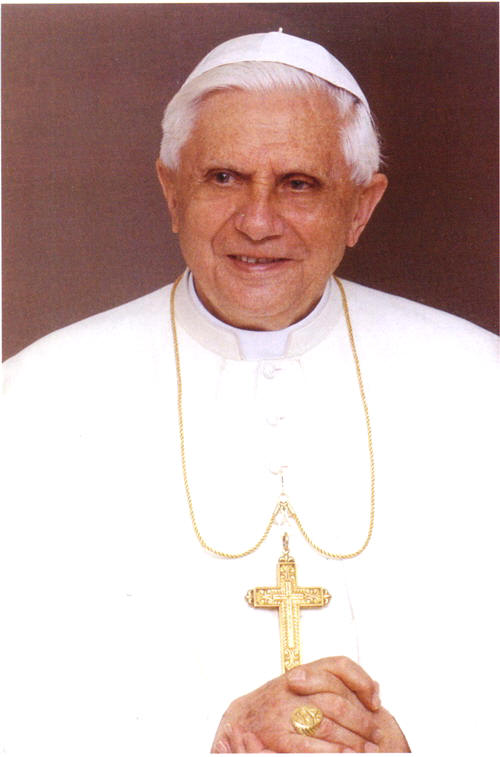
But today is also the triumphal day in which our Holy Father, Pope Benendict XVI, restored to the Roman Church the use of the ancient and noble Roman rite of our ancestors.

All hail Pope Benedict XVI, the restorer of the ancient Roman rites!

Yes, today is the day when, by his own motion - motu proprio - Pope Benedict XVI has restored to the Roman Church its ancient rites. In so doing he has placed himself in the same hallowed tradition of all those popes, among his predecessors, who always sought to preserve the ancient rites of the Church, as all popes until 1970, did.

For this alone, he will go down to history as a great pope. But he has many other great virtues which posterity will also recall and hallow.

He has chosen a very significant and memorable day to make his motu proprio, called Summorum Pontificum, become effective.

It is the Feast of the Exaltation of the Holy Cross upon which day we sing the praises of the Holy Cross with such ancient hymns as Vexilla Regis and Crux Fidelis.

Venantius Fortunatus wrote both hymns, the latter for a procession that brought a part of the true Cross to Queen Radegunda in 570. This hymn is used on Good Friday during the Adoration of the Cross and in the Breviary during Holy Week and on feasts of the Cross like today.

Ancient legend is hinted at in the second verse of this hymn. According to this tradition, the wood of the Cross upon which Christ was crucified was taken from that tree which was the source of the fruit of the fall in the Garden of Eden. When Adam died, the legend states, Seth obtained from the Cherubim guarding the Garden a branch of the tree from which Eve ate the forbidden fruit. Seth planted this branch at Golgotha (the place of the skull), which is so named because Adam was buried there. As time went on, the Ark of the Covenant, the pole upon which the bronze serpent was lifted, and other items were made from this tree.

Eventually the Holy Cross was made from it and our Lord crucified thereon upon Golgotha directly over the tomb of Adam so that the Precious Blood of Christ, seeping through cracks, penetrated into the mausoleum of Adam beneath and fell upon the very skull of Adam to symbolise that the Sin of Adam had now been atoned for by the Crucifixion.

In the pre-1955 Roman Calendar, the Finding of the True Cross (Inventio Crucis) was celebrated on 3 May to commemorate that day when the Empress St Helena, daughter of a British king and mother of the Emperor Constantine, found the True Cross after long searching for it among the wells and cisterns of Jerusalem.

The British born Roman Empress St Helena finds the True Cross

The True Cross was set up and a Basilica built to house it for posterity.

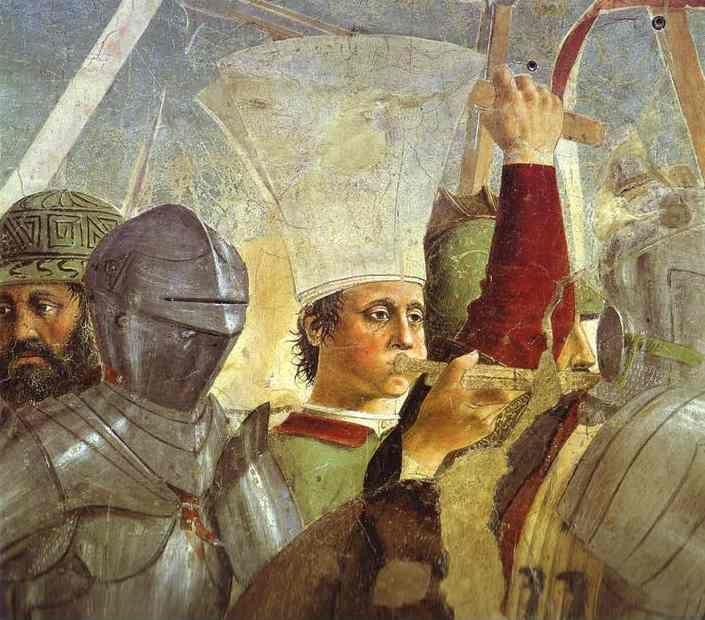
3 centuries later, the pagan, fire-worshipping Persians (not yet Muslim), under King Chosroes II, attacked Jerusalem and took away the precious relic, the True Cross.

The Roman Emperor Heraclius, then regining, swore to recover it and warred against the Persians. He was on the point of being defeated himself when an internal dispute arose within Persia which threatened Chosroes II and the distraction gave Heraclius his chance. He soundly defeated Chosroes in 629 and recovered the True Cross.

This was seen as an answer to prayer by all at the time.

When Heraclius returned to Jerusalem to restore the True Cross he carried it himself, as had our Lord, intending to process along the Via Dolorosa in his gorgeous imperial robes. But when he arrived at the gate of Jerusalem he was frozen to the spot and could not move. All were puzzled and eventually the Patriarch of Jerusalem suggested that the Emperor divest himself of his imperial robes. The Emperor did more and stripped himself to little more than the seamless garment that Christ Himself had worn to carry His Cross.

At once the Emperor found himself able to proceed and so he continued until he was able to retored the Cross to its rightful place in the Basilica upon Golgotha, walking barefoot in a single shift all along the way to the great edification of the people of Jerusalem, his subjects.

Ever after that day, 14 September, was celebrated with great ceremony - nearly as much as Easter and Pentecost - as the Feast of the Exaltation of the Holy Cross (Exaltatio Crucis).
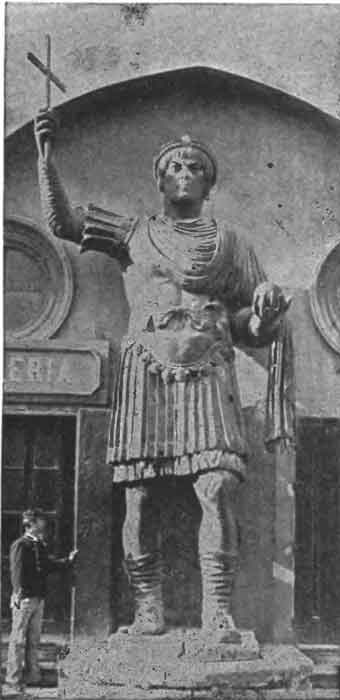
The Roman Emperor Heraclius who restored the True Cross to Jerusalem in 629AD

Now our Holy Father has chosen this most memorable and triumphant of days to restore to us the glory of the ancient Roman rite which the Roman emperors of old fought and died to protect and preserve and which countless saints and martyrs gave their lives for.

VEXILLA REGIS prodeunt:
Fulget Crucis mysterium,
Qua vita mortem pertulit,
Et morte vitam protulit.

Abroad the Regal Banners fly,
Now shines the Cross's mystery;
Upon it Life did death endure,
And yet by death did life procure.

O CRUX AVE, SPES UNICA,
In hac triumpha gloria
Piis adauge gratiam,
Reisque dele crimina.

Hail, Cross, of hopes the most sublime!
In this triumphant glorious time,
Improve religious souls in grace,
The sins of criminals efface.

On Good Friday the second line reads "Now in this mournful Passion time" but on the Feast of the Cross this is replaced by "in hac triumpha gloria" - in the glory of this triumph!

Triumph, indeed, thanks to our beloved Holy Father now gloriously reigning!


St Helena, pray for us!

True Cross, protect us!


...

Friday, 24 August 2007

In case anyone thinks I've got it in for him...

I warmly recommend the latest post of Fr Dwight on his blog Standing on my Head which very properly underscores the importance, in the right place, of emotion in the worship of God.

Read it for yourselves!

Thursday, 23 August 2007

The Motu Proprio: Fr Dwight errs but censors his critics...

The US Catholic Bishops Conference’s English version of the whole Motu Proprio is "unofficial" but many US priests are using it as if it were official. That is probably because the USCCB’s Liturgy Office published guidelines based on the unofficial translation.

Now Fr Dwight Longenecker (regular all-round good guy but a bit muddled on this issue) has used it to argue why the traditional rites should not be offered freely in his parish of St Mary's Greenville, South Carolina (and you can be sure that there are other priests arguing the same).

Here's what he says on his blog Standing on my Head in answer to an enquirer who, quite reasonably, asks him if the traditional rite will be celebrated at St Mary's:

"I therefore would need to consider what my bishop thinks of the matter, and consider the pastoral concerns of the whole community and not just those who are asking for the Latin Mass. This is difficult because to impose the Missal of Bl. John XXIII on the whole community would be pastorally unfair, but to celebrate a regular Mass for a separate group of the faithful would foster disunity. Tough one.

The most interesting word in the ruling is the word 'stable'. It says if a 'stable' group of parishioners asks for the Latin Mass their request is to be considered. But what does 'stable' mean? Must they be stable as a group? Stable as individuals or stable as families? Does this mean emotional and mental stability, spiritual stability or stability in their commitment to the parish?

This is a very important consideration. In some places there are groups of people who are not emotionally or spiritually stable, but more important than that, there are others who are not stable in their commitment either to the Pope or to their local parish. They trot off to whatever celebration of Mass they deem best. For example, some people forsake their parish (even when they have a good conservative priest celebrating the Novus Ordo reverently) for SSPX masses, or they drive hundreds of miles to attend a Fraternity of St Peter Latin Mass. They are entitled to do so, but it is arguable that such individuals, families and groups are not stable in their spiritual lives or their parochial commitment, and I expect many parish priests would not wish therefore to take their requests seriously."


Well, sorry, Fr Dwight. You are once again wrong.

The word "stable" simply does not appear in the document.

Even if it did you have no basis whatsoever for the fantastical conclusions that you draw in the above. And it is particularly unfair that you single out as "unstable" those who, through no fault of their own, through their loyalty to the traditional rites and despite their polite requests for it addressed to their PPs, are forced to go outside their parish to have their legitimate desire for the traditional rites met because the PP unjustly refuses it to them in defiance of papal decrees.

However, the word does not appear in the document.

One could be forgiven for thinking so initially. But Fr Dwight's correspondents put him right in a series of comments in a total of 26 at last count.

Yet, having been pretty comprehensively put right on this, as on a number of other crucial issues, Fr Dwight disdains to amend his blog or even add an update or rider.

When he's wrong he's right, perhaps (to quote from a previous post)?

More than that, he then goes on to censor out those responses which point out his more egregious blunders.

Here is part of one response that was "edited" out by Fr Dwight:

"...You continually say that you are willing to learn, having nothing against the old rite, wish to follow the MP, do not wish to enter into liturgy wars, respect people's love for the old rite etc etc etc....

The popes issued Tres Abhinc Annos, Ecclesia Dei and now Summorum Pontificum in order to get priests to be generous to the Faithful who prefer to worship with the rites that their ancestors used for at least 1700 years and yet there are still priests - like yourself - finding more and more excuses why they should continue to oppress those Faithful and deny them what the Pope has repeatedly said they may have.

This oppression has gone on for 40 years. Now is the time to stop. It is the Pope who orders it and you want, instead, to quibble.

All your quibbles have been more than adequately addressed and laid to rest by your various correspondents and yet.... still you quibble.

Where is the generosity? Where is the pastoral care? Where is the pastoral love of the flock? Where, Father, is your sense of justice?

Your later posts do nothing to re-assure me.

You write that 'this really is a marginal issue: in terms of numbers, those who wish for the Latin Mass are relatively minute.'

Which Latin Mass? Or have you once again overlooked the fact that the Novus Ordo Missae is a Latin rite and that the vernacular was NOT demanded by Vatican II? We have been round that one again and again and again. You just ignore it!

Where do you get your stats from? I question them.

But even if you were right, would it be surprising? Latin, whether in the traditional or new rites, has been virtually strangled to death for the last 40 years. Moreover, only the faithfulness of a minority have kept the traditional rites alive. Now you use that against them. A good is suppressed then a complaint made that the good is no longer seen. Really, Father, what sort of argument is that?

It is abundantly clear from his writings that the Pope thinks this near-total suppression of both Latin and of the traditional rites was a grave mistake and he plainly wishes to reverse the situation.

It is also abundantly clear that he thinks that wide celebration of the traditional rites will vastly improve and enrich the way in which the Novus Ordo is celebrated.

...Once the Holy Father begins to be obeyed, you will find that more and more people are attracted to the traditional rites. That has been our over-whelming experience here in the UK.

Denying people the traditional rites is a self-fulfilling prophecy: you will get less people simply because the rites are, and have been these 40 years, very difficult to find.

To accuse people of being 'unstable' because they travel far to find the traditional rites is yet another extraordinary statement.

The Faithful have had to do so precisely because of the quibblers. Having denied them their rights, the quibblers then accuse them of 'instability' for going elsewhere to find what they have been unjustly denied. A more crassly unreasonable argument would be hard to find.

You write: 'With a shortage of priests it is difficult to justify too many special masses for a handful of people who want mass the way they want it.'

No, Father, it is Mass the way the Holy Father wants it...That is what he has now ordered. And the shortage of priests is not a reason for refusing to obey the Pope. These are not 'special' Masses, they are a right.

...You, have, with great respect, quite some way in this thread to go before you can honestly say that you are really being fair and objective about the traditional rites, as you claim.

Will you now do better?"


Fair question, isn't it?

Or is ignorance bliss?

Tripe about "stable groups": what the Motu Proprio really says...


It's started!

Some obstinate clerics are already trying to minimise the Holy Father's clear wishes to make the traditional Roman rite widely available to the Faithful.

One attempt centres around the weak unofficial translation of the United States Catholic Bishops' Conference upon which translation they then go on to give some very mediocre advice.

The translation makes reference to "stable groups" and some clerics have been desperately trying to make much of the word "stable" to imply that it rules out those who do not attend the Novus Ordo regularly, do not regularly attend only one parish, occasionally attend SSPX chapels, do not form a big enough group to be called "stable", or even that the priest judges them to be "emotionally unstable".

Tripe.

Yes, tripe.

Total and utter tripe.

The word "stable" does not even appear in the Motu Proprio!

Here's what the Motu Proprio says in the Holy Father's original Latin:

"Art. 5, § 1. In paroeciis, ubi coetus fidelium traditioni liturgicae antecedenti adhaerentium continenter exsistit, parochus eorum petitiones ad celebrandam sanctam Missam iuxta ritum Missalis Romani anno 1962 editi, libenter suscipiat. Ipse videat ut harmonice concordetur bonum horum fidelium cum ordinaria paroeciae pastorali cura, sub Episcopi regimine ad normam canonis 392, discordiam vitando et totius Ecclesiae unitatem fovendo."

Which can be pretty accurately translated as:

"Art. 5, § 1. In parishes, where there is continuously present a group of the faithful attached to the previous liturgical tradition, let the pastor willingly receive their petitions that Mass be celebrated according to the Rite of the Missale Romanum issued in 1962. Let him see to it that the good of these faithful be harmoniously incorporated with the ordinary pastoral care of the parish, under the governance of the Bishop according to canon 392, by avoiding discord and by fostering the unity of the whole Church."

The word simply does not appear!

So, for those clerics who still want to go on pretending that the traditional rites should not be freely offered, and who refuse to recognise the generosity of the Holy Father, here is some more tripe:


Yech!

Can't stand the stuff!


.....

Friday, 17 August 2007

Fr Dwight: the grapes of wrath?

Fr Dwight decided to let off more steam on his blog Standing on My Head (a very good blog, by the way) having discovered Roman Christendom and its criticism of some of his views on the traditional liturgy.

Fair enough! I think that is his right. We shouldn't begrudge it. I like him and that's why I'm engaging with him. So please read the below in that spirit.

First, under a heading "Watzablog" he gives a lecture on what a blog should be like, accusing some people of bad manners and then claiming to know who was the author of Roman Christendom and seeking to "out" us.

He launched into an attack on James Bogle, whose letters I have borrowed from, even accusing him of being "insulting" and "arrogant" and this blog of making "senseless and weird" attacks, whilst claiming himself to be "objective and cheerful" and to give those who favour the traditional rites (or Mass of John XXIII as he insists on calling it when it is, of course, the oldest rite in the Church), the "benefit of the doubt".

He then gives us a treatise on how we're all wrong when we think we are right and thinking you're right, even if you are right, is self-righteous. Well, if we all followed such a principle there would, of course, never be any debate at all.

To add spice, the whole is interlaced with choice references to "fundamentalism", "little fortresses", "aggressive", "belligerent", "martyr complexes", "self-pity", "sick kind of mentality", "obsession", "mania", "self-righteous", "extreme", "suspicious", "intolerant", "the seriousness of Satan", "demented terrier with a slipper", "sulk", "infected wound" and the like.

No prizes for guessing, folks, that this is at least partly aimed at Roman Christendom for daring to defend the traditional rite in the face of some pretty ill-informed opposition.

I need say no more: Fr Dwight is not "standing on his head" over this one but on his own dignity by over-reacting somewhat.

Well, at least he is engaging, now. That's a good start!

Fr Dwight is, I consider, actually a very good guy, but both he, and his Parish Priest, Fr Jay Scott Newman, also a good guy, ought to exercise a little caution when using sacerdotal authority particularly on anything that might be interpreted as undermining the Church's traditions (Latin, Chant etc) or the manifest and proper wishes of the Pope and use scorn sparingly against others who simply point this out.

Targeting Catholics who prefer the traditional Roman rite is a recreation that is past its sell-by date. It's done great harm these past 40 years and the Pope has quite rightly called time on it.

Fr Dwight erased most of the comments on his blog that criticised his view of liturgy and Fr Jay now won't receive any further comments on his blog. His penultimate post was, aptly but sadly, entitled "Liturgy Wars". It was not traditional-rite Catholics who started the war.

There should, of course, be no wars over liturgy. We should all be on the same side not divided internally.

Unfortunately, it is the kind of statement that appeared in Fr Jay's Parish newsletter that can sometimes tend to prolong the war. I publish it below as it is in the public domain and a commentator has sent it to me.

If any priest is going to claim to be loyal to the Pope and to say "Where Peter is, there is the Church", then he needs to be open and willing to implement the motu proprio, and should avoid minimising it by suggesting that it "kinda, sorta" gives wider permission for the traditional rites.

The reality is that the motu proprio gives extremely wide and extensive permission for the use of the traditional rites.

But here is Fr Jay's advice to his parishioners on 1 July, just before the publication of the motu proprio:

"When this document is finally published, there will no doubt be a circus of media attention of the most sensational kind, but please do not be confused or disturbed by what you read in the papers or see on television. Whatever else may be the case, there will certainly be no changes made in the present way we celebrate the Missal of 1970 in our scheduled liturgies, and pending a careful study of the document, I do not anticipate that a regularly scheduled Tridentine Mass will be celebrated here at St. Mary’s. For now, simply know that a document will probably appear this summer, and when it does, we will study it together."

To be fair to Fr Jay, he clearly did not anticipate the breadth and width of the rights granted by the motu proprio and, I suspect, is still slightly in denial about it all. On his blog, he certainly admits - actually I think rather courageously and even humbly - to being a bit confused by it all. That actually rather endeared him to me, I have to say. My heart went out to him!

I suspect that when he and Fr Dwight have had time to digest it all, reflect upon it all and pray about it, they will take a more balanced view.

So let's give 'em a chance, folks, and pray for them and for what I have a feeling is a very important and influential parish in that part of the US of A and two potentially very influential priests.

Wednesday, 15 August 2007

The Queen assumed into heaven...

"Christ's faithful, through the teaching and the leadership of their pastors, have learned from the sacred books that the Virgin Mary, throughout the course of her earthly pilgrimage, led a life troubled by cares, hardships, and sorrows, and that, moreover, what the holy old man Simeon had foretold actually came to pass, that is, that a terribly sharp sword pierced her heart as she stood under the cross of her divine Son, our Redeemer. In the same way, it was not difficult for them to admit that the great Mother of God, like her only begotten Son, had actually passed from this life. But this in no way prevented them from believing and from professing openly that her sacred body had never been subject to the corruption of the tomb, and that the august tabernacle of the Divine Word had never been reduced to dust and ashes. Actually, enlightened by divine grace and moved by affection for her, God's Mother and our own dearest Mother, they have contemplated in an ever clearer light the wonderful harmony and order of those privileges which the most provident God has lavished upon this loving associate of our Redeemer, privileges which reach such an exalted plane that, except for her, nothing created by God other than the human nature of Jesus Christ has ever reached this level.

15. The innumerable temples which have been dedicated to the Virgin Mary assumed into heaven clearly attest this faith. So do those sacred images, exposed therein for the veneration of the faithful, which bring this unique triumph of the Blessed Virgin before the eyes of all men. Moreover, cities, dioceses, and individual regions have been placed under the special patronage and guardianship of the Virgin Mother of God assumed into heaven. In the same way, religious institutes, with the approval of the Church, have been founded and have taken their name from this privilege. Nor can we pass over in silence the fact that in the Rosary of Mary, the recitation of which this Apostolic See so urgently recommends, there is one mystery proposed for pious meditation which, as all know, deals with the Blessed Virgin's Assumption into heaven.

16. This belief of the sacred pastors and of Christ's faithful is universally manifested still more splendidly by the fact that, since ancient times, there have been both in the East and in the West solemn liturgical offices commemorating this privilege. The holy Fathers and Doctors of the Church have never failed to draw enlightenment from this fact since, as everyone knows, the sacred liturgy, "because it is the profession, subject to the supreme teaching authority within the Church, of heavenly truths, can supply proofs and testimonies of no small value for deciding a particular point of Christian doctrine.

17. In the liturgical books which deal with the feast either of the dormition or of the Assumption of the Blessed Virgin there are expressions that agree in testifying that, when the Virgin Mother of God passed from this earthly exile to heaven, what happened to her sacred body was, by the decree of divine Providence, in keeping with the dignity of the Mother of the Word Incarnate, and with the other privileges she had been accorded. Thus, to cite an illustrious example, this is set forth in that sacramentary which Adrian I, our predecessor of immortal memory, sent to the Emperor Charlemagne. These words are found in this volume: 'Venerable to us, O Lord, is the festivity of this day on which the holy Mother of God suffered temporal death, but still could not be kept down by the bonds of death, who has begotten your Son our Lord incarnate from herself'.

18. What is here indicated in that sobriety characteristic of the Roman liturgy is presented more clearly and completely in other ancient liturgical books. To take one as an example, the Gallican sacramentary designates this privilege of Mary's as 'an ineffable mystery all the more worthy of praise as the Virgin's Assumption is something unique among men'. And, in the Byzantine liturgy, not only is the Virgin Mary's bodily Assumption connected time and time again with the dignity of the Mother of God, but also with the other privileges, and in particular with the virginal motherhood granted her by a singular decree of God's Providence. 'God, the King of the universe, has granted you favors that surpass nature. As he kept you a virgin in childbirth, thus he has kept your body incorrupt in the tomb and has glorified it by his divine act of transferring it from the tomb'.

19. The fact that the Apostolic See, which has inherited the function entrusted to the Prince of the Apostles, the function of confirming the brethren in the faith, has by its own authority, made the celebration of this feast ever more solemn, has certainly and effectively moved the attentive minds of the faithful to appreciate always more completely the magnitude of the mystery it commemorates. So it was that the Feast of the Assumption was elevated from the rank which it had occupied from the beginning among the other Marian feasts to be classed among the more solemn celebrations of the entire liturgical cycle. And, when our predecessor St. Sergius I prescribed what is known as the litany, or the stational procession, to be held on four Marian feasts, he specified together the Feasts of the Nativity, the Annunciation, the Purification, and the Dormition of the Virgin Mary. Again, St. Leo IV saw to it that the feast, which was already being celebrated under the title of the Assumption of the Blessed Mother of God, should be observed in even a more solemn way when he ordered a vigil to be held on the day before it and prescribed prayers to be recited after it until the octave day. When this had been done, he decided to take part himself in the celebration, in the midst of a great multitude of the faithful. Moreover, the fact that a holy fast had been ordered from ancient times for the day prior to the feast is made very evident by what our predecessor St. Nicholas I testifies in treating of the principal fasts which 'the Holy Roman Church has observed for a long time, and still observes'."


Munificentissimus Deus, Piux XII, 1 November 1950, Feast of All Saints.