Showing posts with label Bonnie Prince Charlie. Show all posts

Friday, 8 April 2011

Mo Ghile Mear: "He is my Caesar, gallant darling"

If anyone doubts that the original political belief of the ancient Catholic Gael was that same Christian Roman imperialism that has ever been the mark of Catholic Christianity since the Resurrection of the Lord, they need only listen to this wonderfully beautiful old Gaelic song, Mo Ghile Mear


This version is performed by Mary Black, and is an Irish tribute to Bonnie Prince Charlie, Prince Charles Edward Stuart, the true King of Scotland, Ireland, and England (and France!) and true Prince of Wales, and who, as the commentary on this Youtube version rightly says, sought to put an end to religious persecution in the Three Kingdoms.

He inspired fierce loyalty wherever he went, even tho', alas, the cause was, in the end, lost. The very motto of his family, the Royal Stuarts, was Aymez Loyauté which is Old French for "Love Loyalty".

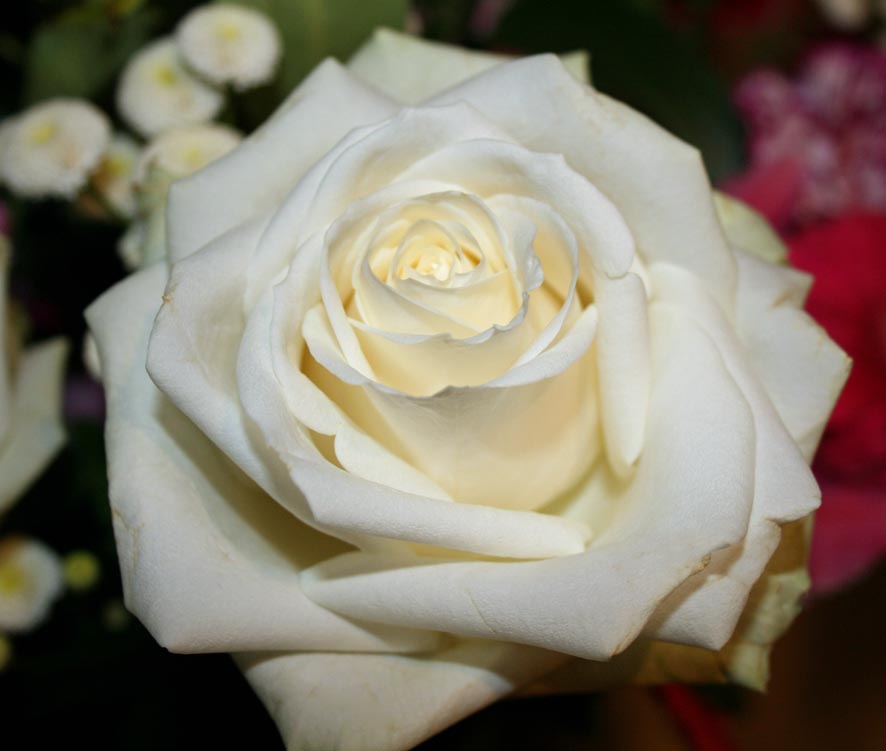
His beauty and gallantry could not fail to attract the warmest love and loyalty from the fair sex of all classes and some of the most famous songs about him were written by a woman, Carolina Oliphant of Gask, Lady Nairne, a lyric poetess called by her countrymen "the Flower of Strathearn" on account of her own beauty. Born at Gask, in Strathearn, her family ever grew white roses, the symbol of the Stuarts and of legitimate monarchy, in profusion at Gask House.

Prince Charles Edward Stuart was not a Scottish or Irish nationalist, nor any kind of nationalist. He believed in the Three Kingdoms, with three separate parliaments but with one king, the ancient Christian Constitution of the British Isles which guaranteed the fundamental freedoms of every man and woman through the Christian religion, love of God and fellow man, and the laws of men based upon the law of God.

Scotland before 1603 had a separate king but James I and VI merged the two crowns in himself.

Ireland had been a patchwork of kingdoms with one High King, Ard Rí na hÉireann, until Pope Adrian IV, in his Bull Laudabiliter (meaning "praise-worthily"), of 1155, placed Ireland under the rule of the Norman-Angevin King Henry II of England but still under the Pope, as a papal fief.

Pope Adrian made his Bull because of the disturbed condition of both Church and State in Ireland (testified to by no less an authority than St Edmund Campion SJ in his History of Ireland). Whether he was entitled to do so is a disputed question but what cannot be disputed is that the passage of time secured the new settlement, in accordance with canon, civil and moral law. The Bull was recognised by Popes Alexander III and Lucius III and ever after by the Holy See.

King Philip II of Spain and I of England and Ireland, and Queen Mary I (Tudor) of England and Ireland. Prince Charles Edward was the legitimate successor to Queen Mary.


Indeed, so disturbed was Ireland at the time that Diarmaid Mac Murchadha (Dermot MacMorrough), King of Leinster, ousted by other war-like Irish kings and chiefs, invited King Henry II to invade and pledged an oath of allegiance to him. As a further thanks for his reinstatement, MacMurrough's daughter Aoife (Eve) was married to Richard de Clare, 2nd Earl of Pembroke, a Cambro-Norman lord, known colloquially as "Strongbow".

Thereafter, the English kings were also styled "Lord of Ireland", Dominus Hiberniae, although Ireland continued to be ruled by its individual kings, like MacMorrough, in accordance with the devolved, distributist, subsidiarist feudal system.

After the Protestant Reformation King Henry VIII illegally made himself King of Ireland by the Crown of Ireland Act 1542. As the Act was passed after Henry VIII had been excommunicated twice by the Papacy, the title "King of Ireland" was not recognised initially by Europe's Catholic monarchs.

However, once Mary became Queen and made England Catholic once more, Pope Paul IV issued a papal bull in 1555 declaring King Philip II of Spain and Queen Mary of England to be King and Queen of Ireland. After Mary died in 1558, Philip made no claim to the crown, but the principle was established that the Crown of Ireland was recognized by the Holy See, from 1555, as a title of the English Crown.


Here's a toast to Charlie's health...


Prince Charles Edward was a Unionist, but not a parliamentary Unionist like the Whigs and soft Tories. He was for "Home Rule" and self-government, as it had always anciently been, for each of the kingdoms of Scotland, Ireland and England, joined as brother to each other under one king who must protect their liberties and rights, from the highest to the lowest in each kingdom.

He did not believe in the hegemony of the new rich men who had plundered the monasteries and stripped bare the poor but, instead, he believed in that great Christian chivalric principle that the greater and richer the man, the more he owed a duty to his servants, followers and to his country and particularly to the poor and needy. Hence he commanded a great and loyal following who fought fiercely for him to recover the Crown from those exploiters, the treacherous Whigs, the liars and cheats who had deposed his father, King James II and VII, and tried to murder him, as they had murdered his great-grandfather, King Charles I.

The uprising and attempted restoration by Bonnie Prince Charlie of his father, King James III and VIII, was called The Jacobite Uprising This Jacobite Uprising of 1745 very nearly succeeded and Prince Charlie got as far as Derby in his military campaign.


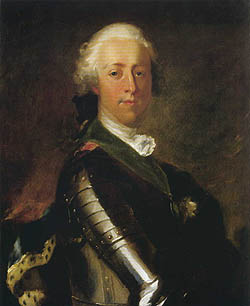
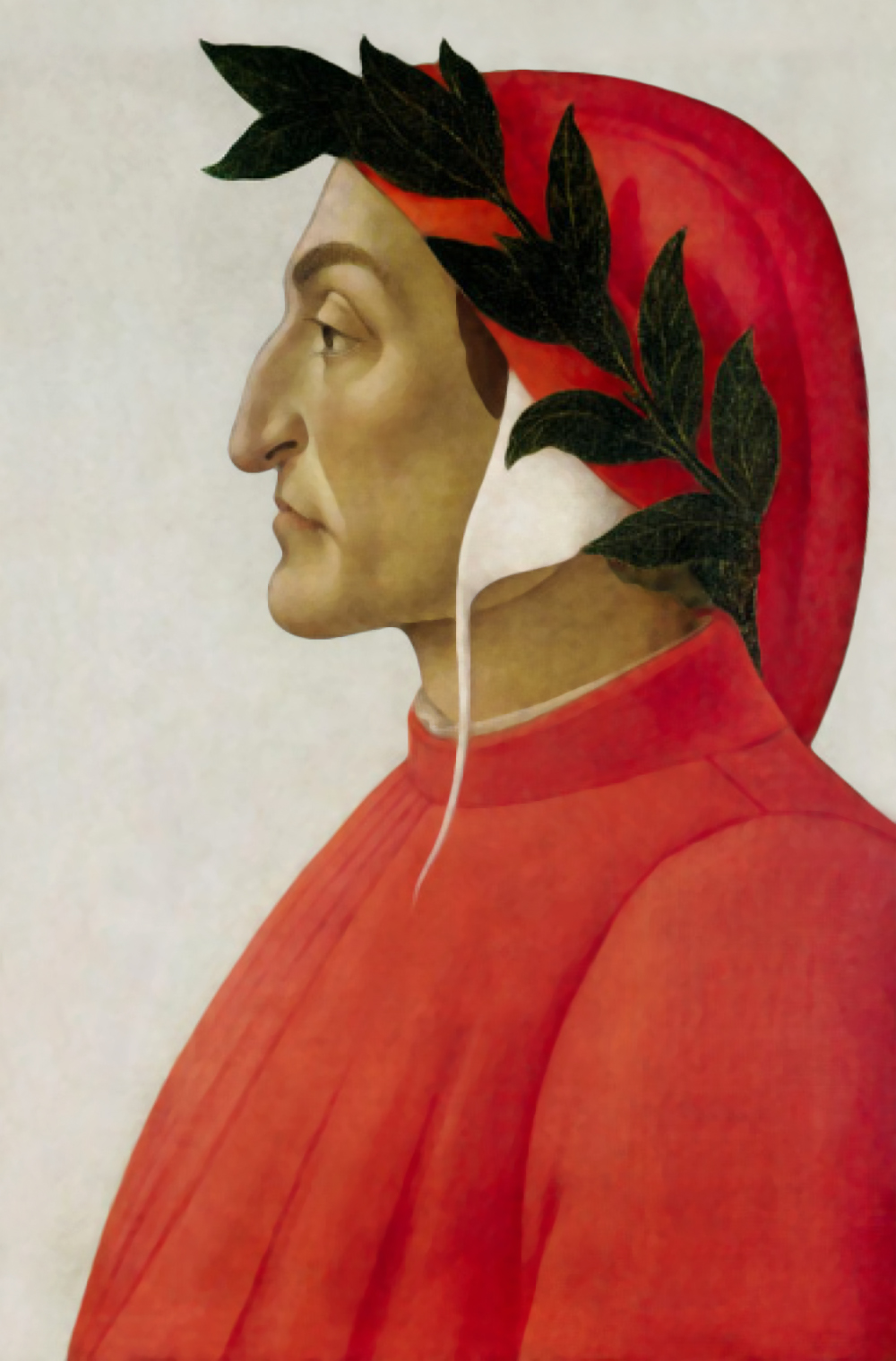
The Bonnie Prince


However, he was fatally persuaded to turn back and lost the momentum and, eventually, the war, and the remnants of his army were butchered savagely by the grotesque Whig and plunderer, the Duke of Cumberland, "Butcher" Cumberland, younger son of the usurping German Hanoverian, George II.

The Prince roamed the Highlands, hidden by loyal men, cared for by Flora MacDonald, and hunted by the Hanoverian government, until he eventually escaped to Europe where he was ever after in exile until his sad death.

Mo Ghile Mear was written by Seán Clárach Mac Dhomhnaill (John Clare MacDonell), c.1691-1757, in loving memory of the Bonnie Prince. It is particularly to be noted that the song-writer refers to him as "my Caesar", the title of the Christian Emperor since Roman times and sometimes borrowed to refer to any Christian king.

Here are the lyrics in both Gaelic and English.

Mo Ghile Mear

Curfa
Sé mo laoch mo Ghile Mear
‘Sé mo Chaesar, Ghile Mear,
Suan ná séan ní bhfuaireas féin
Ó chuaigh i gcéin mo Ghile Mear.

Bímse buan ar buaidhirt gach ló,
Ag caoi go cruaidh ’s ag tuar na ndeór
Mar scaoileadh uaim an buachaill beó
’s ná ríomhtar tuairisc uaidh, mo bhrón

Ní labhrann cuach go suairc ar nóin
Is níl guth gadhair i gcoillte cnó,
Ná maidin shamhraidh i gcleanntaibh ceoigh
Ó d’imthigh sé uaim an buachaill beó.

Marcach uasal uaibhreach óg,
Gas gan gruaim is suairce snódh,
Glac is luaimneach, luath I ngleo
Ag teascadh an tslua ’s ag tuargain treon.

Seinntear stair ar chlairsigh cheoil
’s líontair táinte cárt ar bord
Le hinntinn ard gan chaim, gan cheó
chun saoghal is sláinte d’ fhagháil dom leómhan.

Ghile Mear ‘sa seal faoi chumha,
‘S Éire go léir faoi chlócaibh dubha;
Suan ná séan ní bhfuaireas féin
Ó cuaigh i gcéin mo Ghile Mear.

Seal da rabhas im’ mhaighdean shéimh,
’s anois im’ bhaintreach chaite thréith,
Mo chéile ag treabhadh na dtonn go tréan
De bharr na gcnoc is I n-imigcéin.

Chorus
He is my hero, my gallant darling
He is my Caesar, gallant darling.
I've had no rest from forebodings
Since he went far away my darling.

Every day I am constantly sad
Weeping bitterly and shedding tears
Because our lively lad has left us
And no news from him is heard alas.

The cuckoo sings not pleasantly at noon
And the sound of hounds is not heard in nut-filled woods,
Nor summer morning in misty glen
Since he went away from me, my lively boy.

Noble, proud young horseman
Warrior unsaddened, of most pleasant countenance
A swift-moving hand, quick in a fight,
Slaying the enemy and smiting the strong.

Let a strain be played on musical harps
And let many quarts be filled
With high spirit without fault or mist
For life and health to toast my lion.

Dashing darling for a while under sorrow
And all Ireland under black cloaks
Rest or pleasure I did not get
Since he went far away my dashing darling.

For a while I was a gentle maiden
And now a spent worn-out widow
My spouse ploughing the waves strongly
Over the hills and far away.


Alas! To Lochaber no more....the Prince goes into exile - and over the water - forever more; but the loyal men shall be ever faithful to his memory.


Aymez Loyauté!


+++

Saturday, 5 April 2008

Our last Catholic King: James II and VII

King James II of England, France and Ireland and VII of Scotland, was our last Catholic King.

He was pushed off his throne by a treacherous conspiracy of Whigs and other traitors including, it must be added, his money-worshipping chief army commander, Lieutenant General John Churchill, later 1st Duke of Marlborough, who plotted to kidnap James after William of Orange landed with his Dutch army. Churchill, ancestor to Sir Winston, then deserted his King at a crucial point in the defence of the nation. He became the richest man in Europe through his naked treachery and base betrayal of the King to whom he had sworn a solemn oath of loyalty.

King James was forced to flee to France and the protection of King Louis XIV. He kept court at St Germain-en-Laye looking for opportunities to regain his throne but his plans were ended at the Battles of the Boyne and Aughrim in Ireland.

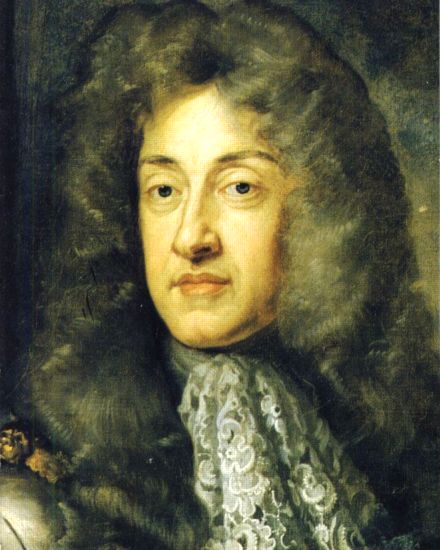
The gauntlet of old, Catholic England, Scotland and Ireland was later taken up by his son, James Francis Edward and his grandson, Charles Edward ("Bonnie Prince Charlie").

Bonnie Prince Charlie, flanked by Cameron of Lochiel and MacDonald of Clanranald


Recent historians have begun to paint a true picture of our last Catholic King and to expose the dishonest picture painted of him by the treacherous but victorious Whig historians whose false portrayal of James has dominated the teaching of English history for so long.

The real reason that the treacherous Whigs sought to oust him was his attempt to roll back the penal laws which so grossly oppressed Catholics and Dissenting Protestants. In his Declaration of Indulgence, James granted religious liberty to his subjects showing that he was far ahead of his contemporaries and had a much wider vision than did the bigoted Whigs who wanted to impose Anglicanism on the three kingdoms and forbid non-Anglicans from taking any part in the professions, teaching, medicine, the law or any public life and to persecute those who were not Anglicans, above all Catholics.

The Whigs feared even the slightest relaxation of the oppression of Catholics because they were convinced that this might mean that they had to disgorge some of the immense wealth that they had stolen from the Church and the monasteries and which they continued to squeeze out of the poor (as William Cobbett, an Anglican, so devastatingly shows in his History of the Protestant Reformation in England and Ireland).

The result was the beginnings of the modern world with a tiny number owning a huge, vast share of the wealth and the vast majority owning only a small part.

Here is an extract from James's last letter to his own son:

James Francis Edward, son of King James II and father to Bonnie Prince Charlie

Instructions left by King James II to his son, 1692

"If it please God to restore me (which I trust in His goodness He will do) I may then hope to settle all things so as may make it easier for you to governne all my Dominions with safty to the Monarchy, and the satisfaction of all the Subjects. No King can be happy without his Subjects be at ease, and the people be secure of enjoying their own without the King be at his ease also, and in a condition to protect them and secure his own right; therefore preserve your prerogative, but disturbe not the Subjects in their property, nor conscience, remember the great precept, Do as you would be done to, for that is the law and the Prophets. Be very carefull that none under you oppresse the people, or torment them with vexations, suits, or projects: Remember a King ought to be a Father of his people, and must have a fatherly tendernesse for them... be content with what is your own. Endeavour to settle Liberty of Conscience by a Law.

...Be never without a considerable body of Catholick troops without which you cannot be safe, then will people thanke you for Liberty of Conscience. Be not persuaded by any to depart from that.

Our Blessed Saviour whipt people out of the Temple, but I never heard he commanded any should be forced into it; tis a particular grace and favour that God Almighty shews to any, who he enlightens so as to embrasse the true Religion, tis by gentleness, instruction, and good example, people are to be gained and not frightened into it, and I make no doubt if once Liberty of Conscience be well fixed, many conversions will ensue..."


So you see, it was King James who was for freedom of conscience and liberty of religion, and the Whigs who were for bigotry, oppression and the forceful imposition of Anglicanism upon the nation by violence, unjust and odious oaths and the savage persecution of Catholics.

Yet there are still many - even some seemingly intelligent people - who think that Whigs stood for toleration and liberty of conscience.

It was, in fact, James and his followers, the Cavaliers, Jacobites and Conservatives, who really had the interests of the nation and the people at heart and who truly preserved freedom and justice for all - not the treacherous Roundheads, Whigs and so-called Liberals.

It takes a special brand of hypocrite to call himself a "Liberal" whilst grinding the face of the poor and hanging, drawing and quartering a man for his religion and his priesthood.


The White Rose of the Stuarts and of legitimate Catholic monarchy throughout Europe


...

Monday, 25 February 2008

Flora MacDonald: "Who shall find a valiant woman? Her price is of the uttermost."

Flora Macdonald (1722-90) (Fionnghal NicDhòmhnaill) was born in Milton, South Uist.

Flora (or Fiona) MacDonald was the daughter of Ronald Macdonald, a tacksman (gentleman freeholder of a grant of clan land) but he left her an orphan when only a year old.

Flora MacDonald's mother married a Macdonald of Annadale, in Skye, who, at the time of the Jacobite uprising, commanded one of the militia companies raised on the island by Sir Alexander Macdonald for the services of the government.

While visiting her brother at Milton in June 1746, to drive his cattle to their summer pasture, she was awoken one night to be told that she must leave the cattle-tending and assist a prince in distress.

Her encounter in Ormaclett, South Uist, on 20 June 1746 with Prince Charles Edward Stuart, then fleeing from the consequences of his defeat at the battle of Culloden, was to make her immortal in Scottish history.

Flora decided to take the prince to safety - disguised as her maid "Betty Burke'"- on Skye. On 28 June the party set out from Rossinish in Benbecula and journeyed for 15 hours under threat of capture by government troops to Mugstot House, from where she guided the prince to Kingsburgh House, the home, as it turned out, of her future husband; he said goodbye to his saviour on 1 July at Portree. As a gift Charles gave Flora a gold locket with his portrait.

The Bonnie Prince takes leave of the loyal and courageous Flora MacDonald

After further adventures the prince escaped to France, but Flora was arrested for her part in the escape plan and was held on the Royal Navy vessel HMS Furnace. Afterwards, Flora was a prisoner in Dunstaffnage Castle. After being conveyed from place to place, she was eventually transferred to London, where she remained in confinement for eight months (she was discharged at the special request of Frederick, Prince of Wales, father of King George III, without a single question having been put to her).

The Bonnie Prince with Cameron of Lochiel and MacDonald of Clanranald

In 1750 Flora married Alan Macdonald of Kingsburgh and produced a family of seven children. At the age of 51 she emigrated with her family to the then British territory of North Carolina and was active in recruiting Highlanders to fight for the British in the American War of Independence, in which her husband was taken prisoner. Flora returned to Britain via Nova Scotia in 1778. Two years after her husband's release, they returned together to settle once more at Kingsburgh.

Some ask: how could she support the British government in America?

Simply this: she recognised that the rebellious American War of Tax Evasion (for such it was) had no legitimacy whatever.

She was not a believer in revolution or rebellion; she was not a revolutionary, nor a nationalist nor a Socialist nor a Marxist but was a believer in lawful and legitimate government.

She supported Bonnie Prince Charlie because he and his father, James Francis Edward Stuart, were the rightful king and heir and James was the rightful head of the British government, excluded by rebellious Whigs simply because he was a Roman Catholic.


Prince James Francis Edward Stuart, King James III and VIII, excluded from his rightful throne because he was a Catholic and for no other reason

She did not believe that the restoration of the Stuarts was a rebellion at all. Like the Catholic Church, like St Thomas Aquinas, she utterly rejected rebellion - and the English Whigs were rebels against the lawful Crown and authority and had placed an usurper upon the throne.

The American rebels were also Whigs but they were worse Whigs and were now rebelling against the English Whigs. Flora MacDonald could see that this was going out of the frying pan and into the fire.

Flora MacDonald, like all good Jacobites, was a Crown Unionist (i.e. she believed in separate kingdoms but under one Stuart Crown) and was not a separatist or nationalist, still less did she believe that any part of the Union or Empire had the right to rebel, least of all the secularising American Whig rebels who wanted to evade their due taxes and seize power from the British government to satisfy their own power-hungry ambitions.

Her position was entirely consistent and was in no way a capitulation to the British Whigs (as some Whig historians falsely and mendaciously pretend).

The American rebels were akin to the Jacobins of the French Revolution and entirely opposite to the Jacobites who were no rebels but rather the loyal supporters of the legitimate Stuart dynasty. The Jacobites were, in fact, opposed to the Whig rebellion and the Whig usurper dynasty and government - a very different thing.

Flora MacDonald and her family returned to Skye, where she died, March 4th, 1790, leaving a son, Lieutenant Colonel Macdonald of the Royal Clan Alpin Regiment, an able writer on military tactics and telegraphy; and a daughter, married to Macleod of Skye. She retained her Jacobite beliefs to the last hour of her existence, contrary to the Whig claptrap put about in some historical journals.

The first meeting: Flora MacDonald is introduced to the Prince

Gaelic-speaking and educated at home, she met Dr Samuel Johnson while on his tour of the Western Islands with James Boswell in 1773 and sang to him of her Highland heritage. Of her, Dr Johnson wrote: “Her name will be mentioned in history, and if courage and fidelity be virtues, mentioned with honour”.

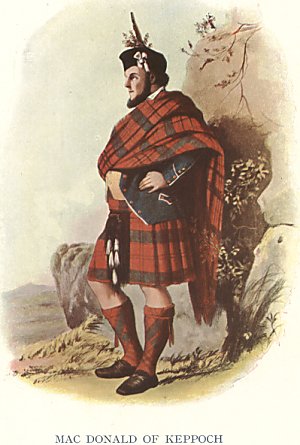
In 1773, despite the ban on the wearing of the kilt (the short kilt, the philibeg, or the great kilt, the philimore) in 1747, which was not to be repealed until 1782, it was worn by MacDonald of Kingsburgh, Flora’s husband, when Dr Johnson and Boswell visited in 1773.


Boswell, himself Boswell of Auchinleck, younger, and the son of the Laird of Auchinleck, wrote:

"I was highly pleased to see Dr Johnson safely arrived at Kingsburgh, and received by the hospitable Mr Macdonald. He had his tartan plaid thrown about him, a large blue bonnet with a knot of black ribbon like a cockade, a brown short coat of a kind of duffil. A Tartan waistcoat with gold buttons and gold button holes, a bluish philibeg, and tartan hose"
(from Journal of a Tour of the Hebrides, James Boswell, page 184)


Tartan: MacDonald of Kingsburgh


...

Monday, 5 November 2007

To Lochaber no more: do we support HM Queen Elizabeth II or the direct successor of the Stuarts, HRH Francis, Duke of Bavaria?

The short answer is this:

Her Majesty, Queen Elizabeth II, is the legitimate monarch of the United Kingdom and all the Commonwealth Realms.

Why?

The best argument is this: common sense.

The true threat to legitimate Catholic monarchy today is most certainly NOT Queen Elizabeth II.

If you don't agree then stop reading now because nothing I nor anyone else says - even God himself - will persuade you.

However, there are many other very good arguments for her legitimacy.

Here are a few:

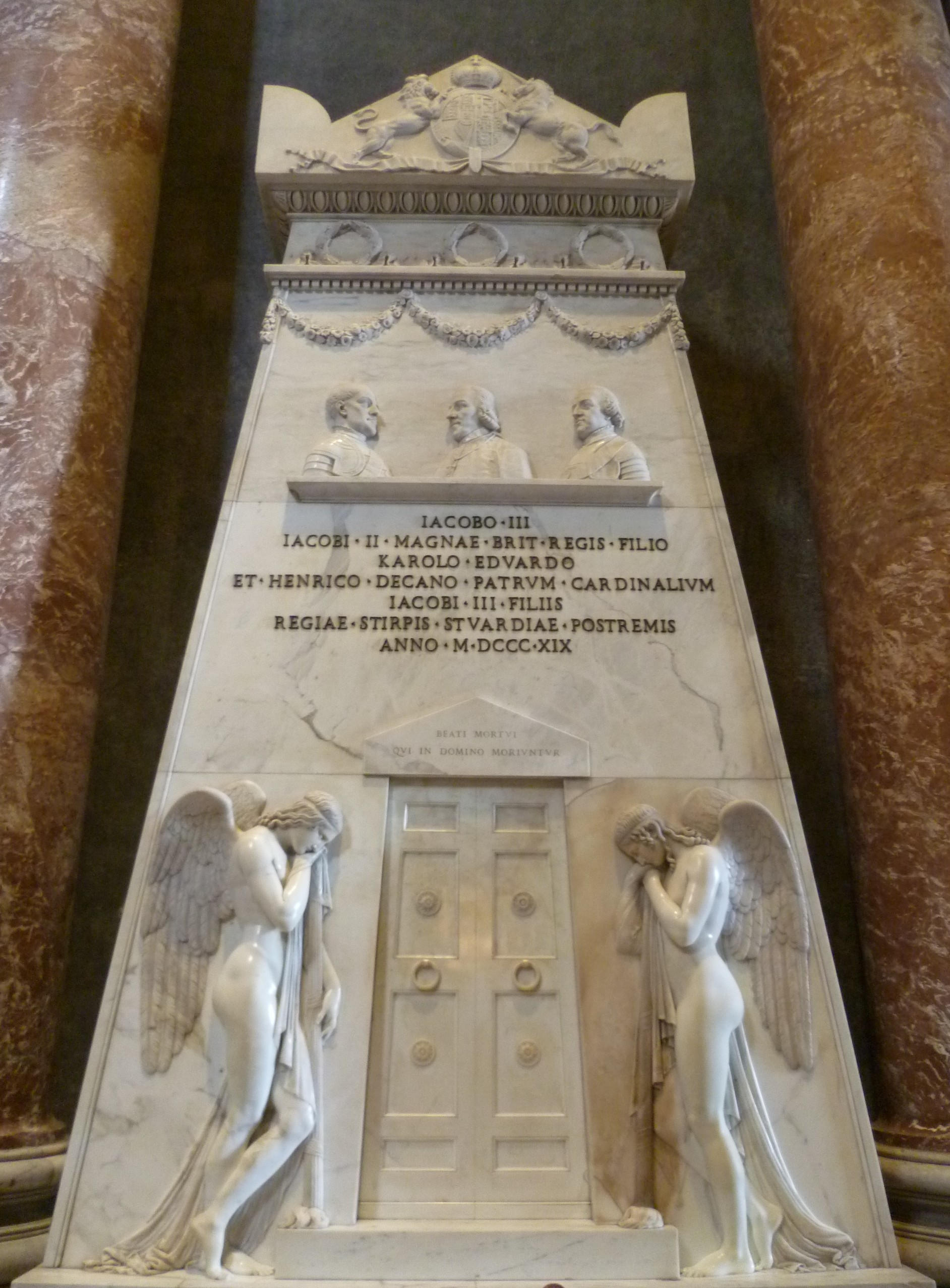
First, the Stuart line has not made any claim to the throne since the death of HRH the Cardinal Duke of York in 1807. That, on its own, puts an end to the matter.

Secondly, the popes since that time, and even before, recognised the Hanoverians for reasons of state policy and for the safety and security of Europe and what was left of Christendom.

Thirdly, the Cardinal Duke of York himself returned the "Honours of Scotland", the Scottish royal heirlooms which always revert to the Sovereign legally, to King George III which was a tacit recognition of him as his legal successor according to the ancient Scottish (and Gaelic) principle of the Taniste (pronounced "Tawnister") meaning "successor". Under this principle, which was a dynastic principle in most if not all of the Celtic monarchies and principalities, the king could choose a successor from amongst his near kin and his eldest son would only succeed if the king had failed to make such a choice. This law, of course, did not apply to England.

However, in England, Parliament claimed the right to make the king (at least since 1688/9). That law was wholly illegal and Parliament had no right to claim it, especially as it was imposed by foreign occupation when the Dutch invaded us and overthrew the rightful king, but, after remaining in place for over 100 years that was a principle that could not now be overthrown without disproportionate harm and so has had to be endured as a part of the British Constitution ever since. Thus it would now be wrong to seek to overthrow the Hanoverian dynasty, nor its heirs or successors.

Fourthly, the Catholic Church teaches that a war, to be just, must be declared by the right authority and no-one now has the right to declare the present dynasty overthrown nor to wage war against it, except, perhaps residually and only in Catholic law not international law, the Pope and he would not now do it as it would be grossly immoral so to disturb a peaceful state and constitution which works, and is working, perfectly well enough for the safety and security of the nation and the people (leaving aside the wicked machinations of some of our more odious politicians).

Fifthly, the Catholic Church also teaches that a war, to be just, must be proportionate and any such attempted overthrow would be utterly disproportionate and thus monstrously unjust and wicked. Indeed, it would be every bit as wicked as the attempt by the evil and Marxist Irish Republican Army to overthrow the state. It was for that reason, among others, that the IRA was several times condemned and its members ex-communicated by the Pope and the Irish bishops.

Sixthly, the Catholic Church favours stability of government - that, after all, is what "peace" is - and that is why it has always favoured legitimate monarchy which, as St Thomas Aquinas and St Robert Bellarmine say, is the best form of government. Now it would be a complete reversal of that principle if one were, at a time when another dynasty has become well-established, to champion the cause of a dynasty that has no prospect of removing the present occupants, does not wish to, and which, if attempted, would be to disturb the peace, safety and security so radically as to threaten the very foundations of the Constitution, the law and monarchy itself.

It would, in short, now be a revolutionary act and the Church utterly opposes revolution which is the greatest threat to any nation's safety and security and which inevitably leads to the persecution, oppression and murder of the innocent. The Church will always ally itself with those governments that are the most peaceful and just, even if that means some sacrifice in terms of legitimacy of monarchy. Peace and Justice are higher goals than legitimacy since legitimacy is seen as a means to the end of attaining such peace and justice because it is more stable than other forms of government. Legitimacy is not purely an end in itself. To choose legitimacy above peace and justice is thus to reverse right order and to sin since, as St Thomas teaches, sin is to desire a good inordinately i.e. outside its right order.

Seventhly, whatever is wrong with our current constitution it cannot be laid at the feet of the Windsor dynasty. Indeed, our Queen has been one of the most exemplary of monarchs that we have ever had the good fortune to see upon the British throne. She has dedicated and devoted herself to the service of her people, the Commonwealth, the Constitution and the best interests of all, without stinting and with much self-sacrifice.

To shew her the kind of ingratitude that is implied in the rejection of her right to sit upon the throne would be an act of the greatest iniquity and baseness and would rightly be viewed as cowardly and deeply criminal. It is the kind of evil ingratitude that utterly false and evil organisations like the IRA demonstrate and is odious in the extreme to all Catholic Christians of good conscience - and, I may add, that excludes all those so-called "Catholics" who think that the IRA have a right to bomb, main, slaughter and destroy innocent men, women and children in open and devilish defiance of the Commandment that says "Thou shalt do no murder". As Bishop Moriarity of County Kerry in Ireland said of their predecessors, the Fenians, "Hell is not hot enough, nor long enough, for such as them".

So, then, you will ask, why do we bother to remember and extol the Stuart dynasty?

That, too, is readily answered.

It is because the dynasty stands not only for legitimate monarchy but also for Catholic monarchy, for Catholic government, for Christian government in accordance with the principles of the Gospel of Jesus Christ, for stability, for peace, for justice, for loyalty, for honour, for truth and for a period in our history that is not only deeply romantic but also sets an example for us today and sets the right tone, human weakness notwithstanding, for what Christian monarchy is really about.

Attempts are repeatedly made - alas, not least in Scotland - to besmirch and dishonour the name of the Stuarts and to pretend that they were weak, venal, dishonest, power-hungry, corrupt, villainous, self-serving, incompetent, vain, bigoted, conwardly and so on. But the smears are so ludicrously excessive that they do not reach their mark just as the false accusations against the Templars and the Jesuits were so absurdly excessive that no-one believed them, not even those who might have been disposed to detest the Templars or Jesuits. It is the same with the wildly excessive accusations against the Stuarts.

Part of the reason for these attempts is that the Jacobites, i.e. those who supported the Catholic Stuarts, were largely exiled from Scotland were sent to Canada, Australia, New Zealand, America and other colonies or else escaped to Europe. That left in Scotland largely those dour, bleak, Calvinists, the Presbyterians, who have a vested interest in besmirching the name of the Stuarts and all they stand for.

The Scottish Episcopalians, among the most loyal of Jacobites, were heavily out-numbered and had to keep a low profile. Many went to America and founded the Episcopalian Church there. Now, they both have simply become yet another of the many liberal Protestant sects who do not really believe in anything much at all and have largely abandoned the historic creeds of Christianity and certainly have abandoned its morality.

In fact, as history reveals, it was the Whigs and Hanoverians who were bigoted and weak and whose government was corrupt. England was never so badly governed as it was by them, as the Protestant William Cobbett, who lived at the time, so graphically reveals.

It was they and their evil example that lost the American Colonies; they who tolerated the supremacy of the "jobbers" in the City of London that led to the South Sea Bubble, and the placemen in government who let corruption and anarchy reign in so many places so that the poor were never so destitute. They, too, were those who introduced transportation to the Colonies and over 200 capital offences, including death for stealing 6d or a sheep; they who widened and extended the most vicious and offensive Penal Code against Catholics ever to be seen so that English and Irish Catholics were reduced to the status of starved slaves in their own country.

The Stuarts stood for everything opposed to such monstrous corruption. The Catholic King James II and VII was even in favour of religious toleration within reasonable bounds. Indeed, it was for THAT reason and no other than he was treacherously betrayed by those who should have been most loyal to him and who sided with the Durch invader, William of Orange, and, indeed, actually INVITED the Duchman to invade, the most open and clear act of High Treason imaginable. Yet these same bare-faced, hypocritical pharisees falsely and unjustly dared to call Catholics by the odious and shameful name of "traitors" and to hang, draw and quarter them with the most savage and brutal torture imaginable - all simply to preserve the ill-gotten plunder of the Whigs!

James II ordered his Declaration of Indulgence to be read from every pulpit in the land (which was the "media" of its day) but the refusal of 7 Anglican Whig bishops so to do, and their subsequent trial, precipitated the plotting of High Treason against the King. In the Declaration, Catholics and dissenters were freed from the savage penalties against them and allowed to participate in the professions, the Armed Forces and the public life of the state, to some degree.

Read the Declaration here and judge for yourself:

http://www.jacobite.ca/documents/16870404.htm

The Whig Anglicans, whose ancestors had enriched themselves from the plunder of the monasteries, the system of welfare for the poor, feared that even this small measure of toleration might lead to them having to account for their ill-gotten gains and - absurdly and irrationally - they feared that it might lead to a Catholic government which might make them give back some of their plunder and robbery to the Church. They feared this even though the Catholic Queen Mary (Tudor) had found it impractical to order more than a small part of the plunder restored. But even this very little the villainous Whigs feared!

This was the REAL fear of those worthless scoundrels, the Whigs.

They feared for their grotesquely bloated wallets, their chests of booty, their fabulous houses and wealth, their sacks of gold. These Whigs were the original fat, bloated Capitalist exploiters and, like all thieves and robbers, they fought hardest and most energetically against those who would require them to disgorge their ill-gotten gains and return some to the public purse and to relieve the poor.

Instead, they conspired to oust the legitimate government, to which they owed allegiance, and, through the agency of the Parliament which they so totally controlled, they set up a puppet government with a king - William of Orange - who was entirely in thrall to them, so that they could secure to themselves fabulous wealth and riches, undisturbed by the famished cry of the starving children of the poor.

Was there ever men so evil as these?!

We remember the Stuarts as being the dynasty that set itself against these plundering rogues, the Whigs, and sought to govern for the good of the people as a whole, and not for one small section of the people.

The Whigs will tell you that the opposite is true but one need but read history to see what liars they are.

The Whigs claim that their revolution of 1688/9 was for "liberty" - but liberty for whom? It was liberty for them to enrich themselves at the expense of the poor, in truth.

Even as late as 1988, the late Quintin Hogg, Lord Hailsham of St Marylebone, a former Lord Chancellor, sought to celebrate 300 years of that Whig revolution as a celebration of our "ancient liberties". It was no such thing. It was the very opposite. It was a denial of our ancient liberties and the settlement of liberty upon the rich to exploit the poor.

The years after 1688 were the years which Hogarth so aptly illustrates with his paintings and drawings of the idle corruption of the rich, the sloth of government and the complete destitution of the poor. One such has a caption "Drunk 1d, dead drunk 2d". This was the time when rich and poor alike went to Tyburn to see many hanged and half-hanged and turned the whole ghastly event into a kind of Christmas fair!

This was why the Whigs felt the need to promote "No Popery" riots whenever there was public discontent with the government. It was a devious, cynical means of deflecting attention from the true source of corruption, i.e. themselves, onto entirely innocent but convenient scapegoats, the Catholics.

The evidence for this is Cobbett himself - a Protestant but a very fair and honest one. Read his book The History of the Protestant Reformation in England and Ireland to see all revealed. And Cobbett was an MP and journalist whop suffered unjust imprisonment for telling the truth about the corruption in British society of his time.

When the Whigs, and their predecessors the Cromwellite Roundheads, speak of "the people" they mean themsleves only. When they speak of "the consent of the governed" they mean only the consent of themselves. When they speak of liberty, they mean liberty only for themselves. And when they speak of "arbitrary government" and "Popish government" they mean a government that will stop them from exploiting, oppressing, persecuting, starving and slaughtering the people and which will stop them enriching and bloating themselves with wealth that once was used to succour the poor and sick.

As Dr Johnson once aptly wrote: "The Devil was the first Whig".

We remember the Stuarts as the dynasty that stood apart and above these evils and, instead, stood to defend the true liberties of the people from the depradations of a parcel of Whig plutocrats and exploiters who cared not a whit for the liberties of the ordinary people.

And we remember that these same Stuarts were, from James II onward, loyal and devout Catholics who looked to the principles of the Gospel to guide their government and to honour, loyalty, chivalry and protection of the weak, and all the virtues as the things at which kings must aim, not mere filthy lucre and self-aggrandisement.

And we remember that they were the legitimate monarchs against whom the treacherous Whigs disloyally and shamefully refused allegiance and, instead, declared treasonous war.

For this reason, too, we honour their descendants, the Wittelsbachs and Liechtensteins, also fine examples of good, modern, Catholic monarchy and dynastic rule.


His Serene Highness, Hereditary Prince Alois of Liechtenstein and his wife, Her Royal Highness, Princess Sophie of Liechtenstein and Duchess in Bavaria, through whom the Stuart line now passes.

We remember the motto of the Stuarts for the same reason:

Aymez Loyaute - love loyalty.

All true Christians love loyalty and hate disloyalty just as they hunger and thirst after justice, peace and mercy and hate injustice, war and the hard-hearted mercilessness of corrupt and selfish men.

...