Saturday, 29 November 2008

Brigadier-General Stand Watie: Cherokee Indian and Confederate cavalry commander

Stand Watie (also known as Standhope Oowatie or Degataga meaning "stand firm") was a Cherokee and a Christian born in Georgia in the year 1806, the year when, in Europe, in the face of Bonaparte’s attacks, the Holy Roman Empire was declared at an end.

By 1820, almost one third of the Cherokee nation had been relocated west of the Mississippi River. Their lands in Indian Territory (modern-day Oklahoma), prosperous before the War of 1861-65, were in ruins thereafter. Many of these Indians were Christians and excellently educated.

They were US citizens, many became wealthy, and many become plantation and even slave owners.

The Cherokee people established a central government in 1827, electing John Ross (1796-1866) as their principal chief. He spoke out against the removal of the Cherokee from their homeland and strongly opposed the illegal Indian Removal Acts of President Andrew Jackson.


Cherokee Chief John Ross


Watie recognized Andrew Jackson’s determination to proceed with the ethnic cleansing of the Cherokee people from the south-eastern United States. The Supreme Court struck down the Indian Removal Acts as unconstitutional. However, President Jackson famously responded:


"The Chief Justice [John Marshall] has made his ruling. Now let him enforce it".


But it was the President’s job to enforce it!

In defying the Constitution, Jackson was a traitor.

But he had might over right on his side and so survived his treacherous betrayal of the US people and Constitution.


President Andrew Jackson, the founder of the Democrat Party.
He illegally sent thousands of Cherokee to their death west of the Mississippi.


This was the founder of the Democrat Party of the United States.

By mid 1837, many Cherokee had been moved to Indian Territory. The rest of the tribes, excluding some who fled to the mountains, were forcibly removed from their homes and shipped West in 1838 on the infamous “Trail of Tears” upon which many perished thanks to the illegal Acts of Jackson.


A portrait of a Cherokee chief


Thousands of them, mostly women and children, died in the vast open wilderness amidst a howling winter and sometimes brutal Federal soldiers, en route to their new homeland.

It was an attempted genocide.

Watie and others were at first seen as collaborators and some were murdered. Eventually, these troubles ended and Watie was appointed to the Cherokee Tribal Council and served from 1846 to 1861.

Shortly thereafter, Watie enlisted in the Confederate army.

Of the five "Civilized" Tribes – Cherokee, Chickasaw, Choctaw, Creek, and Seminole – most fought for the Confederacy.

A successful planter and journalist, Watie supported the Confederacy from the start. His influence helped lead the Cherokee nation into a formal alliance with the South. He and many fellow Cherokees gained renown for their battle exploits – renown largely ignored in traditional American histories.

Watie’s own wife, Sarah Bell Watie, and their children had to flee into North Texas in the cold of winter.


Sarah Bell Watie, wife of General Watie


He was promoted Colonel and organized and commanded the Cherokee Mounted Rifles. They earned a fearsome reputation at such battles as Wilson’s Creek in Missouri and Pea Ridge in Arkansas.

At the latter, Watie’s cavalry, though outnumbered, charging into the face of blazing Yankee cannon, captured them, then turned them on their fleeing Yankee enemy.

Watie eventually commanded the Confederate Indian cavalry made up mostly of Cherokee, Creek and Seminole.

He led Confederate forces to victory in the Second Battle of Cabin Creek where he captured an enormous Federal wagon train.

He was promoted Brigadier-General in 1864.

He was the last Confederate general to surrender, undaunted and unvanquished, on 23 June 1865, nearly three months after the surrender at Appomattox. At Fort Towson in the Choctaw Nation's area of the Indian Territory, Watie signed a cease-fire agreement with Union representatives, becoming the last Confederate general in the field to stand down.

Watie returned to financial ruin and a home burned to the ground by Yankees during the war. He tried to restore his ruined Grand River property which was devastated by the war and met with but little success. Exhausted by the war, Watie nevertheless committed his resources to the education of his children.

The Confederate Cherokees saw their land stripped away from them by a vengeful Yankee government.

In 1863, Stand Watie was elected principal chief of the Cherokee Nation.
Stand Watie died on September 9, 1871. He had outlived all but two of his children.

A friend wrote to Watie’s widow in these moving terms:

"I read with sadness of the death of your much esteemed husband. My tenderest sympathy is yours. I trust you have consolation from a Higher Power than earthly friends for the loss of one so dear to you. His labours on earth have not been in vain, he has done much lasting good for his country and country-men, that will never be forgotten but handed down to the future generations in the book of history for them to follow in his foot-steps and to aspire to leave their foot prints on the sands of time as well as he."


The grave of Brigadier-General Stand Watie


All ye holy saints of the Americas, pray for Stand Watie and the Cherokees deceased!

...

Tuesday, 18 November 2008

"I serve" or "I shall not serve"? Master and servant - or mere employer and employee?

We all are - or should be - servants: servants of others and of each other.

In so doing we imitate the very God Himself who, though He was the Creator of all things, did not shrink from making Himself the servant of His own creation.

In the famous Ford Maddox Brown painting (left), the Second Person of the Holy, Undivided and Everlasting Trinity washes the feet of His own disciples, setting a famous example for us all.

At the great feast of the institution of the Holy Eucharist, on Maundy Thursday, this great act of humility and love is re-enacted as the celebrant priest washes the feet of 12 members of the congregation.

The choir sing the famous words based upon the Gospel of St John - Ubi caritas et amor, Deus ibi est - "Where charity and love are, there is God" and the Last Supper is remembered when the God of earth and heaven gave His own precious Body and Blood as food for His children.

This is the heart and centre of the Christian religion.

In it is contained the most noble of all its teachings: we are all to be servants of each other as God made Himself our servant and as the Son is servant to the Father and, in turn, the Father serves the Son.

Just as the Father serves so does a Christian father and, indeed, a Christian king or master.

Indeed, the relationship between the Father and the Son and between God and His people is the model for the relationship between every master and every servant.

The Christian master is a father to his servant. They obey him and he protects and cares for them. Their bond is a bond of mutual charity, loyalty and fidelity. It is a quasi-familial, paternal relationship, just as the relationship of priest and people is a paternal relationship.

Such was the model of the master-servant relationship that obtained in old Christendom. Think of good King St Wenceslaus fetching food for the poor and warming the feet of his servant or of King St Louis of France or of any of the saintly kings of Christendom.


A stylized view of Good King St Wenceslaus and his servant


Nowadays, this relationship - based upon the divine - is mocked, derided and scorned to ridicule and falsely caricatured as a relationship of exploitation, venal peculation and cruelty by the master and of craven, stupid subserviance on the part of the servant.

What a shameless lie!

This, indeed, is what the relationship became when it ceased to be based upon the divine charity and instead became the pedestrian, mundane and loveless relationship of "employer" and employee".

No longer was the relationship familial but merely a cold, sordid relationship of money, exchange, trade and mutual exploitation.


Old master was replaced by new "employer" who cared only for money and kept his "employees" only so long as they were useful to him.


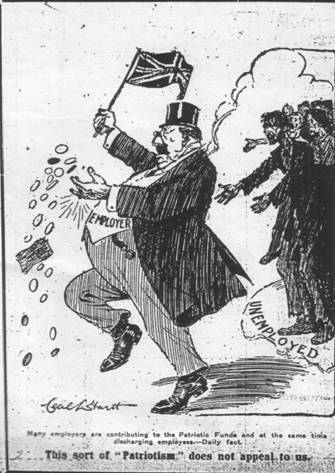
The employer sought only to maximize his profits through hiring employees who, once no longer useful, were "let go" and dispensed with as mere surplusage to fend for themselves.

The employee sought to extract from his employer all that he could in wages and recognised his authority for only so long as it suited him.

The employers used the employee as a mere commodity and the employees combined together to squeeze out of the employer every last penny that they could through strikes and walk-outs.

The familial and paternal relationship of mutual love, respect, loyalty and fidelity for life was gone - smashed by the preposterous Victorian "Political Economists" with their "hidden hand" of mutual exploitation which led to the ghastly mills, factories and workhouses of Victorian England.

Later smashed still further was it by the rise of the "wild-cat" striker Trade Unions, eschewing all responsibility in the name of the Worker's Marxist paradise. Reacting to the new evil of employer Capitalism came the devilish creed of Communism.


Reacting to the new evil of employer Capitalism came the devilish creed of Communism.


Such became the new relationship between men: mere employer and mere employee. Love died and dull exploitation replaced it.

Yet modern man fatuously rejoices in these new, loveless titles!

This was even - ridiculously - called "progress"!

The idea of any man serving another man as "servant" to his "master" was laughed to scorn. The master no longer felt any responsibility to his servant and the servant no longer felt any loyalty to his master.

The very idea of serving others was cast aside in favour of serving only oneself - the creed of Hell. Like their new master, the Devil, men said "I shall not serve".

Egalitarianism again raised its ugly, diabolical head, for where all are equal then none can appeal to any higher authority for justice and the rule of might conquers the rule of right.

As Gilbert and Sullivan put it so aptly "When every body's somebody then no-one's anybody".

In fact, of course, hierarchy is the natural order for mankind since that is how heaven is and will be. God intends that some should be masters and some servants, so that all can appeal to a higher authority, but both are really servants of a different sort, serving each other and others, in differing ways.

The motto of the Royal Military Academy Sandhurst describes well the role of a Christian leader: "Serve to lead".


"Serve to lead"
- the motto of the Royal Military Academy Sandhurst


Leadership is a form of service to others. A Christian leader seeks first to serve and not to be served, just as his master, Christ the King, came to serve rather than to be served.

So it was that our Lord commended the gentile Centurion who came to him and asked that our Lord heal his servant. He said these profound words:

"Lord, my servant lieth at home sick of the palsy, and is grievously tormented. And Jesus saith to him: I will come and heal him. And the centurion making answer, said: Lord, I am not worthy that thou shouldst enter under my roof: but only say the word, and my servant shall be healed. For I also am a man subject to authority, having under me soldiers; and I say to this, Go, and he goeth, and to another, Come, and he cometh, and to my servant, Do this, and he doeth it".
[Matt 8:6-9]


Our Lord marvelled at this, the Centurion being a gentile.

"And Jesus hearing this, marvelled; and said to them that followed him: Amen I say to you, I have not found so great faith in Israel". [Matt 8:10]


"I have not found so great faith in Israel"
- the prayer of the Good Centurion was Domine, non sum dignus - "Lord, I am not worthy...
"


Now we say the Centurion's prayer 3 times at Mass whenever we prepare to receive the Holy Eucharist in Holy Communion:

Domine, non sum dignus ut intres sub tectum meum, sed tantum dic verbo et sanabitur anima mea.

"Lord, I am not worthy to receive you under my roof, say but the word and my soul shall be healed."


This is the prayer of a true Christian master, officer and leader who, loving his own servant as a son, is himself a servant to others.

This is how all Christian masters and leaders should be, whether they are kings, military officers, professional men, or political or business leaders.

They should be as fathers to their servants, not merely employers to their employees.

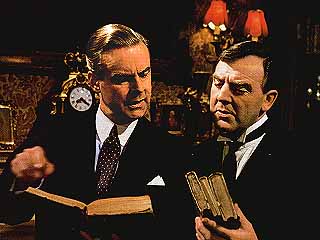
One gets something of the flavour of the old Christian bond between master and servant, in an amusingly eccentric English way, in the relationship between Lord Peter Wimsey, and his butler, Bunter, the aristocratic detective and his servant, both creations of English writer Dorothy L. Sayers. [Note for American readers: only the sons of Dukes and Marquesses have the courtesy title of "Lord" before their first name and family surname. A life peer in the House of Lords has the title of "Lord" before his family surname only. These days plenty of ignorant English writers get this wrong.]

Unlike other "employers" Wimsey will never part with Bunter and always provides for him. Bunter, on the other hand, saved Wimsey's life in the trenches of the First World War, as he lay wounded in no-man's-land.

It is unquestionably a relationship of love between master and servant, a relationship now mocked by "progressive" - and ignorant - modern man. Lord Peter Wimsey and Bunter share a mutual love and respect which modern secularist man - in his utter ignorance and clod-like inability to think beyond himself - simply cannot fathom.


Lord Peter Wimsey and his manservant, Bunter,
share a mutual love and respect which modern secularist man - in his utter ignorance
and clod-like inability to think beyond himself - simply cannot fathom.


HRH the Prince of Wales, the heir to the throne, has, as his motto, the German phrase Ich Dien which means simply "I serve". It is a profoundly Christian idea. Even the heir to the throne must regard himself as a servant.


Ich Dien
is the motto of HRH the Prince of Wales and means "I serve".
Even the heir to throne must regard himself as a servant.


Like a good father, the Christian master does not throw out his servant when he is no longer useful but rather cares for him in his old age remembering the good service that the servant did when he was fit and young.

He does not merely dump him upon the resources of the state, community and society as the modern employer does once he no longer has any use for the employee.

Likewise the servant shows a filial loyalty and love for his master just as God the Son does for the God the Father, as a son does for his father and as a good religious does for his Father superior.

Ultimately, the good Christian master shows the same paternal love for his servant as the father does even for his prodigal son, never casting him off but bearing with him even when he is froward, wasteful or neglectful.


Bartolomé Esteban Murillo. The Return of the Prodigal Son. 1667-1670.


What a disaster for mankind it was when the wonderful relationship of the Christian master and the Christian servant was consciously rejected.

Like so many evils, the beginnings of this rejection is to be found in that cataclysm that historians call the Protestant Reformation. Fortunately, not all Protestant masters rejected the old idea and many continued to treat their servants in the old, charitable way. It was the so-called Enlightenment and the later Industrial Revolution which eventually deprived the world of the beautiful old relationship that God intended to exist between a master and his servants.


The Servant King


...

Friday, 14 November 2008

Animal "rights" sentimentalism: irrational and often lethal

Coochy, coochy, coo - nice sharky warky!

Mr Shark, having just painted the Sistine chapel, written Dante's Inferno and built Chartres Cathedral, is on his way to file suit at the US Supreme Court in defence of his "right" not to have his piece of the ocean trespassed upon by man.

Err...

The debate on so-called "animal rights" continues - and plenty of good people are falling for the sentimental and irrational arguments with which the animal liberationist revolutionaries try to deceive people.

There is simply no teaching of the Church that confers rights upon animals and plenty that say the opposite. Animal rights is an entirely invented and modern concept that has no basis in Christian doctrine - or truth - whatsoever.

Thus, to pretend that animals have rights is to be in disagreement with God, the Creator of all creation, including animals.

If an animal had a "right" then it would have to have at least the potential ability to enforce that right - but it can never do so because animals are not rational creatures.

The fact that one finds one's cat or dog cuddly or "nice" does not confer rights on them.

Indeed, it is the argument of the animal liberationists that creatures have the right to life only if they are "wanted" and thus that humans can be discarded if they are not wanted i.e. if they are no longer "cuddly" or "nice".

Silly sentimentalising plays straight into the hands of this extremely odious ideology, just as all those intensely silly people in the 1920s (women as well as men) fell for the odious nonsense that Hitler spewed forth. They exchanged logic and rationality for woolly sentiment and irrational emotional feeling.

Not wanted?
Then, according to animal liberationists - like vegetarian Adolf Hitler - you have no rights!

Look what the result was: the utter horror of the death camps and vile experiments on human beings.

On the other hand, human beings do have obligations toward God's creation and are obliged not to abuse God's creation, including animals, such as is happening on a vast scale in all too many factory farms that produce genetically-modified animals for use in fast-food outlets.

That is a serious abuse of God's creation and should certainly be banned. It is bad for humans: morally, intellectually, spiritually and digestively.

But man's obligations towards creation do not create "rights" for animals and any attempt to argue for such "rights" is inevitably incoherent. Why stop at baby seals or horses or cats or dogs? If they have rights then why not poisonous spiders, rats or even bacteria?

There is no logical reason to stop at one's favourite pet, or animals that one finds "cute", like baby seals, save that they are "wanted" (because cute) and so we are back to having rights only when "wanted" and no rights when "unwanted" - the classic argument for abortion and euthanasia.


A monster croc - cute, cuddly, "nice" and friendly???

The only solution is that humans have rights and animals do not, but that humans have obligations toward God's creation.

Take Rodeo, for example.

Every time a horse is broken in it requires a type of "Rodeo" since someone has to ride the horse until it is tamed. It is, rather, a question of how it is done.

It can be done cruelly (which is usually an ineffective way of doing it) or it can be done sympathetically, which is usually a more effective way. But there will very often be bucking and resistance from the horse, even for the best and cleverest of horse-tamers.


Rodeo and horse-breaking are not necessarily cruel

No-one can rationally suggest that the age-old practice of "breaking-in" or taming a horse is "very cruel".

Moreover, animals attack and eat each other. They often do so very savagely. It's a fact of life. Indeed, that is another difference between men and animals - animals are naturally savage, men are not (although they can become so if they choose).

Animals have to be tamed or contained. That is their natural condition. It is not cruel or savage for men to tame animals nor, indeed, to hunt them and eat them. Indeed, God made the animals for our use - as pets, for work, for food and, indeed, also, for their simplicity.

A wild cat or dog is by no means "cuddly" or "nice". However, they do not choose to be wild, as some men do. That is because they cannot choose at all since they are not rational beings. Thus they cannot have "rights".

A man who chooses to be wild can have his rights curtailed but, since he remains a rational being (however wild or sinful), he never loses all his rights. But an animal is not rational and so cannot have rights at all, wild or tame.

No amount of silly sentimentality can overcome the facts of nature. Indeed, it can often lead to dangerous consequences as happens when silly sentimentalists think they can tame wild animals by lovey-dovey, sweet-talking to them, as if they were rational creatures.

Some foolish people have even attempted to do so and have got themselves and others killed or maimed into the bargain.

Try hugging a grizzly bear - silly sentimentality can be lethal!

One simply has to face the facts of life: silly sentimentality can be lethal - literally.

...

Wednesday, 12 November 2008

The HFE Bill: "the lights of a perverted science"

The official summary of the Human Fertilisation and Embryology Bill describes it as providing for revised and updated legislation on assisted reproduction and for changes to the regulation and licensing of embryo use in research and therapy.

A draft Bill, the Human Tissue and Embryos Bill, was scrutinised by a joint committee of both Houses of the UK Parliament. The Bill includes provision for research into different types of embryos, and proposes changes to definitions of legal parenthood for cases involving assisted reproduction.

New technologies, especially in relation to the creation of embryos from donor cells, have since come into existence and the present Bill deals with some of them and with the creation of inter-species embryos which the Bill terms “admixed embryos”.

The Bill provides for the mixing of human and animal genes, for the creation of embryos for spare parts for other siblings, for cybrids and chimerae, and for the creation of embryos for same-sex couples without any requirement for a father.


A bundle of joy?
- or a mere bundle of flesh to be cannibalised for others?


Lord Patel and Lord Walton moved two amendments relating to consent for the provision of human tissue for research in the course of the Report Stage legislative debate in the House of Lords.

The first amendment concerned human tissue that,either, had in the past been donated for research, or that could not be traced to the donor and for which no express consent had been given either for or against its use in the creation of human or inter-species embryos.

The amendment proposed that the law should be changed to permit the use of tissue donated for research on these bases to create human and human-animal inter-species embryos for research.

The second amendment proposed that it should be possible for children’s tissue to be given for the creation of human and human-animal embryos for research with only the consent of their parents.

These were termed, respectively, “presumed consent” and “substitute consent”.
The argument behind the amendments was that they were needed in order to facilitate research into serious diseases and that the continued ban upon such tissue use (save with the donor’s consent or for his or her own therapeutic benefit) would unduly hamper scientific research.

Initially, Baroness Royall, for the government, took the view that the amendments were potentially incompatible with the HRA and the Convention.


How would Baroness Royall feel if scientists starting experimenting on her or stripping her out for "spare parts"? But she is quite happy for the same to be done to embryonic humans and for research to be done on children without their consent...


Patel and Walton responded robustly and the government later altered its position, and Lord Darzi, in an letter to peers, conceded a “compelling case” for removing some of the consent restrictions and agreed that such a case provided a proper exception to any potential incompatibility with the Convention.

There was little discussion in the Commons debates and Schedule 3 of the Bill contained the provisions of presumed and substituted consent as envisaged by the amendments.

These now provide, in contradistinction to the provisions in the 1990 Act, for the use of cells for the creation of “admixed embryos” if:

(1) The donor of stored material is dead (or is reasonably believed so to be); or
He is not dead but cannot be traced or identified; or

(2) A prospective donor is not legally competent to consent (either because a child or because mentally or physically incapacitated).

In addition, Schedule 7 is amended to allow an amendment to earlier legislation to the effect that research will not be regarded as intrusive to the extent that it consists in the use of a person’s human cells to bring about the creation in vitro of an embryo or human admixed embryo.

This is the direction that a society begins to take when it no longer draws any distinction between humans and animals, when it no longer recognises the uniqueness of man and his creation in the image of God and in the existence of free will, right and wrong and the human spirit or soul.

It marks the return to the long, dark road down the tunnel of dehumanisation, degradation and – after many foul vicissitudes – death.

We must work to save ourselves from a return to the darkness and pray, pray, pray for protection from what Winston Churchill once rightly called:

“the abyss of a new Dark Age made more protracted still by the lights of a perverted science”.


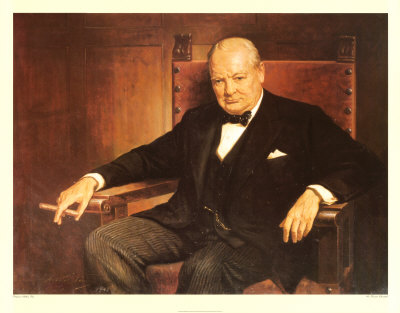
He fought against "the abyss of a new Dark Age made more protracted still by the lights of a perverted science".


...

Monday, 10 November 2008

"A-hunting we shall go": why the hunting ban is wrong and the "animal rights" revolution is another false ideology

Ever eaten a roast?

Yes?

Well, then, you're an accomplice to murder according to the loony "animal rights liberationist" revolutionaries.

This is the new stage of the Revolution, with a capital "R".

The exploitation of workers led to the error of Communism - and we know how disastrously that failed.

The exploitation of women led to the error of Feminism - and we are currently living that disastrous failure.

Animals are also part of God's creation and they and the environment should not be abused but such exploitation has led now to the error of Animal Liberationism which claims that animals have rights, just as humans do, and should be legally accorded them.

Under the extreme versions of this false ideology, a wanted animal, such as a cat or a dog, has more right to live than an unborn child, guns should be banned as they are used to kill animals and abortion should be allowed where a child is not wanted. Thus the ideology often gives more rights to animals than to humans.

It follows that the unwanted sick and elderly are also at risk under this ideology.

This is the duplicitous logic of the "animal rights" revolutionaries. There are even Catholic clerics who have fallen for this bizarre logic and who even retail the same nonsense in their sermons.

This is the philosophy that led to the ban on hunting.

What are guns for? They are used to hunt food and to eliminate verminous animals. They can, occasionally, be used in self-defence, where necessary. Self-defence is not - like abortion - murder or manslaughter.

If the pursuit of animals is also objected to then one must ask "on what ground?". If the answer is because they are God's creatures, then the next question is this "are all God's creatures, e.g. flies or poisonous spiders to be exempt thereby from being killed? Are cows and pigs also to be exempt from being used for food?".

If the answer is - ridiculously - "yes", then the next question is "why?".

The only answer can be because they have a "right to life" akin to that of humans, in which case there is an equality being made between humans and animals which is plainly wrong since humans have a rational soul and are made in the image and likeness of God, with free will, and animals have only an animal soul, and do not have free will or rational souls.

Since the Fall of Adam and Eve, man has had to hunt for his food. It is a natural activity. Moreover, a hunted animal has virtually no cholesterol in it so that it is actually healthier for you than farmed produce.


NORMAL


The technical banning of all forms of hunting has been effected in this country largely on the basis of so-called “animal rights”.

The more extreme animal rights movements are revolutionary in nature and seek to overthrow the legal and moral distinction between men and animals, claiming that all species should be accorded equal status in law and morality.

Professor Peter Singer of Princeton University in the USA is an advocate of extreme animal rights and believes that new-born children may have less right to life than wanted animals do, like a favourite cat or dog.


TOTAL AND UTTER WEIRDO
Professor Peter Singer thinks that a wanted animal has more right to live than an unwanted human child


The issue is thus not only one of the enjoyment, or otherwise, of hunting. There is a deeper philosophical and theological issue at stake here.

Is man different from the animals?

That is the question.

In truth, the answer is obvious.

What species, other than man, built the great Cathedrals, or painted the Sistine chapel, or wrote Dante’s Commedia Divina, or devised Justinian’s law code, or wrote the works of Plato and Aristotle or of St Thomas of Aquinas or came even close to producing anything like the great works of literature, art and architecture? Who but man devised modern science, medicine and mathematics?

“What is man, that Thou art mindful of him? Or the son of man, that Thou visitest him? Thou hast made him but a little less than the angels, Thou hast crowned him with glory and honour; and Thou hast set him over the works of Thy hands: Thou hast put all things under his feet.”

So sings the Psalmist (Ps.8:4-6).

Man is not merely an animal. He is made in the likeness and image of God with free will and the power to subdue nature and to create great things and to do great things.

Animals simply do not have anything like that power.

They do not have rational souls but only animal souls. They have been provided by God for man’s benefit. Of course, it is not good for man to be cruel toward them or to abuse the natural world but that does not confer upon the non-rational world the human and rational idea of rights, let alone human rights.

It does mean that we should oppose the extreme kinds of bizarre factory-farming practised by some big food multi-nationals which is plainly an abuse of God's creation and, moreover, is bad food for us and our children. But this does not confer legal rights upon animals. It is, rather, an enforceable obligation imposed upon men not to abuse creation - a very different thing.


COMMON, OR GARDEN, WEIRDO


Virtue and vegetarianism are not synonyms. Indeed, the great mass-murderer, Hitler, was himself a vegetarian, a teetotaller and a non-smoker, let us not forget.

Vegetarianism, teetotalling and non-smoking are all morally neutral. But let us not forget that evil men can adopt them, too. They do not, of themselves, confer virtue, though they may do so if undertaken as a sacrifice and a discipline, especially if done for good and devout religious motives.

But that is a very different thing from doing so out of a false belief in the equality of men and animals, or out of an excessive devotion to extending one’s life span, ignoring the next world, our true and eternal destination.

Wonderful creations of God though animals are, they are not to be equated with man, God’s special creation, made in His image and likeness.


Icon of St Irenaeus of Lyons


"The glory of God is living man” wrote St Irenaeus of Lyons.

Indeed he is, for he is the reflection and image of God, free to choose good and evil and destined, if he chooses good, to spend a glorious and bountiful eternity with the God who created nature for our benefit.


"The glory of God is living man" - St Irenaeus of Lyons
and here depicted by Leonardo da Vinci.


...

Sunday, 9 November 2008

Martinmas: remembering our dead on the Feast of the soldier-saint on Remembrance Day 2008


We shall remember them...


The British tribal rite of honouring the war dead is still second to none and captures exactly the feeling that ought to be experienced when we consider all those who gave their lives in war - especially those young lives cut off in their prime.

This is one thing the BBC still does well:

http://news.bbc.co.uk/1/hi/uk/7718227.stm


I can never help but think of the young lives lost in the First World War - that useless, pointless war brought about by the enemies of civilisation, of peace and - above all - of Christianity. Having started the war, the enemies of Christianity then did their level best to prevent it ending until every Christian nation had either toppled (like Austria-Hungary) or else had been bled half to death.

I think of young men like 19-year-old Roland Leighton, the poet and fiancee of Vera Brittain, who died of wounds on the Western Front.


"Goodnight, though life and all take flight, never goodbye..."
Inscription on the grave of Roland Leighton, the 19-year-old English poet.


AT A CALVARY NEAR THE ANCRE
(Wilfred Owen)

One ever hangs where shelled roads part.
In this war He too lost a limb,
But His disciples hide apart;
And now the Soldiers bear with Him.

Near Golgotha strolls many a priest,
And in their faces there is pride
That they were flesh-marked by the Beast
By whom the gentle Christ's denied.

The scribes on all the people shove
And bawl allegiance to the state,
But they who love the greater love
Lay down their life; they do not hate.


St Martin of Tours, pray for our noble dead!


...

Thursday, 6 November 2008

Aha! But what about the secret supplement, eh? In fact, the "Secret Supplement" to the Reichskonkordat shows nothing extraordinary.


One absurd website calling itself “No beliefs” (which says it all, folks, does it not?) claims that the Concordat includes a Secret Supplement and “naturally, this is omitted on Catholic sites”.

Well, Messrs “No Beliefs” you are lying again (so what’s new? Ho, hum…).

Here is yet another “Catholic site” that is more than happy to put the "Secret Supplement" onto site for all to see.

“No Beliefs” claims that it shows that “by 1933 the Vatican knew that Hitler was going to re-arm in defiance of the Treaty of Versailles, and wanted to help him keep it secret”.

It shows no such thing.

Here’s what it says:

“Secret Supplement

In case of a change in the present German armed forces in the sense of the introduction of universal conscription, the induction of priests and other members of the regular clergy and the orders into military service will, with the understanding of the Holy See, be arranged within the framework of approximately the following guiding ideas:

a) Students of philosophy and theology at Church institutions who are preparing themselves for the priesthood are to be freed from military service and the preparatory drills for it, except in the case of a general mobilisation.

b) In the case of a general mobilization clerics who are employed in the diocese administration or the military chaplaincy are freed from reporting for duty. This applies to ordinaries, members of the ordinariate, provosts of seminaries and Church residences for seminarians, professors at the seminaries, parish priests, curates, rectors, coadjutors and the clerics who provide a church with worship services on a continuing basis.

c) The remaining clerics, insofar as they are considered suitable, are to join the armed forces of the state in order to devote themselves to pastoral care for the troops under the Church jurisdiction of the military bishops, if they are not inducted into the medical unit.

d) The remaining clergy
in sacris or members of orders, who are not yet priests are to be assigned to the medical unit. The same shall apply when possible to the candidates for the priesthood mentioned in a) who have not yet taken their final vows.”


The "Big Four" who forced the Treaty of Versailles through so as to penalise Germany so harshly as to prepare the way for the next war and the rise of Nazism.


The operative words are “in case of a change in the present German armed forces in the sense of the introduction of universal conscription”.

These vague and generic words make provision for an eventuality which is by no means ruled out by the terms of the Treaty of Versailles, even given that the Versailles Treaty was very unjust and a recipe for another war, and even given that a future re-negotiation of terms was highly likely, in any event, given the Western powers concern over the growth of Soviet Russia.

Here are the relevant extracts from the Treaty of Versailles:

“Article 159. The German military forces shall be demobilised and reduced as prescribed hereinafter.

Article 160. By a date which must not be later than 31 March1920, the German Army must not comprise more than seven divisions of infantry and three divisions of cavalry.

After that date the total number of effective regular personnel in the Army of the States constituting Germany must not exceed 100,000 men, including officers and establishments of depots. The Army shall be devoted exclusively to the maintenance of order within the territory and to the control of the frontiers.

The total effective strength of officers, including the personnel of staffs, whatever their composition, must not exceed 4,000....”


How and where does this prevent “universal conscription”?

Universal conscription simply means that everybody becomes potentially liable for military service but not necessarily all at once or necessarily so as to exceed the limit of 100,000 men.

Once clergy were in danger of becoming liable to conscription then it became necessary for the Church to negotiate over how clergy were to be so conscripted and what they could be conscripted to do.

There is the simple reality of it!

No Catholic website has anything to cover up or conceal.

“No Beliefs”, like so many other atheists and enemies of the Church, however, does not scruple to lie and distort and resort to any feeble dishonesty merely to further its aim of attacking the Church.

Pathetic.

These liars do not stop there but further claim that:

(1) Perhaps “the Vatican” (who he?) was even hoping for this eventuality, since Pius IX “supported any policy or any man who would oppose and fight Soviet Russia”.[1]

(2) Cardinal Faulhaber, who helped negotiate the concordat with Hitler (and who ordained the present pope), assessed its international impact in a 1937 sermon:

"At a time when the heads of the major nations in the world faced the new Germany with cool reserve and considerable suspicion, the Catholic Church, the greatest moral power on earth, through the Concordat expressed its confidence in the new German government."[2]

The 2 sources for these statements are these:

[1] Avro Manhattan, “Chapter 10: Germany, the Vatican and Hitler”, The Vatican in World Politics, London, 1949.

[2] Guenter Lewy, The Catholic Church and Nazi Germany.

The first provides not one jot of evidence for its statement and it is meant to refer to Cardinal Pacelli NOT Pope Pius IX, as “No belief” wrongly states (they cannot even misquote accurately!).

It is pure opinion and that expressed in an amazing rant by Avro Manhattan who variously and contradictorily takes the Catholic Centre Party for daring to oppose Bismarck and the Falk laws that imprisoned Catholic archbishops who would not kowtow to the state but also for cosying up to the oppressive Bismarckian regime – flatly contradicting itself all in one article!

That’s not all.

He then takes them to task for not favouring the Liberals – and the supposedly “liberal” laws of Bismarck - and for denouncing rapacious Capitalism whilst at the same time he blames them for being hostile to Communism!

You never saw such a farrago of contradictions!

In essence, the author is opposed to the Catholic Church because he is opposed to the Catholic Church. That is the sum total of this dunderhead’s logic.

This is the work which “No Beliefs” quotes as a source for its completely unsupported claim.

Pah!

What about the Faulhaber quote?

Well, to start with, there is no page or chapter reference for this plainly controversial quote. In fact, another author claims it is at page 20. But page 20 of the copy of Lewy’s1964 book which I was able to access, gives no reference for the alleged quote from Faulhaber’s alleged sermon.

This becomes second-hearsay only and with no authoritative reference.

Moreover Lewy’s book is a ranting diatribe against the Church which carefully omits mountains of evidence in the Church’s favour.

This is what “No Beliefs” puts forward as serious research!

Pathetic.

And this, folks, is the so-called "evidence" against men like Pope Pius XII and against the Catholic Church!

Truly pathetic.


...