“There went out a decree from Caesar Augustus, that the whole world should be enrolled. And Joseph went up from Galilee to be enrolled with Mary his espoused wife, who was with child.” (Luke 2:1-5) +++ "Render therefore to Caesar the things that are Caesar's..." (Matt 22:21) +++ “Honour all men. Love the brethren. Fear God. Honour the Emperor [Caesar].” (1 Pet 2:17) +++ “Then Paul said: I stand at Caesar's judgment seat, where I ought to be judged….I appeal to Caesar.” (Acts 25:10-11)
Friday, 2 April 2010
THIS IS HOLY WEEK!
This is HOLY WEEK
Tenebrae, Maundy Thursday, Good Friday, Holy Saturday.
The Roman Emperor and Caesar Augustus Constantine I the Great saw a vision of the Chi-Rho symbol of Christ and the words, in Greek, Εν τουτο νικα (pronounced: "en touto nika") - usually rendered in Latin since then as IN HOC SIGNO VINCES ("in this sign conquer"), before his great victory at the Battle of the Milvian Bridge on the edge of the City of Rome. Not long after he liberated Christianity throughout the Empire, later himself becoming a Christian. Although Christianity was not made the religion of the Roman Empire until a later emperor, Theodosius, nevertheless winning this battle, seemingly by divine inspiration, caused Constantine to defend, and later to convert to, Christianity. So this victory is said to mark the beginning of the nearly two thousand years of the Christian and Catholic Roman Empire.
imago domini jesu christi
The Holy Face of Our Lord Jesus Christ has been partly re-constructed from the image on the Shroud of Turin. The shroud was loudly dismissed by a scoffing, but often rather ignorant, secular mass media but the latest view is that its image is inexplicable by modern science and most likely miraculous. St Therese of the Child Jesus was devoted to the Holy Face and many saints have had visions of our Lord's face.
Dominus Jesus Christus Rex
This icon of Christos Pantokratoros, Christ the Sovereign-King, reminds us that Christ's rule must be recognised in this world as also the next. His rule and his descent from the tribe of Judah, the royal tribe of Israel, was prophesied in Scripture: "The sceptre shall not be taken from Juda, nor a ruler from his thigh, till he come that is to be sent, and he shall be the expectation of the nations". (Gen 49:10 - Vespers Antiphon for Advent). For our Lord and Saviour Jesus Christ is not only King of the Jews, spiritually, but also in the flesh, through both his mother, the Blessed Virgin Mary, Princess of Juda, but also through St Joseph, Crown Prince of Juda, and direct descendant of King David, King of the Jews.
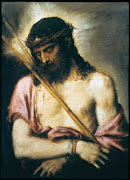
ecce homo - behold the man! behold the king of kings!
"And the soldiers plaiting a crown of thorns, put it upon his head; and they put on him a purple garment. And they came to him, and said: Hail, king of the Jews; and they gave him blows. Pilate therefore went forth again, and saith to them: Behold, I bring him forth unto you, that you may know that I find no cause in him. Jesus therefore came forth, bearing the crown of thorns and the purple garment. And he saith to them: Behold the Man!" (John 19:2-5)
whom kings adore
"When Jesus therefore was born in Bethlehem of Juda, in the days of King Herod, behold, there came wise men from the east to Jerusalem, saying, where is he that is born King of the Jews? For we have seen his star in the east, and are come to adore him". (Matt 2:1-2)
before abraham was, i am
The tetragrammaton, written in Hebrew as YHVH, meaning "I am Who am", signified the ineffable name of God which, having been told to Moses directly by God, was so deeply sacred that Jews were forbidden to say it lest it sound like a claim to be divine. Thus, in prayer, they called God Adonai (your Majesty) or Elohim (God, in the royal plural). When our Lord said "Before Abraham was, I AM" He was thus saying to the Jews very directly that He was God. Catholics used to have a great reverence for the Holy Name of Jesus so that they bowed whenever it was said but, alas, now, many have become careless.
The Queen of Heaven
"And Mary said: Behold the handmaid of the Lord; be it done to me according to thy word." (Luke 1:38). "And Mary said: My soul doth magnify the Lord. And my spirit hath rejoiced in God my Saviour. Because he hath regarded the humility of his handmaid; for behold from henceforth all generations shall call me blessed. Because he that is mighty, hath done great things to me; and holy is his name. And his mercy is from generation unto generations, to them that fear him." (Luke 1:46-50). "But Mary kept all these words, pondering them in her heart." (Luke 2:19)
εγω ειμι κυριος ο θεος σου οστις εξηγαγον σε εκ γης Αιγυπτου εξ οικου δουλειας ουκ εσονται σοι θεοι ετεροι πλην εμου
Ego sum Dominus Deus tuus qui eduxi te de terra Aegypti de domo servitutis non habebis deos alienos coram me
[Ex 20:2-3]
The trinity of royal and sacred languages: Hebrew, Greek and Latin, used over the Cross, and in the Scriptures and liturgies of the Christian Church, correspond to Father, Son and Holy Ghost, respectively. No Christian could call themselves educated, in times past, without knowing at least one or two of these Classical languages. The Latin language created a unique international community of scholars. Latin remains the primary language of the Church but nowadays even the clergy hardly know it, let alone Greek or Hebrew. Some foolish clergy even rejoice in their lamentable ignorance.
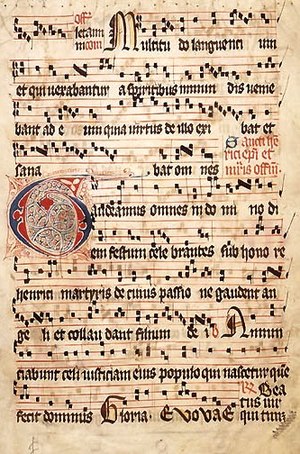
sacred music: chant
Chant goes back to the Jewish Temple worship. It was continued in the Christian Church and codified by Pope St Gregory the Great and was, thereafter, often called Gregorian chant. The oldest liturgy in the Christian Church could be seen in the Easter Triduum services of the Roman rite up to 1955. The ancient Offices of Tenebrae (Matins and Lauds of Maundy Thursday, Good Friday and Holy Saturday) are virtually unchanged since the earliest times.
CATHOLIC ORIGINS OF MODERN SCIENCE
Modern science has its origins firmly and centrally in the bosom of the Roman Catholic Church. Johannes Buridanus, (1295-1363), or Jean Buridan (pictured above), was a great French priest and scientist, teaching at the University of Paris, who sowed the seeds of modern science by reviving the concept of impetus, an understanding of motion first proposed by John Philoponus (c.490-c.570), the priest-scientist of the ancient University of Alexandria known by Arabs as Yaḥyā al-Naḥwī (or “John the Grammarian”). Philoponus had broken with the Aristotelian–Neoplatonic tradition, questioning Aristotelian dynamics in favour of the concept of impetus. This concept preceded the concept of inertia, which Sir Isaac Newton effectively stole, unacknowledged, from Buridan. Buridan, in turn, had borrowed the idea (but with acknowledgement, unlike Newton) from Friar Francis of Marchia (c.1285-c.1344), an earlier Franciscan scholar at the University of Paris, who had used it as an analogy of the effect of grace received in Holy Communion. The origins of modern science thus derive from an analogy of the Blessed Sacrament. John Philoponus had also argued against the eternity of the world, a theory which formed the basis of pagan attacks on the Christian doctrine of Creation, very similar to those mounted by unoriginal thinkers of today like Professor Richard Dawkins. Philoponus’ critique of Aristotle was a major influence on Italian scholar, Giovanni Pico della Mirandola and Italian scientist, Galileo Galilei, who cited Philoponus frequently. Pictured above is a likeness of Jean Buridan, arguably the father of modern science.
Roman Emperor
Defender of civilisation
Roman Pontiff
Teacher of civilisation
Roman rite
Spirit of civilisation
holy church & holy empire
Sancta Romana Ecclesia (SRE) - the Holy Roman Church, of which all the Cardinal-Princes of the Church were, and are still today, designated. The Cardinals were, originally, the curia (or court) of the Roman Pontifex Maximus or Pope that formed his chief advisers. The right of the Senate, clergy and commons (Senatus Populusque Romanus - SPQR) of the city of Rome to elect the Pope eventually devolved to the Cardinals. They held the highest rank in the Church after the Pope.
Sacrum Romanum Imperium (SRI) - the Holy Roman Empire, of which all the Prince-Electors of the Empire were, until the end of the Empire in 1806, designated. The Prince-Electors were, originally, the curia (or court) of the Roman Caesar Augustus or Emperor that formed his chief advisers. The right of the Senate, clergy and commons (Senatus Populusque Romanus - SPQR) of the city of Rome to elect the Emperor eventually devolved to the Prince-Electors. They held the highest rank in the Empire after the Emperor.
Both Pope and Emperor had the right of veto in the election of the other. The Pope also had the right to excommunicate an heretical Emperor and relieve his subjects of their fealty and the Emperor had the right to depose a Pope who excommunicated himself by publicly teaching heresy. No public enemy of the Church could thus, in theory, hold either office.
The imperial veto was only abolished in 1912 after it had been successfully used, by the Austrian Kaiser (Caesar or Emperor) Francis Joseph through the Cardinal Archbishop of Cracow, to elect a saint, Pope St Pius X. The new pope feared that in an increasingly anti-Catholic world the power might be misused in the future, so he abolished it.
The imperial veto had earlier been used by Austrian Kaiser (Caesar and Emperor) Francis Joseph to help elect Blessed Pope Pius IX, also.
"But they said: Lord, behold here are two swords. And he said to them, it is enough." (Luke 22:38)
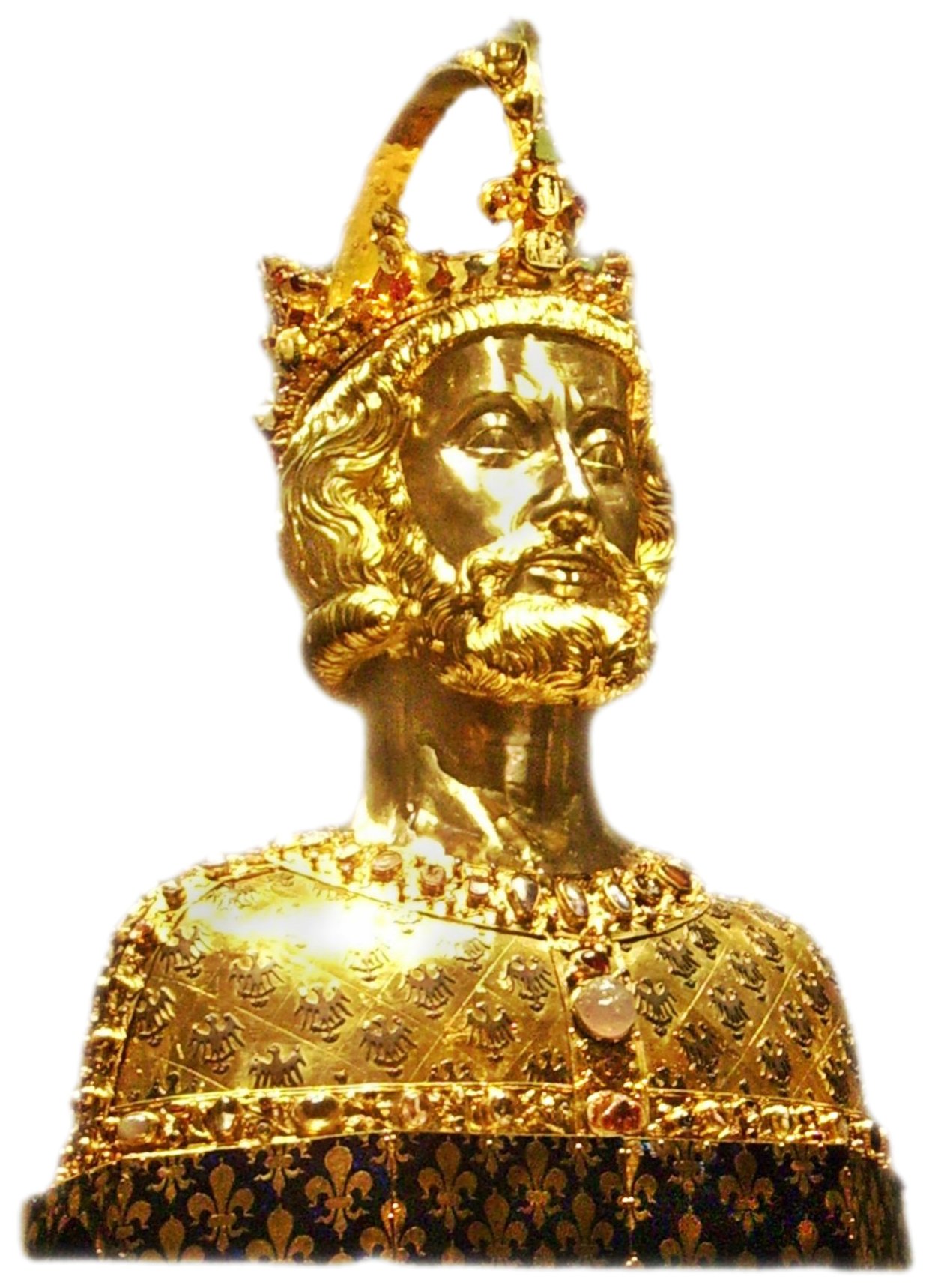
crown of charlemagne
The imperial prayers
"O God, who prepared the Roman Empire for the preaching of the Gospel of the eternal King, extend to Thy servant, our Emperor, the armoury of heaven, so that the peace of the churches may remain undisturbed by the storms of war. Through Christ our Lord. Amen."
[From the Mass Pro Imperatore for the Holy Roman Emperor, used also at the Coronation of an emperor, when the Emperor-elect was anointed by the Cardinal-bishop of Ostia, given the sword and orb by the Pope, ordained by him a Sub-deacon and then crowned Caesar semper Augustus, Romanorum Imperator with the sacred crown of Charlemagne, after which, as Deacon, he served the papal mass.]
"Let us pray also for our most Christian Emperor that the Lord God may reduce to his obedience all barbarous nations for our perpetual peace. O almighty and eternal God, in whose hands are all the power and right of kingdoms, graciously look down on the Roman Empire that those nations who confide in their own haughtiness and strength, may be reduced by the power of Thy right hand. Through the same Lord..."
[Good Friday Intercessions for the Roman Emperor, said after those for pope and clergy in the Roman rite until 1955]
"Regard also our most devout Emperor[Name] and since Thou knowest, O God, the desires of his heart, grant by the ineffable grace of Thy goodness and mercy, that he may enjoy with all his people the tranquillity of perpetual peace and heavenly victory."
[The imperial prayers came at the end of the Exsultet at the Easter Vigil on Holy Saturday until they were abolished in 1955 by the impious hand of Archbishop Annibale Bugnini, the great architect of the modern, ungainly, liturgy]
arms of imperial austria
pax romana et christiana
"Peace is not merely the absence of war... Peace is the work of justice and the effect of charity. Earthly peace is the image and fruit of the peace of Christ, the messianic 'Prince of Peace'." (Catechism of the Catholic Church, 2304-5)
Caesar Augustus
Caesar Augustus was the ancient title of the Roman Emperor, adopted by the Roman Catholic Christian emperors after Emperor Constantine I the Great, and derived from Julius Caesar and from his nephew, Octavian, called Augustus, the first Emperor. Constantine I the Great preserved the title, as did the Byzantine Roman emperors, and it was later adopted by the Russian kings called Tsar, meaning Caesar. When Pope St Leo III, at the call of the Roman Senate, clergy and commons, transferred the imperial crown from the usurping and heretical Empress Irene in Byzantium (who had slain her own son, Emperor Constantine VI) to Charlemagne, King of the Franks, on Christmas Day 800 AD in Rome, he crowned him Caesar Augustus. In the German of the Teutonic tribes this was rendered Kaiser (Caesar) and later, Der Heilige Römische Kaiser or "Holy Roman Emperor". The last Roman Emperor, Kaiser Franz II (pictured above in traditional Coronation vestments and the Crown of Charlemagne), was overthrown by Corsican revolutionary and imprisoner of popes, Napoleon Bonaparte, who ushered in the modern era of moral, political and cultural corruption from which the world has been suffering ever since.
The Holy Roman Emperor
Kaiser (Caesar and Emperor) Francis I was the Duke of Lorraine, formerly an imperial territory, when he married the Holy Roman Empress Maria Theresia. She then had him made Holy Roman Emperor (after due election by the Prince-Electors). He is seen here in the sacred coronation vestments and the sacred Crown of the Emperor Charlemagne. He wears the imperial cope and the imperial stole as well as an imperial alb, all privileges of an emperor. In his hand he carries the imperial sceptre and wears the imperial sword. At his coronation, the Emperor is made a deacon, reads the Gospel and serves the Pontifical mass. The above representation is of the central painting in the Giants' Hall of the Innsbruck Hofburg, or Court Palace, which was magnificently re-decorated by Queen-Empress Maria Theresia during the reign of her husband, King-Emperor (Kaiser) Francis I, and further re-decorated after his death. Their reign was a highly successful one, materially, politically and spiritually.
S.R.I. Sacri Romani Imperii
In the same way that Cardinals are designated S.R.E - Sanctae Romanae Ecclesiae - "of the Holy Roman Church" - so the Prince-Electors of the Holy Roman Empire were designated S.R.I. - Sacri Romani Imperii - "of the Holy Roman Empire" - the "two swords" of the Church, the spiritual and the temporal, being thereby represented. At the apex of the spiritual was the Pope, the Pontifex Maximus of ancient Rome, and at the apex of the temporal was the Emperor, the Caesar Augustus (in German, Kaiser) of ancient Rome, here pictured above in the person of Emperor and Caesar (Kaiser) Joseph I. He is pictured wearing the sacred Crown of Charlemagne and the sacred coronation vestments and accoutrements. Emperor (Kaiser) Joseph (26 July 1678-17 April 1711) was Holy Roman Emperor from 1705 until his death in 1711. He was the eldest son of Emperor Leopold I, by his third wife, Eleonor Magdalene, Countess-Palatine of Neuburg. Joseph was crowned King of Hungary at the age of nine in 1687, and King in Germany at the age of eleven in 1690. He succeeded to the imperial throne and that of Bohemia when his father died. Although not a devout monarch, he nonetheless ruled reasonably and kept the Empire together and viable.
THE KNIGHTS OF RELIGION (1)
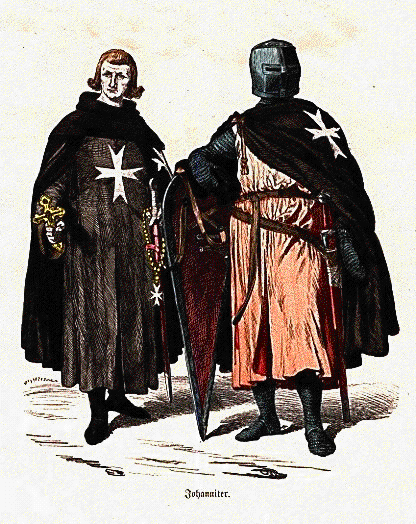
To defend Europe, the Holy Land and Jerusalem and the Holy Places, the Military-Religious Orders of Knighthood came into existence and were later given legal and special recognition by the Church. The most famous of these Orders were the Knights Templar, the Knights Hospitaller of St John, and the Knights Teutonic of St Mary of the Germans, the first two founded by Frenchmen and the latter by a German. They were the most formidable foes of the Islamic Jihadists who sought to conquer Jerusalem and thereafter Europe. They were military armies of knights, sergeants and men-at-arms, but also religious orders whose full members took the vows of religion - poverty, chastity and obedience. Their armies served on the frontiers of Christendom (particularly the Holy Land) but they kept many estates in Europe, run by their quartermaster knights and sergeants, to raise the necessary funds for the defence of Christendom. Because they were so trusted and well-disciplined, they were sought out by the rich and noble to protect their assets and, charging a fee for these services, these Orders became wealthy and were able to defend the boundaries of Christendom robustly. This extended even to providing naval patrols of the Mediterranean Sea against Jihadist pirates and Barbary (Berber) raiding corsairs who plundered the coasts of Europe, burning, pillaging and taking slaves, raping women and taking them as concubines back to Africa. These orders of knights were thus the greatest exemplars of Christian chivalry.
THE KNIGHTS OF RELIGION (2)
The knights of religion thus became the first and foremost defenders of Christian civilisation against its enemies. The Templars were suppressed due to the greed and ambition of King Phillipe IV "le Bel" of France, who was like a French precursor of England's King Henry VIII. The Hospitaller and Teutonic Knights were suppressed in Protestant countries at the Protestant Reformation and the Teutonic Knights continued in German lands until the end of the First World War which caused the virtual abolition of the Catholic kingdoms. Today only the Knights Hospitaller of St John are extant. After the Islamic victory in Palestine, when the last Hospitaller castle fell at the Siege of Acre in 1291, they went to Rhodes and thereafter to Malta which they famously, and successfully, defended against the massive Ottoman Muslim Great Siege of Malta in 1565. Ever since they have been called the Knights of Malta. Today the Knights of Malta have reverted to their first vocation, that of hospitaller, caring for the sick poor, re-living their ancient title, inscribed on the portals of their conventual churches, Servi Domini Nostri Pauperum Infirmorum - "the servants of our Lords, the sick poor", treating the sick poor as they would our Lord Himself - whilst continuing to defend religion. They have priories and associations all over the world, dispense around $1 billion of aid each year and their Headquarters is in Rome. They are recognised as a sovereign state, have ambassadors and their own passports, and the Grand Master is both a religious superior and a ruling prince. Pictured is Grand Master Jean Parisot de la Valette leading the knights at the Great Siege of 1565. Valetta, the capital of Malta today, was named after him. He wears the sopravestita or surcoat of the Order, bearing a white cross on a red field (the Templars had a red cross on a white field, now the national flags of England and of Savoy).
THE KNIGHTS OF RELIGION (3)
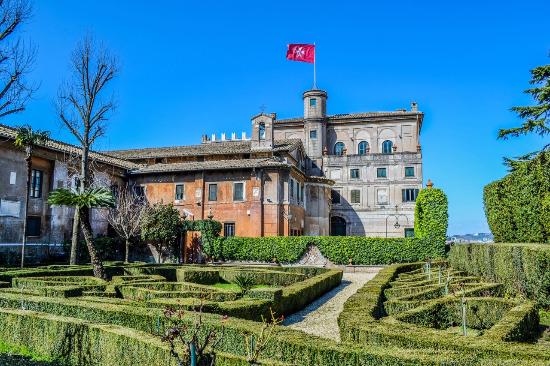
The Knights of Malta continue to occupy not only their headquarters in the Palazzo di Malta, Via Condotti, Rome, but also still occupy the Villa Malta, the palace of the Order's Grand Priory of Rome, on the Aventine Hill, one of the original Seven Hills of Rome. This palace is famous for its squint, the keyhole of the main gate, through which tourists can view the dome of St Peter's Basilica but which, through optical illusion, appears much greater than normal. The Aventine Palace also looks directly over the Sublician Bridge, the famous bridge defended, in ancient Roman times, by Publius Horatius Cocles against the invading Etruscan army of Lars Porsena of Clusium, immortalised by English author and public figure, Lord Macaulay (1800-1859), in his poem Horatius at the Bridge, first published in his Lays of Ancient Rome in 1842. It contains this well-known and most famous verse: "Then out spake brave Horatius, The Captain of the Gate: 'To every man, upon this earth, Death cometh soon or late. And how can man die better, Than facing fearful odds, For the ashes of his fathers, And the temples of his gods?' ". It is fitting that the site of the bridge for this famous scene should now lie directly below the palace of the Knights of Malta who, in times past, were called upon to defend Roman Christendom and Church.
the habsburgs
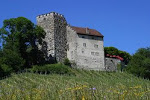
"Habsburg", the greatest of imperial names, is a municipality in the district of Brugg in the canton of Aargau in Switzerland. The name comes from Habichtsburg meaning "Hawk's Castle". Around 1020, Radbot of Habsburg built Habsburg castle, which was the original family seat of the Habsburgs, the dynasty that later became so prominent as Holy Roman Emperors. After the death of the sons of Emperor Frederick II there was an interregnum but then, in 1273, Count Rudolf of Habsburg was plucked from relative obscurity to be Roman Emperor, the Caesar of Christendom. His rule was very successful and he united the Empire. His memory caused later Prince-Electors to elect his family time and time again so that they occupied the Imperial throne until its end in 1806 and thereafter they became Emperors of Austria.
Tu felix Austria
Alii bella gerent, tu, felix Austria, nubes - "others make war but thou, O happy Austria, make love!" (It was said of the Holy Roman, later Austrian, Empire that it grew by dynastic alliances and royal marriages rather than by war, especially under the largely peace-loving Habsburg emperors.)
St Maurice, black patron saint of the Holy Roman Empire
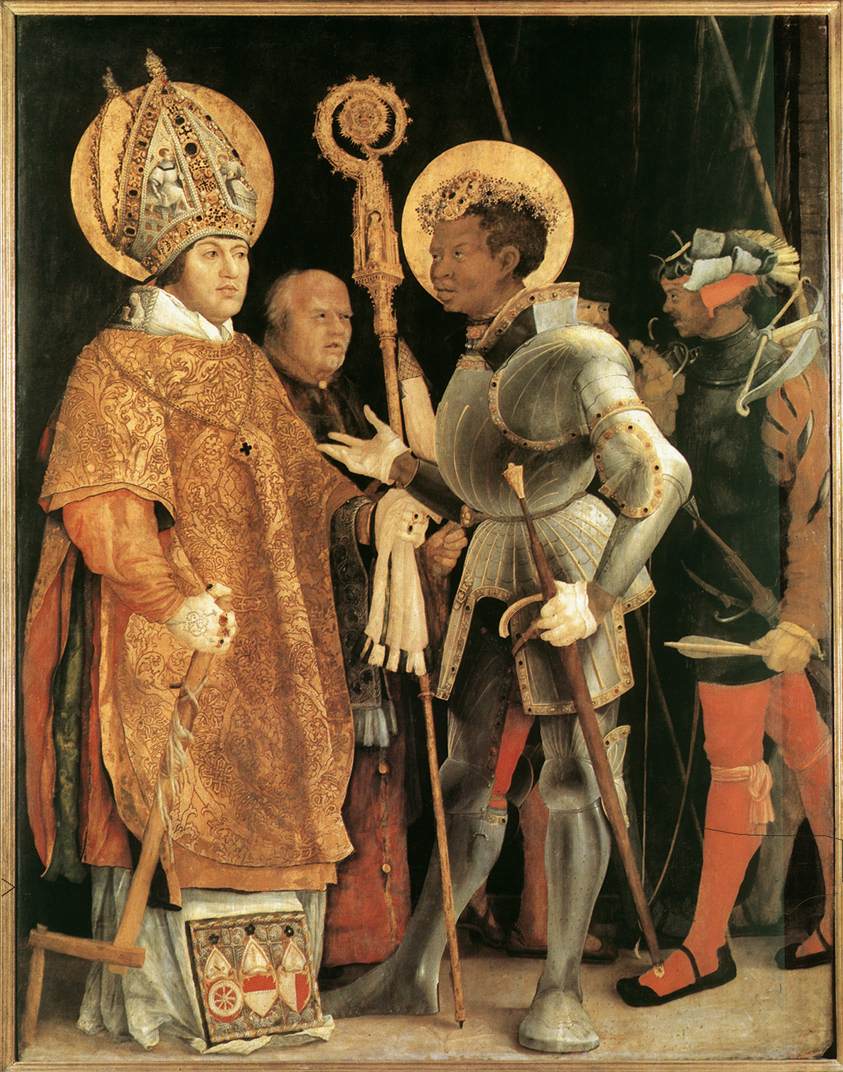
St Maurice, Knight Commander of the Roman Theban Legion, was martyred with his whole legion of 6,600 for refusing to attack Christians and became, later, the black patron saint of knighthood, chivalry and the Holy Roman Empire. For centuries the Holy Roman Emperors were anointed at his altar in St Peter's Basilica. The site of his martyrdom, Agaunum, is now St Maurice-en-Valais, Switzerland, in the Aargau, the same area wherein lies the original castle of the Habsburgs. He is pictured with Bishop St Elmo. The modern ski resort of St Moritz is also named after this same St Maurice.
innsbruck hofkirche
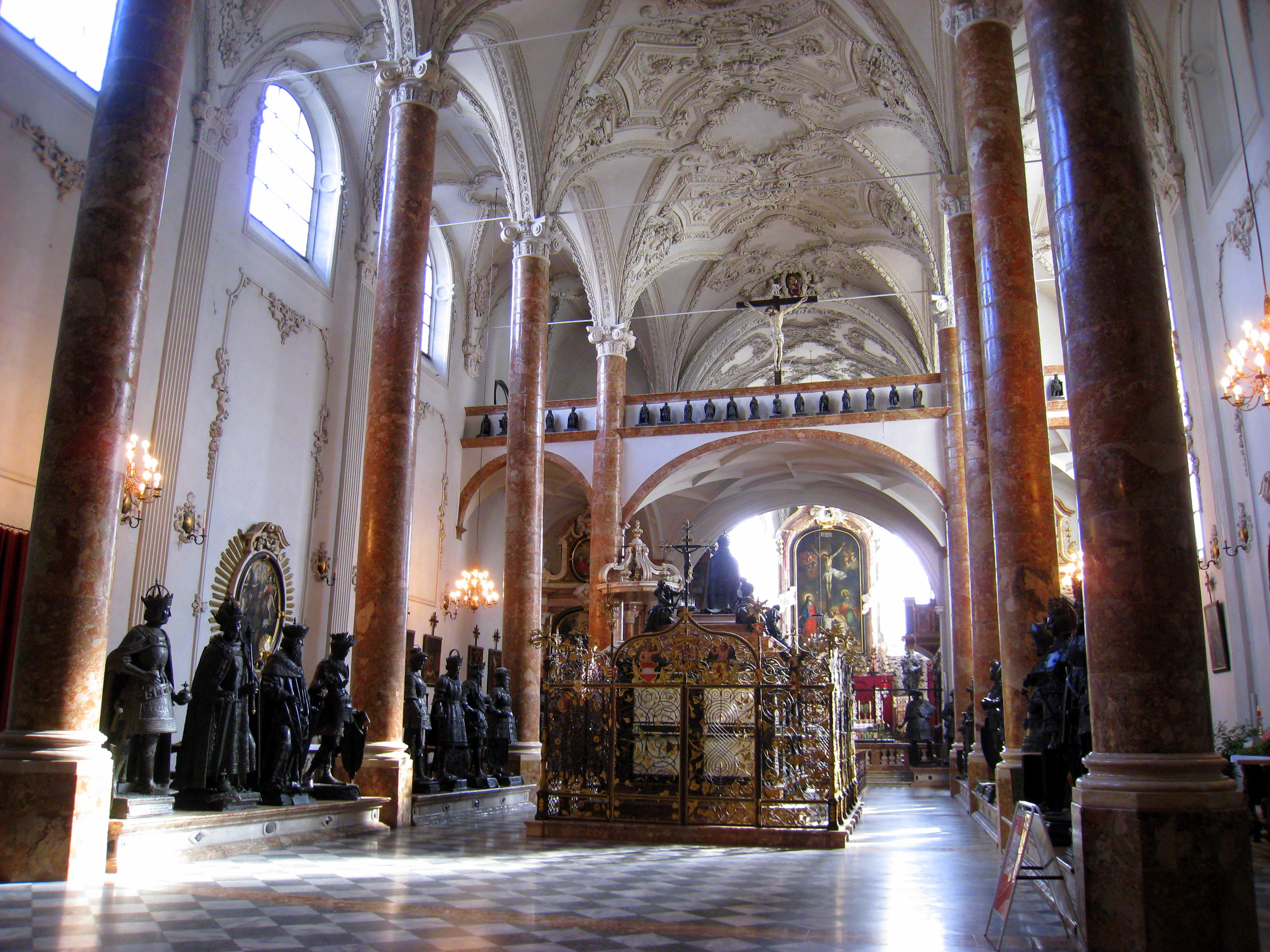
The Innsbruck Hofkirche (Court Church) is probably the apotheosis of imperial court design and archtecture. Built in a Gothic church located in the Altstadt (Old Town) district of the imperial city of Innsbruck, Austria, it is a magnificent example of its kind. The church was built in 1553 by Emperor and Caesar (Kaiser) Ferdinand I (1503–1564) as a memorial to his grandfather Emperor and Caesar (Kaiser) Maximilian I (1459–1519), whose cenotaph (centre of picture) portrays a truly magnificent and remarkable collection of German Renaissance sculpture. The sacrophagus, although it does not contain the remains of Kaiser (Caesar and Emperor) Maximilian I, is nevertheless surrounded, in a guard of honour, by magnificent bronze statues of his most prominent relations and some of the great figures of history like King Clovis, first Christian king of the Franks, King Theodoric of the Goths, King Godfrey of Bouillon, King Arthur of Britain (amusingly styled "of England") and others. The church also boasts the tomb of Andreas Hofer, the folk hero of the Tryol who defended both Church and Empire against the invading Bonaparte and his hordes of anti-Catholic, Freemasonic and secularising invaders.
the loyal tyrol
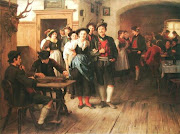
The freedom- and peace-loving Tyroleans like to sing, dance and enjoy life. They were long faithful to the Holy Roman Emperor and he to them. In a foundational document, the Magna Carta of the Tyrol, and called the Tirolerfreiheitsbrief, or the "Imperial Tyrolean Freedom Brief", Kaiser (Emperor and Caesar Augustus) Maximilian I confirmed their right not to be taxed or drafted into military service without the consent of their Parliament, the Landtag in Innsbruck. They thus had "no taxation without representation" for some 600 years before the American revolutionaries thought they had invented the idea. Led in 1809 by the heroic innkeeper Andreas Hofer and others, including Josef Speckbacher and Capuchin friar, Father Joachim Haspinger, they defeated the invading troops of the anti-Catholic, Pope-imprisoning Bonaparte, three times. But Hofer was betrayed by a traitor, taken to Mantua for a show trial and then shot by personal order of the Corsican usurper. The Song of Andreas Hofer is now the proud anthem of the Tyrol.
the peace emperor
His Majesty, the Blessed Emperor Charles of Austria, heir to the Habsburg Holy Roman Empire, pictured as a young officer of cavalry; he later tried to stop the Great War, a fratricidal disaster orchestrated by the enemies of Christendom - but they let him not and instead persecuted him for his pious and chivalrous love of justice, charity and peace so that he died in exile aged just 34...
the peace pontiff
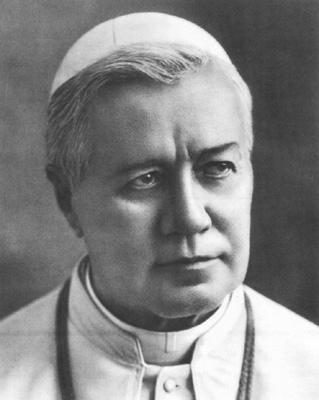
His Holiness, Pope St Pius X, also tried to stop the Great War which set brother against brother and Christian against Christian; his motto was omnia instaurare in Christo - to restore all things in Christ - but he, too, was prevented and persecuted and died a man of sorrows on the eve of the suicidal conflict he had so nobly tried to stop...
christian chivalry and honour
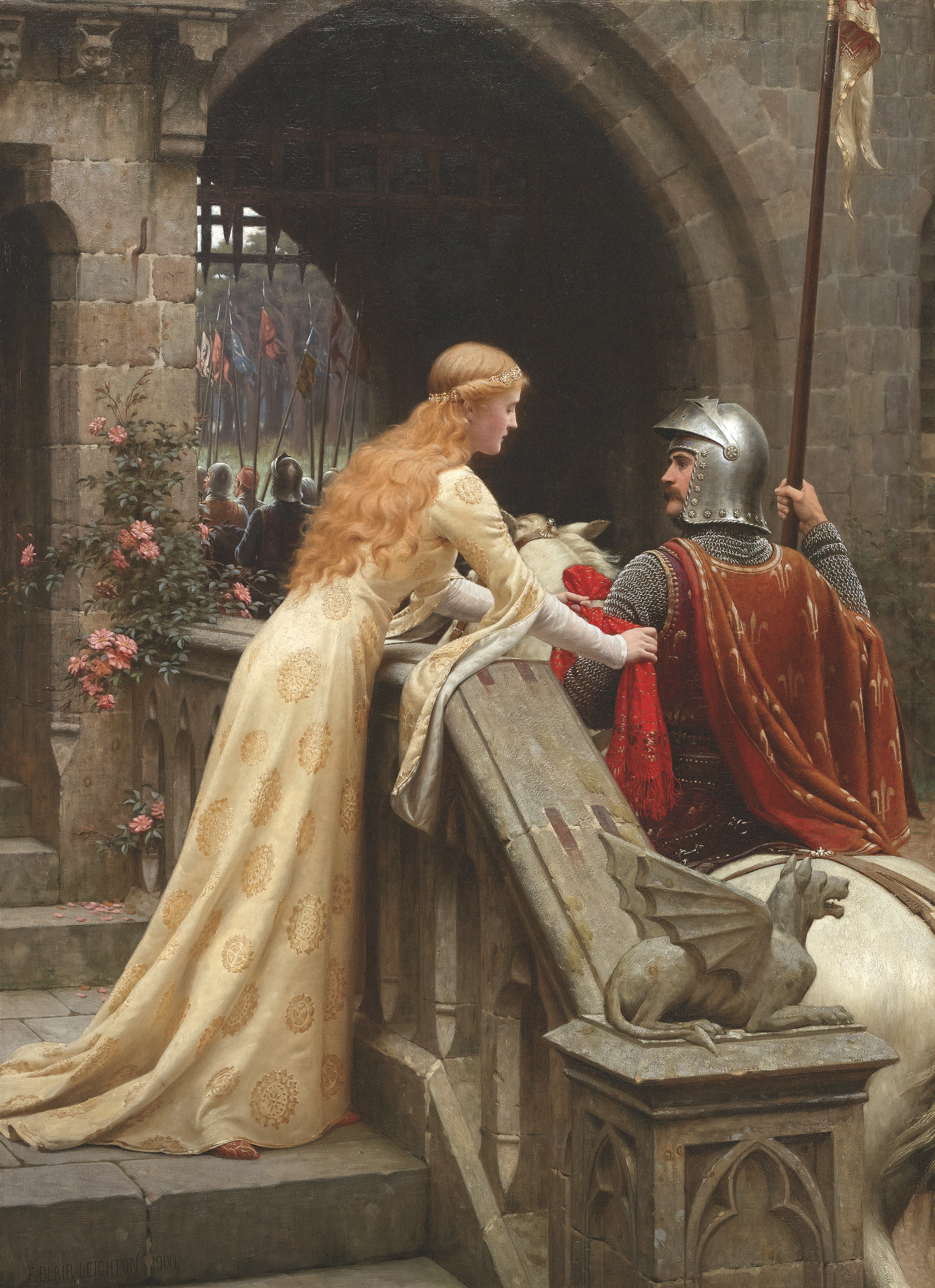
Chivalry, meaning the whole company of knights (from chevalier, French for a mounted knight), later came to mean the knightly Code of Honour. "Chivalry is only a name for that general spirit or state of mind which disposes men to heroic actions, and keeps them conversant with all that is beautiful and sublime in the intellectual and moral world" (The Broadstone of Honour, Kenelm Digby). "And there by ordnance of the Queen it was judged upon Sir Gawaine for ever after he should be with all ladies, and fight their quarrels, and that he should never refuse mercy to him that asketh mercy. Thus was Gawaine sworn upon the four Evangelists" (Morte d'Arthur, Sir Thomas Malory). The chief virtues of Chivalry are Courtesy, Mercy, Religion, Generosity, Hospitality, Courage and Defence of the weak and helpless.
St Bridget of Sweden
St Bridget of Sweden received great revelations concerning chivalry, founded the Order of the Most Holy Saviour and the Royal Convent of Vadstena, Sweden, esteemed and encouraged the military-religious orders and urged and rebuked bishops and popes - especially the latter for not returning to Rome from his "Babylonish captivity" at Avignon in France. Our Lord appeared to her, extolling chivalry, and saying: "A knight who keeps the laws of his order is exceedingly dear to me. For if it is hard for a monk to wear his heavy habit, it is harder still for a knight to wear his heavy armour".
of courtesy
"Of Courtesy, it is much less, Than Courage of Heart or Holiness, Yet in my Walks it seems to me, That the Grace of God is in Courtesy... Our Lady out of Nazareth rode, It was Her month of heavy load; Yet was her face both great and kind, For Courtesy was in Her Mind." (On Courtesy, Hilaire Belloc).
inventio crucis per helena
Roman Empress Saint Helena (Flavia Iulia Helena Augusta), wife of Emperor Constantius Chlorus, and the mother of Emperor Constantine, in 325, on pilgrimage to Jerusalem, discovered the True Cross near Calvary and ordered the building of the Church of the Holy Sepulchre. She also found the nails of the Crucifixion. Her palace in Rome was later converted into Santa Croce in Gerusalemme. It was also said that she was a daughter of King Coel of Camulodunum (“Old King Cole”) and it is clear that Constantine learned of Christianity in Britain.
Blessed Pope Pius IX
Once the enemies of the Church had secured the fall of the Holy Roman Empire, their next target was the Papal States. Under the false guise of Italian Nationalism (which later became Fascism), the secularists of the Risorgimento replaced the benign rule of the popes with that of the corrupt and decadent King Victor Emmanuel of Savoy and his even worse ministers. Once the walls of Rome were breached, Blessed Pope Pius IX ordered his loyal troops, who included many from the great Catholic families of Europe, to surrender lest there be blood spilt in the streets of the Holy City. After that he and his successors remained prisoners of the Italian revolutionaries until 1929. The next target for the revolutionaries was the Austrian Empire and they achieved their aim by 1918, careless that it had cost the lives of tens of millions of young men, senselessly slaughtered in the trenches of the Great War.
Pontifical Zouaves of Pius IX
The Pontifical Zouaves formed part of the infantry troops that defended the Papal States and Rome in 1870 when the Italian revolutionaries attacked with the aim of annexing them and imprisoning the Pope. The Pope frequently visited his loyal Zouaves and was warmly received by all the officers and men of this gallant band of Catholic heroes.
pope innocent iii on the empire
"...We acknowledge as we are bound, that the right and authority to elect a king (later to be elevated to the Imperial throne) belongs to those princes to whom it is known to belong by right and ancient custom; especially as this right and authority came to them from the Apostolic See, which transferred the Empire from the Greeks to the Germans in the person of Charles the Great. But the princes should recognize, and assuredly do recognize, that the right and authority to examine the person so elected king (to be elevated to the Empire) belongs to us who anoint, consecrate and crown him." (Venerabilem, 1202, Pope Innocent III)
POPE PIUS VI ON MONARCHY
"In fact, after having abolished the monarchy, the best of all governments, it [the French Revolution] had transferred all the public power to the people — the people... ever easy to deceive and to lead into every excess…" (Pourquoi Notre Voix, 17 July 1793, Pope Pius VI). This unfortunate and heroic pope was persecuted to an early death by Bonaparte, whose general, Berthier, took Papal Rome on 10 February 1798, and, proclaiming a Roman Republic, demanded of Pope Pius VI the renunciation of his temporal authority. Upon his refusal he was made prisoner, and on 20 February was taken to Siena, and thence to the Certosa, near Florence. Thereafter he was taken to Parma, Piacenza, Turin and, then, via Grenoble to the citadel of Valence, the chief town of Drôme. There he died, on 29 August 1799, six weeks after his arrival, worn out by his ill-treatment, after an otherwise long papacy. The French revolutionaries persistently blocked his proper burial and obsequies which did not take place until 19 February 1802 in Rome.
aquinas on kingship
“If therefore, kingship, which is the best form of government, seems to be worthy of avoidance mainly because of the danger of tyranny, and if tyranny tends to arise not less but more often under the government of several, the straightforward conclusion remains that it is more advantageous to live under one king than under the rule of several persons.” (De Regimine Principum, chapter VI, St Thomas Aquinas)
BELLARMINE ON MONARCHY
“If monarchy is the best and most excellent government, as above we have shown, and it is certain that the Church of God, instituted by the most sapient prince Christ, ought to be best governed, who can deny that the government of it ought to be a monarchy?” (De Romano Pontifice, St Robert Bellarmine)
dante on monarchy
"[The] Imperial authority derives immediately from the summit of all being, which is God...But before the Church existed, or while it lacked power to act, the Empire had active force in full measure. Hence the Church is the source neither of acting power nor of authority in the Empire, where power to act and authority are identical...since it is impossible that an effect should exist prior to its cause...Christ attests it, as we said before, in His birth and death. The Church attests it in Paul’s declaration to Festus in the Acts of the Apostles: 'I stand at Caesar’s judgment seat, where I ought to be judged'; and in the admonition of God’s angel to Paul a little later: 'Fear not, Paul; thou must be brought before Caesar'; and again still later in Paul’s words to the Jews dwelling in Italy: 'And when the Jews spake against it, I was constrained to appeal unto Caesar; not that I had aught to accuse my nation of', but 'that I might deliver my soul from death'. If Caesar had not already possessed the right to judge temporal matters, Christ would not have implied that he did, the angel would not have uttered such words, nor would he who said, 'I desire to depart and be with Christ', have appealed to an unqualified judge". (De Monarchia, Book III, Ch.XIII, Dante Alighieri)
return of the king
"From the ashes a fire shall be woken, a light from the shadows shall spring, renewed shall be blade that was broken, the crownless again shall be king!" (The Lord of the Rings, JRR Tolkien, Roman Catholic author)
the royal stuarts - aymez loyauté - love loyalty
Prince Charles Edward Stuart ("Bonnie Prince Charlie"), with Cameron of Lochiel, on his right, and Lord Forbes of Pitsligo (or possibly MacDonald of Clanranald), his most faithful followers among the Jacobite Clan chiefs. Aymez Loyauté ("love loyalty") was the motto of the Royal Stuarts, the legitimate kings of Britain and Ireland but illegally excluded from their rightful throne because, since King James II and VII, they were Roman Catholics and wished to repeal the disgracefully savage laws that meant a man could be hanged, drawn and quartered for repudiating the Anglican and Presbyterian State churches. King James issued a "Declaration of Indulgence" giving religious freedom to his subjects. However, the bigoted anti-Catholic Whigs plotted and instigated treason and invited a foreign power to invade Britain and Ireland, establishing a Dutch Protestant as king. "Dutch Billy" was a pawn of the rich Capitalist Whig oligarchs in Parliament who had disloyally betrayed their true king.
Royal Stuart Arms
skye boat song
"Burned are our homes, exile and death, Scatter the loyal men, Yet, e'er the sword cool in the sheath, Charlie will come again."
henry ix and i, cardinal-king
Prince Henry Benedict Stuart, Duke of York and brother of Bonnie Prince Charlie, later became Cardinal-bishop of Ostia and Velletri and of Frascati, Dean of the Sacred College of Cardinals, Vice-Chancellor of the Holy Roman Church and, de jure, King Henry IX of England, I of Scotland and Ireland and King of France. He was very nearly elected Pope in the Conclave of 1800 so that he would then have been both Pope and King of England. He died 13 July 1807, just after the fall of the Holy Roman Empire, so that 2007 was the bicentenary of his death.
the old chevalier
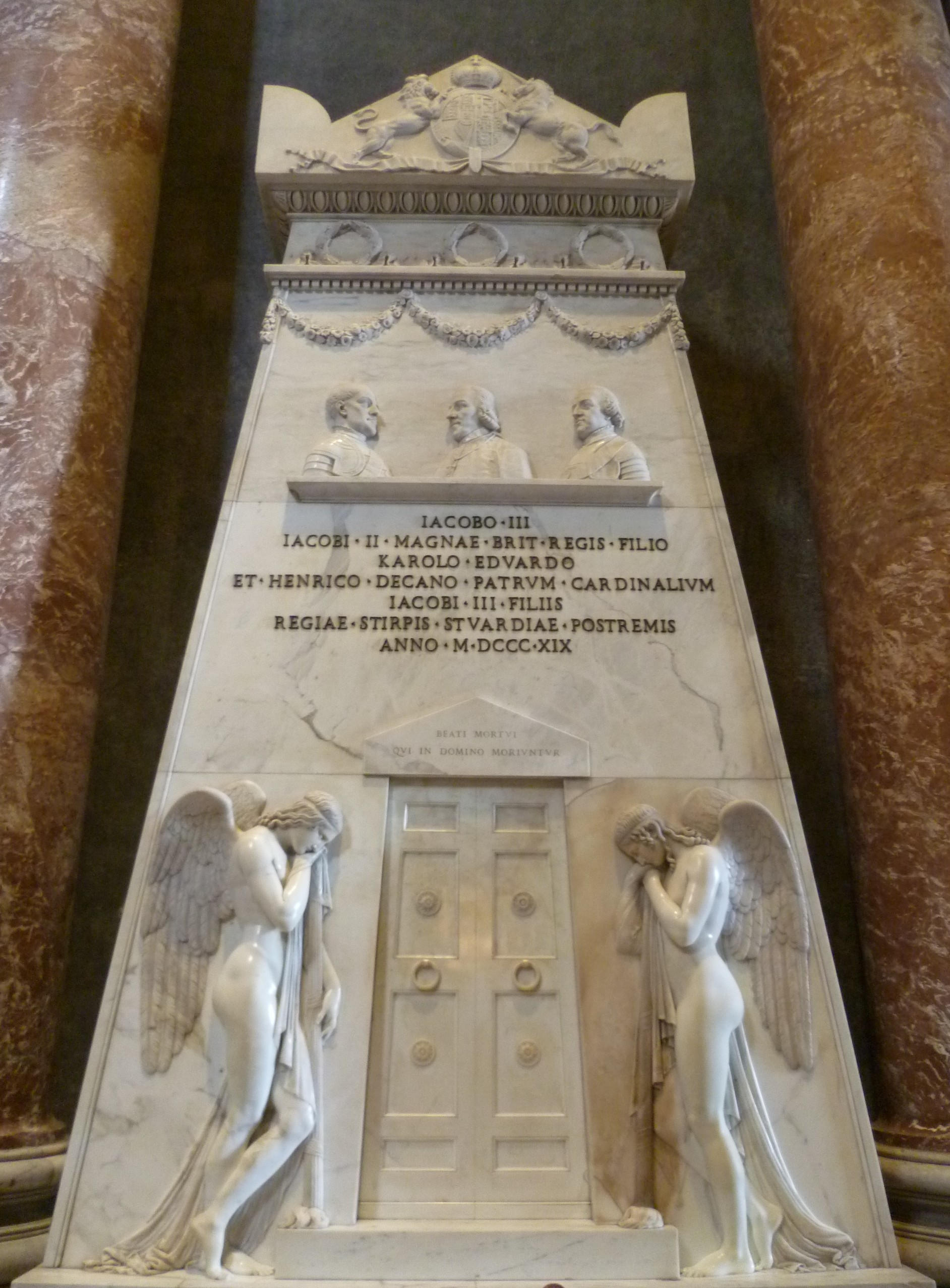
Prince James Francis Edward Stuart, the son of King James II and VII, was de jureKing James III of England and VIII of Scotland, the father of Bonnie Prince Charlie and Prince Henry, Cardinal Duke of York. All 3 are now buried in St Peter's Basilica, Rome, commemorated by a famous Canova monument on the left side of the Basilica. James was a faithful Catholic and monarch. Offered the throne of Britain and Ireland by the British Whigs if he converted to Protestantism, he replied that nothing would induce him to abandon his religion. He was thus compelled to fight for his lawful right to the throne but was prevented by treacherous enemies. The result was that the people of Britain and Ireland were delivered into the hands of the brutal Capitalist Whigs and the British, and especially Irish, people became deeply pauperised and shamefully oppressed. The Protestant writer William Cobbett who lived at the time, wrote of even children being starved to death, hanged for stealing sixpence and transported to the colonies for petty crimes, never to see their families again. Roman Catholics in particular were subjected to one of the most savage and oppressive Penal Codes ever to have disgraced European history. This tyranny was the real legacy of the anti-Catholic Whigs.
Vatican monument to the Royal Stuarts
The Monument to the Royal Stuarts is a memorial in St. Peter's Basilica in the Vatican City State. It commemorates the last three members of the Royal House of Stuart: King James III & VIII, his elder son Prince Charles Edward Stuart, and his younger son, Cardinal Prince Henry Benedict Stuart. The marble monument is by Antonio Canova, the most celebrated Italian sculptor of his day. It is a bas relief profile of the three exiled princes, with this inscription: IACOBO•III•IACOBI•II•MAGNAE•BRIT•REGIS•FILIO•KAROLO•EDVARDO•ET•HENRICO•DECANO•PATRUM•CARDINALIVM•IACOBI•III•FILIIS•REGIAE•STIRPIS•STVARDIAE•POSTREMIS•ANNO•M•DCCC•XIX (To James III, son of King James II of Great Britain, to Charles Edward and to Henry, Dean of the Cardinal Fathers, sons of James III, the last of the Royal House of Stuart. 1819.) The monument was originally commissioned by Monsignor Angelo Cesarini, executor of the estate of Cardinal Henry Stuart. Among the subscribers, curiously, was King George IV, who (once the Jacobite challenge had ended) was an admirer of the Stuarts. The monument stands towards the back of the basilica in the left aisle opposite the main door.. It is frequently adorned with white flowers by Jacobites.
Vatican monument for Queen Maria Clementina
Opposite the monument to the Royal Stuarts in St Peter's Basilica is a monument to Queen Maria Klementyna Sobieska, wife of King James III & VIII and mother of Prince Charles Edward Stuart and Cardinal Prince Henry Benedict Stuart. Its inscription reads: MARIA CLEMENTINA M. BRITANN. FRANC. ET HIBERN. REGINA ("Maria Clementina, Queen of Great Britain, France and Ireland"). The reference to France is a continuance of the Plantagenet claim to the French throne, not abandoned until the French Revolution. She was born on 18 July 1702 in Ohlau, Silesia, in the Holy Roman Empire. Her parents were Prince James Louis Sobieski (1667–1737), the eldest son of King John III, and Countess Palatine Hedwig Elisabeth of Neuburg (1673–1722). Imprisoned by the Holy Roman Emperor Charles VI who was placating King George I of England (the Hanoverian supplanter) so as to prevent her marrying King James, she was rescued by dashing Irish Jacobite, the Chevalier Senator Sir Charles Wogan Bt, in most romantic style. Following her marriage to King James on 3 September 1719 in the Chapel of the episcopal palace of Montefiascone in the Cathedral of Santa Margherita, James and Maria Clementina were invited to reside in Rome at the special request of Pope Clement XI, who acknowledged them as the King and Queen of England, Scotland and Ireland.
distributive justice
Gilbert Keith Chesterton was the apostle of Distributism by which, learning from the Guild system of the Middle Ages and the teaching of the popes, he re-fashioned a model that avoided the extremes of Capitalism and Communism. It was based upon the principle of Subsidiarity that had been the guiding political philosophy of both Church and Empire in times past but which is today much misunderstood and misrepresented. Here is how the Church defines it: "Still, that most weighty principle, which cannot be set aside or changed, remains fixed and unshaken in social philosophy: Just as it is gravely wrong to take from individuals what they can accomplish by their own initiative and industry and give it to the community, so also it is an injustice and at the same time a grave evil and disturbance of right order to assign to a greater and higher association what lesser and subordinate organizations can do. For every social activity ought of its very nature to furnish help to the members of the body social, and never destroy and absorb them." (Quadragesimo Anno, encyclical letter of Pope Pius IX)
an irish bishop on kings
"The character of kings is sacred; their persons are inviolable; they are the anointed of the Lord, if not with sacred oil, at least by virtue of their office. Their power is broad - based upon the will of God, and not on the shifting sands of the people's will... They will be spoken of with becoming reverence, instead of being in public estimation fitting butts for all foul tongues. It becomes a sacrilege to violate their persons, and every indignity offered to them in word or act, becomes an indignity offered to God Himself. It is this view of kingly rule that alone can keep alive in a scoffing and licentious age the spirit of ancient loyalty that spirit begotten of faith, combining in itself obedience, reverence, and love for the majesty of kings which was at once a bond of social union, an incentive to noble daring, and a salt to purify the heart from its grosser tendencies, preserving it from all that is mean, selfish and contemptible." (Dr John Healy, early 20th Century Roman Catholic Archbishop of Tuam, Ireland)
roman and christian
"Christianity as well as civilisation became conterminous with the Roman Empire. To be a Roman was to be a Christian and this idea soon passed into the converse. To be a Christian was to be a Roman."
(The Holy Roman Empire, James, Viscount Bryce, barrister, politician, historian, Regius Professor of Civil Law and Fellow of Trinity and Oriel Colleges, Oxford)
christian rome
"She was not merely an image of the mighty world, she was the mighty world itself in miniature. The pastor of her local church is also the universal bishop; the seven suffragan bishops who consecrate him are overseers of petty Sees in Ostia, Antium, and the like, towns lying close round Rome: the cardinal priests and deacons who join these seven in electing him derive their title to be princes of the Church, the supreme spiritual council of the Christian world, from the incumbency of a parochial cure within the precincts of the city. Similarly, her ruler, the Emperor, is ruler of mankind; he is deemed to be chosen by the acclamations of her people: he must be duly crowned in one of her basilicas. She is, like Jerusalem of old, the mother of us all." (The Holy Roman Empire, James, Viscount Bryce)
After Rome: Communism and the bogus "Third Reich"
After the appalling bloodshed of the Great War and the fall of the Austrian Empire in 1918, and with it the idea of the Roman Empire, the gaping void was filled first with tears and sorrow and then with Marxist Socialism in Russia and National Socialism in Germany. Both Communists and Nazis persecuted Roman Catholicism. The Nazis even pretended to be successors of the first and Roman Empire, and of the German Protestant Empire but their claim to be a "Third Reich" was bogus and they were condemned by the Church and by all civilised men. Men hypocritically speak of the violence of former centuries but no century has ever been anything like as bloody as the 20th century.
Western culture is, above all else, Roman - and Christian Roman at that. This is so because it has been shaped and defined by Roman Catholicism, ruled by a Roman Emperor, guided by a Roman Pontiff and blessed by Roman rites in a Roman language. Even its enemies have been forced to recognise this. Our laws, our science, our culture, our art, our music, our literature, our parliaments, our scholarship, our primary institutions all derive from this Roman and Christian heritage. The oldest rite of worship in the Christian Church is the classical, Roman rite, deriving, as it does, from the ancient Jewish Temple worship, perfected under Roman rule. It is theologically unsurpassed. It is a timeless love song to the Creator of all things. In a curious "trahison des clercs", many today, even amongst the clergy, have forgotten this and so have become disconnected from their spiritual and cultural roots. It is perhaps time to recall and re-capture our traditions and to re-connect with them in a modern setting.







.jpg)













_-002.jpg/220px-Circle_of_Anton_Raphael_Mengs,_Henry_Benedict_Maria_Clement_Stuart,_Cardinal_York_(ca_1750)_-002.jpg)



No comments:
Post a Comment