Sunday, 9 November 2008

Martinmas: remembering our dead on the Feast of the soldier-saint on Remembrance Day 2008


We shall remember them...


The British tribal rite of honouring the war dead is still second to none and captures exactly the feeling that ought to be experienced when we consider all those who gave their lives in war - especially those young lives cut off in their prime.

This is one thing the BBC still does well:

http://news.bbc.co.uk/1/hi/uk/7718227.stm


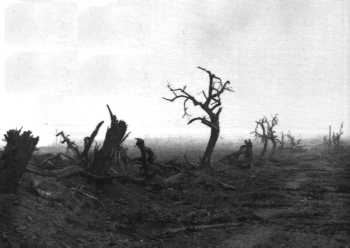
I can never help but think of the young lives lost in the First World War - that useless, pointless war brought about by the enemies of civilisation, of peace and - above all - of Christianity. Having started the war, the enemies of Christianity then did their level best to prevent it ending until every Christian nation had either toppled (like Austria-Hungary) or else had been bled half to death.

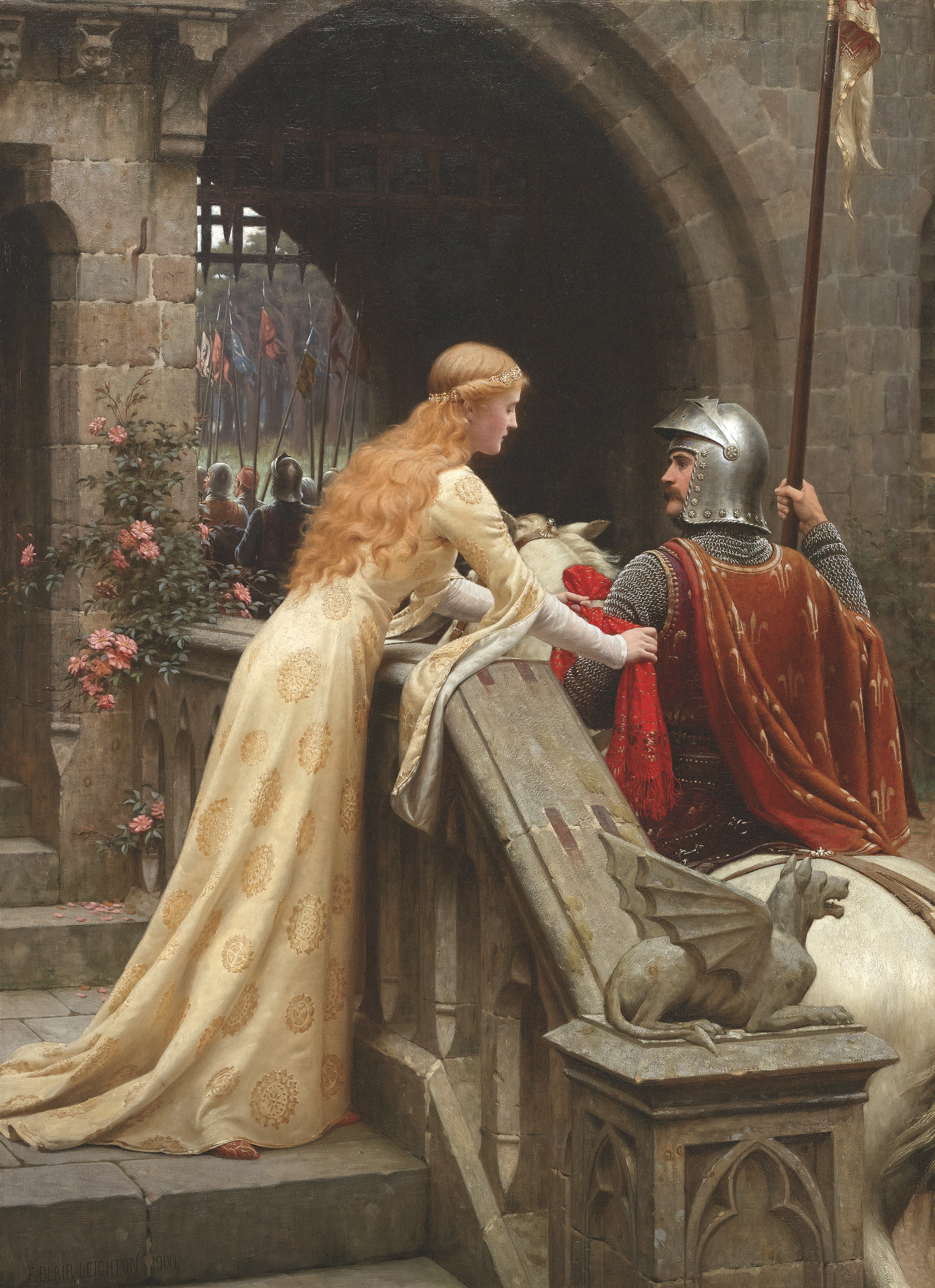
I think of young men like 19-year-old Roland Leighton, the poet and fiancee of Vera Brittain, who died of wounds on the Western Front.


"Goodnight, though life and all take flight, never goodbye..."
Inscription on the grave of Roland Leighton, the 19-year-old English poet.


AT A CALVARY NEAR THE ANCRE
(Wilfred Owen)

One ever hangs where shelled roads part.
In this war He too lost a limb,
But His disciples hide apart;
And now the Soldiers bear with Him.

Near Golgotha strolls many a priest,
And in their faces there is pride
That they were flesh-marked by the Beast
By whom the gentle Christ's denied.

The scribes on all the people shove
And bawl allegiance to the state,
But they who love the greater love
Lay down their life; they do not hate.


St Martin of Tours, pray for our noble dead!


...

Thursday, 6 November 2008

Aha! But what about the secret supplement, eh? In fact, the "Secret Supplement" to the Reichskonkordat shows nothing extraordinary.


One absurd website calling itself “No beliefs” (which says it all, folks, does it not?) claims that the Concordat includes a Secret Supplement and “naturally, this is omitted on Catholic sites”.

Well, Messrs “No Beliefs” you are lying again (so what’s new? Ho, hum…).

Here is yet another “Catholic site” that is more than happy to put the "Secret Supplement" onto site for all to see.

“No Beliefs” claims that it shows that “by 1933 the Vatican knew that Hitler was going to re-arm in defiance of the Treaty of Versailles, and wanted to help him keep it secret”.

It shows no such thing.

Here’s what it says:

“Secret Supplement

In case of a change in the present German armed forces in the sense of the introduction of universal conscription, the induction of priests and other members of the regular clergy and the orders into military service will, with the understanding of the Holy See, be arranged within the framework of approximately the following guiding ideas:

a) Students of philosophy and theology at Church institutions who are preparing themselves for the priesthood are to be freed from military service and the preparatory drills for it, except in the case of a general mobilisation.

b) In the case of a general mobilization clerics who are employed in the diocese administration or the military chaplaincy are freed from reporting for duty. This applies to ordinaries, members of the ordinariate, provosts of seminaries and Church residences for seminarians, professors at the seminaries, parish priests, curates, rectors, coadjutors and the clerics who provide a church with worship services on a continuing basis.

c) The remaining clerics, insofar as they are considered suitable, are to join the armed forces of the state in order to devote themselves to pastoral care for the troops under the Church jurisdiction of the military bishops, if they are not inducted into the medical unit.

d) The remaining clergy
in sacris or members of orders, who are not yet priests are to be assigned to the medical unit. The same shall apply when possible to the candidates for the priesthood mentioned in a) who have not yet taken their final vows.”


The "Big Four" who forced the Treaty of Versailles through so as to penalise Germany so harshly as to prepare the way for the next war and the rise of Nazism.


The operative words are “in case of a change in the present German armed forces in the sense of the introduction of universal conscription”.

These vague and generic words make provision for an eventuality which is by no means ruled out by the terms of the Treaty of Versailles, even given that the Versailles Treaty was very unjust and a recipe for another war, and even given that a future re-negotiation of terms was highly likely, in any event, given the Western powers concern over the growth of Soviet Russia.

Here are the relevant extracts from the Treaty of Versailles:

“Article 159. The German military forces shall be demobilised and reduced as prescribed hereinafter.

Article 160. By a date which must not be later than 31 March1920, the German Army must not comprise more than seven divisions of infantry and three divisions of cavalry.

After that date the total number of effective regular personnel in the Army of the States constituting Germany must not exceed 100,000 men, including officers and establishments of depots. The Army shall be devoted exclusively to the maintenance of order within the territory and to the control of the frontiers.

The total effective strength of officers, including the personnel of staffs, whatever their composition, must not exceed 4,000....”


How and where does this prevent “universal conscription”?

Universal conscription simply means that everybody becomes potentially liable for military service but not necessarily all at once or necessarily so as to exceed the limit of 100,000 men.

Once clergy were in danger of becoming liable to conscription then it became necessary for the Church to negotiate over how clergy were to be so conscripted and what they could be conscripted to do.

There is the simple reality of it!

No Catholic website has anything to cover up or conceal.

“No Beliefs”, like so many other atheists and enemies of the Church, however, does not scruple to lie and distort and resort to any feeble dishonesty merely to further its aim of attacking the Church.

Pathetic.

These liars do not stop there but further claim that:

(1) Perhaps “the Vatican” (who he?) was even hoping for this eventuality, since Pius IX “supported any policy or any man who would oppose and fight Soviet Russia”.[1]

(2) Cardinal Faulhaber, who helped negotiate the concordat with Hitler (and who ordained the present pope), assessed its international impact in a 1937 sermon:

"At a time when the heads of the major nations in the world faced the new Germany with cool reserve and considerable suspicion, the Catholic Church, the greatest moral power on earth, through the Concordat expressed its confidence in the new German government."[2]

The 2 sources for these statements are these:

[1] Avro Manhattan, “Chapter 10: Germany, the Vatican and Hitler”, The Vatican in World Politics, London, 1949.

[2] Guenter Lewy, The Catholic Church and Nazi Germany.

The first provides not one jot of evidence for its statement and it is meant to refer to Cardinal Pacelli NOT Pope Pius IX, as “No belief” wrongly states (they cannot even misquote accurately!).

It is pure opinion and that expressed in an amazing rant by Avro Manhattan who variously and contradictorily takes the Catholic Centre Party for daring to oppose Bismarck and the Falk laws that imprisoned Catholic archbishops who would not kowtow to the state but also for cosying up to the oppressive Bismarckian regime – flatly contradicting itself all in one article!

That’s not all.

He then takes them to task for not favouring the Liberals – and the supposedly “liberal” laws of Bismarck - and for denouncing rapacious Capitalism whilst at the same time he blames them for being hostile to Communism!

You never saw such a farrago of contradictions!

In essence, the author is opposed to the Catholic Church because he is opposed to the Catholic Church. That is the sum total of this dunderhead’s logic.

This is the work which “No Beliefs” quotes as a source for its completely unsupported claim.

Pah!

What about the Faulhaber quote?

Well, to start with, there is no page or chapter reference for this plainly controversial quote. In fact, another author claims it is at page 20. But page 20 of the copy of Lewy’s1964 book which I was able to access, gives no reference for the alleged quote from Faulhaber’s alleged sermon.

This becomes second-hearsay only and with no authoritative reference.

Moreover Lewy’s book is a ranting diatribe against the Church which carefully omits mountains of evidence in the Church’s favour.

This is what “No Beliefs” puts forward as serious research!

Pathetic.

And this, folks, is the so-called "evidence" against men like Pope Pius XII and against the Catholic Church!

Truly pathetic.


...

So what was this "Reichskonkordat" that the enemies of Pius XII complain of? Let's have a look, shall we?

Well, folks.

Here it is, below.

The more you study it, the more you realise what a diplomatic achievement it was for Cardinal Pacelli, given that it gives away virtually nothing to the state and receives a huge amount of protection in return.

Any diplomat coming back to his government with a treaty like this could expect high praise.

Unfortunately, as became clear after the event, the Nazi regime did not mean a word of it and breached the treaty virtually at will. But even their plenipotentiary, Franz von Papen (left, in the photo above), did not realise it until later, after which he was sacked and then escaped from Nazi Germany.

Anything critical that can be said of this Concordat can just as easily be said of numerous agreements reached between the Western powers and both the Soviet and Nazi governments.

But do they get called Hitler's men?

Nope.

Only Pius XII.

Why?

The usual thing: anti-Catholic prejudice and a willingness to tell any old lie in order to attack the Church. In this way, the anti-Catholics of today are willing to use the same deeply dishonest tools and lies that the Nazis used to further their own campaign against the Church.

The true effectiveness of this Concordat is demonstrated by one simple fact that never gets told by the enemies of the Church.

It is still in force today!

Yes, folks! After the war, it was found by the victorious Allies to be so fair and reasonable that they left it in place and it became a fundamental part of the new Federal German Constitution.

Fact!

When you read this document, note that the only part that gave anything away to the Reich government was couched in very careful terms. See Article 16 which contains the oath of loyalty which is required of Diocesan bishops (oaths had always been required of bishops by European states).

First, it is to the Regional state (Land) and/or to the President of the Reich, not a personal oath of loyalty to Hitler.

Second, the bishop swears to honour the "legally constituted government" not just any government. Once Hitler overrode the Constitution, the oath excluded him, quite apart from the fact that an immoral oath could not bind in conscience, anyway. But Cardinal Pacelli was careful, in any case, to avoid any immoral oaths.

Note, too, how he has carefully negotiated away any obligation on the part of clergy to serve in state positions, save as Army chaplains (where they are necessary, anyway, simply to save souls).

It is a brilliant piece of diplomacy.

If this had been negotiated between Israel and the nearby Arab States it would have been hailed as a great work. The negotiating diplomats would not have been later called "Islam's Jews" or some other equally offensive insult.

But there is one rule to be applied to the Church and quite another rule to be applied to everyone else.

Such are the double standards of the modern enemies of the Catholic Church.

Dishonesty and lying are their stock-in-trade.

But - hey! - what about the Jews? Aha, there's nothing there about them, is there?

Right! Not a word requiring any Catholic priest to approve any mistreatment of Jews, whatsoever. But you might be forgiven for thinking the opposite if you listened to the enemies of the Church.

Aha! But doesn't that show that the Church didn't care about the Jews?

On the contrary! It shows that the Church was very careful, when negotiating with the Nazi government, not to allow its hands to be tied against helping Jews - or any other ethnic or religious minority.

Moreover, the Nazis would not have allowed any negotiating by the Catholic Church on behalf of the Jews.

Even so, Cardinal Pacelli still managed to get in Article 29 which "accorded no less favourable treatment than that accorded by law and in practice to members of German origin and speech living within the boundaries of the corresponding foreign states" as regards their religious education and societies.

This enabled many Jews to be saved by the use of false baptismal certificates.

But the International Red Cross protested against this becuase it was "illegal". Pah! Do they get called "Hitler's Red Cross"? Oh, no! Never. Only Pius XII and the Church.

This was a Concordat between the Holy See and the Reich government. The Church had first to negotiate its own freedom if it wished to save others - which, as we now know, it most certainly did when Pius XII, as Pope, saved over 860,000 Jewish lives.

What liars the enemies of the Church are! Any old lie will do so long as they can attack the Church!

But look here - read the text of the Concordat and make up your own mind:


"The Reichskonkordat of 1933

His Holiness Pope Pius XI and the President of the German Reich, moved by a common desire to consolidate and promote the friendly relations existing between the Holy See and the German Reich, wish to permanently regulate the relations between the Catholic Church and the state for the whole territory of the German Reich in a way acceptable to both parties. They have decided to conclude a solemn agreement, which will supplement the Concordats already concluded with individual German states (Länder) [4], and will ensure for the remaining states (Länder) fundamentally uniform treatment of their respective problems.

For this purpose His Holiness Pope Pius XI has appointed as his Plenipotentiary His Eminence the Most Reverend Cardinal Eugenio Pacelli, his Secretary of State and the President of the German Reich has appointed as Plenipotentiary the Vice-Chancellor of the German Reich, Herr Franz von Papen, who, having exchanged their respective mandates and found them to be in good and proper form, have agreed to the following Articles:

Article 1

The German Reich guarantees freedom of profession and public practice of the Catholic religion.

It acknowledges the right of the Catholic Church, within the framework of the laws valid for all, to manage and regulate its own affairs independently, and, within the framework of its own competence, to issue binding laws and ordinances for its members.

Article 2

The concordats concluded with Bavaria (1924), Prussia (1929) and Baden (1932) remain in force, and the rights and privileges of the Catholic Church recognized in these are preserved unchanged within the territories of the states concerned. For the remaining states (Länder), the agreements reached in the present concordat come into force in their entirety. These last are also binding for the three states (Länder) named above, in so far as they affect matters not regulated by the states’ (Länder) concordats or in so far as they supplement the earlier settlements.

In the future concordats with the states (Länder) will be concluded only with the agreement of the government of the Reich.

Article 3

In order to foster good relations between the Holy See and the German Reich, an apostolic nuncio will reside in the capital of the German Reich and an ambassador of the German Reich at the Holy See.

Article 4

The Holy See enjoys full freedom in its relations and correspondence with the bishops, clergy and other members of the Catholic Church in Germany. The same applies to the bishops and other diocesan officials in their dealings with the faithful in all matters belonging to their pastoral office.

Instructions, ordinances, pastoral letters, official diocesan gazettes, and other decrees concerning the spiritual direction of the faithful issued by the Church authorities within the framework of their competence (Art. 1, Sect. 2) may be published without hindrance and brought to the notice of the faithful in the customary form.

Article 5

In the exercise of their clerical activities the clergy enjoy the protection of the state in the same way as state officials. The state will proceed, in accordance with the general provisions of civil law, against any insult to their person or to their clerical capacity, as well as against any interference with the duties of their office and, if necessary, will provide official protection.

Article 6

The clergy and members of religious orders are freed from any obligation to take public office and such obligations as, according to the dictates of Canon Law, are incompatible with the status of a member of the clergy or religious order respectively. This applies particularly to the office of a lay judge, juror, member of a tax committee or of a fiscal tribunal.

Article 7

For the acceptance of employment or appointment as state official, or to any public corporation dependent on the state, clergymen require, the nihil obstat [5] of their diocesan ordinary, as well as of the ordinary of the place where the public corporation is situated. The nihil obstat may be withdrawn at any time for important reasons of ecclesiastical interests.

Article 8

The official income of the clergy is immune from distraint [6] to the same extent as is the official salary of the Reich and state officials.

Article 9

The clergy cannot be required by judicial and other authorities to give information about matters which have been entrusted to them in the course of administering pastoral care, and which therefore fall under the obligation of pastoral secrecy.

Article 10

The wearing of clerical dress or of a religious habit by lay people, or by members of the clergy or religious orders by whom this use is forbidden by a definitive and legally valid directive of the competent ecclesiastical authority and officially communicated to the state authority, is liable to the same penalty by the state as the misuse of the military uniform.

Article 11

The present organisation and boundaries of dioceses of the Catholic Church in the German Reich remain in force. Any creation or rearrangement of a bishopric or ecclesiastical province, or other changes in the boundaries of dioceses that seem advisable in the future, so far as they involve changes within the boundaries of a German state (Land), remain subject to the agreement of the state (Land) governments concerned. Rearrangements and alterations which extend beyond the boundaries of a German state require the agreement of the Reich Government, which shall be left to secure the consent of the appropriate state (Land) government. The same applies to creations or rearrangements of Church provinces involving several German states (Länder). The foregoing conditions do not apply to changes in ecclesiastical boundaries made merely in the interests of local pastoral care.

In the case of any (territorial) re-organisation within the German Reich, the Reich Government will communicate with the Holy See with a view to rearrangement of the organisation and boundaries of dioceses.

Article 12

Without prejudice to the provisions of Article 11, ecclesiastical offices may be freely created and changed, unless state funds are drawn upon. The involvement of the state in the creation and alteration of parishes shall be carried out according to standard procedures that are agreed to by the diocesan bishops, and for which the Reich Government will endeavor to secure the most uniform treatment possible from the state (Länder) governments.

Article 13

Catholic parishes, parish and diocesan societies, episcopal sees, bishoprics and chapters, religious orders and congregations, as well as institutions, foundations and property which are under the administration of Church agencies, shall retain or acquire respectively, legal competence in the civil domain according to the general provisions of civil law. They shall remain corporations under public law to the extent that they have been so far; the others may be granted similar rights within the framework of the laws valid for all.

Article 14

As a matter of principle the Church retains the right to appoint freely to all Church offices and benefices without the involvement of the state or of civil groups, in so far as other provisions have not been made in previous concordats mentioned in Article 2.

Concerning the appointment of bishops’ sees, the regulation made for appointment of the two suffragan [7] bishoprics of Rottenburg and Mainz, as well as for the bishopric of Meissen, is to be duly applied to the metropolitan see of the Upper Rhine Ecclesiastical Province of Freiburg. The same holds for the two first named suffragan bishops with regard to appointments to the cathedral chapter, and for the administration of the right of patronage [8].

Furthermore, there is agreement on the following points:

1. Catholic clerics who hold an ecclesiastical office in Germany or who exercise pastoral or educational functions must:

(a) be German citizens,
(b) have earned a secondary-school graduation certificate which permits study at an institution of higher learning,
(c) have studied philosophy and theology for at least three years at a German state university, a German ecclesiastical college, or a papal college in Rome.

2. The bull nominating archbishops, bishops, coadjutors cum jure successionis [9] or a praelatus nullius [10] will not be issued until the name of the appointee has been submitted to the Reich governor in the relevant state (Land), and until it has been ascertained that there are no objections of a general political nature. In the case of an agreement between Church and state, Paragraph 1, sections (a) (b) and (c) may be disregarded or set aside.

No right of the State to assert a veto is to be based on this Article.

Article 15

Religious orders and congregations are not subject to any special restrictions on the part of the state in relation to their foundation, establishment, number and – subject to Paragraph 2 of this Article – the selection of their members, their pastoral activities in care, education, care of the sick and charitable work, the management of their own affairs and the administration of their property. Superiors of religious orders whose headquarters are within Germany must be German citizens. Superiors of provincials and orders whose headquarters lie outside the territory of the German Reich, have the right to visit those of their establishments that lie within Germany.

The Holy See will take pains to ensure that for conventual establishments within the German Reich the provincial organization is set up so that, as far as possible, German establishments do not fall under the jurisdiction of foreign provincial superiors. Exceptions can be permitted with the agreement of the Reich Government, especially in cases where the small number of houses makes a German province impracticable, or where special grounds exist for the retention of an historic and firmly established provincial organisation.

Article 16

Before bishops take possession of their dioceses they are to take an oath of loyalty either to the Reich governor of the state (Land) concerned or to the President of the Reich respectively, according to the following formula:

"Before God and on the Holy Gospels I swear and promise, as becomes a bishop, loyalty to the German Reich and to the State (Land) of . . . I swear and promise to honour the legally constituted government and to cause the clergy of my diocese to honour it. With dutiful concern for the welfare and the interests of the German state, in the performance of the ecclesiastical office entrusted to me, I will endeavor to prevent everything injurious which might threaten it."

Article 17

The property rights and other rights to assets of corporations under public law, of the institutions, foundations and associations of the Catholic Church are guaranteed according to requirements of the general law of the land.

No building dedicated to religious services may be destroyed for any reason whatsoever without the previous consent of the proper Church authorities.

Article 18

In the case of the abrogation of state obligations to the Church, whether based on law, agreement or special charter, before working out the principles according to which the abrogation is to be carried out, in a timely manner an amicable agreement is to be effected between the Holy See and the Reich.

Legitimate traditional rights are to be considered as titles in law. An abrogation must bestow upon those entitled to abrogation proper compensation for the loss of the customary state benefits.

Article 19

Catholic theological faculties in state universities are to be maintained. Their relation to Church authorities will be governed by the relevant concordats and by their supplementary protocols with stated regulations, having due regard for the relevant Church decrees. [11] The Reich Government will endeavor to secure for all of these Catholic faculties in Germany uniformity of treatment.

Article 20

Where other agreements do not exist, the Church has the right to establish theological and philosophical colleges for the training of its clergy, which are to be wholly dependent on the Church authorities if no state subsidies are sought.

The establishment, management and administration of theological seminaries and hostels for seminarians is, within the framework of the laws valid for all, the exclusive prerogative of the Church authorities.

Article 21

Catholic religious education in elementary, vocational, secondary schools and institutions of higher learning is a regular school subject, and is to be taught in accordance with the principles of the Catholic Church. In religious education, special emphasis will be given to inculcating a patriotic, civic and social sense of duty in the spirit of the Christian faith and the moral code, just as happens in all other subjects. The curriculum and the selection of textbooks for religious education will be arranged in agreement with the Church authorities. The opportunity will be given to the Church authorities to check, with the agreement of the school authorities, whether the pupils receive religious education in accordance with the teachings and specifications of the Church.

Article 22

In the appointment of Catholic religious instructors, agreement is to be reached between the bishop and the state (Land) government. Teachers who, because of their doctrine or moral behaviour, are declared unfit to further impart religious education, are not permitted to be employed as religion teachers so long as this obstacle remains.

Article 23

The retention of Catholic denomination schools and the establishment of new ones is guaranteed. In all parishes where parents or guardians request it, Catholic elementary schools will be established, wherever the number of pupils, with due regard for the local conditions of school organization, appears to be sufficient for a school administered in accordance with the standards prescribed by the state.

Article 24

In all Catholic elementary schools only such teachers are to be employed as are members of the Catholic Church, and who guarantee to fulfill the special requirements of a Catholic school.

Within the framework of the general professional training of teachers, facilities will be created which will provide for the training of Catholic teachers, in accordance with the special requirements of Catholic denominational schools.

Article 25

Religious orders and congregations are entitled to establish and conduct private schools, within the framework of the general laws and ordinances. These private schools award the same qualifications as state schools, insofar as they adhere to the regulations governing curriculum prescribed for the latter.

Members of religious orders or congregations seeking admission to teacher training and employment in elementary, secondary or post-secondary schools are to meet the general requirements applicable to all

Article 26

Until a later comprehensive regulation of the marriage laws, it is understood that, apart from cases of critical illness of an engaged person which would not permit delay, and in cases of great moral emergency, whose presence must be confirmed by the proper episcopal authority, the Church marriage blessing should precede the civil ceremony. In such cases the priest is obliged to immediately notify the Registrar's office.

Article 27

For the German army pastoral care outside the realm of ordinary jurisdiction is conceded for its Catholic officers, officials and men, as well as for their families.

The administration of such pastoral care for the army is the duty of the army bishop. His Church appointment is to be made by the Holy See after contact has been made with the Reich Government in order, with its agreement, to select a suitable person.

The Church appointment of military chaplains and other military clergy will be made by the army bishop after prior consultation with the appropriate authorities of the Reich. He may appoint only such chaplains as receive permission from their diocesan bishop to undertake military pastoral work, together with a certificate of suitability. Military chaplains have the rights of parish priests with regard to the troops and other army personnel assigned to them.

Detailed regulations for the organisation of pastoral work by chaplains will be supplied by an Apostolic Brief. Regulations for the legal aspects in terms of officials will be drawn up by the Reich Government.

Article 28

In hospitals, prisons, and other public institutions the Church is permitted to make pastoral visits and conduct services of worship, subject to the general rules of the institutions concerned. If regular pastoral care is provided for such institutions, and if pastors must be appointed as state or other public officials, such appointments will be made with the agreement of Church authorities.

Article 29

Catholic members of a non-German ethnic minority living within the German Reich, as regards their mother tongue in Church services [sermons], religious education and Church societies, will be accorded no less favourable treatment than that accorded by law and in practice to members of German origin and speech living within the boundaries of the corresponding foreign states.

Article 30

On Sundays and official holy days, a prayer conforming to the liturgy will be offered at the end of the principal Mass in parish, auxiliary and conventual churches of the German Reich, for the welfare of the German Reich and (German) people.

Article 31

Those Catholic organisations and societies which have exclusively charitable, cultural or religious purposes, and, as such, are placed under the Church authorities, will be protected in terms of their institutions and activities.

Those Catholic organisations which, in addition to their religious, cultural and charitable purposes, have others, such as social or professional tasks – even though they may be brought into national organizations – are to enjoy the protection of Article 31, Paragraph 1, provided they guarantee to conduct their activities outside all political parties.

It is reserved to the Reich Government and the German episcopate, in a joint agreement, to determine which organisations and associations come within the scope of this Article. In so far as the Reich and the states (Länder) take charge of sport and other youth organisations, care will be taken that it shall be possible for the members regularly to attend church on Sundays and feast days, and that they shall not be induced to do anything inconsistent with their religious and moral convictions and obligations.

Article 32

Due to the special situation existing in Germany, and in view of the safeguards created by the clauses of this concordat of legislation preserving the rights and privileges of the Catholic Church in the Reich and its states (Länder), the Holy See will enact regulations to exclude the clergy and members of religious orders from membership in political parties and from working on their behalf.

Article 33

All matters relating to clerical personnel or Church affairs, which have not been treated of in the foregoing Articles, will be regulated for the ecclesiastical sphere according to current Canon Law.

Should differences of opinion arise regarding the interpretation or execution of any of the Articles of this Concordat, the Holy See and the German Reich will reach a friendly solution by mutual agreement.

Article 34

This Concordat, whose German and Italian texts shall have equal binding force, shall be ratified, and the instruments of ratification shall be exchanged, as soon as possible. It will be in force from the day of such exchange.

In witness hereof, the plenipotentiaries have signed this Concordat. Signed in two original copies, in the Vatican City, July 20th, 1933.

(Signed) Eugenio, Cardinal Pacelli

(Signed) Franz von Papen"


Read this, too:


...

Wednesday, 5 November 2008

As the sun dawns over America and people are waking up...nothing changes at all.

The trouble with voting in America is that whomever you vote for, it's always more of the same.

The financial, media and political moguls would not allow anything else.

That's democracy, American-style, folks. Get used to it!

But it's probably just as well in the case of Barack Hussein Obama.

The National Right to Life Association gives Obama a perfect zero rating, because he has voted anti-life at every opportunity, including voting against banning partial birth abortion in which a child is stabbed in the back of the neck as it is being born, and its brains are sucked out of its skull (yes, folks, he’s not against this practice - nor is he concerned that there are more aborted black babies than any other!).

So - as Aelfheah rightly points out (in the comment box) - this is the one area where there will be likely change - and for the worse. The rights of unborn black babies will be particularly at risk under this Presidency!

His election may be a shot of confidence for born black Americans but it will be a back-handed one when it becomes clear that he is a flaky, politically correct, mouther of worthless slogans brought up in the school of crazies like Saul David Alinsky.

“Change you can believe in” means “no change at all” and just more of the same old secularising, materialistic stuff that keeps the immensely rich secular humanists of America happy.

That is the irony of secular radicalism: it talks big about change and achieves nothing at all but more of the same.

It is, however, strange to listen to the 44th President of the USA telling the nation that he wants to support all the things that the country's founders set out to achieve, since one of those things was black slavery.

Other things included anti-Catholic bigotry, narrow-minded liberal Protestantism, unrestrained financial cheating and chicanery to dispossess the poor which is called "Capitalism" and an aggressive foreign policy designed to turn nearby countries into slaves of America or financial and political basket-cases.

Anyone who thinks that Barack Hussein Obama is not going to do exactly the same, simply because of his name and race, had better think again.

Hey, man, this is AMERICA, the home of the "rave" and the land of "I love me!" (with apologies to Francis Scott Key and to those Americans whose vision for their country extends a bit wider than simply more money, more sex and more power).

And then there's Joe Biden, Vice-President elect and allegedly a "Catholic". Pah!


And you thought I was Catholic? Too bad, sucker...


Plus ca change, plus c'est la meme chose...

...

Thursday, 30 October 2008

The Catholic Centre Party of Germany was the author of its own demise - nothing to do with Pius XII

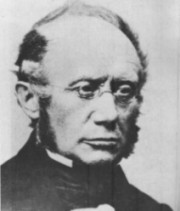
The Centre Party was founded in 1871, it first leader being the Hanoverian Catholic lawyer, Ludwig Windhorst (pictured left), the famous opponent of Bismarck’s Prussian militarist government, the forerunner of Hitlerism.

Senior Centre Party member Heinrich Bruening became Chancellor but resigned when President Hindenburg began to favour Hitler. Franz von Papen, also of the Centre Party, was then made Chancellor but, after facing opposition within, resigned the Party. Catholic Prelate, Ludwig Kaas, then became Chairman of the Centre Party.

By 1932, the National Socialist German Workers’ Party, NSDAP or Nazi Party, was the larger party so that the Centre Party leadership felt compelled to accept a Nazi as Chancellor, provided he could gain the trust of the President, which at that time seemed difficult.

Kaas advised President Paul von Hindenburg and advocated "national concentration including the National Socialists".


Field Marshal Paul von Hindenburg became President of Germany but was fooled by Hitler into favouring him. After the 1933 elections Hindenburg was forced to accept Hitler as Chancellor and then, after the passage of the Enabling Act, Hitler eventually (and illegally) dispensed with Hindenburg and became German Fuehrer


Despite strong reservations, von Papen and Hugenberg join forces with Hitler. Hitler intended to minimize non-Nazi participation, but cunningly feigned a willingness to cooperate with the Centre.

However, in the elections of March 1933 the government parties, NSDAP (Nazis) and DNVP, jointly won 52% of the vote.

This result shattered the Centre Party's hopes of being indispensable for obtaining a majority in parliament. The Party was now faced with two alternatives – either to persist in protesting and suffer reprisals like Communists and Social Democrats, or to declare their loyal cooperation, in order to protect their members. As shown by subsequent events, the Party, though deeply uncomfortable with the new government, opted for the latter alternative. This was under the chairmanship of Ludwig Kaas who later supported the Enabling Act in return for religious liberty guarantees including concordats.


Prelate Ludwig Haas, the leader of the Catholic Centre Party


Kaas was aware of the doubtful nature of such guarantees, but when the Centre Party assembled on 23 March to decide on their vote, Kaas advised his fellow party members to support the bill, given the "precarious state of the party".

He described his reasons as follows: "On the one hand we must preserve our soul, but on the other hand a rejection of the Enabling Act would result in unpleasant consequences for faction and party. What is left is only to guard us against the worst. Were a two-thirds majority not obtained, the government's plans would be carried through by other means. The President has acquiesced in the Enabling Act. From the DNVP no attempt of relieving the situation is to be expected".

A considerable number of parliamentarians however opposed the chairman's course, among them former Chancellors Heinrich Bruening, Joseph Wirth and former minister Adam Stegerwald. Bruening called the Act the "most monstrous resolution ever demanded of a parliament", and was sceptical about Kaas' efforts.

All sides in the Centre Party were not unaffected by Hitler's self-portrayal as a moderate seeking cooperation as opposed to the more revolutionary SA led by Ernst Roehm. Even Bruening thought it would be "decisive which groups of the NSDAP will be in power in the future. Will Hitler's power increase or will he fail, that is the question".


German Chancellor Heinrich Bruening, was a member of the Catholic Centre Party but was eventually forced out by the Nazis


In the end the majority of Centre parliamentarians supported Kaas' proposal. Bruening and his followers agreed to respect party discipline by also voting in favour of the bill.

The support of the Centre party proved to be decisive, and the act was passed on 23 March 1933. With the passing of the Enabling Act, the Centre Party had in fact acquiesced in its own demise.

On 8 April, Hitler sent Vice-Chancellor von Papen to Rome to offer to the Pope negotiations for a Reichskonkordat (Concordat).


Former Army Officer, Franz von Papen, was another Centre Party Chancellor and then Vice-Chancellor and thought he could get the better of Hitler but came off second best and only ended up by inadvertently helping the Nazi dictator to power


Throughout the years of the Weimar Republic, the National Socialists had always been staunch opponents of such an agreement, but now Hitler intended to deal a decisive blow against Political Catholicism and also gain international prestige.

Though the Vatican tried to hold back the exclusion of Catholic clergy and organisations from politics, in the end it had to accept the restriction to the religious and charitable field, which effectively meant acquiescing to end the Centre Party. On 14 July 1933 Hitler accepted the Concordat, which was signed a week later.

Ludwig Kaas, the outgoing chairman of the Centre Party, negotiated the first drafts of the Concordat terms with von Papen, representing the German government.

Between 1933 and 1939, Eugenio Cardinal Pacelli, later Pope Pius XII, issued 55 protests of violations of the Concordat. Most notably, early in 1937, Pacelli asked several German cardinals, including Michael Cardinal von Faulhaber (who ordained as priest our present pope, Benedict XVI) to help him write a protest of Nazi violations of the Concordat; this was to become the papal protest, called Mit Brennender Sorge.

This document condemns the ideology underpinning Nazism and was written in German instead of Latin and read in German churches on a Sunday in 1937. On 10 June 1941, Cardinal Pacelli commented on the problems of the Concordat in a letter to the Bishop of Passau, in Bavaria thus: “The history of the Concordat shows, that the other side [i.e. the Nazi regime] lacked the most basic prerequisites to accept minimal freedoms and rights...”.


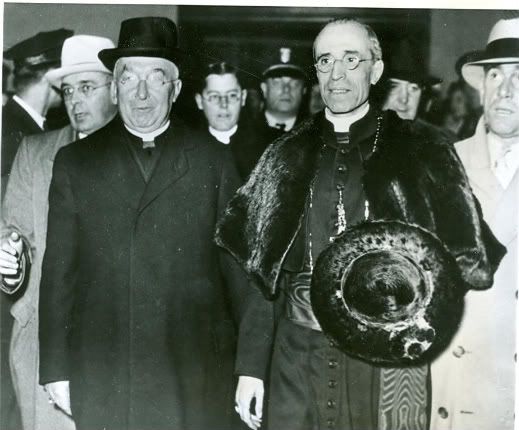
Cardinal Pacelli (later Pope Pius XII) on a trip to America between the wars


The Centre Party then elected Heinrich Bruening as chairman. At that time, the Centre party was subject to increasing pressure in the wake of the process of Gleichschaltung and after all the other parties had dissolved (or were banned like the SPD), the Centre Party dissolved itself on 6 July 1933.

It is thus nonsense to claim that Cardinal Pacelli put the Zentrum (Centre) party under pressure or to say that the Zentrum did not, however unwillingly, support Adolf Hitler's climb to power. The Centre Party leadership did support it but the real blame lies with the Nazi manipulators and those Germans weak enough to vote for the Nazis. It certainly does not lie with Cardinal Pacelli.

...

Tuesday, 28 October 2008

Face it: the Protestant areas voted for Hitler - the Catholic areas did not

Here is the proof that it was in Protestant areas that the Nazis got their highest votes and in the Catholic areas the lowest (save the exception of Berlin, where the common sense and down-to-earth humour of the native Berliners, coupled with a higher Socialist vote, ensured they could never vote for the strutting, jack-booted Nazi popinjays).


[Source: Blog of Fr Ray Blake at: http://marymagdalen.blogspot.com/]

The dark area on the first map show the 1933 Nazi vote in Germany.

The second map shows the distribution of Catholics in the 1932 census.

It is immediately obvious that majority Catholic areas didn't vote for Hitler whereas majority Protestant areas did.

Yet Protestant liars persist with the outright fib that Bavaria voted for Hitler. The truth is the exact opposite: Catholic Bavaria rejected Hitler, as did the Catholic Rhineland, and the Catholic parts of Westphalia, Pomerania and Silesia.

Remarkably, it is a nearly exact fit.

The Protestant areas, by contrast, are exactly the areas where the Nazis gained their votes. The only dot of white in the Nazi-voting Protestant areas is Berlin, for the reasons already mentioned.

It could hardly be clearer.

Face it, Protestants, your German co-religionists supported Hitler and the Nazis, some ardently.

Stop lying and start telling the truth, you Protestants who remain in denial, and recognise that your Catholic brothers, like Pius XII, were leading anti-Nazis and that the majority of German Protestants, with some very noble exceptions, sold out to the Nazi Antichrist.

And Catholics make better beer, too!

...

Monday, 27 October 2008

Hitler's Protestants


National Bishop Friedrich Coch is pictured here giving a Hitler salute greeting in Dresden, 10 December 1933.

Dresden pastor Friedrich Coch was one of the leading men of the “German Christians” in Saxony.

The Nazi Party Gau consultant for church matters since 1932, he was elected to the office of state bishop by the “Brown Synod” of the German Protestant churches in August 1933. Most German Protestants either actively supported Hitler and the Nazis or else kept quiet. In stark contrast to the Roman Catholic Church, almost none made any protest about the Nazi holocaust against the Jews.

Nevertheless, many today claim the right to attack the Catholic Church for not doing enough and especially Pope Pius XII, despite the fact that he saved over 800,000 Jewish lives, more than all other agencies put together.

Such is the hypocrisy of many modern commentators that they have no desire even to find out the true facts about this issue.

When Hitler decided to create a national bishop for the Protestant confessions, the reaction of German Protestant church leaders was positively ecstatic, witness this message:

“Through God's intercession, our beloved German Fatherland has experienced a mighty exaltation. In this turning point in history we hear, as faithful evangelical Christians, the call of God to a closing of ranks and a return, the call also for a single German Evangelical Church .... The Confessions are its unalterable basis .... A national bishop of the Lutheran confession stands at its head .... Christ comes again and brings an eternal completion in the majesty of His Kingdom”.
[Zabel, James A., Nazism and the Pastors: A Study of the Ideas of Three Deutsche Christen Groups. Missoula, Mont. 1976. P.28]

In this, the Protestants saw the hand of God at work in Germany. He was calling the churches back to their old place and task in the midst of the nation.

The Fuehrer was popular among Protestants and it was in traditionally Protestant areas that he had secure his largest vote in contradistinction to the Roman Catholic areas, where he secured his lowest vote (save Berlin where Socialists kept the Nazi vote down).


Reich Bishop of the Protestant churches, Ludwig Mueller, at a Nazi rally


Provincial churches united and synod after synod voiced its approval of a national church under one bishop. Dissent was virtually non-existent.

There was no excuse for this mass approval of Nazism by the German Protestants. It was a grotesque national and international betrayal of the principles of Christ. They were fully aware of Hitler's ideology and aims: he had revealed much of them in his autobiography Mein Kampf, published in the twenties.

Long before January 1933, when Hitler became chancellor, Protestant groups had become widespread in Germany which attempted to combine Christianity with the type of paganism that the Nazis espoused. In 1932, that is, before Hitler became chancellor, a number of these groups had united in what came to be known as the movement of the "German Christians" (Deutsche Christen).


Presidium of the German Christian movement in December 1933


This movement espoused the Nazi party's "positive Christianity" - devised by the odious Nazi ideologue, Alfred Rosenberg - stressing nationalism and the state.

It was especially these "German Christians" who pushed for a national church under one bishop and one Fuehrer. Once Hitler consolidated his power in the course of 1933, their influence grew tremendously. They had members in every provincial church-governing body and were openly supported by members of the Nazi party, many of whom now joined this Protestant national church.

Reich Bishop Ludwig Mueller,
wearing the "NSDAP-Hoheitsabzeichen" (Nazi Eagle party badge) and Feldschnalle (ribbons).


Hitler appointed Ludwig Mueller as bishop. In November 1933 a meeting of 20,000 "German Christians" took place in the Sports Palace, Berlin. The meeting opened with Luther's "A Mighty Fortress” and speeches as well as resolutions were outspoken in their anti-Semitism. The Jewish elements of Christianity must be discarded; the "Rabbi Paul" was to be rejected; the Bible was to be purged of all Jewish influences. Only one person out of the 20,000 cast a negative vote.

Many from the German “Christian” movement went on to become Hitler’s willing tools in the oppression of subject nations and the extermination of Jews.


Investiture of Ludwig Mueller as Reich bishop


So outspokenly pro-Nazi were these German “Christians” that the Nazi Party had to disavow them publicly for fear of a reaction. Even Bishop Mueller disavowed them.

Toward the end of December Bishop Mueller signed an agreement with Baldur von Shirach, the Hitler Youth leader, whereby some 700,000 members of the Evangelical Youth Organization were transferred to the Hitler Youth.


Mass meeting of the "German Christian" movement in 1933 to support Hitler and the Nazis. The banner reads "The German Christian reads the 'Gospel in the Third Reich' ".


Where were the protests from German Protestants at Nazism and Hitler?

There were very, very few. Martin Niemoller, and then later Dietrich Boenhoeffer and Karl Barth (who was, in fact, Swiss, not German) are among the few names that come down to us. Later – much later – there was the Kreisau circle which numbered a few aristocratic Protestants as well as Catholics and those without any specific faith.

And that was about it!

Even then, Niemoeller’s "Pastors' Emergency League" avoided any confrontation with the state, and the exclusion of Aryans was only rejected "in the area of the Church of Christ" and not in the state or society at large!

Moreover, Niemoller was a Hitler supporter to start, despite what the Nazi leader had written in Mein Kampf.


Martin Niemoller never challenged the Jewish holocaust.


Niemoller wrote:

"I really believed...that Jews should avoid aspiring to Government positions or seats in the Reichstag. There were many Jews, especially among the Zionists, who took a similar stand. Hitler's assurance satisfied me at the time. On the other hand, I hated the growing atheistic movement, which was fostered and promoted by the Social Democrats and the Communists. Their hostility toward the Church made me pin my hopes on Hitler for a while".


Niemoller was later imprisoned but survived the war and became a pacifist peacenik - too little, too late and even then, wrong-headed. Pacifism is not the answer but early opposition to evil - fighting it, if necessary.

Hans and Sophie Scholl of the "White Rose" movement did so. They were originally Protestant Christians but, unlike the vast majority, they fought the evil - and were guillotined by the Gestapo, true martyrs.

Inge Scholl, the sister of Hans and Sophie, became a Roman Catholic and she, and other authors, say that Hans and Sophie died as Catholics (see: Schüler, Barbara. "Im Geiste der Gemordeten...": Die 'Weiße Rose' und ihre Wirkung in der Nachkriegszeit. Paderborn, Germany: Ferdinand Schöningh, 2000).

Niemoller never protested the deportation and murder of the Jews.


Hans and Sophie Scholl, with Christoph Probst.
These young people, with outstanding courage, defied the Nazis and were executed by guillotine.


Few pastors joined the League – another indication of the pro-Nazi stance in the Protestant churches. Even so, loyalty toward the regime was carefully observed by the League. When in October 1933 Hitler ended Germany's membership of the League of Nations, everyone cheered, including the Pastors' Emergency League, which sent a congratulatory message to the Fuehrer assuring him of the members' support!

The Barmen Declaration which had been written by Karl Barth and two Lutheran theologians, which represented but a tiny minority, and was the idea of Karl Barth, a Swiss not a German, was not a political manifesto and it avoided political issues, Nazism was not expressly rejected and Hitler's crimes were not mentioned.

Not a word was said, for example, about the Jews.

This was a terrible omission in many of the pre-Barmen declarations as well as in Barmen itself.


Karl Barth authored the "Barmen Declaration" but never protested the Jewish holocaust.


The Jewish question does not seem to have interested Barth overmuch. Much later, he himself admitted that. In a letter written in May 1967 to Bonhoeffer's biographer, he stated:

“I myself have long felt guilty that I did not make this problem [the Jewish question] central, at least in public, in the two Barmen declarations of 1934 which I composed. In 1934, certainly, a text in which I said a word to that effect would not have found general agreement either in the Reformed Synod of January 1934 or in the General Synod of May at Barmen - if one considers the state of mind of the confessors of faith in those days. But that I was caught up in my own affairs somewhere else is no excuse for my not having properly fought for this cause."
[E. Bethge, "Troubled Self-Interpretation . . . " in The German Church Struggle and the Holocaust. P.67.]


Indeed, the Protestant churches in Germany simply ignored or avoided the Jewish question.

The Barmen authors were only concerned to preserve the purity of the church's doctrine. The vast majority of the Protestant clergy constantly hampered the efforts of anyone who tried to rouse them to resist the evils of the regime.

The stubborn Lutheran tradition of obedience to the ruling powers ensured that German Protestants willingly collaborated with the evil Nazi regime and formed a very significant section of the nation that helped carry out Hitler’s evil plans.

After the war, in October 1945, the Stuttgart Manifesto was published wherein the German Protestant churches were forced to express their guilty collaboration with the Nazi regime:

"With great pain we say: through us, infinite suffering has been brought upon many peoples and countries."

Shame, shame, shame upon those Protestants who now attack the Catholic Church and, in particular, Pope Pius XII, who saved over 800,000 Jewish lives, in stark contrast to the Protestant leaders who, instead, actively collaborated with the diabolically evil, pagan and murderous Nazi regime.

Shame!

...