Tuesday, 27 November 2007

Damien: the Apostle of the lepers

Blessed Damien of Moloka’i is one of my favourites, along with saints like the Cure d’Ars.

He confounds the worldly just as the blessed St John Vianney did. They cannot fathom what to them looks like foolishness. But it is the foolishness of the Divine and therefore all the more blessed.

What I like about Fr Damien is his humanity as much as anything.

He was cranky, impatient, bad-tempered when crossed and not always easy to deal with. His human failings somehow make his holiness shine all the more brightly. They also somehow make him so much closer to us who share his faults but not his holiness.

Indeed, it was really only Joseph Dutton, the reformed alcoholic and divorcee, who was able to really get close to Damien. Damien called him Brother Joseph and they became as one in their friendship and love of God.

Damien was a great traditionalist. None of your namby-pamby, half-baked liberal Catholicism for him, nor your wishy-washy ecumenical maunderings that try to pretend that all faiths are roughly the same. He was having none of that: he wanted to convert people to the Faith and so save their souls. He wanted his charges to be eternally happy forever with God.

He also did his best to give his poor lepers the best he could, even – nay especially – liturgically. He did his best to make his liturgy as impressive, solemn and ceremonial as possible but this, necessarily, was modest and humble since he had to select his choir from among the lepers and teach them himself.

Given their condition they did remarkably well under his tutelage but it was a truly moving sight to see these maimed and incapable lepers doing their best to play musical instruments and sing the chants and music of the Sacred Liturgy.

Their humble efforts must have been intensely pleasing to a God who loves the strivings of the humble.

Fr Damien considered them his pride and joy and loved to show them off to visitors who must have marvelled at the progress he had been able to make with them.


Damien and his choir of lepers


Leprosy is a particularly horrid disease. Men simply rot away and they smell appalling into the bargain. Extremities fall off and horrible ulcers and sores form on the body. Now there is a cure for the disease but even so there are still many millions of lepers in the world.

Damien was born Jozef ("Jef") de Veuster, the seventh child of the corn merchant Frans de Veuster and his wife Cato Wouters in the village of Tremelo in Flemish Brabant.

He entered the novitiate of the Congregation of the Sacred Hearts of Jesus and Mary (the Picpus Fathers) in Leuven, taking the name of Damian.

On 19 March 1864, Damien landed at Honolulu Harbour as a missionary. There, Damien was ordained to the priesthood at the Cathedral of Our Lady of Peace, a church established by his religious order. He served at several parishes on the island of Oahu just at the start of the spread of leprosy, influenza and syphilis by the influx of foreigners.

Fearful of its spread, King Kamehameha V segregated the lepers of the kingdom and moved them to a settlement colony on the north side of the island of Moloka’i. The Royal Board of Health, run largely by Europeans, provided them with supplies and food but did not yet have the resources to offer proper healthcare.

While Msgr Louis Maigret, vicar apostolic, believed that the lepers at the very least needed a priest to minister to their needs, he realized that this assignment could potentially be a death sentence. He asked for volunteers and 4 priests came forward. Damien was one and he asked for permission to go to Moloka‘i.

On 10 May 1873, Damien arrived at the secluded settlement at Kalaupapa. Bishop Maigret presented Damien to the colonists as "one who will be a father to you, and who loves you so much that he does not hesitate to become one of you; to live and die with you."

The settlement was surrounded by an impregnable mountain ridge and water on all sides.

There were 816 lepers living at Kalaupapa. Damien's first course of action was to build a church and establish the Parish of Saint Philomena (a favourite saint of the Cure d'Ars).

He did not limit himself to a purely spiritual role. He took on the role of doctor, builder, carpenter, farmer, child-carer, nurse and many other roles as well. He dressed ulcers, built homes and beds and even built coffins and dug graves.

When Damien arrived the lepers were in a dreadful state - listless, depressed, neglected, suffering, robbing each other, some living under trees and there was much drunkenness and sexual immorality.

The kingdom didn't plan the settlement to be in such disarray but the government's neglect in providing much needed resources and medical help unfortunately helped to create the chaos. Damien's arrival was a turning point for the community. Under his leadership, basic laws were enforced, shacks became painted houses, working farms were organized and schools were erected.

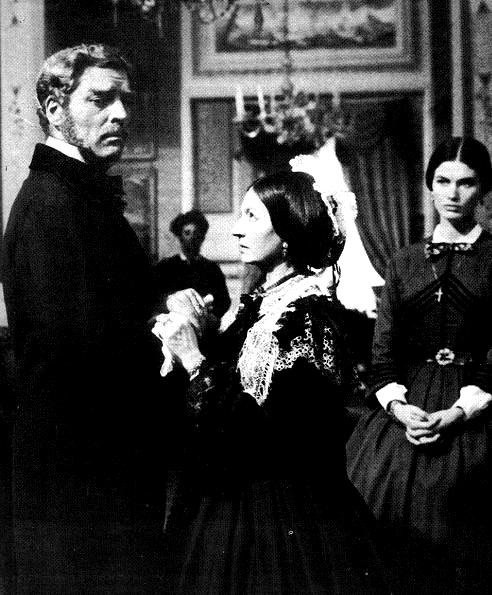
Damien and the lepers (from the film based on his life)


By December 1884, Damien himself had contracted leprosy. Despite the discovery, residents claim that Damien worked vigorously to build as many homes as he could and planned for the continuation of the programmes he created after he was gone.

His constant prayer was for other priests and especially religious sisters for the children, most of whom were orphaned because of their disease.

Eventually they came. Louis Lambert Conrardy was a Belgian priest. Mother Marianne Cope was Superior of the Franciscan Sisters of Syracuse. Joseph Dutton was an American Civil War soldier who left behind a marriage broken because of alcoholism but became Fr Damien’s most faithful and trusted companion, ever-patient and tireless in work. James Sinnett was a nurse from Chicago.

Fr Conrardy took up pastoral duties, while Mother Marianne organized a working hospital. Brother Joseph attended to the construction and maintenance of the community's buildings. James Sinnett nursed Damien in the last phases of the disease, closing his eyes upon Father Damien's death at the age of 49 from leprosy.

King David Kalakaua bestowed on Damien, during his life, the honour of Knight Commander of the Royal Order of Kalakaua.

When the King was away on a trip abroad, his daughter, Princess Lydia Liliuokalani, a gifted an intelligent woman, went to Moloka’i to see for herself what could be done to help her people. She visited the settlement to present a medal to Damien and was greeted with as much pageantry and ceremony as the poor lepers and their blessed priest could summon up. It was pathetically touching to see such efforts.


Her Royal Highness Princess, later Queen, Liliuokalani of Hawaii


She intended to make a speech to her suffering people but was so deeply touched by the scene that all she could do was weep and weep.

She was so moved, in fact, that she became a determined supporter of Fr Damien and was determined to acclaim publicly Damien's efforts and tell the world. Consequently, Damien's name was spread across the United States and Europe. Even American Protestants raised large sums of money for the missionary and the Church of England sent food, medicine, clothing and supplies.

Eventually, the disease caught up with Damien. He began to preach to his lepers saying “We lepers” and they knew that he had truly become one of them.


Damien the leper


Fr Damien died in the wooden parish house he had made by his own hands, lying in his cassock, surrounded by his new helpers, priests, brothers and sisters and at peace because his flock would not be abandoned at his death. It had been his one fear that once he himself caught leprosy his flock would be abandoned when he died. But now he could die in peace and, as he put it, be with God in heaven for Easter.

On 15 April 1889, he gave up the ghost, quietly, peacefully and calmly departing this life to rest from his most strenuous labours, mourned by his leper flock who wept as, for his Requiem and burial, they carried him to the Church he had re-built with his own hands.

It was Holy Week.


...
Saturday, 24 November 2007

They do not hate...

The First World War saw the final end of old Europe.

Too few realised it at the time. Earl Grey, the British Foreign Secretary, was one of the few who did. "The lights are going out all over Europe", he said, "And we shall not see them lit again in our lifetime".

The “war to end all wars” did not end war at all – but it did finally mean the end of the beautiful, old world of Catholic Christendom that had given to the world everything that it had come to value did the world but wish to know. Instead, this horrid war ushered in the new, grim, ugly, inhuman world of secularism which has given us Communism, Nazism, abortion and euthanasia.

The First World War was, in reality, the culmination of over 200 years of campaigning by the secularist Antichrist to eliminate traditional Christianity from the government of states.

Its partisans did not care how many died in this deathly struggle – indeed, like their master, Satan, they seemed to revel demonically in the destruction of the old world even as this alien spirit devoured its own sons.

A few bright lights sought to end this terrible and useless war: Pope Benedict XV and the Blessed Emperor Charles were but two such.

But all the more did the secular Antichrist snort and rave at them since these two represented the very enemy it wished to destroy!

Even misguided Catholics denounced their own spiritual leader, Pope Benedict XV, who was so zealous for peace. He could foresee what they could not. The enemies of Christendom had settled upon nothing less than a conflagration of the old world to usher in a new, secular world, and they did not care how many were killed in the process.

Mercy, compassion, forebearance, humility, meekness and love. Pah! What did the new men care for these! These were the signs and symbols of the Creed they wished to eliminate in the name of a spurious, perverted superstition that they sought to dignify with the hallowed name of “science”.

It was no “science” but rather the alchemy of Hell, the occult ignorance of the witch, the presdigitation of the charlatan and the theosophy of self-worship – in short, a monstrous, devilish fraud.

It was the advent of what even Sir Winston Churchill himself admitted would be “the abyss of a new dark age made more sinister and perhaps more prolonged by the lights of a perverted science”.

As so often, it was as much the journalists, chattering classes, scribblers and "scribes" who, not having to fight the war themselves, gleefully helped to whip up the intoxicating spirit of war-fever and misguided patriotism that so much marked the time.

Journalists pride themsleves on exposing frauds and using free speech to denounce evils. Some brave and courageous journalists do but the craven majority simply exacerbate the fashionable evils of their time by promoting and exalting them. One need only look at the utterly craven and cowardly way in which so many journalists promoted Communism during the years of Stalin's greatest mass-murdering of his own people. So, too, did many journalists avidly support the First World War.

And this homage to the Enemy of human nature claimed the lives of millions, even of some of the brightest and best.

Here dead we lie because we did not choose
To live and shame the land from which we sprung.
Life, to be sure, is nothing much to lose;
But young men think it is, and we were young.

A E Housman (1859-1936)

Roland Leighton

Roland Aubrey Leighton (27 March 1895-23 December 1915) was an English poet and soldier, immortalised in Vera Brittain's memoir, Testament of Youth, who was killed aged only 20 years old, not long out of boyhood (his grave says 19).

His parents, Robert Leighton and Marie Connor, were both writers. Leighton was a pupil at Uppingham School, where he became a close friend of Vera Brittain's brother, Edward.

He obtained a commission in 1915 and served with the Worcestershire Regiment in France. He died of wounds on 23 December 1915 having been shot through the stomach while inspecting wire, and is buried in the military cemetery at Louvencourt, near Doullens, France.

Vera Brittain, who had accepted his proposal of marriage four months before his death, was to include him, and quote some of his work, in her writing at the time, and later in Testament of Youth.

Many of Leighton's letters are included in Letters from a Lost Generation, a compilation of her wartime letters that was published after her death. His mother anonymously published a memoir of him called Boy of My Heart which heart-rendingly tells the tragic tale of a mother's loss of her most beloved son.

Readers of Testament of Youth will get a flavour of the horror, heartache and grief that was caused by this most odious and senseless war.

Vera Brittain herself later campaigned during World War II against unrestricted bombing, joining with men like Bishop Bell of Chichester and Richard Stokes, the Catholic Labour MP. They were in touch with the German opposition and men like Dietrich Bonhoeffer. Such was the enthusiasm for bombing that they were not listened to and a huge amount of unnecessary damage was done.

Her daughter, Shirley Williams, now Baroness Williams of Crosby, became a famous Labour politician.

Roland Leighton, himself, however, had quietly converted to Roman Catholicism on the battlefield.

Like many another young soldier in that war, he had seen the Catholic chaplains risking their lives to tend wounded soldiers in no-mans-land, bringing them the Sacraments, Viaticum, Anointing and the last rites. Many a young man awoke in the mud to find a Catholic priest leaning over him, anointing him and asking "Shall I write to your mother?", or similar, before moving on to another wounded boy, leaping from trench to trench, amidst shrapnel, explosions and stray bullets, to bring the crucified Christ to the lips of the shattered and dying.

The Parable of the Old Man and the Young

So Abram rose, and clave the wood, and went,
And took the fire with him, and a knife.
And as they sojourned both of them together,
Isaac the first-born spake and said, My Father,
Behold the preparations, fire and iron,
But where the lamb for this burnt-offering?
Then Abram bound the youth with belts and straps,
And builded parapets and trenches there,
And stretched forth the knife to slay his son.
When lo! an angel called him out of heaven
Saying, lay not thy hand upon the lad,
Neither do anything to him. Behold,
A ram, caught in a thicket by its horns;
Offer the Ram of Pride instead of him.

But the old man would not so, but slew his son,
And half the seed of Europe, one by one.

Wilfred Owen (1893 - 1918)

Raymond Asquith

Raymond Asquith (6 November 1878-15 September 1916) was an English barrister and eldest son and heir of British Prime Minister H. H. Asquith, later Earl of Oxford and Asquith, by his first wife Helen Kelsall Melland (who died 1891).

Raymond Asquith was a Wykehamist, a brilliant scholar of Balliol College, Oxford, and a fellow of All Souls College, Oxford. He was a member of “The Coterie”, one of many Edwardian sets (or fraternities, as the Americans call them) that sprung up at the time, and a prominent young Englishman of the Edwardian period. He died on active service during the First World War in 1916 at the age of 37, having volunteered shortly before.

Asquith was one of the young stars of his generation, a brilliant scholar, a brilliant barrister and rapidly selected as Junior Counsel to the Treasury. He later figured prominently in the Titanic Enquiry as Counsel for the Board of Trade.

From this platform he could undoubtedly have become one of the greatest in the land, with a brilliant political career ahead of him – perhaps Prime Minister, like his father, or Lord Chancellor.

Instead he volunteered to fight as a humble lieutenant on the Western Front with the Grenadier Guards and was killed at Ginchy on the Somme. He is buried at Guillemont by the Somme.

His relatives are well-known: his sister Violet, her elder son Mark and granddaughter Jane who all became Life Peers, as Baroness Asquith of Yarnbury, Lord Bonham-Carter and Baroness Bonham Carter of Yarnbury, respectively.

Raymond's son Julian succeeded his grandfather as 2nd Earl of Oxford and Asquith.

Other relatives include the late director Anthony Asquith (a half-brother), his great-niece, the actress Helena Bonham Carter (a granddaughter of Violet Bonham Carter), his grandson, the 5th Baron Hylton who was elected to the House of Lords as a representative peer, another grandson, the writer, the Hon John Joliffe, who edited a collection of Asquith's letters, and the late Liberal politician Jo Grimond, the Baron Grimond (who married Raymond Asquith's niece Laura, a daughter of Violet).

The writer John Buchan devoted several pages of his autobiography, Memory Hold-the-Door, to remembering Raymond Asquith and their friendship in some detail.

Raymond Asquith was married in 1907 to the former Katherine Horner, younger daughter of Sir John Horner, of Mells Abbey, Somerset, descended from “Little Jack Horner'”of nursery song fame. His wife inherited the estate when her brother Edward Horner (1888-1917) also died in the war. Asquith and his wife had three children.

Raymond Asquith died before his father was raised to the House of Lords in 1925 as Earl of Oxford and Asquith.

His widow, Katherine, famously converted to Roman Catholicism, and befriended Monsignor Ronald Knox, the even more famous Old Etonian convert to the Faith.

Upon Raymond Asquith's grave are inscribed these words from the final chorus of Shakespeare's Henry V:


"Small time but in that small, most greatly lived this star of England"


A poignant epitaph to a man of brilliance, cut down in his prime in a cruel war.


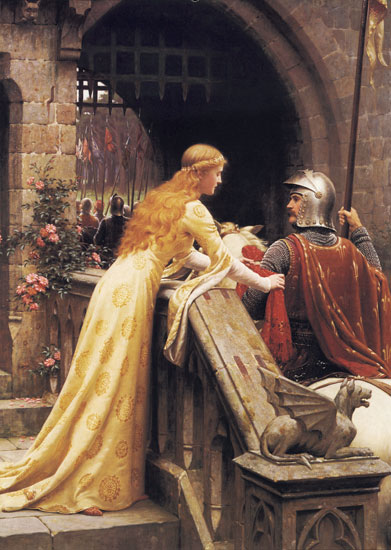
What began, in the minds of the innocent, with this:


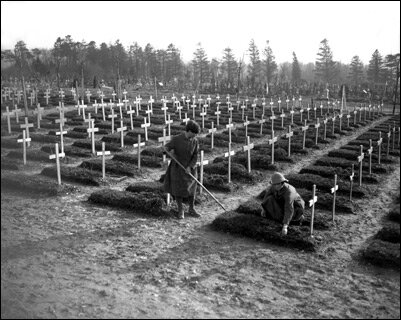
Ended with the reality of this:

Better men seeing the futility of it tried to stop the war but the Moloch of secularism was determined to sacrifice all to its insatiable lust for gore and blood.


At a Calvary near the Ancre

One ever hangs where shelled roads part.
In this war He too lost a limb,
But His disciples hide apart;
And now the Soldiers bear with Him.

Near Golgotha strolls many a priest,
And in their faces there is pride
That they were flesh-marked by the Beast
By whom the gentle Christ's denied.

The scribes on all the people shove
And bawl allegiance to the state,
But they who love the greater love
Lay down their life; they do not hate.

Wilfred Owen (1893 - 1918)


...

Wednesday, 21 November 2007

King George III, Thomas Jefferson, Capitalism and kings

I am asked some interesting questions by a reader and will answer, with the indulgence of my other readers.

What is my assessment of King George III or his successors prior to Elizabeth II?

In simple terms, I think the monarchy began to improve under King George III and the recognition of his position by both the Pope and the Cardinal Duke of York (the true King of England) enhanced his legitimacy.

Thereafter, I think, we may safely assume that the Hanoverian dynasty gains sufficient legitimacy by the simple fact of its secure establishment and longevity, together with recognition in international law and by the Pope and the real claimant, and an attempt at restoration of the Stuarts, especially as they no longer made a claim, would have been morally doubtful.

George IV was fat and idle and abandoned his real – and Catholic – wife and William IV was a debauchee, having 10 children by Mrs Jordan, his mistress, giving rise to many Fitzwilliams and Fitzclarences (he had been Duke of Clarence before he was King).

Nevertheless, I think the time had probably passed to contemplate overthrowing them in favour of the Stuarts.

However, the American, and particularly the French, Revolution had opened up a whole new – and terrifyingly immoral – concept of rebellion and revolution and many now sought to overthrow the Hanoverian monarchy for entirely immoral, spurious and wholly anti-Christian reasons.

Thomas Jefferson was one such spurious and hypocritical revolutionary.


Thomas Jefferson

I do not admire revolutionaries and Jefferson is no exception. Indeed, he is exceptionally unattractive since he kept slaves, had a child by a slave whom he further kept as a slave, and yet bleated loudly about “freedom” and “liberty”.

It was of him that Dr Johnson said “Why is it that the cries for liberty come loudest from the drivers of slaves?”.

Well, indeed!

Jefferson also supported the French Revolution, at least to start with, and even said that “the tree of liberty must be watered with the blood of tyrants” meaning King Louis XVI who was, by no stretch of the imagination, a tyrant. Indeed, Jefferson was more of a tyrant than Louis XVI.

It is true that Jefferson would almost certainly have supported the South in the War between the States but that is not enough to exonerate him.

Jefferson had, however, some good ideas about States’ Rights and was generally a decentralist which is good and reflects the Catholic concept of subsidiarity. But he was otherwise deeply anti-Catholic and hostile to the Catholic Church.

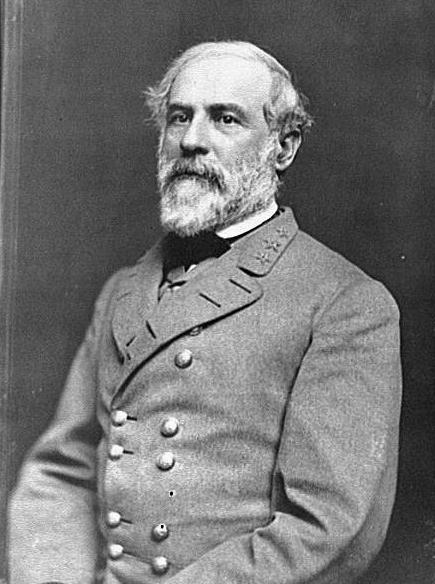
Robert E. Lee was, as I have said, a Christian gentleman – not perfect, of course, since he was not yet a Catholic. He supported the Constitution, even though it had been forged by revolutionaries, because, by his time, the idea of restoring the British monarchy to America was impossible and so he had a moral obligation to be loyal to the Constitution as it then was – which he did and which is why he fought for that Constitution and, in particular, the States’ Rights guaranteed by it.


I am asked what I think of Alexander Hamilton but I think it unwise to say as I do not know enough about him.

I am also asked what I think of the growth of capitalism and whether I am against it, as I appear to be, and if I am against it then wouldn’t I be deprived of the Internet without it.

Well, it depends what one means by capitalism. If one means “free enterprise” and “industry” then who can be against those except some crazy Communist or mad Marxist? And manifestly industry gave us the Internet.

But if one means Capitalism, with a big “C”, and/or a system of unrestricted capital accumulation by a few, or by anyone who can so accumulate, without regard to the moral laws that must bind the community of men, then, yes, I am against it.

In particular, I am against the sin of usury, condemned by the Catholic Church, solemnly and repeatedly, at more than one General Council, this being re-affirmed, but with appropriate distinctions, by Pope Benedict XIV in his Encyclical letter, Vix Pervenit, of 1745.

Usury is a form of theft because it consists in selling both money AND the use of money, as well as selling time (i.e. time to pay back the loan). This is to sell something which does not exist or is not one's own to sell, which is theft.


Pope Benedict XIV in 1745 hands down Vix Pervenit a decree which continued the ban on usury but with further explanations and appropriate distinctions for more modern times


In modern conditions, the meaning of the usury ban is unchanged but its application is much more complex.

I might do a post on this one day.

Suffice to say, the goods of the earth are not meant for just a few men but for all - but not in equal proportions.

Equally, this does not mean that the wheelers and dealers – still less the crooks and swindlers – should be given the lion’s share and ordinary families only a small share.

In a properly run society more regard is given to hierarchy and to recognising that those who rule and take responsibility deserve to be rewarded for having greater responsibility.

This was the original rationale for a ruling class, based upon family, with the Royal family at the apex of the hierarchy but with each class and stratum of society having rights and obligations to each other, guided by justice and moved by charity to serve each other, each in their own class and manner.

Every man is, and must be, in a Christian society, a servant to others, be he never so high. Hence the Pope is called servus servorum Dei - servant of the servants of God. So, too, was the Emperor.

The higher up the social class scale one is, the greater the obligation to society as a whole.

Thus the nobility had a special vocation to rule, to risk their lives in war, to adminster justice, to adminster the public patrimony and to care for and provide for their people as if they were an extended part of their own family.

This was the ideal but not always attained, of course.

The Capitalist ethos does not see the rich having any such intimate responsibility for the poor, the marginalised, the dispossessed and the weak.

Capitalism, of the unrestricted, self-interested kind, is essentially unchivalrous and is selfish and rapacious and enriches a man by unfairly exploiting others. This sort of Capitalism is not desirable.

Responsible free enterprise (by which I do NOT mean Socialism) enriches individuals and society. The wide distribution of capital is particularly to be encouraged but by incentive not by Socialist prescription.

Private social welfare is also preferable to state provision but almost impossible without a large network of the sort that existed in the Middle Ages through the Church and the monasteries.

Let us not forget that was an entirely PRIVATE system of social welfare and was most emphatically NOT state Socialism or anything like it, as some Leftists like to pretend.

On the hand, the Adam Smith school of thinking which claims that there is an automatic “hidden hand” which automatically and inevitably helps society by individual men seeking to enrich themselves by capitalist accumulation, is also not right, in my view.

Yes, it is good for men to work, invent, devise and plan to enrich themselves and others but it does not follow that ALL such self-enrichment is necessarily good.

My preference is for the system approved by St Thomas: the balanced constitution consisting of monarchy, nobility and democracy.

That, indeed, was the model of the old world and especially the Holy Roman Empire which was the prime model for Christendom of old.

This model is equally adaptable to the modern age. Indeed, there is no reason why a modern republic could not be modelled on similar lines. The United States, if it were Catholic, might readily become such a model and, indeed, it seems to be moving more in that direction than modern Europe which is rapidly abandoning all of its glorious Catholic past.

But that’s probably enough from me for one day!


...

Roundheads, queens and the immorality of revolutions

Apologies to "SubjectofRome" whose post I seem to have lost. Can you send it again? Midlander need not bother unless he comes up with some arguments rather than simply barracking. Sorry, Midlander.

Others have written and some still do not quite get the point that I was making.

Last try, then, folks. Here goes.

Some make a common mistake and assume that a different set of rules must apply to a head of state who is called king or queen than to one who is called by some other name.

The name of the head of state makes no difference: he cannot seize powers that are not lawfully his (or hers) and thus do not belong to him under the Constitution.

Dictators of unstable countries all too often seize such powers for themselves. This is merely a coup d'etat. It is illegal and immoral.

Some seem to think that merely swapping a monarch for some other kind of head of state with a different name solves the moral problem of signing immoral laws. How could it?

I don’t quite know why this relatively simple idea seems so hard for some to grasp.

The evil consists in requiring a head of state to seize powers he does not have and thus overthrow a constitution.

Again I do not know why this should be so difficult an idea to grasp.

I suspect that some have but one idea or concept of monarchy in their heads and that is monarchy with wide power. But the British monarch is not such a monarch.

Some call this a "charade". It is no more of a charade than a republican constitution that requires the president to do the same thing. How is it any less of a charade to call a president “head of state” when he or she has virtually no power, either?

The fact is that most jurisdictions have a head of state, even if only for ceremonial reasons. There is a need for such a figure. It is not a charade. There is a job to be done. Most constitutions give that head of state some final and residual power to prevent the Constitution being ultimately subverted.

It really amounts to not much less than a kind of blind prejudice and bigotry to think that this system must be abolished if it is exercised by a person called a monarch or "king" or "queen" but is fine if it is exercised by some other sort of head of state with a different title like, say, "president".

This bigotry is simply not logical. It is perhaps cultural or psychological. For instance, some Americans and many Irishmen seem to have a kind of cultural and psychological aversion to the mere word "king" or "queen", partly perhaps for understandable historical reasons. Many Irishmen, for instance, understandably associate monarchy with oppression by successive English governments but end by having an irrational aversion to the word and idea as such.

Perhaps some other people have been brought up on fairy tales about kings and queens and princes in castles who order subjects about with largely untrammelled power. Thus they think this is how all monarchs should be and can’t get their heads round the idea of a restricted constitutional monarchy.

Or perhaps some have a romantic notion about revolution which, in their mind’s eye, requires some supposed villainous monarch to rebel against.

I don’t know what else causes this kind of bigotry but it is profoundly anti-rational.

The Queen does not do evil when she signs a law because, in signing that law, she is not exercising any freedom to endorse or reject that law. She has no such freedom.

Her signing is not a free act on her part but merely an acknowledgement that Parliament has passed a law. It is rather like signing a receipt.

The only exceptions are the extreme situations to which I referred in my earlier posts (deadlock in Parliament which cannot be resolved by the courts, or a rogue government seeking to abolish the Constitution or, say, elections) and these now represent her only real power and discretion to act.

The fact that her signing is called “Royal Assent” is now a legal fiction, save in those extreme cases. Then, and only then, does the Queen retain any discretionary power.

Other than those extreme situations her signature is now no more than a “Royal Acknowledgement” or a “Royal Receipt” rather like signing a DHL receipt to say that you have received a DHL-delivered parcel.

No-one would suggest that the act of signing a DHL receipt for a parcel means that you were responsible for sending the parcel in the first place!

So, also, with the Queen. She is not morally or legally responsible for the legislation enacted by Parliament.

Now, it might be very nice and good if the Queen had more power than that and exercised it to block an abortion bill. But she doesn’t.

And no amount of calls for her to resign will give her, or her replacement, that power.

The royal power was radically attenuated by the Civil War, the so-called "Glorious" Revolution and the Bill of Rights of 1689 and further inroads continued to be made thereafter by a now powerful Parliament.

However much one may regret the Roundhead rebellion and the Whig Revolution, they won and the Royalists lost and it is now too late to reverse the constitutional situation. Indeed, even to try would now, if done by unconstitutional means, be a revolution of its own and thus sinful.

Now try as you might, you simply cannot blame Her Majesty Queen Elizabeth II for this situation!

Moreover, because Parliament passes an immoral law, this does not give either the Queen or a subject the right to overthrow Parliament.

I repeat, yet again, that this is what St Thomas Aquinas teaches in his De Regimine Principum ("On the Rule of Princes"), as does the Church itself.

St Thomas makes it quite clear that, whilst an unjust law is no law, morally speaking, and so it cannot bind morally and one should not obey it, that does not give us the right to overthrow the state or the prince (or the Parliament) which produced such an immoral law. It only gives us the right to refuse to obey such a “law”. We are not then disobeying the law because this “law” is, in fact, no law at all, morally speaking.

Likewise, the Queen, whilst she should certainly regard the abortion law as no law at all – morally speaking – she cannot break the legitimate laws (i.e. those which forbid her to exercise the Royal Assent as she pleases) in order to nullify the immoral “law”. That would be doing evil that good may come of it, which is strictly forbidden by the moral law.

The abortion law remains a human positive law but, in the sight of God and good men, it is really no law at all, morally speaking.

One must not, therefore, obey that law if it requires one to participate in an abortion, or connive at an abortion, but the existence of such an immoral law does not give the subject the right to overthrow the state or the Constitution.

For the same reason the Queen does not have that power, either.

The blame for these immoral laws lies with those who frame and pass them - not the Queen.

Some say, well, what about Hitler and the Nuremberg Laws. Well, what about them? They were laws passed by the Nazi-dominated Reichstag, not by President Hindenburg.

If there were laws passed to put Jews into concentration camps then those laws should be resisted and not obeyed but the Queen would still not magically get powers she does not have to block Parliamentary Bills. If, however, these laws were forced through illegally (as, of course, they would have to be since no-one would now pass such laws) and the courts refused to act, then the Queen would be facing the very extreme situation which I adumbrated and might then have a discretionary power.

I hope this, at last, makes the position clear.

Sunday, 18 November 2007

Southern Gentleman: General Robert E. Lee

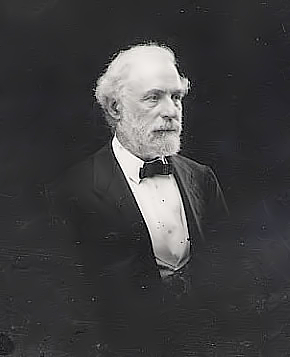
General Robert E. Lee is often regarded as the epitome of the Southern Gentleman, as almost all commentators, even hostile ones, agree.

What did Lee consider the essential hallmarks of a gentleman? What did Lee consider made a gentleman in the broad sense? How does one think and act and speak to be such? He gives us a flavour from one of his speeches:

"The forbearing use of power does not only form a touchstone, but the manner in which an individual enjoys certain advantages over others is a test of a true gentleman. The power which the strong have over the weak, the employer over the employed, the educated over the unlettered, the experienced over the confiding, even the clever over the silly -- the forbearing or inoffensive use of all this power or authority, or a total abstinence from it when the case admits it, will show the gentleman in a plain light. The gentleman does not needlessly and unnecessarily remind an offender of a wrong he may have committed against him. He cannot only forgive, he can forget; and he strives for that nobleness of self and mildness of character which impart sufficient strength to let the past be but the past. A true man of honour feels humbled himself when he cannot help humbling others."

Not a bad guide!


He has other bon mots for us:

"All that the South has ever desired was that the Union as established by our forefathers should be preserved and that the government as originally organized should be administered in purity and truth."
Robert E. Lee

"We could have pursued no other course without dishonour. And as sad as the results have been, if it had all to be done over again, we should be compelled to act in precisely the same manner."

Robert E. Lee

"I am nothing but a poor sinner, trusting in Christ alone for salvation."
Robert E. Lee


Requiem aeternam, dona ei Domine.

Saturday, 17 November 2007

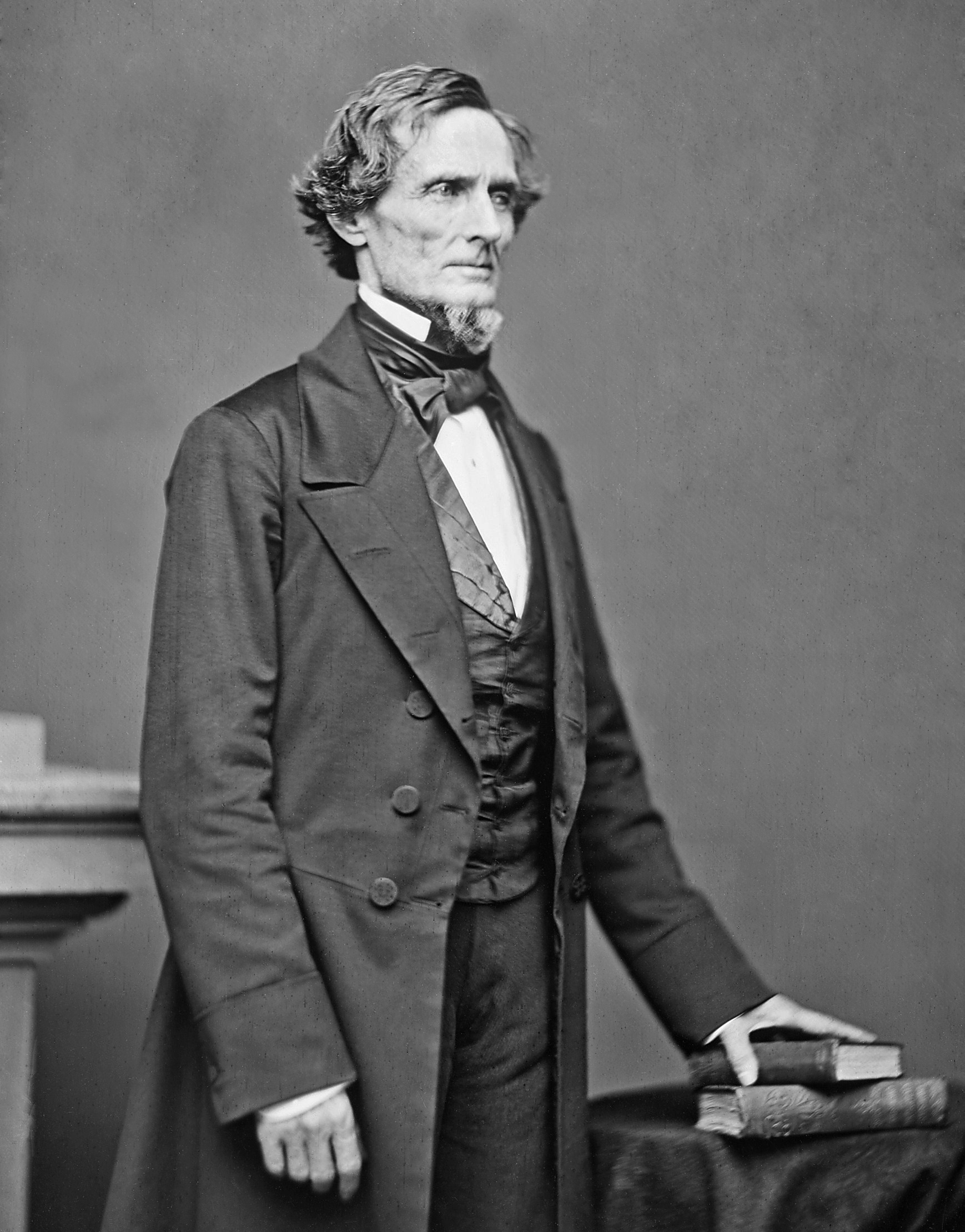
Tales from the Old South: Jefferson Davis and Blessed Pius IX

After the War between the States (1861-65) in America, the Southern President Jefferson Davis, was held in prison for trial on a charge of treason. But no charge could stick since, as the Supreme Court held, there was nothing in the U.S. Constitution that prohibited the secession of states.

If secession was not illegal, neither Davis nor any other Confederate leaders could be guilty of treason.

Indeed, on one view, the leaders of the North should have been tried for illegally attacking the seceding states who were exercising a right permitted by the Constitution.

Jeff Davis was a Southern gentleman who had married the daughter of US President Taylor, had fought in the Mexican wars and had been a US Senator and US Secretary of War. The unchivalrous Yankees treated him shamefully in prison even denying him basic privacy.

One man, however, accorded him due respect.

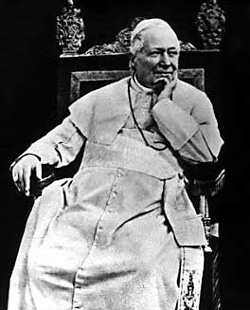
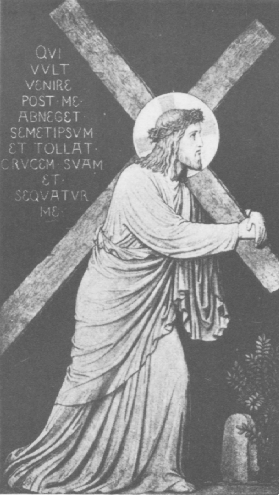
Whilst Davis was in prison, Blessed Pope Pius IX sent, to the former President of the Confederate States of America, a crown of Jerusalem thorns hand-woven by the Pope’s own hands which, given their sharpness, he could not have done without drawing blood. The Sovereign Pontiff also sent his own portrait self-autographed with the Scriptural verse:

“If any man will come after me, let him deny himself, and take up his cross, and follow me.”

This was partly in response to the fact that when Pope Pius himself was in exiled in Gaeta, fleeing the revolutionaries of Garibaldi's Roman republic, Jefferson Davis corresponded with him consoling him in his tribulation.

Blessed Pope Pius IX was the only European Catholic prince who recognised the Confederate States government referring to Davis as "His Excellency, the President of the Confederate States of America".

While her husband languished in prison, Varina Davis, the wife of the ex-President, was herself, with her children, succoured by the Sisters of Charity, something, she noted, that none of the members of her own religion seemed willing to do. The sisters also educated her children.

Interestingly, Davis himself had been sent by his father to be educated by the Dominican Fathers in Kentucky and, aged 9, Davis had asked to be received into the Church but his family were reluctant.Davis himself later became a High Church Episcopalian having been received by a former West Point classmate, Leonidas (later Bishop) Polk, who later died as a Confederate general.

Abraham Lincoln, on the other hand, though he liberally sprinkled his speeches with religious imagery, rarely attended any church and was not a member of any Christian denomination.

Davis began corresponding with Pius IX when agents of the North sought to recruit mercenaries from Poland and Ireland. Davis asked the Pope to discourage this, which the latter did as he did not wish to raise the American conflict to an unduly international level .

Davis and Pius IX shared many views and opinions and had a shared outlook toward the world and politics in the sense that they believed in the old world of honour, courtesy, hierarchy, chivalry and the land. For this reason, too, all Catholic bishops in the South supported the Confederacy.

The real issue in the War between the States was not slavery but States’ Rights and subsidiarity – a bit like the battle that is currently being fought at a purely political level between Brussels and the Member States of the European Union.

The Church had long ago condemned slavery and the slave trade and that most conservative and supposedly “reactionary” of popes, Pope Gregory XVI, had issued an Apostolic Constitution roundly condemning the slave trade.

As I have mentioned in other posts, it was the so-called “liberals” who legalised slavery, not the conservatives and Catholics.Black slavery in America began in the North and was first legalised there, in Massachusetts, in 1625. Northern liberals and Protestants were as likely to be slavers and segregationists as anyone in the world.

Lincoln’s solution was even worse. He wanted all blacks to be rounded up and sent to Liberia in Africa.In August, 1862, he convened a White House conference with black leaders and said to them:

“Why should people of your race be colonized, and where? Why should they leave this country? You and we are different races. We have between us a broader difference than exists between any other two races. Whether it is right or wrong, I need not discuss; but this physical difference is a great disadvantage to us both, as I think. Your race suffers very greatly, many of them, by living among us, while we suffer from your presence. If this is admitted, it affords a reason, at least, why we should be separated.”

No, the real issue was States’ Rights and secession. And like most believers in revolution, as Lincoln was, of course, he was also implacably opposed to any such revolution against his own power. Such is the hypocrisy of revolution.

Also it was a war between the more traditional and agrarian interests and the radical and moneyed urban interests.

Interestingly, there were some 20 Confederate generals who were Catholics and many in Davis’ cabinet.

So, too, the native American Indians were allies with, and fellow-soldiers in, the Confederacy. The Cherokee nation had representatives in the Confederate Congress in Richmond and a full blood Cherokee, Stand Watie, was the last Confederate general to surrender.

Many ordinary Southerners were also Catholic. Not a few of them, or their sons and daughters, joined religious orders. Catholic sisters of various orders, in the North as well as the South became the first nurses to tend wounded and ill troops during the War and not, as is oft supposed, the Red Cross.

Southern priests were among the first chaplains in the armies of either side and one in particular must be mentioned: Fr. Abram J. Ryan. Born in Virginia and ordained shortly before the war broke out, he is known as the “poet of the Confederacy.” One poem of his, Conquered Banner, can still be recited by heart by very many Southerners.

Davis always wore a St. Benedict Medal and a Miraculous Medal as well as a French scapular. Someone had also given him the brown scapular of the Discalced Carmelites. All of these he wore in prison and preserved to the end of his life.

He was known to be a familiar meditator on the Crucifixion and carried a worn and coverless 1861 edition of The Imitation of Christ, an 18th-century translation from the Latin by Richard Challoner, the English Roman Catholic Bishop, and which he used often, in his imprisonment, as a manual of prayer.


The Bonnie Blue Flag

We are a band of brothers, and native to the soil,
Fighting for our liberty, with treasure blood and toil;
And when our rights were threatened; the cry rose near and far,
Hurrah for the Bonnie Blue Flag, that bears a single star.

Chorus: Hurrah! Hurrah! For Southern rights hurrah!
Hurrah! For the Bonnie Blue Flag that bears a single star.

As long as the Union was faithful to her trust,
Like friends and like brothers, kind were we and just;
But now, when Northern treachery attempts our right to mar,
We hoist on high the Bonnie Blue Flag that bears a single star.

First gallant South Carolina nobly made the stand;
Then came Alabama who took her by the hand;
Next, quickly, Mississippi, Georgia, and Florida,
All raised on high the Bonnie Blue Flag that bears a single star.

Ye men of valor gather round the banner of the right,
Texas, and fair Louisiana, join us in the fight
Davis our loved President, and Steven statesmen are,
Now rally round the Bonnie Blue Flag that bears a single star.

And here's to brave Virginia; the old Dominion state,
With the young Confederacy, at last has linked her fate.
Helped by her example, now other states prepare,
To hoist on high the Bonnie Blue Flag that bears a single star.

Then here's to our Confederacy, strong we are and brave,
Like Patriots of old we’ll fight our heritage to save,
And rather than submit to shame, to die we would prefer.
So cheer for the Bonnie Blue Flag that bears a single star.

Then cheer, boys, cheer, and raise a joyous shout.
For Arkansas, and North Carolina, now have both gone out,
And let another rousing cheer for Tennessee be given.
For the single star of the Bonnie Blue Flag has grown to be eleven.

New chorus: Hurrah! Hurrah! For Southern rights Hurrah!
Hurrah!For the Bonnie Blue Flag has gained eleven stars.


St Andrew is crucified upon a saltire cross (from a Flemish Book of Hours).

The St Andrew's Cross was adopted by the Kings of Scotland as the Scottish flag and banner and later adopted by the Confederate States of America for its battle flag.

...

Friday, 16 November 2007

Il Gattopardo: a glimpse of the old Kingdom of Two-Sicilies

This film is not only a wonderful glimpse of the last of the old world but also a very well produced film by Luchino Visconti di Modrone, the Duke of Modrone and a member of the old and wealthy Milanese family, the Visconti.

Visconti later joined the Italian Communist Party, bizarrely. However, it did not stop him making some very good films and Il Gattopardo, the Leopard, is undoubtedly one of them.

It is based on the book of the same name by Giuseppe Tomasi di Lampedusa, the Prince of Lampedusa. But be warned the film is long: nearly 4 hours.

Il Gattopardo follows the family of its title character, the Sicilian nobleman Don Fabrizio Corbera Falconeri, Prince of Salina, through the events of the Italian Risorgimento when the new men, the bastard spawn of the French Revolution, set about creating a "liberal" (for which read anti-clerical and secularist) state of Italy by annexing and wresting by force the territories of the Pope and the Catholic monarchs in Sicily, Tuscany, Modena and all the northern duchies ruled over by Catholic Habsburgs and Bourbons for the most part.


The old world is threatened by this new, brash, bourgeois, money-grabbing, rapacious, capitalist, poor-grinding, revolutionary secularism. The Church is even more threatened and the Pope chased out of the Papal States and eventually out of Rome, altogether, for a time.


Under the hot sun, in the Kingdom of the Two-Sicilies, the Catholic Spanish Bourbons still reign in an easy-going Catholic manner but vicious, modern, lying propaganda portrays the Kingdom as reactionary, backward, crumbling, tottering, oppressive, bumbling and in urgent need of revolution - as if any nation were ever to need a bloody revolution with death, blood, killing and assassination! As though these evil things were somehow to be considered good!

Gladstone, the British Prime Minsiter, famously blundered in his hostile policy and speeches against the King of the Two-Sicilies, accusing him of all manner of evil deeds that turned out to be largely spurious, anti-clerical propaganda cooked up by enemies of the Catholic Church. But silly old Gladstone, being Protestant, fell for it all - hook, line and sinker.

So, too, do numerous modern Americans kid themselves that the Sicilian mafia is the centre of a great criminal octopus that still rules in America. The reality is that American gangsters make the Sicilian mafia look like children in a kindergarten. And, in any case, the mafia grew out of the anti-clerical, anti-Catholic partisans of the French Revolution who, once the revolution was over, did not want to go back to ordinary living but preferred to live as bandits. They were no more "Catholic" than were the revolutionaries themselves!

But, not to worry! Thanks to ignorant nincompoops like Jimmy Swaggart and the other Protestant “Televangelists”, there is never any shortage of naïve Americans prepared to believe any amount of lies about the Catholic Church and the Catholic people.

As Gladstone wailed and moaned about the allegedly black deeds of the "evil" and "oppressive" Catholic regime of King Ferdinand II, which he called "negation of God erected to a system of government", his own prison officers were chaining Irishmen with heavy iron neck collars in dark dungeons, his own army had been blowing Indian Hindoos into tiny pieces from the end of field guns, and his own government was presiding over an England that had grinding, industrial poverty with horrors wholly unknown to the simple peasants of Sicily!

Gladstone's lying propaganda was far blacker and far more evil than anything King Ferdinand ever did!

But nevertheless, millions of pounds and Yankee dollars poured into the coffers of the revolutionaries, Garibaldi, Mazzini and Cavour, from blind, stupid Protestants and secularists who thought that anyone who was an enemy of the Pope must be good! And all the while these same dupes and fools were saying that Italy must decide its own fate without foreign intervention!

Hypocrisy knows no national boundaries!

Don Fabrizio's nephew, Don Tancredi, urges unsuccessfully that Don Fabrizio abandon his allegiance to the threatened Kingdom of the Two Sicilies and ally himself with the aggressive, all-conquering Savoy dynasty who have capitalised upon Garibaldi's red-shirted revolution. Says Tancredi: "Unless we ourselves take a hand now, they'll foist a republic on us. If we want things to stay as they are, things will have to change".

That is the theme of the book and film, but subtly and cleverly done. If things are to stay the same then they must change i.e. we must accommodate ourselves to the new brash, upstart generation of pushy social climbers and even marry their daughters so that we can preserve as much of the old world as we can.

There is obviously a considerable contradictory tension there and both Lampedusa and Visconti portray it with considerable skill.

The title is rendered in English as "The Leopard", but the Italian word gattopardo refers to the American ocelot or to the African serval. Il gattopardo may be a reference to a wildcat that was hunted to extinction in Italy in the mid-1800s - just as Don Fabrizio dryly contemplates the decline of his beloved Sicilian aristocracy.

One of the new men, a recently created knight, comes to visit Don Fabrizio as a kind of emissary of the new Savoyard government in Turin to try to persuade him to become a Senator in the new Upper House of the new Italian parliament but Don Fabrizio knows that would not fit his plan of preservation of this family and the old world and refuses, to the Cavaliere's consternation.

As the Cavaliere gets into his coach to depart, having failed, Don Fabrizio says, almost to himself, "We are the leopards and lions but after us will come the jackals and hyenas". It is, of course, true. That is exactly what happens to Italy. But the Cavaliere doesn't quite catch what is said and asks him to repeat it. "Oh, nothing, nothing" replies the Prince, acutely aware that this bespectacled commissar and bureaucratic schemer for the new regime, will not even know what he is talking about.

The plan goes ahead and Don Tancredi marries the daughter of the rich, capitalist but ignorant, uncultured and socially clumsy mayor, Don Calogero, who assures the Prince that he, Don Calegero, will soon also be noble because the papers will soon arrive from Turin! The Prince laughs and leaves the room to conceal his disgust, as does the family chaplain, Don Pirrone, himself an interesting character, an intelligent peasant who entered the Church and can see that the Church will suffer from the Revolution.


Yes, says, Don Fabrizio, but if our order (the aristocracy) were to be ditched to save the Church, you'd do it without a thought, wouldn't you? Hmm, says the priest. And you'd be right, the Prince adds, because the Church is immortal but the old regime is not. So, we nobles must compromise to save our families. You, the Church, have no such need. You will continue forever. Then you have a spiritual sin to confess, says the priest, misunderstanding the Prince's point. On the other hand, the simple instincts of the priest that no good will come of these compromises is, perhaps, also right. Such are the difficulties created by evil times. "Bruti tempi, bruti tempi", says the priest, meaning "evil times we live in".

Fortunately, Don Calogero's daughter is supremely beautiful and Tancredi falls for her instantly, leaving Don Fabrizio's daughter, Donna Concetta, with a broken heart for she has always secretly loved Tancredi and hoped to marry him. Tancredi's friend, a Count from the North, tries to woo her but it is no good. She is a one-man woman, gentle and devout but also proud and Sicilian.

There is a ballroom scene that last for fully 45 minutes but it is not for an instant boring and is, on the contrary, fascinating with many plots, sub-plots and counterpoint. Don Fabrizio is prevailed upon by Calogero's daughter to dance with her and the Prince dances the waltz so superbly that it is like a work of art and many of the guests stand and watch with delight: it is, however, the strange harmony of the old world and the new. Dimly, all sense it. The more intelligent admire it but with a feeling of uncertainty.

But the clergy and the peasants see more clearly. They see which way it will all end and detest the new men and their capitalist exploitation. They want the old world, the old Sicily, the poor but easy life in the sun-drenched valleys, all ruled under the harmony of Throne and Altar, Church and State with olive groves, vines, fig trees, peach trees, donkeys, carts and the dust and the wind in one's face.

We cannot but sympathise with them - espoecially as we know the end of the story and we know that they were, as ever, right. The new men did wreck everything. They did persecute the Church. They did despoil the peasants. They did make a farcical mess of government. They did lie, cheat and steal. And they prepared the way for Mussolini who was, in truth, one of them, though a rather better governor.

In one amusing scene, the true story of the so-called Plebescito, or Plebiscite of the people to vote on the new Italy, is told.

There are 515 registered voters. 512 vote. And - yes, you've guessed it - 512 vote "yes" and no-one votes "no".

Well, then. There you are! Everyone wants the new Risorgimento of Cavour and Victor Emmanuel! How simple!

Except that most of the people voted "no"! It was a fix by Don Calogero - and a thousand other such Don Calogeros all over Italy.

Don Fabrizio has counselled everyone to vote yes as part of his survival plan but they do not so. But what use is that? Calogero has fixed it whatever happens! Welcome to the "new" politics!

The novel was often criticised by modish, avant-garde, "with it", trendy literary critics for "combining realism with decadent aesthetics".

Utter piffle, of course.

Actually, it became so popular among common readers, that in 1963 Il Gattopardo was made into the film.

It is all in Italian but with sub-titles. This is better and more authentic. Interestingly, Burt Lancaster plays Don Fabrizio - and does it superbly well. Alain Delon plays Tancredi and Claudia Cardinale plays Don Calogero's daughter.


The film ends after the Ball. Don Fabrizio decides to walk home. As he walks the streets, a tinkling bell is heard and a priest appears bearing the Blessed Sacrament for the sick with a server before him ringing the bell.

The Prince kneels in the dusty street before the King of Kings.

Italy will change its governments and the top people will re-arrange the chairs but Sicily will still be Sicily and all, from highest to lowest, from grandest to meanest, will still kneel as the Blessed Sacrament passes by, whatever crazy government is in power.

See the film. You will not regret it.