Thursday, 9 October 2008

8 October: St Bridget of Sweden, great saint and patroness of chivalry

St Bridget (sometimes called Birgitta) - Feast day 8 October - was born about the year 1303 (by tradition on 14 June) in Upland, the chief province of Sweden, where her father, Birger Persson, Lord of Finsta, was governor and "law-speaker".

Her mother, Lady Ingeborg of Finsta, was a daughter of the governor of East Gotland.

When only seven Bridget had a vision in which our Lady placed a crown on her head, and when ten, after a sermon on the Passion, she saw in a dream Christ wounded and bleeding.

These two experiences seem to have been the formative ones of her life.

Her mother died in 1314, and she lived with an aunt until, in 1316, obediently but against her inclination, she married Ulf Gudmarsson, Lord of Närke.

They had four boys and four girls.

Two of the boys died young. Karl, the eldest, was worldly but devoted to our Lady. Birger, the second, though married, later became his mother's companion and brought her body home to Sweden from Rome to be buried. Three of the girls married: Merita and Cecilia staying in Swedish society, while Catherine lost her husband and lived with her mother. The fourth, Ingebord, became a Cistercian.

Twenty-eight years after their marriage, Lord Ulf died and Bridget went to live the penitential life she longed for near the Cistercian monastery at Alvastra. While there, she planned the Rule and Office of the Order she was called to found but which she never saw in existence. After two years, in 1344, she went to Rome, where she died on 23 July 1373. Her canonization took place only eighteen years later, on 7 October 1391 (later the Feast Day of the Holy Rosary, following the Battle of Lepanto).

St. Bridget had the gift of prophecy and worked many marvellous cures. Once widowed, she lived an ascetic life, eating very little, sleeping short hours, and praying continually. She followed a strict rule and practised every possible kind of charitable work, even reducing herself to begging.

She received constant inspirations which were either taken down by her chaplain and put into Latin, thus becoming known as her Revelations, or took the form of letters to the succeeding popes, cardinals, and secular rulers of the day, telling them of their wickedness and how to reform their lives.

Both in Sweden and in Rome she was either hated violently or loved as a saint. "Strong and full of courage", she was "homely and kind and had a laughing face".

She founded the Order of the Saviour or the Bridgettines at Vadstena in Sweden, which was richly endowed by King Magnus Eriksson of Sweden and his Queen.


Vadstena Abbey, founded by St Bridget of Sweden, stands to this day


King Magnus had been named at birth after Carolus Magnus i.e. Charlemagne the Emperor.

The Order really started after St. Bridget's death but with her daughter, St. Catherine of Sweden, as first Abbess of Vadstena.

About 1350 she went to Rome, partly to obtain from the pope the authorisation of the new order, and partly in pursuance of her self-imposed mission to elevate the moral tone of the age.


Bridgettine sisters wear a very distinctive habit and wimple with a cross over the head


She also set herself the task of persuading the Pope to return to Rome from Avignon, a task later completed by St Catherine of Siena.

She also composed a Rosary-chaplet of 69 Aves in honour of the number of years of our Lady's life, with 7 Paternosters and 7 Credos in honour of her joys and sorrows.

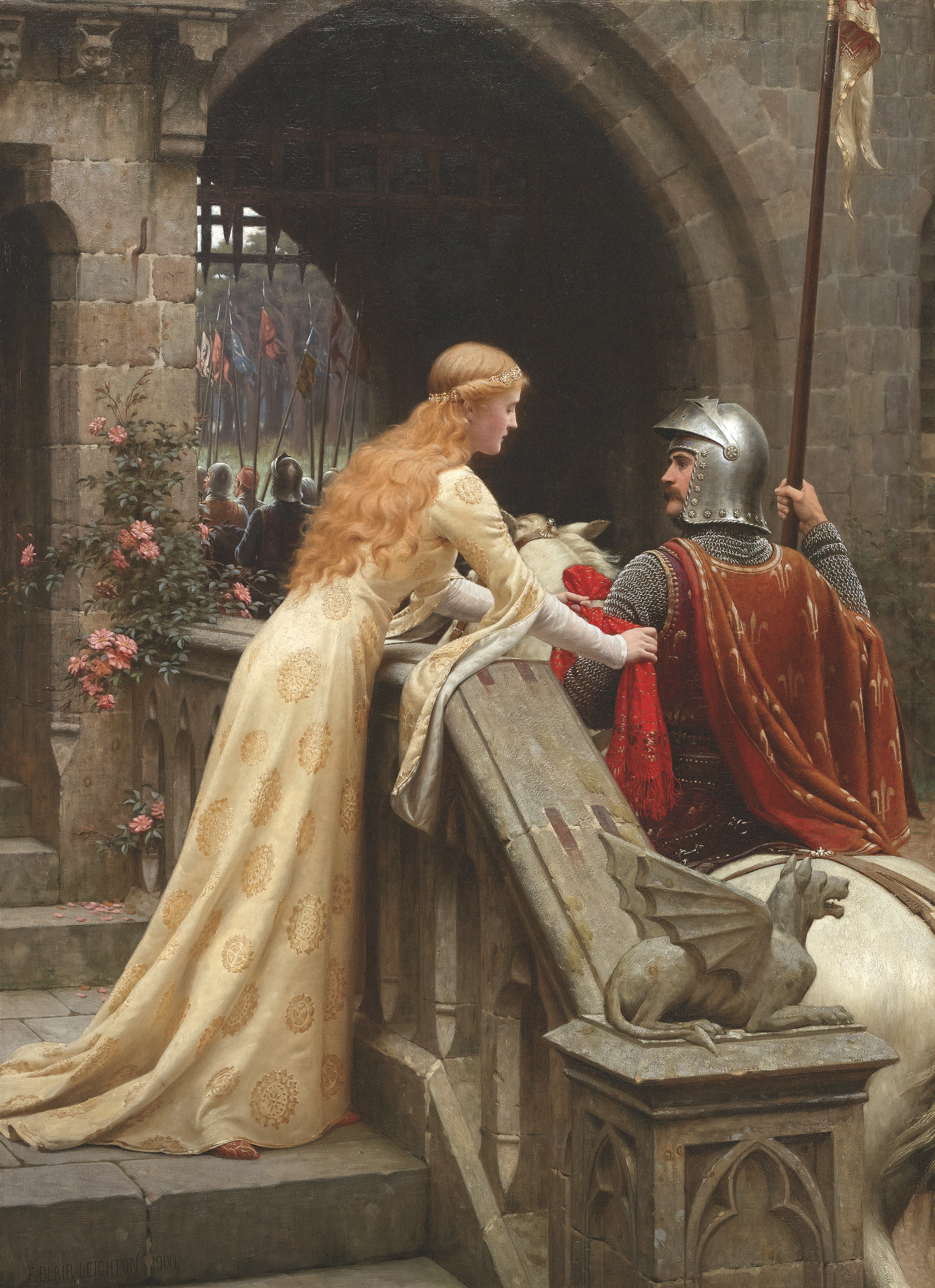
St Bridget received great revelations concerning chivalry and the great virtue of the knights that fought for Christ and Christendom. Our Lord appeared to her and said in one of her visions, taking care to emphasise what He said to her, this:

"A knight who keeps the laws of his order is exceedingly dear to me. For if it is hard for a monk to wear his heavy habit, it is harder still for a knight to wear his heavy armour".

These were the very words of our Lord to St Bridget.
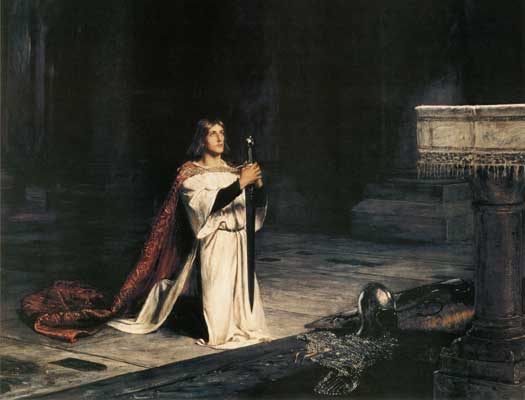


The Vigil of a knight.
St Bridget had visions from our Lord extolling Christian chivalry and the virtue of Knighthood


It was not until 1370 that Pope Urban V confirmed the rule of her order, but meanwhile Bridget had made herself universally beloved in Rome by her kindness and good works. Save for occasional pilgrimages, including one to Jerusalem in 1373, she remained in Rome until her death on 23 July 1373. She was originally buried at San Lorenzo in Panisperna before being moved to Sweden. She was canonized in 1391 by Pope Boniface IX (also confirmed by the Council of Constance in 1415).

In 1999, Pope John Paul II chose St Bridget of Sweden as Europe's co-patroness, along with St Catherine of Siena and St Teresa Benedicta of the Cross.
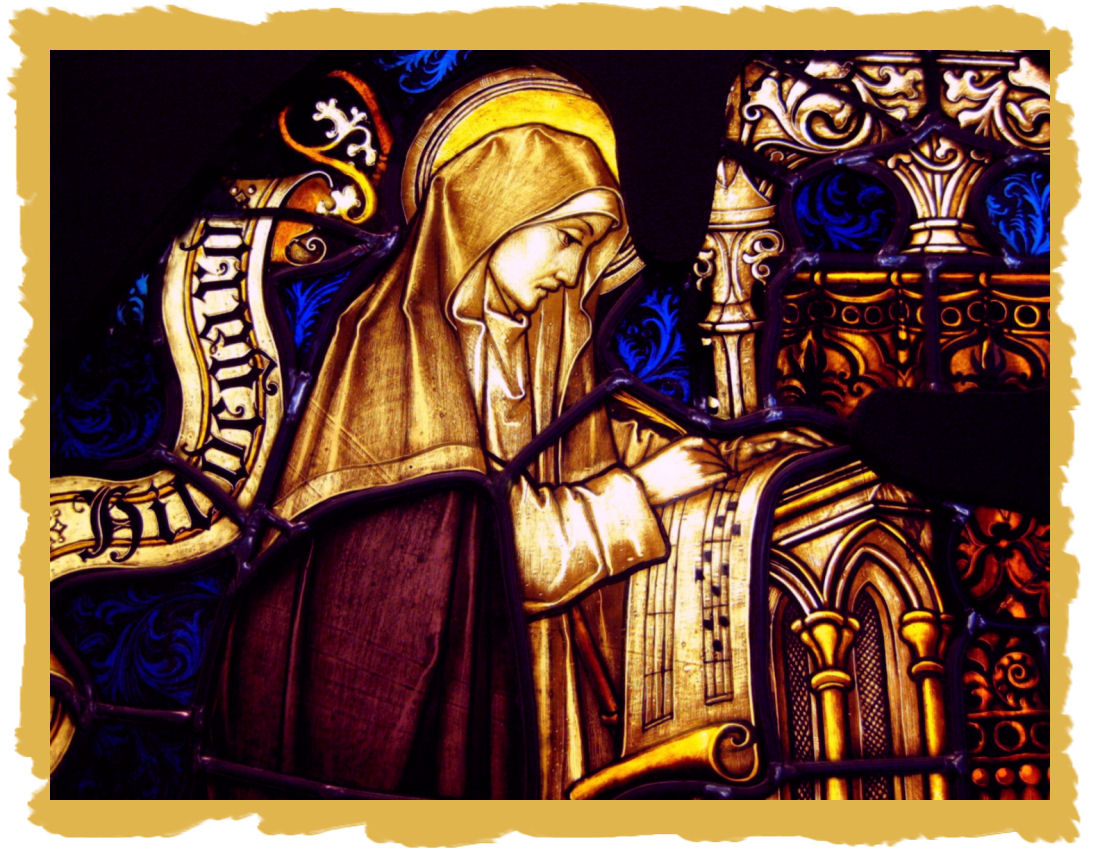


St Bridget of Sweden, pray for us!


...

7 October: Feast of the Most Holy Rosary, weapon of prayer

The Feast of our Lady of the Most Holy Rosary is a title of the Blessed Virgin Mary as the Queen of the Holy Rosary, the chaplet of prayer beads that are used to invoke the Virgin to aid us whilst meditating upon scenes in the life of her Son, JESUS CHRIST.

The Rosary developed out of the habit of lay brothers, who did the manual work and did not have time to pray the whole Monastic Office, of praying Paternosters and Ave Marias in monasteries. This habit then passed to the devout laity.

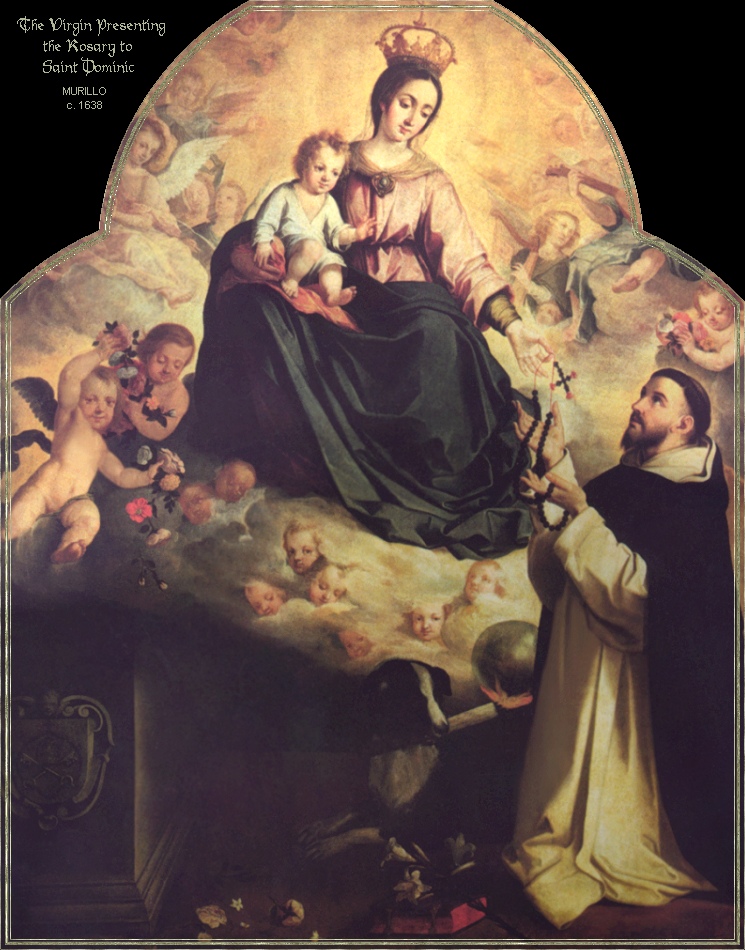
In 1208 our Lady appeared to St Dominic in the Church of Prouille, France, and gave him a chaplet of beads representing roses commending to him the devotion which had spread among the Faithful of saying Paters and Aves whilst meditating upon the life of Christ.

St Dominic then gave the Rosary to all his Friars Preachers to use in their efforts to convert the heterodox Cathars in Southern France and to call upon our Lady to assist the soldiers of Count Simon de Montfort, 5th Earl of Leicester, father of the founder of the later English Parliament, to defend Christendom from the attacks by the armies of the heterodox Cathars and Albigensians.


St Dominic receives the Holy Rosary from our Lady


On 12 September 1213, whilst St Dominic and his brethren were praying in the Church at Muret in the South of France, Count Simon and 700 knights charged out of the town to meet an invading army of 50,000 marauding heterodox Albigensians who were set upon capturing the whose of Southern France for the Albigensian heresy.

The Albigensians were a type of Manichee and they believed in euthanasia, abortion and sodomy and opposed marriage and child-birth because they believed that all material things were evil and created by an evil force. They had one Sacrament which was called the consolamentum and consisted in euthanasia by either starvation or suffocation. They had murdered Catholic missionaries sent to preach to them and murdered bishops, priests and the Papal legate who was sent to negotiate with them.

Count Simon and his knights straight into the middle of their ranks and slew their leader King Pedro of Aragon, much to the chagrin of Count Simon who wanted to defeat him but not slay him. At this the Albigensian horde fell into disarray and were routed. Our Lady, Count Simon de Montfort and the Rosary saved the day.

Ever after, the Rosary became a great weapon of prayer against evil, and especially in time of battle.

In thanks for the victory of the Battle of Muret, Count Simon built the first shrine dedicated to Our Lady of Victory.

The Rosary was prayed in 1529 at the Siege of Vienna and a great victory won under Count Nicholas von Salm against the Ottoman Turks and their Sultan Suleiman the Magnificent.

In 1571 Pope St Pius V instituted the Feast of Our Lady of Victory as an annual feast to commemorate the victory of Lepanto, off the Greek coast, the huge naval battle won by the Christian navies against the navy of the invading Muslim Turkish hosts. The Turkish navies were many times larger than the Christian navies and had been bent upon conquering the whole of Christendom and enslaving all Christians.


Allegory of the Battle of Lepanto with our Lady and the saints interceding


The victory was attributed to our Lady, as a rosary procession took place on that day in St. Peter's Square in Rome for the success of the forces of the Holy League to hold back the Muslim forces from over-running Western Europe.

In 1573, Pope Gregory XIII changed the title of this feast-day to the Feast of the Holy Rosary. This feast was extended by Pope Clement XII to the whole of the Latin Rite, inserting it into the Roman Calendar in 1716, and assigning it to the first Sunday in October.


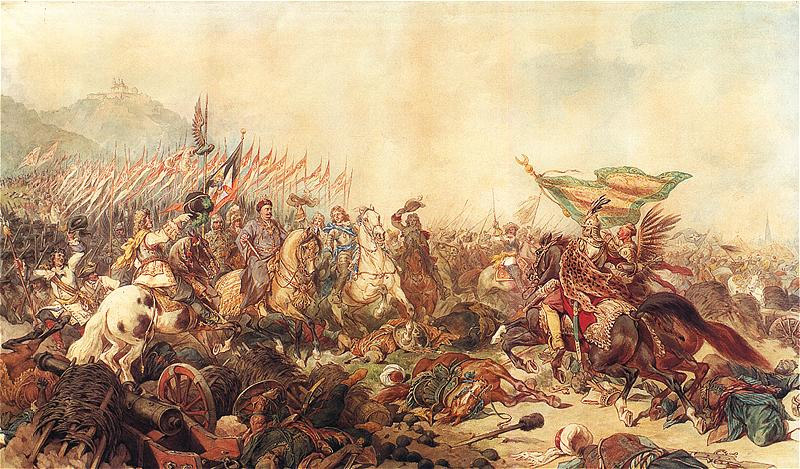
King Jan Sobieski and his army at the Battle of Vienna, 12 September 1683


On 12 September (that date again!) 1683, King Jan Sobieski, appointed commander by Roman Emperor Leopold I, and his Polish Hussars, inflicted a massive defeat upon the Turkish hosts in the Battle of Vienna. Again a Rosary campaign had preceded his victory.

Venerable Pope Innocent XI instituted the Feast of the Holy Name of Mary on 12 September to mark the victory obtained by praying to our Lady.


Kara Mustapha Pasha, the commander of the Turkish host, was unfairly executed by his own king, Sultan Mehmed II, after losing the Battle of Vienna


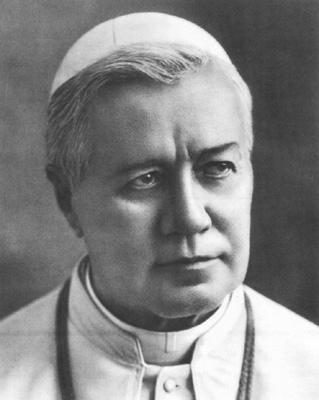
Pope St Pius X changed the date to 7 October in 1913, being the actual date of the great victory at Lepanto.

In 1969, Pope Paul VI changed the name of the feast to Our Lady of the Rosary.


Our Lady of the Most Holy Rosary, pray for us!


...

Saturday, 4 October 2008

The Sacred Military Constantinian Order of St George: investitures of new knights in Britain

This week will see investitures of new knights in the Sacred Military Constantinian Order of St George in the UK.

They take place at Brompton Oratory in London.

The investees include His Serene Highness Albert II, the Prince of Thurn und Taxis, Sir Nicholas Mander, Bart, Mark Watson-Gandy of Myrton, Baron of Myrton, and Rafe Heydel-Mankoo Esq.

The insignia of the Order, as in the gold star of a Knight of Justice (left), include the Chi-Rho symbol of the ancient Labarum, the first two letters in Greek of Christos (Christ), together with the Alpha and Omega, the first and last letters of the Greek alphabet, indicating that Christ is first and last.

Outside this are the letters IHSV representing In Hoc Signo Vinces, the Latin transliteration of the Greek words en touta nika (meaning "in this (sign) conquer") seen in the sky by the Emperor Constantine just before his victory at the Battle of the Milvian Bridge which gave him the Roman Empire and allowed him, later, to make Christianity the official religion of the Empire.

St George the Martyr, pray for us!


The Sacred Military Constantinian Order of Saint George was incorporated as a Religious Order of the Roman Catholic Church hereditary in the House of Farnese and its Bourbon heirs dating from the transfer to Francesco Farnese, Duke of Parma and Piacenza, in 1698.

In 1731 the Grand Magistery was inherited by HRH the Infante Don Carlos de Borbon y Farnese (from 1759-88, King Charles III of Spain), eldest son of King Philip V of Spain and Elisabeth of Parma, who also inherited the duchies of Parma and Piacenza from the Farnese.


Francesco Farnese, Duke of Parma


Statutes of the Order dating from the sixteenth century show that rules were confirmed and amended by the Byzantine Emperors Isaac Angelus and Michael Paleologus and the aim of the imperial founders was to revive the Guard of 50 Knights that escorted the Labarum, the Chi-rho emblazoned banner of the Emperor Constantine I.

The Constantinian Order subsequently received confirmation as a Religious-Military Order from the Holy See and, together with the Order of Malta, is the only international Catholic Order which has maintained this status unchanged to the present day.

The Order is regulated as a subject of canon law, and the succession to the Grand Magistery is governed first by the statutes of 1705, approved by Papal Brief in 1706 and the Bull Militantis Ecclesiae of 1718, and then confirmed in the statutes of 1922 approved by Papal Placet (these statutes have again been modified in 1934, 1943, 1987 and 2004).


King Charles VII of Naples (III of Spain) abdicating the throne of Naples to Ferdinand VII


In 1910 Pope St Pius X appointed the first of three successive Cardinal Protectors and, in 1913, approved a series of privileges for the chaplains of the Order. In 1915 Pope Benedict XV dedicated the Constantinian Chapel in the Basilica of Santa Croce al Flaminio, which had been built with donations from the knights, who included Monsignor Eugenio Pacelli, later Pope Pius XII. In 1916 the Pope restored the Church of Saint Anthony Abbot to the Order. In 1919 new statutes received Papal approval and Cardinal Ranuzzi de' Bianchi was appointed Cardinal Protector.

The Grand Master of the Order is HRH the Infante Don Carlos, Duke of Calabria, first cousin to HM the King of Spain.


The Grand Master of the Order,
HRH the Infante Don Carlos, Duke of Calabria,
first cousin to HM the King of Spain


St George the Martyr, pray for us!
Emperor Constantine I, pray for us!
Empress St Helena, foundress of the True Cross, pray for us!


...

Monday, 29 September 2008

Michaelmas: the Feast of St Michael the Archangel

Michaelmas is the Feast Day of St Michael the Archangel, the Captain and leader of all the Angel hosts.

There are 7 Archangels in all, but only the three mentioned in Sacred Scripture are commemorated liturgically; St Gabriel's Feast is on 24 March, and St Raphael's Feast is on 24 October (the Guardian Angels are remembered on 2 October). The other archangels, whom we know from the Book of Enoch, are Uriel, Raguel, Sariel, and Jeramiel.

The name of St Michael the Archangel, in Hebrew, means, "Who is Like God" or Quis ut Deus, in Latin.

The Golden Legend of Jacobus de Voragine, Archbishop of Genoa, written in 1275, says this of him:

"For like as Daniel witnesseth, he shall arise and address in the time of Antichrist against him, and shall stand as a defender and keeper for them that be chosen. [Daniel 10:12-13]

He also fought with the dragon and his angels, and casting them out of heaven, had a great victory. [Apocalypse 12:7-9]

He also had a great plea and altercation with the devil for the body of Moses, because he would not show it; for the children of Israel should have adored and worshipped it. [Jude 1]

He received the souls of saints and brought them into the paradise of exultation and joy.

He was prince of the synagogue of the Jews, but now he is established of our Lord, prince of the church of Jesu Christ.


And as it is said, he made the plagues of Egypt, he departed and divided the Red Sea, he led the people of Israel by the desert and set them in the land of promission, he is had among the company of holy angels as bannerer. And bearing the sign of our Lord, he shall slay by the commandment of God, right puissantly, Antichrist that shall be in the Mount of Olivet. And dead men shall arise at the voice of this same archangel. And he shall show at the day of judgment the Cross, the spear, the nails and the crown of thorns of Jesu Christ.

As to the final victory of St Michael over Antichrist, it continues:

The fourth victory is that the archangel Michael shall have of Antichrist when he shall slay him. Then Michael, the great prince, shall arise, as it is said Danielis xii.: “He shall arise for them that be chosen as a helper and a protector, and shall strongly stand against Antichrist”. And after, as the Gloss saith: “Antichrist shall feign him to be dead, and shall hide him three days,” and after, he shall appear saying that he is risen from death to life, and the devils shall bear him by art magic, and shall mount up into the air, and all the people shall marvel and worship him. And at the last he shall mount up on the Mount of Olivet, and when he shall be in a pavilion, in his siege [seat - ed], entered into that place where our Lord ascended, Michael shall come and shall slay him. Of which victory is understood, after St. Gregory, that which is said in the Apocalypse, the battle is made in heaven.

This word of the treble battle in heaven is expounded of the battle that he had with Lucifer when he expulsed him out of heaven, and of the battle that he had with the devils that torment us.”


There is a great devotion to St Michael in the Eastern Church.


St. Michael is the great warrior against Satan, and ought to be invoked in times of temptation, particularly by use of the famous Prayer to St. Michael:

SANCTE MICHAELE ARCHANGELE, defende nos in proelio, contra nequitiam et insidias diaboli esto praesidium. Imperit illi Deus, supplices deprecamur: tuque princeps militiae caelestis, Satanam aliosque spritus malignos, qui ad perditionem animarum pervagantur in mundo, divina virtute in infernum detrude. Amen

"ST MICHAEL THE ARCHANGEL, defend us in battle; be our safeguard against the wickedness and snares of the Devil. May God rebuke him, we humbly pray, and do Thou, O Prince of the Heavenly Host, by the power of God, cast down into Hell, Satan, and all the other evil spirits, who wander throughout the world, seeking the ruin of souls. Amen".

This great champion of Israel has made many important appearances throughout the years. In A.D. 590, during the reign of Pope Gregory, a great pestilence swept through Rome. During a procession and litanies led by the Holy Father there, St. Michael appeared over the Castel Sant'Angelo - a building which was formerly Hadrian's tomb, but which was converted to papal use, connected to the Vatican by a long tunnel.

A statue of St. Michael sits atop the Castle to this day.


Castel Sant'Angelo in Rome


Mont St. Michel was built off the coast of Normandy, France, in honour of St. Michael and stands gloriously, to this day. Pious tradition tells us that St Michael appeared there in 708 to St. Aubert, Bishop of Avranches.


Mount St Michael lies of the coast of Cornwall and is a smaller version of Mont St Michel.

St Michael also appeared, together with Sts Margaret and Catherine, to St Joan of Arc (d.1431) when she was thirteen years old, encouraging her to assist King Charles VII of France to defeat the English who were usurping part of the Kingdom of France. When she was later put on trial for sorcery by the Burgundians (who were allies of the English), she told her judges, “I saw them with these very eyes, as well as I see you”.

St. Michael is usually depicted in Roman armour as a Roman knight-at-arms with spear, slaying the Devil. He is patron of knights and soldiers, for the sick, and for a holy death.

His feast day gives the name to the season of Michaelmas (St Michael’s Mass) which is a season of the year starting on his Feast Day. It is still used in the Law as the name of a Law Term, the Autumn term.

The Michaelmas Daisy is named so because it blooms at this time of the year. Geese used to be plentiful at this time, too, as the hunting season started at this time and so they were often eaten – hence the name “Michaelmas goose”.


Michaelhouse at Cambridge University was once a great College and St John Fisher was once its head and made it famous for learning. Part of the old buildings are now a cafe and church centre attached to the Anglican Church of Great St Marys.


St Michael the Archangel, pray for us in the day of battle!


...

The Protestant Reformers themselves believed most of the Roman Marian dogmas...

It is a simple historical fact that the original Protestant Reformers accepted almost every major Marian doctrine and considered these doctrines to be both scriptural and fundamental to the historic Christian Faith.

Many modern Protestants object to devotion to the Virgin Mary, or at least, to such devotion as is shown in such feasts as that of our Lady of Sorrows or the Seven Sorrows of our Lady. They claim to find it "disturbing" and seem unable to understand it.

Well, they had better have it out with the founders of their Protestant movement because the founders believed in the special position of the Blessed Virgin Mary.

The evidence is not far to seek. Let us examine some of it.

Martin Luther

The Blessed Virgin Mary as the Mother of God

Luther maintained this belief throughout the whole of his life.

"She is rightly called not only the mother of the man, but also the Mother of God ... It is certain that Mary is the Mother of the real and true God."1


The Perpetual Virginity of the Blessed Virgin Mary


Martin Luther dressed in priestly garb


He also believed in and taught that Mary's perpetual virginity ought to be held by all Bible-believing Christians and, tellingly, he interpreted Galatians 4:4 to mean that Christ was “born of a woman” without the seed of a husband.

"It is an article of faith that Mary is Mother of the Lord and still a Virgin."2

The Immaculate Conception of the Blessed Virgin Mary

Luther defended this doctrine, now seen by most to be a specifically Roman Catholic doctrine, until his death. Like St Augustine, he believed that Mary's divine maternity necessarily implied her perpetual virginity and conception without Original Sin.

"But the other conception, namely the infusion of the soul, it is piously and suitably believed, was without any sin, so that while the soul was being infused, she would at the same time be cleansed from original sin and adorned with the gifts of God to receive the holy soul thus infused. And thus, in the very moment in which she began to live, she was without all sin..."3

The Assumption of the Blessed Virgin Mary into heaven

Luther said of this doctrine:

"There can be no doubt that the Virgin Mary is in heaven. How it happened we do not know."4

Due reverence for the Blessed Virgin Mary

Luther opposed the idea of human mediation and intercession but nevertheless continued to proclaim that Mary should be revered and made a point of preaching on her feast days.

"The veneration of Mary is inscribed in the very depths of the human heart."5


In his last sermon at Wittenberg, Luther preached:

"Is Christ only to be adored? Or is the holy Mother of God rather not to be honoured? This is the woman who crushed the Serpent's head. Hear us. For your Son denies you nothing."6

John Calvin

Calvin always referred to the Blessed Virgin Mary as La Sainte Vierge, the “Holy Virgin”.

He wrote of her:

“Elizabeth called Mary Mother of the Lord, because the unity of the person in the two natures of Christ was such that she could have said that the mortal man engendered in the womb of Mary was at the same time the eternal God.”7


“Helvidius has shown himself too ignorant, in saying that Mary had several sons, because mention is made in some passages of the brothers of Christ.”8


John Calvin dressed in priestly garb


Calvin translated “brothers” just as the Catholic Church does, to mean cousins and other relatives.

“It cannot be denied that God in choosing and destining Mary to be the Mother of his Son, granted her the highest honour.”9

“To this day we cannot enjoy the blessing brought to us in Christ without thinking at the same time of that which God gave as adornment and honour to Mary, in willing her to be the mother of his only-begotten Son.”10

Ulrich Zwingli

Even Ulrich Zwingli, had this to say about the Blessed Virgin Mary:

“It was given to her what belongs to no creature, that in the flesh she should bring forth the Son of God.”11

"I firmly believe that Mary, according to the words of the Gospel, as a pure Virgin brought forth for us the Son of God and in childbirth and after childbirth forever remained a pure, intact Virgin.”12

Zwingli used Exodus 4:22 to defend the doctrine of Mary's perpetual virginity.

“I esteem immensely the Mother of God, the ever chaste, immaculate Virgin Mary.”13

“Christ ... was born of a most undefiled Virgin.”14

“It was fitting that such a holy Son should have a holy Mother.”15

“The more the honour and love of Christ increases among men, so much the esteem and honour given to Mary should grow.”16


Ulrich Zwingli dressed in priestly garb


The Protestant Reformers rejected Marian mediation because of their rejection of all human mediation but they did not reject most of the other Marian dogmas which were then taught by the Roman Catholic Church.

The simple reason for this is that they could not avoid the fact that the honour and reverence due to the Blessed Virgin is plainly evident, to any objective eye, from Scripture.


References:
1 Pelikan, J (ed), The Works of Martin Luther, Concordia: St. Louis, volume 24, 107.
2 Ibid, Volume 11, 319-320.
3 Ibid, Volume 4, 694.
4 Cole, William J, The Works of Martin Luther, 10, p. 268.
5 Ibid, 10, III, p.313.
6 Pelikan, J, Op. Cit., Volume 51, 128-129.
7 Calvin, J, Opera, Braunshweig-Berlin, 1863-1900, Volume 45, 35.
8 Leeming, Bernard, “Protestants and Our Lady”, Marian Library Studies, January 1967, p.9.
9 Calvin, J, Op. Cit., Volume 45, 348.
10 Calvin, J, A Harmony of Matthew, Mark and Luke, Edinburgh: St Andrew’s Press, 1972, p.32.
11 Zwingli, U, In Evangelii Lucae, Opera Completa, Zurich, 1828-42, Volume 6, I, 639.
12 Zwingli, U, Opera, Corpus Reformatorum, Volum 1, 424.
13 Stakemeier, E, in De Mariologia et Oecumenismo, Balic, K (ed), Rome, 1962, p.456.
14 Ibid.
15 Ibid.
16 Zwingli, U, Opera, Corpus Reformatorum, Volume 1, 427-428.


Gaude Maria Virgo, cunctas haereses tu sola interemisti in universo mundo

Rejoice, O Virgin Mary, to thou only has it been given to destroy all heresies in the whole world


[From The Little Office of the Blessed Virgin Mary]


...

Friday, 26 September 2008

Saint Maurice: martyr, black saint, Knight Commander of the Theban Legion and Patron Saint of the Holy Roman Empire

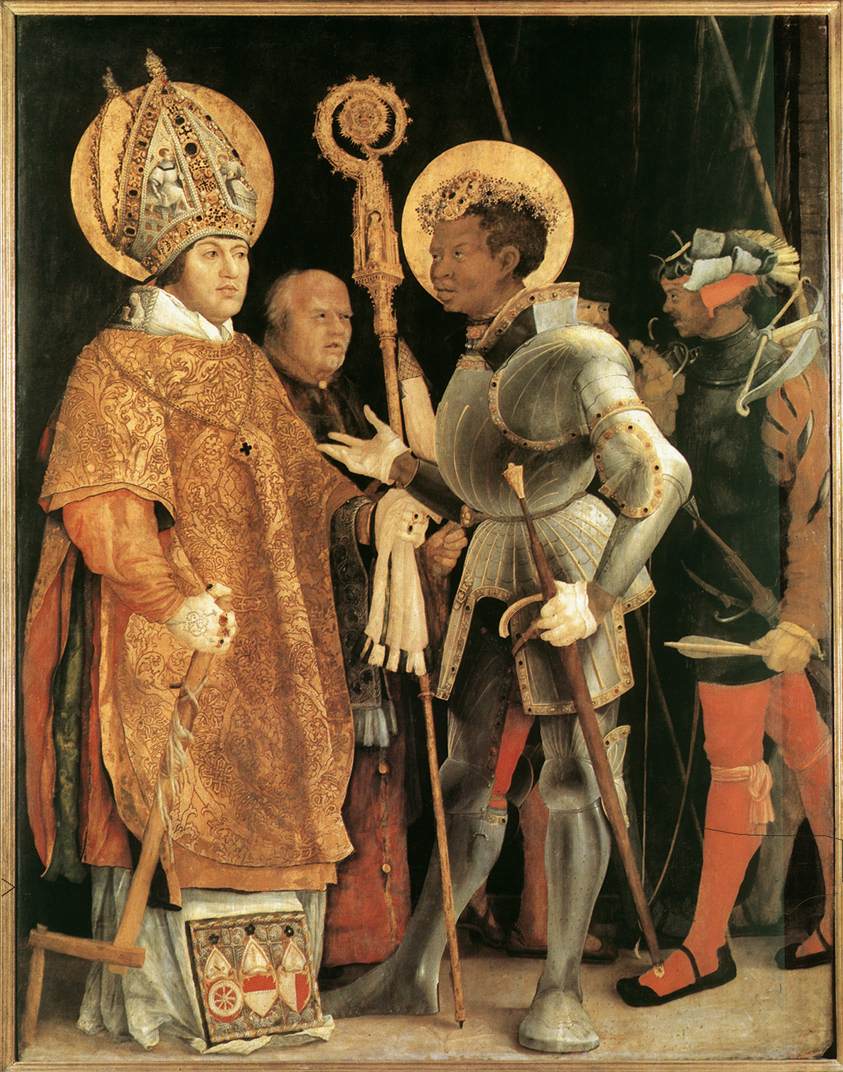
Saint Maurice (Moritz or Mauritius), pictured here with St Elmo, was the Knight Commander of the famous Roman Theban Legion in the 3rd century.

His Feast Day is 22 September.

The Legion, almost entirely composed of Christians, was ordered from Thebes in Egypt to Gaul to assist Maximian.

Marcus Aurelius Valerius Maximianus Herculius (c.250-c.310), commonly referred to as Maximian, was Caesar (junior Roman Emperor) from July 285 and Augustus (senior Roman Emperor) from 1 April 286 to 1 May 305. He shared the latter title with his senior co-emperor, Diocletian, and they made a formidable duo in persecuting Christians.

Maximian established his residence at Trier but spent most of his time on campaign. He spent the late summer of 285 suppressing the Bagaudae, rebels in Gaul. From 285 to 288 he fought against Germanic tribes along the Rhine frontier. Together with Diocletian, he ran a scorched earth campaign deep into the territory of the Alamanni tribes in 288, temporarily relieving the Rhenish provinces from the threat of Germanic invasion.


Bust of the Christian-persecuting Roman Emperor Diocletian


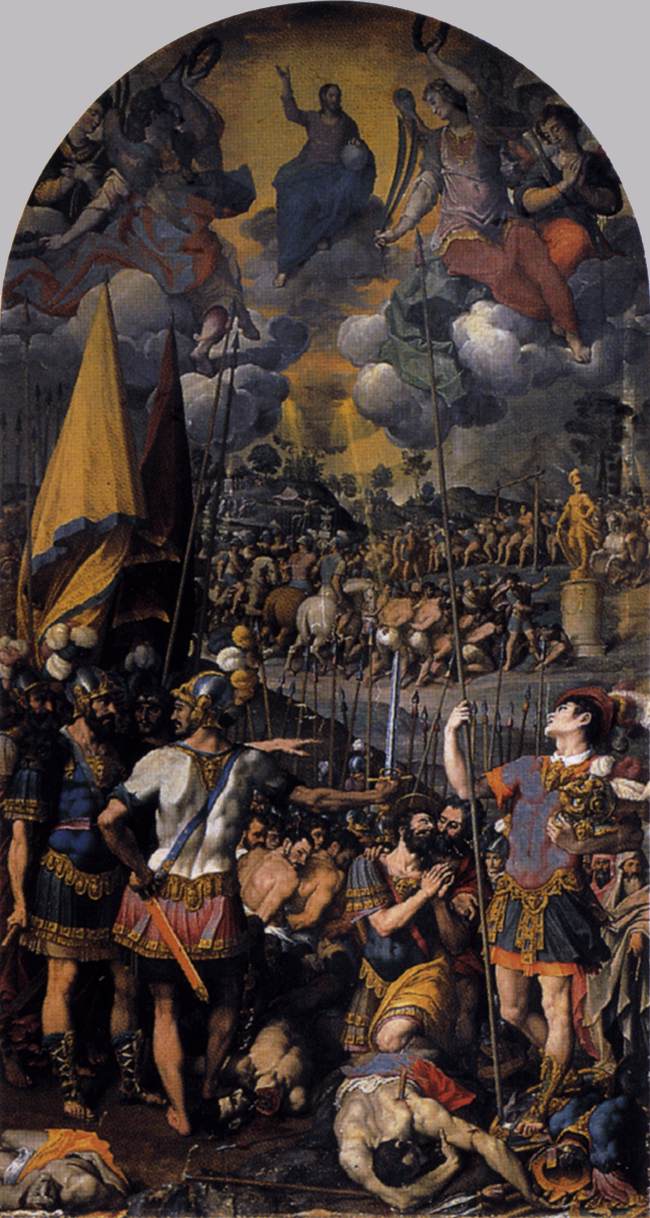
However, when Maximian ordered the Theban Legion to attack local Christians, they refused and Maximian ordered them to be punished with the savage punishment of decimation, whereby every tenth man was randomly executed.

More such orders followed but they still refused, encouraged by Maurice, and they were further punished. Finally, in response to their refusal to use violence against fellow Christians, Maximian ordered all the remaining members of the 6,600 strong Legion to be executed. This took place in Agaunum, which is now Saint Maurice-en-Valais, site of the Abbey of Saint Maurice-en-Valais, in Switzerland.

In the East of Switzerland is another St Moritz, the famous skiing resort, also named after St Maurice of Agaunum.

Near Agaunum, in a place still identifiable as a former temple to Mercury, god of travellers, a revelation led to the discovery of the bones of the Agaunum martyrs during the time of Theodore, Bishop of Octodurus (now Martigny), who was in office in 350 AD.

Their martyrology was written by Eucherius, Bishop of Lyon, who died in 494 AD.

He wrote:

"We often hear, do we not, a particular locality or city is held in high honour because of one single martyr who died there, and quite rightly, because in each case the saint gave his precious soul to the most high God. How much more should this sacred place, Agaunum, be reverenced, where so many thousands of martyrs have been slain, with the sword, for the sake of Christ."

The actual site of the martyrdom (or of the cache of bones) was pointed out to pilgrims as the "true place" the vrai lieu, a name it still carries, as Verroliez.

In 515, the basilica on the site became the centre of a monastery built on land donated by Sigismund of Burgundy, the first king of the Burgundians to convert from Arianism to Catholic Christianity.


The Bell tower of the Abbey of St Maurice in St Maurice-en-Valais, Switzerland


The liturgy at the Abbey, known as the laus perennis, "perpetual praise", of relays of choirs, was an innovation for Western Europe, imported from Constantinople. It was distinctive to the Abbey of St. Maurice and the practice spread widely from there.

St. Maurice's Abbey at Agaunum was the chief abbey of the Burgundian kingdom.

St Maurice became a patron saint of the Holy Roman Emperors.

In 926, Roman Emperor Henry I (919–936), ceded the present Swiss canton of Aargau to the Abbey, in return for St Maurice's lance, sword and spurs.

Aargau is the region in which is found the original seat of the Habsburgs, later the most famous of the Holy Roman Emperors.


St Maurice as a mounted Knight


The sword and spurs of Saint Maurice formed part of the regalia used at coronations of the Holy Roman Emperors (and later Austro-Hungarian Emperors), and were among the most important insignia of the imperial throne.

Moreover, the Holy Roman Emperors were traditionally anointed before the altar of Saint Maurice in St. Peter's Basilica, Rome.


The Martyrdom of St Maurice and the Theban Legion


Emperor Henry I the Fowler held a royal court gathering (Reichsversammlung) at Magdeburg. At the same time the Mauritius Kloster, in honour of St Maurice, was founded.

In 961, Emperor Otto the Great built and enriched the cathedral at Magdeburg in preparation for his own tomb. In that year, in the presence of all of the nobility, on the vigil of Christmas, the body of St. Maurice was conveyed to Emperor Otto at Regensburg along with the bodies of some of the saint's companion legionaries. They were then conveyed to Magdeburg, received with great honour and are still venerated there.

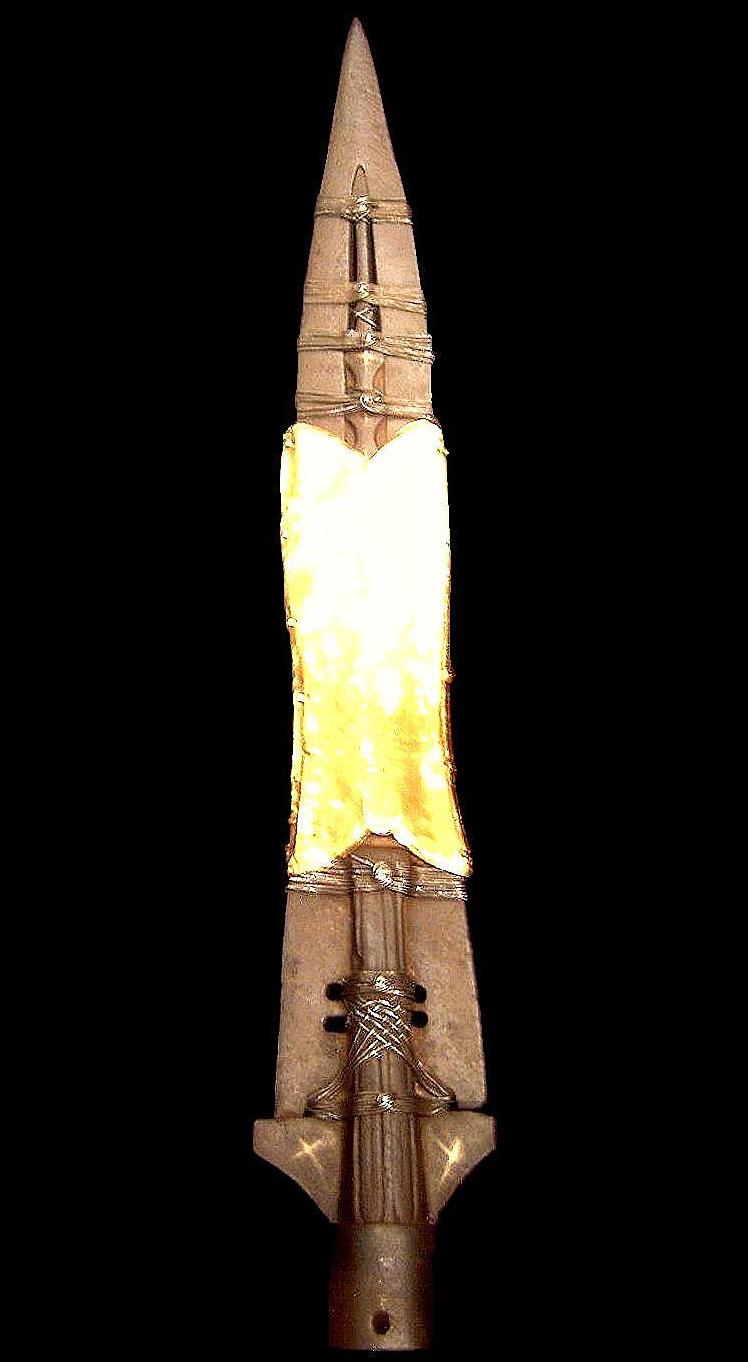
Maurice is traditionally depicted in full armour, often emblazoned with a red cross. In folk culture he has become connected with the legend of the "Spear of Destiny", which he is supposed to have carried into battle; his name is engraved on the Holy Lance of Vienna, one of several relics claimed as the spear that pierced the side of our Lord upon the Cross.


The Holy Lance of Vienna.
It is said to be the spear by which Longinus pierced the side of Christ.
Longinus soon converted to Christianity and was later venerated as a saint


Hundreds of religious houses are dedicated to him as well as chivalric orders, including the famous Burgundian Order of the Golden Fleece which later became the heirloom of the Holy Roman Emperors, and the Order of Saint Maurice. Many towns have been named after him, also.


Emperor Franz Joseph
in the robes of the Grand Master of the Most Illustrious Order of the Golden Fleece,
one of the grandest orders of chivalry in the Empire and dedicated to St Maurice


The Order of St Maurice was founded in 1434 by Amadeus VIII, Duke of Savoy, who became Antipope Felix V. The Order declined, but in 1572 was re-established by Pope St Pius V at the instigation on the then Duke of Savoy.

In 1572 Pope Gregory XIII merged the Order of Saint Lazarus, a crusading order of leper-knights who tended other lepers as well as defended the Holy Land, with the Order of St Maurice.


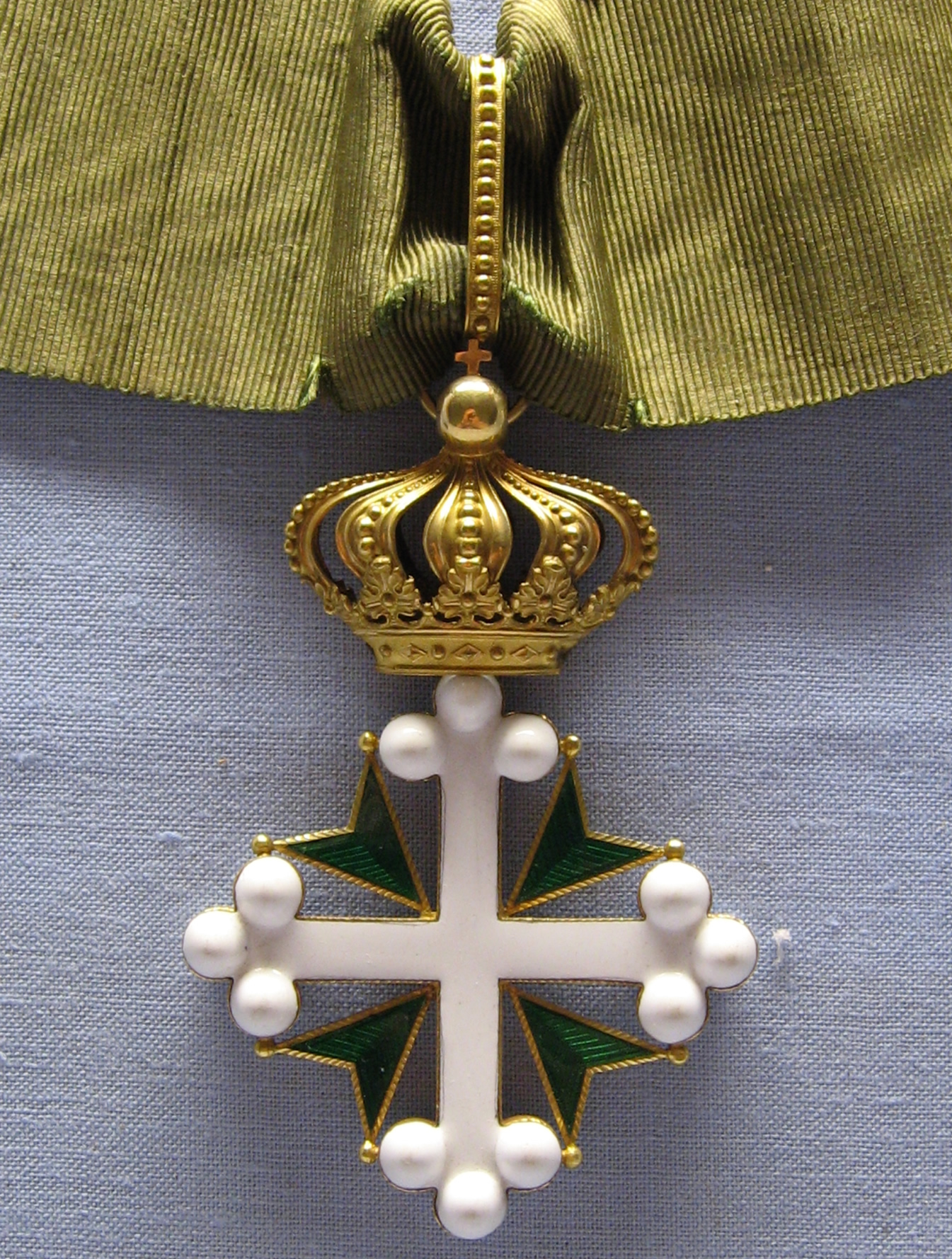
The Knight Commander's Cross of the Order of St Maurice and St Lazarus.
The white cross is a cross botonny (the cross of St Maurice). The green Maltese cross is that of St Lazarus.


The new Order of St Maurice and St Lazarus was charged to defend the Holy See as well as to continue to assist lepers. The war galleys of the Order fought against the Turks and the Barbary pirates. When leprosy again broke out the Order founded, in 1773, a hospital in Aosta in Savoy.

The images of Saint Maurice in the Cathedral of Magdeburg show him as a black man and there is evidence to indicate that Maurice was Egyptian. Thus it is that the patron saint of the Holy Roman Empire is, in fact, a black man, indeed a black Roman Knight Commander (or Legatus) of the great Roman Legion called “The Theban Legion” celebrated in the Roman Martyrology as the Martyrs of the Theban Legion.


Medieval statue of St Maurice in Magdeburg Cathedral


All Catholics, not least black Catholics, may be justly be proud of this great soldier-saint and martyr of the Church.

St Maurice, Knight Commander of the Theban Legion, pray for us


...

Wednesday, 24 September 2008

Stabat Mater: a meditation

Imagine your own most beloved daughter or sister, imagine her as perfect as you could ever imagine any woman to be, and imagine that she has suffered the loss of a most beloved child and in a manner that none but the most strong-minded person could ever bear. Imagine, too, that she loved her child more than can be imagined and that you knew and had seen this.

You will still not have any more than but one small inkling of the ocean of pain and suffering caused to the all-loving and all-compassionate Virgin Mother of God at seeing her Son crucified upon the Cross - a Son Whom she knew to be truly her own Son and, at the same time, the very God Himself - innocent, pure, holy and perfect.

From the moment of the Annunciation until the Crucifixion and Resurrection, Mary lived every moment of her life for, and in compassion with, her Son. Her devotion was total and all-absorbing.

We know from our own experience the intense devotion of mothers for their children, a devotion so intense that they can sometimes even sense the suffering of their child from a distance.

Yet there never was a mother who had the same degree of intense devotion for her child as the Blessed Virgin Mary.

We can hardly imagine the suffering of a mother who sees her child suffer and die.

How much the less, then, can we even begin to imagine the intense suffering of the Blessed Virgin as she saw her own Son suffer and die, albeit He was the very perfection and personification of innocence. So great was her suffering that most other mortals could not endure it and would run from it or die of it.


She did neither - although she suffered pain as grim and dire as death itself. Yet she lived. For not only did she suffer more intensely than any other mother, or human being, but she also endured that suffering, uncomplaining and without flinching or resiling, to the end, tasting every bitter morsel for the sake of her Son and for the Redemption of mankind from sin.

In this way she truly was a Co-redemptrix with her Son, not in the sense that she could redeem mankind by any power of her own, but, to the exact contrary, solely by the sovereign command of God Himself, Who asked of her to suffer and compassionate with Him to the bitter end, for the sake of the salvation of all mankind. And so she did, obedient to her Son, Who was also her Lord, Master and God.


The mystery of the suffering of the Blessed Virgin is great indeed - unfathomable - and it is so because that is what God Himself desired and ordained.

In this mystery we see many things but above all we see the extraordinary and limitless humility of God, the God who chose to allow His own creation to participate in His own redemptive sufferings and to share in the sacrifice which only God could provide the grace to achieve.

See that? The Supreme Creator says to a mere created being "I desire that you should suffer with Me and so share in the Redemption that only I, God, could ever have provided for".

He let us do what only He, God, could otherwise do! See the remarkable humility of God so to humble Himself before His own creation, mere man?

This, indeed, is how God has arranged for us to become one with Him and to share eternal life with Him, for He has provided that we - mere mortals and creatures - should partake of the extraordinary act that is required to redeem us from the aboriginal act of defiance and sin that severed the first man from God.

That extraordinary act is the suffering of God upon a Cross to redeem us. Now He allows us to participate in that redemptive act and to add our own sufferings to His in payment of the debt of sin. This is compassion - to suffer with another from the Latin cum ("with") and passio ("passion" meaning suffering).

Only one creature could suffer with Him to the full and that was the Blessed Virgin Mother of God, our Lady St Mary. And she, with meekness and humility, accepted this terrible burden when she responded to the Holy Spirit with the words fiat mihi secundum verbum tuum - "let it be done unto me according to Thy word" - although, of course, she would have uttered it in a dialect of Aramaic. Her fiat shows that she is the utter antithesis of a Feminist.


We, however, are given the opportunity to share some of that redemptive suffering, if we are willing to take it on. We do so by offering up our own weak sufferings to be joined with His and hers.

We do this best when we offer our daily sufferings up at the Holy Sacrifice of the Mass when the sacrifice of the Cross on Calvary is re-enacted in an unbloody manner.

We do this by living the Christian year which is but the annual re-commemoration of the life of Christ from Advent to Nativity, from Cross and Resurrection to the Advent of the Holy Ghost.

This, too, is what our Lady did in her own life, at every instant, as she lived, with perfect compassion and devotion, the life of her Son from the Annunciation to the Cross and Resurrection, unto the very last.

This she did with the greatest intensity at the Crucifixion when, as the ancient Sequence has it:


Stabat mater dolorosa
iuxta Crucem lacrimosa,
dum pendebat Filius.

Cuius animam gementem,
contristatam et dolentem
pertransivit gladius.

O quam tristis et afflicta
fuit illa benedicta,
mater Unigeniti!

Quae maerebat et dolebat,
pia Mater, dum videbat
nati poenas inclyti.


At the Cross her station keeping,
stood the mournful Mother weeping,
close to Jesus to the last.

Through her heart, His sorrow sharing,
all His bitter anguish bearing,
now at length the sword has passed.

O how sad and sore distressed
was that Mother, highly blest,
of the sole-begotten One.

Christ above in torment hangs,
she beneath beholds the pangs
of her dying glorious Son.


We must stand in awe of such a mother, second to none in courage, devotion, patience, strength, grace and love.

If we pray to her and ask her for help, she will ask her Son to give us some of that immense strength which the Lord Himself gave to her.

We can, too, meditate upon her silent, quiet, enduring, powerful but always womanly, strength of will, character and integrity and thank God for it.

I find that I can sometimes do this a little better when I hear the Stabat Mater of Giovanni Battista Pergolesi, especially those opening bars which seem to speak, in their solemn beating as of a suffering human heart, so eloquently of the constancy and loyalty of the suffering Mother of God, standing beneath the Cross. Prepared for the worst and ready to endure it to the bitter end, this greatest of women shows a more perfect long-suffering than even the toughest of soldiers ever exhibited - yet she never loses even the tiniest portion of her complete femininity.

Listen to Pergolesi's great work here, in the powerful voices of soprano, Emma Kirkby, and countertenor, James Bowman:


...