Wednesday, 10 February 2010

Why revolution is always evil and was the very first sin (3)

This is further reinforced by the principles of just war.

As St Thomas teaches (Summa Theologica, II-II, Q.40, A.1):

'In order for a war to be just, three things are necessary.

First, the authority of the sovereign by whose command the war is to be waged. For it is not the business of a private individual to declare war, because he can seek for redress of his rights from the tribunal of his superior. Moreover it is not the business of a private individual to summon together the people, which has to be done in wartime. And as the care of the common weal is committed to those who are in authority, it is their business to watch over the common weal of the city, kingdom or province subject to them. And just as it is lawful for them to have recourse to the sword in defending that common weal against internal disturbances, when they punish evil-doers, according to the words of the Apostle (Romans 13:4): "He beareth not the sword in vain: for he is God's minister, an avenger to execute wrath upon him that doth evil"; so too, it is their business to have recourse to the sword of war in defending the common weal against external enemies. Hence it is said to those who are in authority (Psalm 81:4): "Rescue the poor: and deliver the needy out of the hand of the sinner"; and for this reason Augustine says (Contra Faust. xxii, 75): "The natural order conducive to peace among mortals demands that the power to declare and counsel war should be in the hands of those who hold the supreme authority".

Secondly, a just cause is required, namely that those who are attacked, should be attacked because they deserve it on account of some fault. Wherefore Augustine says (QQ. in Hept., qu. x, super Jos.): "A just war is wont to be described as one that avenges wrongs, when a nation or state has to be punished, for refusing to make amends for the wrongs inflicted by its subjects, or to restore what it has seized unjustly".

Thirdly, it is necessary that the belligerents should have a rightful intention, so that they intend the advancement of good, or the avoidance of evil. Hence Augustine says (De Verb. Dom. [actualiter Can. Apud. Caus. xxiii, qu. 1]): "True religion looks upon as peaceful those wars that are waged not for motives of aggrandizement, or cruelty, but with the object of securing peace, of punishing evil-doers, and of uplifting the good". For it may happen that the war is declared by the legitimate authority, and for a just cause, and yet be rendered unlawful through a wicked intention. Hence Augustine says (Contra Faust. xxii, 74): "The passion for inflicting harm, the cruel thirst for vengeance, an unpacific and relentless spirit, the fever of revolt, the lust of power, and such like things, all these are rightly condemned in war".'

Thus it could not be clearer:

Only the legitimate ruler has the right to declare war.

No private citizen has that right.


Edouard Manet. Execution of Emperor Maximilian. 1867.
HIRH Archduke Maximilian of Austria, brother of the Emperor Franz Josef, was invited by the people and government of Mexico to become their emperor. He agreed. But a revolution came, overthrew him and cruelly executed this most mild of men. As so often, the idle, heartless and faithless mob lean on the wall vainly watching their own sovereign being shot, too dull and stupid to realise that it also meant the death of their own peace and freedom - as indeed proved exactly so. Mexico went from bad to worse and eventually revolutionary government banned all religion and massacred Christians. It was illegal for clergy to wear clerical dress. The Institutional Revolutionary Party (PRI) was only finally thrown out of government in 2002. Even now, much of Mexico is a poverty-stricken, chaotic, crime-ridden backwater ruled by inept rulers.


A private body of men do not have that right and if they usurp it then they are making themselves rulers or kings which they have no right to do . Indeed, it is a defiance of God who is the author of all authority.

If, however, a legitimate king were unlawfully exiled or deposed then he could command his subjects to make war to restore him and, if the war fulfilled the other just war criteria, then they could - and indeed probably should - do so.

Thus the following, being restorations, qualify as just (if, where appropriate, the other just war criteria are met):

  • The Incarnation of Jesus Christ
  • The Resurrection of Jesus Christ
  • The Jacobite uprising
  • The uprisings against the usurping Bonaparte
  • The Carlist uprising in Spain against the usurping Isabellinist liberals
  • The uprising of the Russian Whites against the Communist Reds
  • The uprising of the Mexican Cristeros against the Communists
  • The uprising of President Gabriel Garcia Moreno in Ecuador against the usurping Freemasons
  • The uprisings in Eastern Europe against the usurping Communist regimes


The Battle of Prestonpans in which the Jacobites routed the Hanoverian forces.
The Jacobite uprising was a lawful - and very nearly successful - attempt to restore the rightful ruler. It was thus a restoration and not a revolution. The Hanoverians had no right to rule, were usurpers and there were 57 claimants (all Roman Catholic) with a better right to rule Britain than King George I.
However, by the time of King George III, proportionality, unlikelihood of success and the benevolence of the King caused the Jacobite dynasty to relinquish any claim and so an uprising would have been, by just war principles, unjust. Flora MacDonald herself supported King George III against the American revolutionaries. Modern Jacobites acknowledge and loyally obey the Queen but reserve a continuing reverence and respect for the older, senior line.


And the following were manifestly unjust rebellions against authority:

  • The revolt of the Devil
  • The trial, judgment and Crucifixion of Jesus Christ
  • The Protestant Reformation - that great source of evil and revolution ever since
  • The English Revolution of 1642
  • The so-called "Glorious Revolution" of 1688
  • The American Revolution of 1776
  • The French Revolution
  • The political revolutions of the 19th century against popes and monarchs
  • The Italian nationalist revolution
  • The Nazi revolution
  • All Communist revolutions: Lenin, Stalin, Mao, Pol Pot etc
  • The Irish nationalist rebellions
  • The youth "revolution" of the 1960s
  • The rebellions against morality that have followed ever since

The logic is quite simple:

Revolution - immoral and evil

Restoration - moral and good

Rebellion is sin and sin is rebellion.

And revolution is no more than a continuation of the Devil's arrogant claim out of which all evil began: non serviam - "I shall not serve".

Goodness, humanity and justice flow from service and thus all good men should be ever-ready to say: serviam - I shall serve.

The crest and motto of HRH the Prince of Wales - Ich Dien - I serve.
And that is what all rulers and kings must do.

...

Why revolution is always evil and was the very first sin (2)

For the traditional Christian it is even clearer.

He acknowledges, as does St Thomas, that no subject has the right to overthrow the legitimate, constitutional monarch or government.

And the monarch does not become "illegitimate" simply because some of his subjects begin to think that he is.

If it can be shown that the ruler is an usurper, who made himself king or governor without regard to the lawful constitution of the state, then he can be overthrown and the real king or governor restored.

Restoration is legitimate but revolution is always evil.

And even restoration may only be attempted if the other just war criteria are met e.g. proportionality or likelihood of success.

St Thomas says this of rebellion:

"[45] If the excess of tyranny is unbearable, some have been of the opinion that it would be an act of virtue for strong men to slay the tyrant and to expose themselves to the danger of death in order to set the multitude free (5). An example of this occurs even in the Old Testament. For a certain Aioth slew Eglon, King of Moab, who was oppressing the people of God under harsh slavery, thrusting a dagger into his thigh; and he was made a judge of the people (6).

[46] But the opinion is not in accord with apostolic teaching. For Peter admonishes us to be reverently subject to our masters, not only to the good and gentle, but also to the froward: “For if one who suffers unjustly bear his trouble for conscience’ sake, this is grace” (7). Wherefore when many emperors of the Romans tyrannically persecuted the faith of Christ, a great number both of the nobility and the common people were converted to the faith and were praised for patiently bearing death for Christ. They did not resist although they were armed, and this is plainly manifested in the case of the holy Theban legion (8). Aioth, then, must be considered rather as having slain a foe than assassinated a ruler, however tyrannical, of the people. Hence in the Old Testament we also read that they who killed Joas, the King of Juda, who had fallen away from the worship of God, were slain and their children spared according to the precept of the law (9).

[47] Should private persons attempt on their own private presumption to kill the rulers, even though tyrants, this would be dangerous for the multitude as well as for their rulers. This is because the wicked generally expose themselves to dangers of this kind more than the good, for the rule of a king, no less than that of tyrant, is burdensome to them, since, according to the words of Solomon: “A wise king scattereth the wicked” (10). Consequently, by presumption of this kind, danger to the people from the loss of a good king would be more probable than relief through the removal of a tyrant.

[48] Furthermore, it seems that to proceed against the cruelty of tyrants is an action to be undertaken, not through the private presumption of a few, but rather by public authority".

[St Thomas Aquinas,
De Regimine Principum (On Kingship), quoted in Dino Bigongiari, ed., The Political Ideas of St. Thomas Aquinas, New York: Hafner Press, 1953, Book I, Ch. Six, 49-51. St Thomas cites the following sources in the extract: (5) Cf. John of Salisbury. Policraticus viii. 18, 20. (6) Judges iii. 14 ff and see Policraticus viii. 20. (7) 1 Pet ii. 18,19. (8) Acta Sanctorum Septembris, vol VI, 308 ff. (9) IV Kings xiv. 5, 6. (10) Prov xx. 26.]


St Thomas Aquinas, the Angelic Doctor, rejected revolution


The Roman Catechism of the Council of Trent teaches the same:

"If we sometimes have wicked and unworthy officials it is not their faults that we revere, but the authority from God which they possess. Indeed, while it may seem strange, we are not excused from highly honouring them even when they show themselves hostile and implacable towards us. Thus David rendered great services to Saul even when the latter was his bitter foe, and to this he alludes when he says: ‘With them that hated peace I was peaceable. However, should their commands be wicked or unjust, they should not be obeyed, since in such a case they rule not according to their rightful authority, but according to injustice and perversity’ ".

[
On the Fourth Commandment]

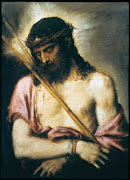
Tiziano Vecellio (Titian). Christ Crowned with Thorns. c. 1542.
The symbolism is dual: evil men claim the right to judge and condemn Christ the King of Kings, God Himself, the highest authority and, in so doing, give God the opportunity to provide an image of kingship forever new, namely, that kings wear the crown as Christ worn the thorns, as a cross, a duty, a burden, for the sake and service of his subjects. Christ becomes the supreme symbol of all those who suffer for the sake of right and justice - especially rulers who are rebelliously overthrown by their own subjects, for rebellion is sin and sin is rebellion.


...

Why revolution is always evil and was the very first sin (1)

Non serviam - "I shall not serve", said the Enemy of humankind and so fell from grace taking with him fully one third of Heaven.

Thus did Hell begin - that loathsome place where self-love and rebellion eat at the soul for all eternity.

And this spirit of rebellion has become the watchword of revolutions ever since.

It is small wonder then, that revolutions are such bloody, hateful affairs that begin badly and end worse.

By contrast, the duty of kingship is to serve. That is why the motto of the Prince of Wales is Ich Dien - "I serve".

Likewise the duty of each of us is to serve - serve God, serve our families, serve our country and that means, also, serve our governors. They, in turn, should serve us. Indeed, the highest thing man can do is to serve others. The higher you are, the more fully must you serve others.

However, we do not have the right to judge our rulers if they do not serve well enough or according to our liking.

The reason is so simple that anyone ought to be able to understand it. If the lower can sit in judgement upon the higher then authority ceases to exist.

By what right can the the lower possibly sit in judgement upon the higher? It can only be by some higher authority yet. But if the lower claims the right to judge the higher then even that yet higher authority can be judged and discarded, too.

The result is then that there is no authority at all.

And when there is no authority at all then no-one is safe, good government ends and mere anarchy becomes the norm. And when anarchy is the norm, the strong prey upon the weak and justice is at an end.


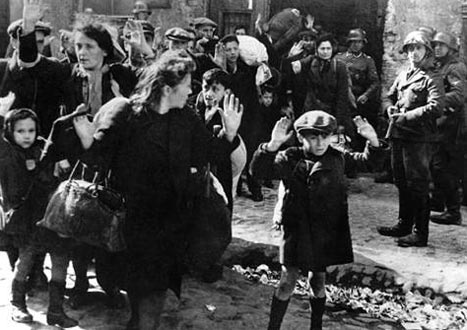
Jewish women and children herded by Nazis in the Warsaw Ghetto.
When legitimate authority is overturned by revolution then no-one is safe, good government ends and mere anarchy becomes the norm. And when anarchy is the norm, the strong prey upon the weak and justice is at an end.


Many a revolutionary claims to sit in judgement upon his rightful governor by appealing to an "higher" authority in the form of "justice" or "the people" or "historical imperative" or even some spurious form of god of his own making.

But if the rightful governor can be overthrown then so can the "higher authority" of "justice" or "the people" or "historical imperative" or "god". Once you start down the path of claiming to overthrow your own ruler then there is no end in sight, every authority is then under risk and chaos is inevitable.

And so it has proved.

Every revolution ends by devouring itself and its own.


The Revolution devours its own: the execution of Maximilien Robespierre.
The murder of King Louis XVI opened the floodgates to a massive wave of blood-letting in which huge numbers perished - most of them peasants and ordinary citizens - in the "Reign of Terror" which did not slow down until Robespierre, the author of the Terror, was himself guillotined at the order of the very revolution he created. These acts were all the more rebellious and diabolical in that the executioner - as seen here - was dressed as one of the educated and ruling classes, in culottes, who should have been most loyal but, instead, defiantly holds up the head to satisfy the leering blood-lust of the lawless, abandoned mob. But this is the nature of revolution: it poisons all loyalties, it teaches the servant to betray the master, and the master the servant, the son to betray the father and the father, the son, husband and wife to betray each other and it teaches man to hate his maker, God.


As the odious St Just, Robespierre's henchman, put it: "the Revolution consists in destroying all that opposes it".

In short - non serviam.

Revolution is a self-defeating reversal of all good human values. Even an atheist ought to be opposed to it. It is a recipe for chaos. And, when chaos reigns, the strong prey upon the weak and peace and justice are at an end.


William Frederick Yeames. "And when did you last see your father?". 1878.
Puritans claimed the right to sit in judgement on their superiors and to interrogate innocent children to discover the whereabouts of their loyalist and royalist fathers who had defended the king and rightful authority. As such, the Puritans were revolutionaries and enemies of God.


...

Saturday, 6 February 2010

Why King George III did not deserve to be overthrown

A gentleman called, I think, Mr Mulvaney (who wrongly identifies me with someone else) points out to me a most interesting article about the American Revolution.

It is by Jonathan Kolkey and is entitled:

Did King George III Deserve To Be Overthrown?

It is here:

http://www.lewrockwell.com/orig10/kolkey3.1.1.html

and it demolishes many myths about that Revolution, not least that there were any genuine grievances against King George III - and certainly now worthy of revolution.

I warmly recommend it.

Tuesday, 19 January 2010

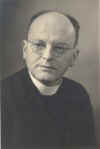
Fathers Alfred Delp and Hermann Wehrle - martyr-priests murdered by the Nazis

Rev Dr Alfred Delp SJ and Rev Dr Hermann Wehrle SJ were both dragged before the Nazi People's Court on trumped up charges and martyred chiefly for being Catholic priests.

Fr Wehrle had merely heard the confession of a German cavalry officer, Major Ludwig Freiherr (Baron) von Leonrod, who was not even part of the 20th July plot to overthrow Hitler. He had declined to get involved.

Baron Leonrod was nevertheless condemned to death for not revealing what he knew about the plot, which was, in any case, very little.

Fr Wehrle knew even less but Baron Leonrod came to him for spiritual counsel and confession. Fr Wehrle gave him him open spiritual counsel and told him that tyrannicide was moral if the tyrant had no legal right to be leader.

Outspoken opposition to the Nazis by individual Jesuits resulted in harsh response from government officials, including imprisonment of priests in concentration camps.

The government takeover of church property, "Klostersturm", resulted in the loss of valuable properties such as that of Stimmen der Zeit, the Jesuit newspaper, and limited the work of the Jesuits in Germany. The Jesuit provincial, Rev Fr Augustin Rösch SJ, Father Delp's superior in Munich, became active in the underground resistance to Hitler.

It was Augustin Rösch who introduced Delp to the Kreisau Circle. As of 1942, Delp met regularly with the clandestine group around Helmuth James, Count von Moltke to develop a model for a new social order after the Third Reich came to an end. Delp's role was to explain Catholic social teaching to the group, and to arrange contacts between Moltke and Catholic leaders, including Archbishop (later Cardinal) Preysing of Berlin.


Rev Dr Augustin Roesch SJ, the Munich Jesuit Provincial
who clandestinely opposed Hitler and the Nazis


This was the difficulty for German Christians. Hitler had been voted in constitutionally. Was his government legitimate? Seemingly, then, yes. But then he had also usurped power as Chancellor but creating himself Fuehrer or "Leader" which was not a constitutionally recognised post. He had done so through the Ermaechtigungsgesetz or "Enabling" or "Empowering" Acts which purported to be constitutional but, in reality, could hardly be called so.

True, Chancellor Bruening (a Catholic) had persuaded President von Hindenburg to sign over to him the emergency powers under Article 34 of the Weimar Constitution but that was all legal and only temporary. This seemed different. But, on the other hand, the Weimar Constitution had only come in, after World War I, and in duress. Was it the last word on the subject?

All these debates, the 20th July plotters repeatedly considered, anxious to ensure that they behaved with impeccably correct morals and justice.

It is easy for us to sit back in our armchairs and say "what was the problem?". But we were not there and called upon to risk our lives. The issue is still live. As Catholics we are taught to obey the legitimately constituted government and not to seek to overthrow it unlawfully just because we do not like it. We do not have the right to impose upon others our own dislike of the government.

These distinctions were lost on a brutish thug like Roland Freisler, the ex-Communist then fanatical Nazi, President of the Nazi People's Court.

Newly released footage below shows the eloquent defence of Fr Hermann Wehrle and others and their ill treatment at the hands of the odious Freisler.


Rev Dr Hermann Josef Wehrle SJ
curate at Holy Blood Church, Munich,
martyred for the Faith in 1944


Freisler acts as both prosecutor and judge in a blatant breach of elementary natural justice and then, with all the venom he can muster, he screeches and screams at the victims earning himself the clandestine sobriquet "raving Roland".

He ensured that his victims, the false accused, were further humiliated by having them dressed in old ragged clothes, often without any belt to keep their trousers up, so that they appeared before this Nazi kangaroo court looking shabby, scruffy and humiliated, particularly those who had been generals or high officials.


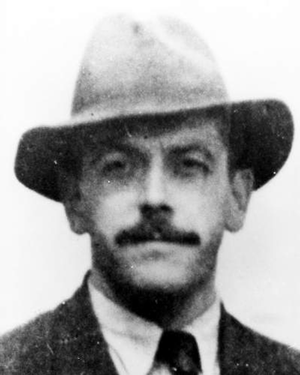
Major Ludwig Freiherr (Baron) von Leonrod
German cavalry officer and devout Catholic aristocrat
martyred for the Faith in 1944


In these clips he finds Baron von Leonrod and Fr Wehrle, guilty of knowing of the 20 July 1944 plot to assassinate Hitler, and of following Catholic theology in considering themselves not bound to reveal their knowledge (clearly because of Hitler's tyranny).

He then condemns them to death, to be hanged by wire, suspended from meat hooks, in the cells of Ploetzensee prison as "enemies of the Reich" but, in reality and in the eyes of God, as deeply heroic Christian martyrs.

We salute their courage in standing firm before the odious treachery, heathen villainy and pagan devilishness of the National Socialist German Worker's Party and its atrocious, diabolical leadership who, with their symbol of a cross with arms broken, the satanic swastika, declared war on the old, royal, noble and Catholic Germany of men like Colonel Count Claus von Stauffenberg, Baron Ludwig von Leonrod and Fathers Delp and Wehrle.

See, in these clips, how these Catholic heroes had to explain their innermost thoughts to the brutal, insensitive Freisler who was wholly incapable of understanding the careful moral reasoning of men like Fr Wehrle.

He screams at them and then declares, in solemn tones: "Sie werden mit dem Tode bestraft", "they shall be punished with death!".


Freisler, who had been a Communist in his youth, had been sent to the Soviet Union to learn how they conducted their show trials of dissidents. He learned his evil trade well at the hands of the equally brutal Soviet prosecutors and judges.

Freisler himself was killed in a bombing raid not long after the 20 July plot trials when the court building was struck by a direct hit. He was found with a file in his hands about to persecute yet another victim of the "People's Court".

His victims are now commemorated in modern Germany as national heroes.

Yet there are still bigots like the "Reverend" Ray Dubuque and others who pretend that the Nazi leaders were really a "Catholic men's movement like the Knights of Columbus".

May we draw strength from the courageous stand against evil of these noble Catholic men. Consider what a singular honour it will be to spend eternity in heaven with men such as these. Are we worthy of the company of these gentle giants?

God give us the strength to learn from them and live as they did!


Christian martyrs of the old, once Catholic, Germany,
pray for us!


Maiorem hac dilectionem nemo habet ut animam suam quis ponat pro amicis suis.

Greater love than this no man hath, that he lay down his life for his friends.

John 15:13

...

Sunday, 17 January 2010

For the record: Hitler hated Christianity and described himself as "a complete pagan"

Hitler was no more Catholic than Martin Luther was, or John Calvin or a great many others who had some Catholicism as a child and then rejected that faith utterly.

To call Hitler a Catholic is about as logical as a square circle.

A few quotes from Hitler's Mein Kampf ("my struggle", the book that launched his political career and set out his political and philosophical testament):

"The root of the whole evil lay, particularly in Schoenerer's opinion, in the fact that the directing body of the Catholic Church was not in Germany, and that for this very reason alone it was hostile to the interests of our nationality".

"The attitude of the Pan-German movement toward the Catholic Church was determined far less by its position on science, etc., than by its inadequacy in the championing of German rights and, conversely, its continued aid and comfort to Slavic arrogance and greed".

"Thus, the first theoretical foundation for a struggle of the Pan-German movement against Catholicism..."

"In my study of the Pan-German movement and its struggle against Rome...the struggle against the Catholic Church..."

[Vol 1/Ch 3]

"...above all the [Catholic] House of Habsburg was destined to be the misfortune of the German nation".

[I/1]

Hitler's Table Talk (sayings written down by his secretary, verified and published at the time) is even more explicit. A few excerpts:

"The reason why the ancient world was so pure, light and serene was that it knew nothing of the two great scourges: the pox and Christianity!"

"Christianity is a prototype of Bolshevism: the mobilisation by the Jew of the masses of slaves with the object of undermining society. Thus one understands that the healthy elements of the Roman world were proof against this doctrine."


Georg, Ritter von Schoenerer, Pan-Germanist, anti-Semitic and anti-Catholic influence on Hitler


"With what clairvoyance the authors of the eighteenth, and especially those of the past, century criticised Christianity and passed judgement on the evolution of the Churches!"

"But Christianity is an invention of sick brains: one could imagine nothing more senseless, nor any more indecent way of turning the idea of the Godhead into a mockery".

"Kerrl, with the noblest of intentions, wanted to attempt a synthesis between National Socialism and Christianity. I don't believe the thing's possible, and I see the obstacle in Christianity itself."

"Pure Christianity - the Christianity of the catacombs - is concerned with translating the Christian doctrine into facts. It leads quite simply to the annihilation of mankind. It is merely whole-hearted Bolshevism, under a tinsel of metaphysics."

"Our epoch will certainly see the end of the disease of Christianity. It will last another hundred years, two hundred years perhaps."

"The heaviest blow that ever struck humanity was the coming of Christianity. Bolshevism is Christianity's illegitimate child. Both are inventions of the Jew. The deliberate lie in the matter of religion was introduced into the world by Christianity. Bolshevism practises a lie of the same nature, when it claims to bring liberty to men, whereas in reality it seeks only to enslave them. In the ancient world, the relations between men and pagan gods were founded on an instinctive respect. It was a world enlightened by the idea of tolerance. Christianity was the first creed in the world to exterminate its adversaries in the name of love. Its key-note is intolerance. Without Christianity, we should not have had Islam. The Roman Empire, under Germanic influence, would have developed in the direction of world-domination, and humanity would not have extinguished fifteen centuries of civilisation at a single stroke. Let it not be said that Christianity brought man the life of the soul..."


The Men Behind Hitler: a German warning to the world, by Bernhard Schreiber, gives a very interesting account of the racists, occultists and anti-Christian fringe-dwellers who supported Hitler.


"Christianity is a rebellion against natural law, a protest against nature. Taken to its logical extreme, Christianity would mean the systematic cultivation of the human failure".

"So it's not opportune to hurl ourselves now into a struggle with the Churches. A slow death has something comforting about it. The dogma of Christianity gets worn away before the advances of science. Religion will have to make more and more concessions. Gradually the myths crumble. All that's left is to prove that in nature there is no frontier between the organic and the inorganic. When understanding of the universe has become widespread, when the majority of men know that the stars are not sources of light but worlds, perhaps inhabited worlds like ours, then the Christian doctrine will be convicted of absurdity".

"Christianity, of course, has reached the peak of absurdity in this respect. And that's why one day its structure will collapse. Science has already impregnated humanity. Consequently, the more Christianity clings to its dogmas, the quicker it will decline".

Enough? I could go on.

Notice, too, how Hitler uses all the same tired, old arguments that atheists continue to regurgitate today. Same old nonsense coming back century after century.

According to historian Michael Rissmann, young Hitler was influenced in school by Pan-Germanism and began to reject the Church, receiving Confirmation only unwillingly. A boyhood friend reports that after Hitler had left home, he never attended Mass or received the Sacraments again.

Georg Ritter von Schönerer's writings and the written legacy of his Pan-German Away from Rome! movement, which agitated against the Roman Catholic Church at the end of the 19th century, heavily influenced the young Hitler.

It is not just atheists who make the same old mistakes. However, the lesson of history is that atheists who mass-murder millions often don't think they are making mistakes. Often enough they think they are doing the right thing.

Certainly Hitler, Stalin, Mao and Pol Pot did.

And that's just one of the many problems with atheists and heathens.

...

Wednesday, 6 January 2010

Face it "Reverend" Ray: the Protestant areas voted for Hitler - the Catholic areas did not

The "Reverend" Mr Ray Dubuque returns unrepentant and persistent in his fear of the truth. It does not suit him to face the truth so he simply pretends that it is not there.

Well, here is some more of the truth which he will doubtless find equally unpalatable to his campaign of slander, hatred and religious vilification against the Catholic Church.

Here is the proof that it was in Protestant areas that the Nazis got their highest votes and in the Catholic areas the lowest (save the exception of Berlin, where the common sense and down-to-earth humour of the native Berliners ensured they could never vote for the jack-booted Nazi popinjays).


[Source: Blog of Fr Ray Blake at: http://marymagdalen.blogspot.com/]

The dark area on the first map shows the 1933 Nazi vote in Germany.

The second map shows the distribution of Catholics in the 1932 census.

It is immediately obvious that majority Catholic areas didn't vote for Hitler whereas majority Protestant areas did.

Yet Protestant liars persist with the outright fib that Bavaria voted for Hitler. The truth is the exact opposite: Catholic Bavaria rejected Hitler, as did the Catholic Rhineland, and the Catholic parts of Westphalia and Silesia.

Remarkably, it is a nearly exact fit.

The Protestant areas, by contrast, are exactly the areas where the Nazis gained their votes. The only dot of white in the Nazi-voting Protestant areas is Berlin, for the reasons already mentioned.

It could hardly be clearer.

Face it, "Reverend", your German co-religionists supported Hitler and the Nazis, and, alas, some did so ardently.

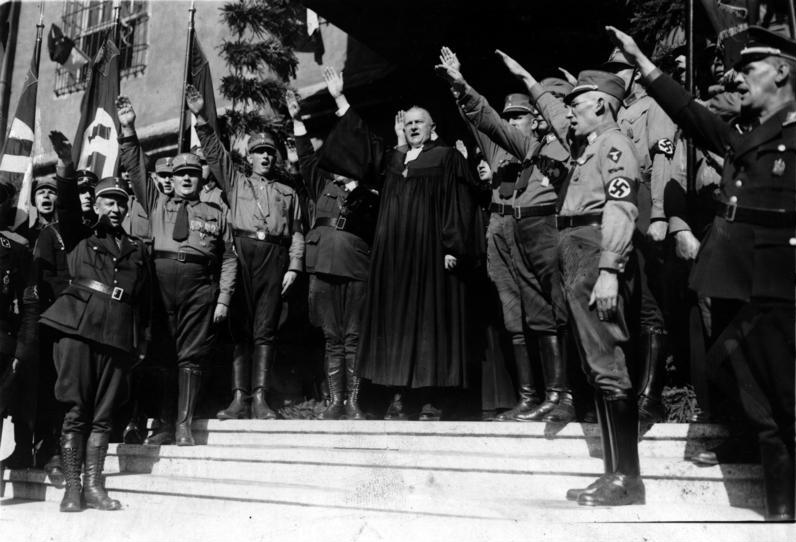
One such example was the Protestant Reich Bishop Ludwig Muller who is seen here giving the Nazi salute, surrounded by Nazi thugs.


Protestant Reich Bishop Ludwig Muller giving the Nazi salute surrounded by Nazi thugs


Stop lying and start telling the truth, "Reverend" Ray and others who remain in denial, and recognise that your Catholic brothers, like Pius XII, were leading anti-Nazis and that the majority of German Protestants, with some very noble exceptions, sold out to the Nazi Antichrist.

And Catholics make better beer, too!

...